It’s 3 p.m. Your eyes burn, your neck has gone stiff, and there’s a dull throb at your temples. Without thinking, your hand drifts up to the very top of your head and starts rubbing the center of your crown. That spot has a name — Baihui — and if you press it the right way, ten minutes is enough to feel the tension drain out of your scalp. Press it the wrong way, and you’ll only feel dizzier. This guide covers the location, the technique, the timing, and the warnings, all in one place.
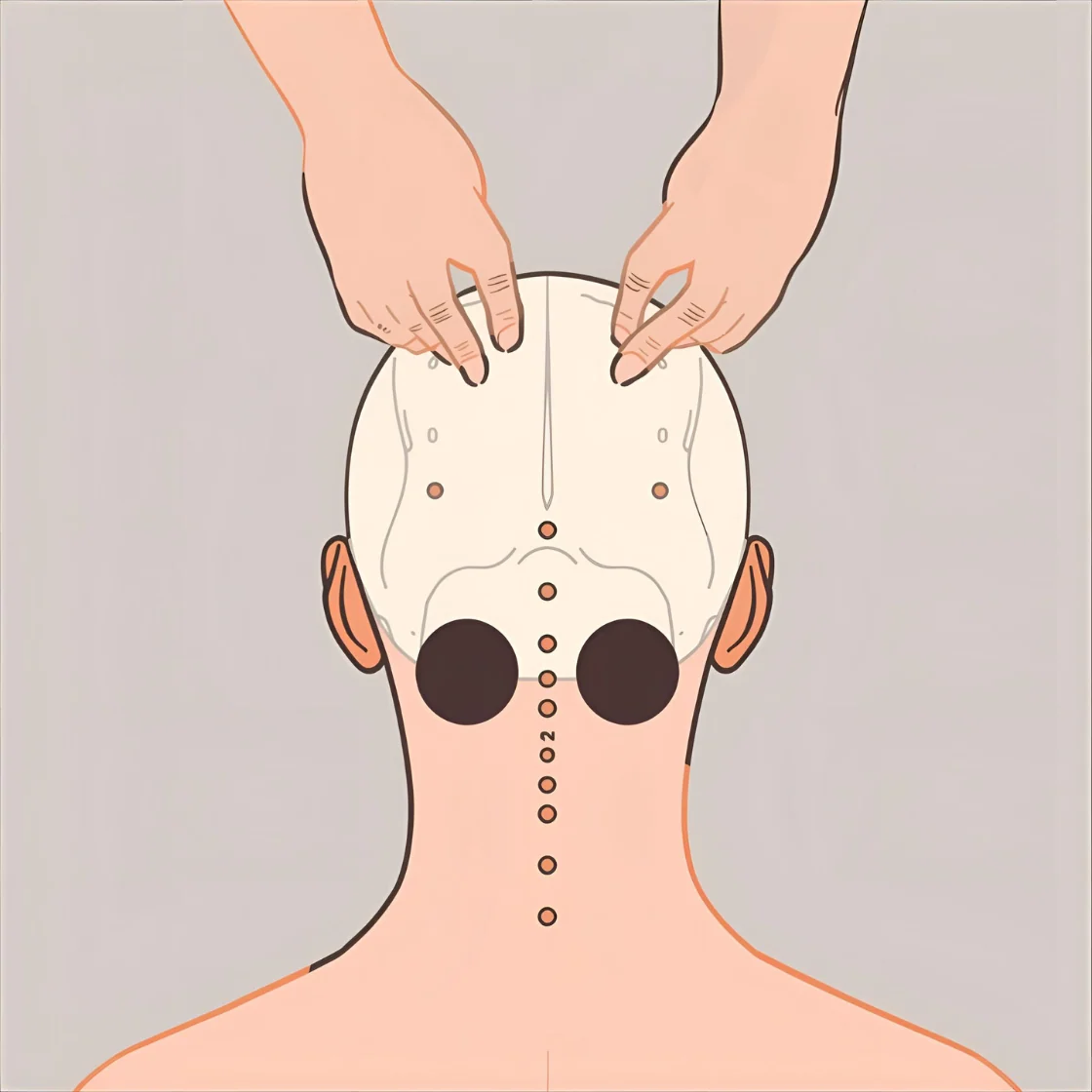
Baihui, known in English as GV20 or Governing Vessel 20, is one of the most famous acupoints in traditional Chinese medicine. An acupoint is a specific spot on the body where, according to traditional theory, energy — qi — gathers and can be influenced by touch. Baihui sits at the very top of the head, and its name means “a hundred convergences”: classical texts describe it as the place where many meridians, the channels through which qi is said to flow, meet. You don’t need to believe in any of that to use it, though. What matters in practice is simple: a small, slightly tender dip at the crown of your head, and a few minutes of gentle, well-aimed pressure.
Finding Baihui: Three Steps to the Right Spot
Baihui sits at the top center of the head. Locating it takes less than a minute if you use the two-line method:
- The ear-to-ear line: Place the index finger of each hand on the tip of each ear, then draw an imaginary line from each ear up and over the top of your head. Where the two lines cross is roughly where Baihui sits. This is the method most people use, and nine out of ten get it right on the first try.
- The nose-to-crown line: Draw a second imaginary line from the tip of your nose, up over the bridge of the nose and the center of the forehead, to the crown. It should cross the ear-to-ear line at the same point. When the two methods agree, you can be confident about the location.
- Confirm by touch: Press gently at the crossing point with your fingertip. You should feel a small, shallow dip, and the pressure should produce a dull, achy sensation — not a sharp pain. Achy when pressed, comfortable when released: that’s the right spot. If it feels like a needle prick, shift half a centimeter to the side and try again.
One detail worth knowing: everyone’s head shape is slightly different, and the crossing point may sit half a centimeter forward or back. That’s normal. The real test is the achy feeling, not a measurement with a ruler. If your hair is thick, part it first and let your fingertip touch the scalp directly — pressing through a thick layer of hair cuts the pressure roughly in half.
Four Techniques: Pick One for the Moment
Different situations call for different techniques. The four below run from gentlest to strongest. Pick the one that fits your moment — there’s no need to do all four.
Fingertip Press: Best for Beginners
Press the pad of your middle or index finger straight down onto Baihui. Build the pressure slowly until you feel that dull ache, hold for 5 seconds, release for 2, and press again. Repeat 10 times — about 2 minutes in total. This is the steadiest, most forgiving technique, ideal for a first attempt or for a quick session at your desk during a lunch break. Keep your shoulders down while you press; don’t hunch up and force it.
Circular Rubbing: The Workhorse for a Tight Scalp
Rest your fingertip on Baihui and make small circles around the point — 30 clockwise, then 30 counterclockwise, about one circle per second. The key is to move the scalp with your finger, not to slide your finger across the scalp. If your scalp is tight, you’ll feel it warm up and loosen after about 20 circles. This is the technique to reach for when your whole head feels wound up.
Tapping: For When You’re Drowsy
Curl your fingers slightly and tap lightly around Baihui with your fingertips, as if playing the piano, covering an area about 3 centimeters across. Aim for roughly 100 taps per minute and keep it going for about a minute. This is the one for the mid-afternoon slump, when your brain feels like it’s running on empty. Note the word “tap,” not “knock”: keep your wrist loose and the pressure light enough that your scalp only tingles faintly. Never use your fist.
Palm Press: For Winding Down Before Bed
At night, lay your palm gently over the crown of your head, press down evenly for 10 seconds, release, and repeat 5 times. The broad surface of the palm spreads the pressure, so the feeling is soft and calming — pair it with slow breathing: inhale slowly as you press down, exhale slowly as you release. Don’t use this one when you need to stay alert; it tends to make you sleepy.
Pressure, Duration, and Frequency: Three Numbers to Remember
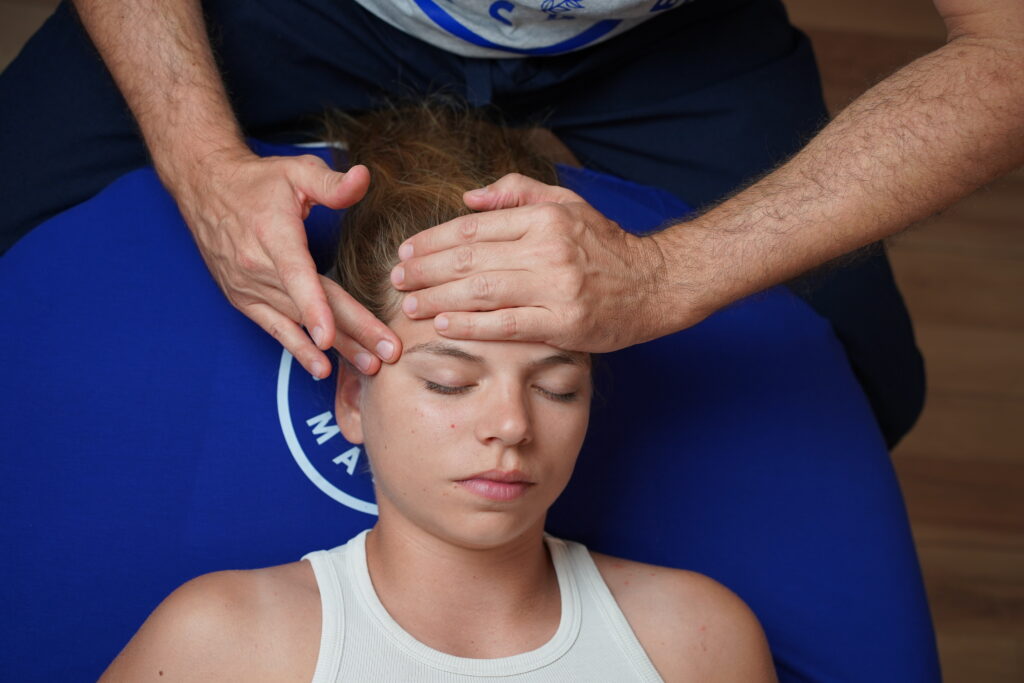
Most problems with Baihui massage don’t come from finding the wrong spot — they come from pressing too hard or too long. Three numbers keep you on the safe side:
- Pressure: Aim for a “sore but not painful” feeling. On a scale of 1 to 10, the ache should sit around 4 to 6. If you hit 7 or above — sharp pain or dizziness — the pressure is too strong; ease off immediately. People with a thin scalp or higher blood pressure should go one notch lighter still.
- Duration: Three to five minutes per session is plenty. Press for ten minutes straight and your scalp will start to feel numb and swollen instead of relaxed. Like a meal, stop at about seventy percent — leaving a little in reserve works better than overdoing it.
- Frequency: Once or twice a day, at least four hours apart. Once after waking up and once when the afternoon slump hits is a sensible rhythm. Don’t press every hour; your scalp needs rest too, and overstimulating the point can make it less responsive over time.
Before you start, wash your hands and trim your nails — long nails can scratch the scalp. In winter, warm your hands first by rubbing them together; pressing a cold hand onto the crown of your head can make some people dizzy on the spot.
When It Helps — and When to Stay Away
Baihui acupressure fits very specific moments: the stiff neck after hours of looking down at a phone or a screen, the foggy head of a mid-afternoon slump, a mind that won’t stop racing at bedtime, or the groggy feeling after a long bus or plane ride. Three minutes in those moments is often enough for most people to feel their scalp loosen and their head clear.
But there are situations where you should be extra careful — or not press at all:
- Cuts, boils, or skin conditions on the scalp: Pressing can worsen an infection. Wait until the skin has healed.
- Noticeably high or low blood pressure, or active dizziness: Massage can shift blood pressure further. Sit down and rest first, and seek medical care if things don’t feel right.
- Past head injury or cranial surgery: Pressing on the crown carries real risk. Ask your doctor first.
- Pregnancy: Baihui is considered a strongly stimulating point. Don’t press it on your own during pregnancy; consult a doctor if you think it might help.
- Severe headache, projectile vomiting, or blurred vision: These are not signs of being tired — they can be signs of illness. Don’t try to tough them out with massage; get medical attention promptly.
After a session, don’t wash your hair with cold water right away, and don’t step out into a cold wind immediately. Your scalp’s circulation has just been stimulated and the pores are open; a blast of cold air can make a headache worse for some people. Drink a small glass of warm water and sit for two minutes before getting up.
Four Common Mistakes to Stop Making
Clinics and massage parlors see the same errors again and again. Check whether any of these sound familiar:
- Harder is better: Some people press with their knuckles until it hurts, convinced that more pain means more benefit. They end up with bruised scalps that hurt to touch the next day. What Baihui needs is that dull, achy sensation — not pain. Pain means too much.
- Grinding on one spot: Pressing a single point for ten minutes straight is worse than rotating gently within a 2-centimeter circle around Baihui. The pressure spreads evenly, and you won’t create one sore spot.
- Pressing while scrolling on your phone: Looking down compresses the blood vessels in your neck, so your head is already getting less blood flow. Pressing Baihui in that position wastes most of the effect. Sit up straight and drop your shoulders first.
- Expecting instant results: Baihui acupressure is daily self-care, not a quick fix. Most people need a full week of once or twice daily practice before they notice the afternoon tension easing off.
Quick Answers
How do I find Baihui? Draw an imaginary line from the tip of one ear to the tip of the other, over the crown. Cross it with a line from the tip of your nose up over the forehead. Where they meet, press gently — a small dip with a dull ache confirms the spot.
How hard should I press? Aim for a dull ache around 4 to 6 out of 10. Sharp pain or dizziness means too much pressure — ease off right away.
How long and how often? Three to five minutes per session, once or twice a day, at least four hours apart. More is not better.
Which technique should a beginner start with? Fingertip press: 5 seconds on, 2 seconds off, 10 repetitions. It’s the steadiest and hardest to get wrong.
Can I do it before bed? Yes — use the palm press with slow breathing. Skip the tapping technique at night; it can be too stimulating.
When should I not press Baihui? If you have a scalp wound or skin infection, a head injury or cranial surgery history, are pregnant, or have severe headache, vomiting, or blurred vision — don’t press, and see a doctor instead.
Baihui acupressure has a very low barrier to entry: no tools, no cost, no special place needed. You can do it at your desk, on the subway, or in bed before sleep. Remember the three-step location method — ear-to-ear line, nose-to-crown line, confirm by the ache — and the three numbers: an ache of 4 to 6 out of 10, three to five minutes per session, once or twice a day. And remember who should skip it and the mistakes to avoid. Start today: the next time the 3 p.m. fog rolls in, try two minutes of fingertip pressing. Keep it up for a week and see whether that heavy-headed hour feels any lighter. If pressing makes the dizziness worse, or a headache lasts more than two days, stop and get checked.
Disclaimer: This article is for reference only and is not medical advice. Baihui acupressure is a form of daily self-care; it does not promise any therapeutic effect. If dizziness or headaches persist, or if you experience blurred vision, vomiting, or numbness in your limbs, please see a doctor promptly.