It’s the first cold morning of October. You wake up to the sound of your own sneezing — seven, eight times in a row — and your eyes are already itching before you’ve even opened them properly. By noon your cheeks are red and dry, and by evening a patch of hives has bloomed on your forearm for no obvious reason. The next day, the same thing. The same thing every autumn and winter, year after year.
If this sounds familiar, you may have what Traditional Chinese Medicine (TCM) calls a tebing constitution — literally a “special inborn constitution,” better known in plain language as an allergic constitution. It is not a disease in itself. It is a pattern: a body that reacts to the outside world more quickly, and more strongly, than other people’s bodies do. This guide explains how to recognize it, why it happens, and how to get through autumn and winter with fewer flare-ups.
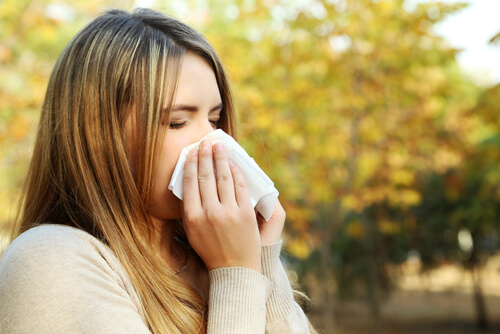
What an Allergic Constitution Looks Like: See If It Fits You
In TCM, the body is understood through nine constitution types, and tebing is one of them. In modern terms, it describes a person whose immune system is wired to overreact: it mistakes harmless things — pollen, dust mites, cold air — for invaders, and mounts a defense far bigger than the threat deserves. Sneezes, rashes, and itching are the visible fallout of that overreaction.
The signs usually show up in four places. The nose is the most outspoken: with the first cold snap of autumn, cold air, pollen, dust mites, or pet dander can set off a burst of sneezing, a runny nose with thin, clear mucus, and congestion so bad you end up breathing through your mouth at night. The skin is next: cheeks turn red and dry when the seasons change, hives appear on the arms and legs, and the more you scratch, the worse the itch gets — sometimes escalating into eczema or peeling. The eyes join in too: itching, watering, red eyelids, and rubbing them only makes them redder. For some people the reaction lands in the airways or the gut instead: a cough or wheeze triggered by cold air, or diarrhea and a rash within hours of eating shrimp, crab, or mango.
A simple self-check: think back over the past year. Have you had three or more episodes that follow the same script — flaring up when the season changes, then easing once the trigger is gone? The runny nose that arrives every late October when the temperature drops, for example, or lips that tingle and break out in a rash within two hours of eating seafood. If the answer is yes, and colds and skin conditions have been ruled out, it is worth treating your body as an allergic constitution and caring for it accordingly.
Why You? Three Causes Behind the Pattern
The first cause is the one you were born with — and it carries the most weight. If one parent has allergic rhinitis, asthma, or eczema, a child’s chances of developing an allergic constitution are noticeably higher than average; if both parents have one, the chances rise further. This is not an inherited disease. It is an inherited immune system that is simply quicker to overreact. Where most people’s bodies ignore a dust mite, yours treats it as an intruder and sounds the alarm.
The second cause is the environment you live in. Modern life keeps us in sealed, air-conditioned rooms where dust mites, mold, and pet hair accumulate for months. Fresh paint and formaldehyde linger long after a renovation. Air pollution and hazy days keep the airways irritated. And children who grow up in overly sanitized surroundings, with little contact with the natural world, may give their immune systems too few chances to “practice” — so when a real allergen shows up, the system overreacts.
The third cause is the one most people overlook: the state of your spleen and lungs. In TCM, the lungs govern the skin and hair — a weak lung qi means a weaker skin barrier, so a cold wind alone can raise a rash. The spleen, meanwhile, is described as the source of phlegm: when digestion is weak, food is not fully processed, dampness and phlegm build up, and allergic reactions are more easily “lit.” That is why the same plate of shrimp can leave one person perfectly fine and another covered in hives by evening. The difference is not the shrimp. It is the body’s foundation.

Autumn and Winter Care: Cut the Triggers First
Autumn and winter are the hardest seasons for an allergic constitution, and the first step of care is not a tonic — it is lowering your exposure to triggers. Start with the bedroom, where you spend a third of your life. Wash bedding and pillowcases in water hotter than 55°C (131°F) every two weeks, or air them in direct sunlight for at least three hours. Vacuum mattresses, sofas, and rugs once a week. Keep indoor humidity between 40% and 60%: air that is too dry irritates the nose, and air that is too damp breeds mold. If you keep pets, try to keep them out of the bedroom in autumn and winter, and wash your hands and change clothes after playing with them.
Going outside deserves the same attention. Mornings and evenings in autumn and winter can differ by 10 degrees or more, so check the temperature before you leave: below 10°C (50°F), put on a mask before stepping out — it blocks most of the cold air and pollen. On hazy or very windy days, cut down on outdoor time, and when you get home, wash your face, rinse your mouth, and change out of your outdoor clothes right away. If your skin flares up easily, keep showers under 40°C (104°F) and under ten minutes, and apply moisturizer within three minutes of toweling off, while the skin is still slightly damp, to lock the moisture in.
Eating and Moving: Build the Foundation Bit by Bit
When it comes to food, the rule for an allergic constitution is gentle, simple, and low-stimulation. Shrimp, crab, mango, and peanuts are common triggers, but everyone’s personal “blacklist” is different — the first time you react, write down everything you ate that day, and watch more carefully the next time you eat something from that list. In autumn and winter, warming, easy-to-digest home cooking works best: pork rib soup with Chinese yam, lotus seed and lily bulb porridge, red date and millet porridge, steamed egg with pumpkin. Drink 1,500 to 2,000 ml of warm water a day, and don’t wait until you’re thirsty. Cut back on fried food, barbecue, and heavily seasoned takeout — these tend to generate internal damp-heat, which makes both skin and nose more miserable.
Exercise needs the right intensity. Jumping straight into a five-kilometer run or high-intensity interval training is a poor fit: drenched in sweat and then hit by cold wind, you are more likely to trigger a cough or a bout of rhinitis. Better is 30 minutes of moderate activity a day — brisk walking, slow jogging, Baduanjin (the Eight Brocades, a traditional set of eight gentle qigong movements), or tai chi — just enough to break a light sweat. In autumn and winter, aim for the window between 10 a.m. and 3 p.m., when the sun is up and the air is warmest, and avoid the cold of early morning. After exercising, don’t strip off your jacket right away: towel off the sweat first, let your body cool down gradually, then change.
Sleep is the highest-value care of all, and it costs nothing. A run of late nights throws the immune system off balance, and a mild allergy can turn into a serious one. In autumn and winter, aim to be in bed before 11 p.m. and to get seven to eight hours. Put the phone away an hour before bed and soak your feet in warm water — around 40°C (104°F), deep enough to cover the ankles — for about 15 minutes. It warms the body and helps you fall asleep.

Three Mistakes to Avoid
Mistake 1: reaching for heavy tonics the moment you react. Some people start drinking ginseng soup and eating donkey-hide gelatin every day as soon as autumn arrives, convinced that more tonics mean a stronger constitution. But an allergic constitution often comes with a weak spleen and stomach, and heavy tonics are hard to digest — they can generate dampness and heat instead, and make the skin itch more. Autumn tonics should be taken in small steps: start with everyday foods like Chinese yam, lotus seeds, and red dates, and only consider anything stronger once your body has adjusted.
Mistake 2: scratching the itch and blowing hard through a blocked nose. Scratching breaks the skin barrier, makes the itch worse, and invites infection. Blowing hard through a congested nose can push mucus toward the ears and trigger a middle-ear infection. Instead, press a cool, damp cloth against itchy skin, or apply moisturizer; for a blocked nose, use a saline spray and blow gently, one nostril at a time.
Mistake 3: relying on antihistamines as a long-term fix. Anti-allergy medication can relieve symptoms quickly, and when symptoms are severe, taking it as your doctor advises is the right call. But it treats the flare-up, not the constitution — and it is no substitute for care. What actually reduces how often flare-ups happen, and how bad they get, is the unglamorous work above: avoiding triggers, keeping regular hours, and eating and moving well.
Quick Answers
Is an allergic constitution a disease? No. It is a constitutional pattern — a tendency to overreact to triggers. It can be managed and improved with daily care, but it does not go away overnight.
Can children outgrow it? Many children do see their reactions ease as they grow older and their immune systems mature, especially with consistent care. Adults can also reduce the frequency and severity of flare-ups, even if the underlying sensitivity remains.
What should I do first if I suspect I have it? Keep a simple log for two weeks: what you ate, where you went, the weather, and when symptoms appeared. Patterns usually show up fast — and a clear log also helps a doctor if you decide to get checked.
When should I see a doctor instead of managing it myself? If symptoms are severe or keep coming back, if breathing becomes difficult, or if a rash spreads over a large area of the body, see a doctor promptly rather than waiting it out.
How long before daily care makes a difference? Small changes usually show within two weeks: fewer sneezes, less itching. The deeper shift — fewer flare-ups overall — takes a season or more of steady habits.
There is no quick fix for an allergic constitution. It is more like a long game: keep the triggers outside the door in autumn and winter, and slowly build up the spleen and lungs the rest of the time. Start with three small goals you can do this week: air the bedding and wash the pillows once; be in bed before 11 p.m. for two weeks straight; wear a mask when you go out, and wash your face and rinse your mouth when you come home. Look back after two weeks — fewer sneezes, calmer skin. The change is usually hiding in exactly these small things.
Disclaimer: This article is for reference only and is not medical advice. It cannot replace a doctor’s diagnosis or treatment. If allergy symptoms are severe, recur frequently, or you experience breathing difficulty or a widespread rash, please seek medical care promptly. Adjust the diet, exercise, and lifestyle suggestions in this article to your own situation; pregnant people, children, and those with underlying conditions should consult a doctor first.