It is 6:30 in the morning in a neighborhood park. A few older residents are standing beside the flower beds, feet apart, hands rising slowly in front of them. On the exhale, each one lets out a soft, long “xu” sound, barely louder than a whisper. A passerby might think they are just sighing. In fact, they are practicing Liu Zi Jue, the Six Healing Sounds, a breathing method that has been passed down in China for over a thousand years. Six different sounds, six different breaths, one quiet quarter of an hour. Done well, it is one of the cheapest ways to start a day feeling calmer and looser. Done badly, it costs you nothing but a few wasted minutes. This guide explains it plainly: how each sound works, how to practice step by step, and the mistakes beginners most often make.

What Is Liu Zi Jue? The Six Healing Sounds Explained
Liu Zi Jue literally means “the six-character formula.” It is a traditional Chinese breathing and movement practice built around six sounds: xu, he, hu, si, chui, and xi. Each sound is not shouted or spoken like a word. It is breathed out slowly, with the sound carried on the exhale, while the hands move in a matching gesture. In traditional Chinese medicine theory, each sound is linked to a different organ system. Think of that mapping as a practice map, not a medical diagnosis: it gives you a direction for your attention, not a promise of a cure.
Here is the traditional pairing, in practice order:
- Xu (pronounced “shoo”): traditionally linked to the liver. Practitioners turn to it when they feel tense, irritable, or tired-eyed after late nights.
- He (pronounced “huh”): traditionally linked to the heart. Used for settling a restless mind and easing that wound-up feeling after a stressful day.
- Hu (pronounced “hoo”): traditionally linked to the spleen and digestion. A common choice after long hours sitting, when the stomach feels heavy or bloated.
- Si (pronounced “szuh”): traditionally linked to the lungs. Often emphasized in dry seasons or when a lingering cough leaves the chest feeling tight.
- Chui (pronounced “chway”): traditionally linked to the kidneys. Associated in tradition with lower-back tiredness and low energy.
- Xi (pronounced “shee”): traditionally linked to the San Jiao, or “triple burner,” a traditional concept describing the body’s overall regulation of fluids and energy rather than a single organ. Practitioners use it as a general balancer, something like a full-body reset.
You do not need to memorize this table before your first session. Most beginners simply run through all six sounds in order, and only later start favoring one sound that matches how they feel that day. The map becomes useful over time, as you notice which sound leaves you feeling most settled.
How to Pronounce the Six Sounds Without Straining Your Throat
Pronunciation is where most beginners go wrong, because three of the sounds do not look the way they sound in English spelling. Getting them roughly right matters more than getting them perfect. The rule that covers all six is simple: soft, even, and long. Someone standing next to you should just barely hear you, and you should finish each sound feeling unhurried, not out of breath.
The three sounds to watch
- Si: say it like a gentle “szuh,” with the tip of your tongue behind your lower teeth, as if you were quietly saying “s” while breathing out. It should feel like air brushing past the teeth, not like a hiss forced through a clenched jaw.
- Xi: say it like “shee,” with air squeezed softly between the teeth, similar to a quiet “see” said with a smile. Keep it light; if your throat tightens, you are pushing too hard.
- Hu: this is not the sharp “hoo” of blowing out a candle. Open your mouth, relax the throat, and let a warm, low breath roll out, almost like fogging a mirror in winter. The sound should sit deep in the throat, not in the lips.
The other three are closer to everyday speech: xu like “shoo,” he like a soft “huh,” and chui like “chway” with rounded lips. For all six, keep the volume low, the pace slow, and the length comfortable. A good test after your first round: your throat should feel more relaxed than before you started. If it feels dry or scratchy, halve the volume next time. Loudness is not effort here; control is.
A Complete 15-Minute Practice, Step by Step
Find a spot with fresh air and few interruptions. Standing is best, but sitting in a chair works just as well, especially for older practitioners or anyone with sore knees. Stand with your feet shoulder-width apart, knees slightly bent, shoulders dropped, and the tip of your tongue lightly touching the roof of your mouth. Before you begin, take three natural deep breaths and let the tension out of your neck and shoulders. The whole session should take about 15 minutes; 10 minutes is plenty when you are starting out.
- Settle in with three calming breaths. Raise your hands slowly from your sides to chest height, palms facing down, as you breathe in. Lower them gently as you breathe out. Repeat three times. The point is only to slow your breathing down before the sounds begin.
- Run through all six sounds, one breath each. Follow the order xu, he, hu, si, chui, xi. As you breathe in, let your hands rise or open outward. As you breathe out with the sound, let your hands press slowly downward or push gently forward. One sound, one inhale, one exhale. Six sounds make one full round. Do two full rounds.
- Repeat your focus sound six times. After the two full rounds, pick the one sound that fits how you feel today and repeat it six times on its own. Eyes dry after a late night? Stay with xu. Stomach unsettled after sitting all day? Stay with hu. A dry cough hanging on? Stay with si. This focused repetition is where many practitioners say the practice starts to feel personal rather than mechanical.
- Close quietly. Rest both hands, one over the other, on your lower belly. Stand or sit still for one minute with your eyes closed, breathing naturally. Many people notice a mild warmth in their hands or a sense of heaviness settling in their body. When that minute is done, you are finished. Open your eyes and move on with your day.
Timing helps more than willpower. Practice at a fixed time, ideally within half an hour of waking up, or about an hour before bed. Those two windows are the easiest to protect. Set a 15-minute timer on your phone for the first few weeks and stop when it rings. Five days a week for 15 minutes beats a single heroic hour on Sunday and nothing for the rest of the week. Breathing practice rewards routine the way brushing your teeth does: small, regular, and unremarkable, until you notice the difference when you skip it.
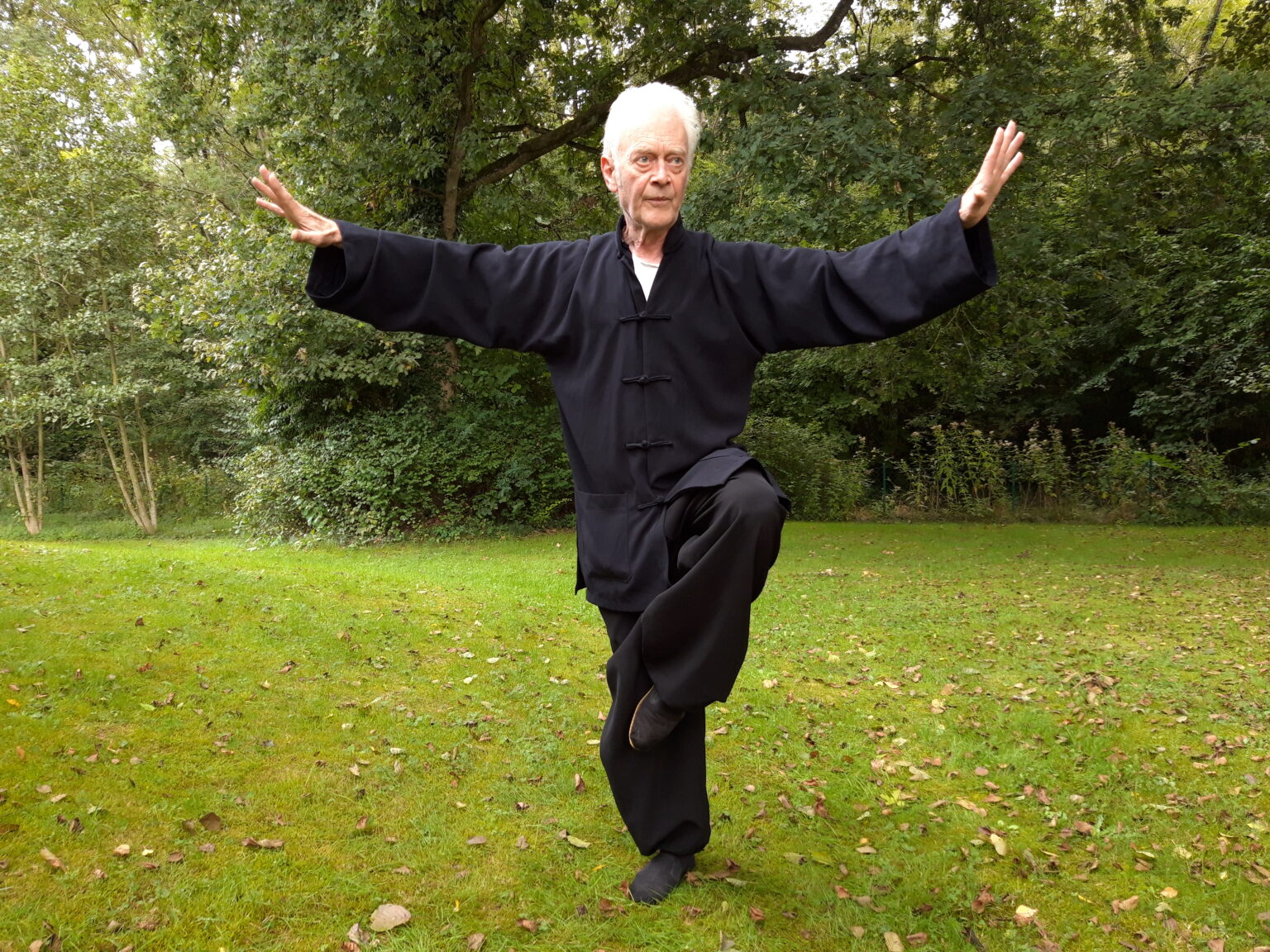
Four Beginner Mistakes That Spoil the Practice
Mistake 1: Louder means better. Some beginners turn the sounds into shouted commands, and end up with a hoarse throat and scattered breathing. Liu Zi Jue works on the principle that sound rides on breath; the sound is only the vehicle. Light, even, and long is the standard. If your throat feels worse after practice than before, cut the volume in half next time.
Mistake 2: Holding the breath to sound “long.” Stretching one sound to 20 seconds while your face turns red is not skill, it is strain, and it often ends in dizziness. For a beginner, six to eight seconds per sound is excellent. As your breathing capacity grows, the sounds will naturally lengthen on their own. If you run out of air mid-sound, simply stop and breathe in again. Pausing to breathe is not failure; pushing through discomfort is the actual problem.
Mistake 3: Worrying more about the hand movements than the breath. The gestures exist to serve the breathing, not the other way around. If you cannot remember a movement, stand still and practice the sounds and breathing alone. You lose nothing. Once the breathing feels smooth, the movements are easy to add back in, one sound at a time.
Mistake 4: Expecting results in a few days. A friend who has practiced for three months puts it this way: the first two weeks felt like nothing was happening, in the third week falling asleep got a little easier, and morning dry mouth eased. Breathing practices work slowly. Treat them as a daily habit, not a three-day remedy, and judge them after a month of steady practice, not after a single session.
Adapting the Practice to Your Life
Office workers with only a 10-minute lunch break can practice just xu, he, and hu, focusing on loosening the shoulders and calming a busy mind before returning to work. Many people report that their head feels clearer for the afternoon after even a short session. Older adults who find standing uncomfortable can practice entirely from a chair, as long as the back stays upright and both feet rest flat on the floor. Students under exam pressure sometimes practice xi twice before an evening study session to release nervous tension; if speaking aloud is not appropriate in a classroom or library, silently mouthing the sound while keeping the same breathing rhythm still works.
Seasonal details make a difference too. In dry autumn and winter air, when practicing si, placing a cup of hot water nearby can add a little moisture to the air you breathe in. In summer, when practice leaves you sweating, do not step straight into air conditioning or drink ice water afterward. Sit quietly for two minutes, let the sweat settle, and then go about your day. These small details look trivial, and they are exactly what separates a comfortable long-term habit from a practice that gets abandoned after a week.

How to Start Today, and What to Expect
Liu Zi Jue is not mysterious, and it is not magic. Six sounds, six breaths, fifteen minutes: that is the whole practice. If you want to start, do three things today. Tonight before bed, stand in a comfortable posture and say all six sounds softly, in order, twice through, remembering the three words: soft, even, long. Tomorrow morning, set a 15-minute timer and complete one full session. After a week of steady practice, notice which sound leaves you feeling best, and make it your focus sound for the following week. Patience is part of the method. When the breathing becomes smooth, the body usually tells you so in its own quiet way.
Quick Answers
What is Liu Zi Jue? Liu Zi Jue, the Six Healing Sounds, is a traditional Chinese breathing practice that pairs six exhaled sounds (xu, he, hu, si, chui, xi) with gentle hand movements. Each sound is traditionally linked to a different organ system and is used as a focus for relaxation and daily health maintenance.
How long should a beginner practice each day? About 10 to 15 minutes a day, five days a week, is a good starting point. Two full rounds of all six sounds, plus six repetitions of one focus sound, with a one-minute quiet close, fits comfortably inside that time.
Do I need to learn the hand movements first? No. The breath and the sounds matter most. If the movements confuse you, practice standing or sitting still with just the breathing, and add the gestures later once the breathing feels natural.
How loud should the sounds be? Barely audible to someone standing next to you. Soft, even, and long is the standard. If your throat feels dry or hoarse afterward, you were pushing too hard.
Which sound should I focus on? Choose the one that matches how you feel that day: xu for tension and tired eyes, he for restlessness, hu for a heavy stomach after sitting, si for a dry cough, chui for low energy, and xi as a general balancer. After a week, you will usually notice one sound that feels most helpful.
When will I feel a difference? Most steady practitioners notice small changes, such as easier sleep or a calmer start to the day, after two to four weeks of regular practice, not after a single session. Treat it as a habit and judge it after a month.
Safety note: Practice within your limits. If you feel dizzy, short of breath, chest tightness, or a racing heartbeat during practice, stop immediately, sit down, and rest. People with asthma, chronic obstructive pulmonary disease, or serious cardiovascular conditions should consult a doctor before starting. This article is traditional wellness education only, makes no promise of healing or treatment, and is not a substitute for professional medical advice.