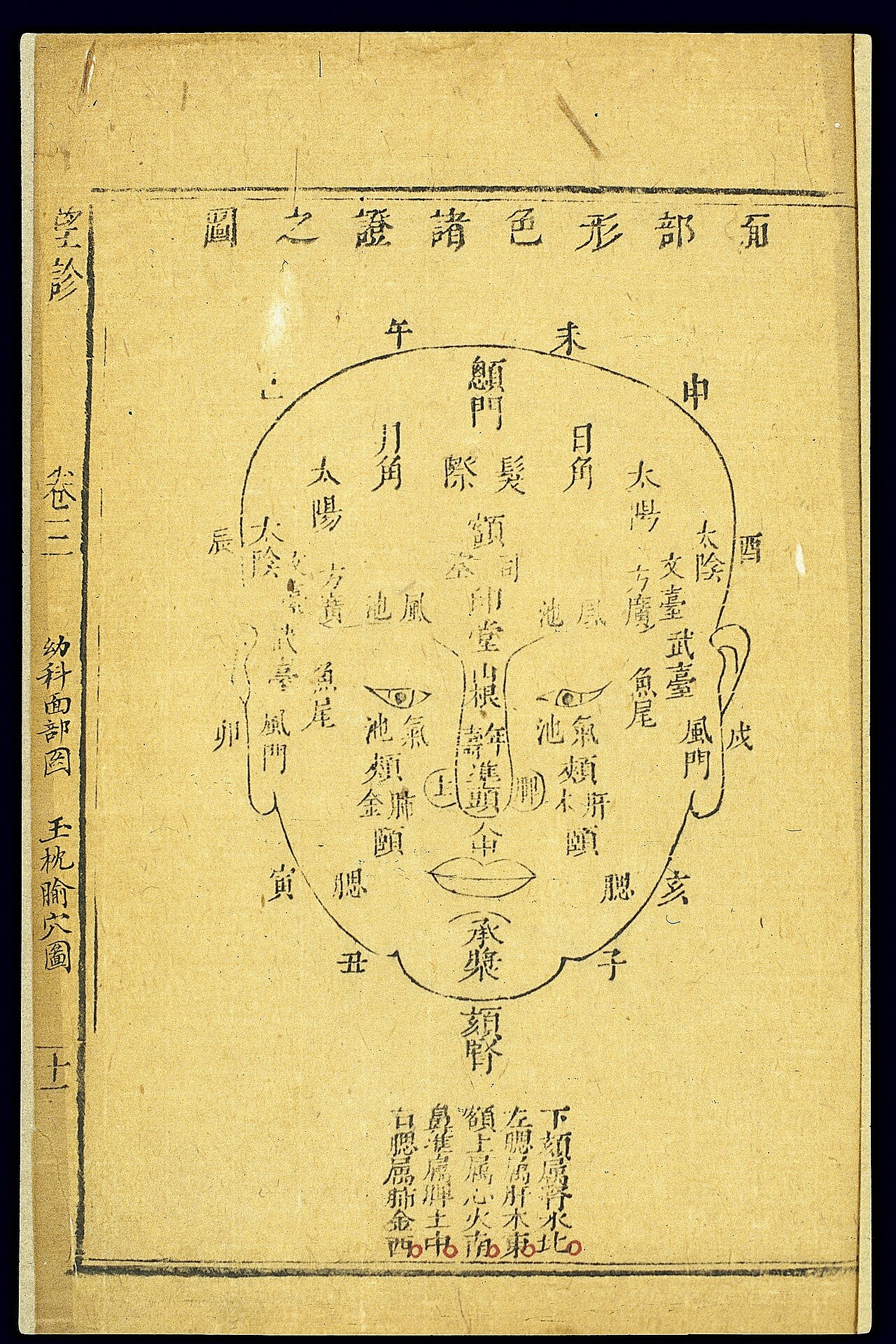
The ancients read faces a bit like we read resumes: not just “good-looking or not,” but dividing a face into twelve “departments,” each running its own portfolio — career, wealth, marriage, health, each with its own office. The system is called the Twelve Palaces of face reading. Today, all twelve, made clear in one sitting.
The Twelve Palaces at a Glance: One Face, Twelve Departments
First memorize the map and the job descriptions (check against a mirror as you read):
- Life Palace (between the brows, the Yintang): overall destiny, the ups and downs of luck
- Wealth Palace (the nose): money luck, financial management
- Siblings Palace (the eyebrows): siblings, close friends
- Property Palace (the eyes): family assets, housing, real-estate affinity
- Children Palace (the lower eyelids): affinity with children
- Servants Palace (the sides of the chin): subordinates, juniors, partners
- Marriage Palace (the outer eye corners, the crow’s-feet zone): marriage and romance
- Health Palace (the bridge of the nose, the Shangen): health
- Travel Palace (the two forehead corners): travel, relocation, journeys
- Career Palace (the center of the forehead): career, official rank, professional path
- Fortune Palace (the upper forehead): blessings, late-life luck, state of mind
- Parents Palace (the forehead’s two sides, the Sun-Moon corners): parents, elders’ affinity
The Five Everyone Asks About
Life Palace (Yintang): first among the twelve. A broad, bright Yintang traditionally means an open mind and smooth luck; a narrow or heavily lined one means overthinking. The old line about a “dark Yintang” refers to this spot looking dull — traditionally a signal of low luck. The modern translation — “sleep-deprived and stressed” — works just as well.
Wealth Palace (the nose): the nose is the “wealth star.” Tradition wants a straight bridge, a fleshy tip, and full nostril wings — the so-called “hanging gallbladder” nose — meaning steady wealth that stays put. Turned-up nostrils or a crooked bridge traditionally mean “money comes and goes.” Here’s the fun part: modern psychology finds that people who feel confident about their looks genuinely do negotiate money more boldly — the ancient and modern readings converge.
Marriage Palace (outer eye corners): also called the “treacherous gate.” Smooth, full eye corners traditionally mean a harmonious marriage; hollow or heavily lined ones mean a rockier love life. But one caveat: crow’s feet can also come from smiling a lot — do smiley people have bad marriages? Obviously not. Always read this palace in context.
Career Palace (the forehead): the career palace. Tradition wants a full, broad forehead — “heaven’s court full” — meaning good early luck and career backing. A narrow or scarred forehead traditionally means tougher early years. But flip it around: showing your forehead is itself a posture of confidence and openness — it scores points in interviews and social life.
Health Palace (Shangen): the root of the nose bridge, between the eyes. A high, strong Shangen traditionally means a solid constitution; a collapsed one, or one with horizontal lines, says watch your health. In modern anatomy this spot sits over the sinuses — chronic sinus trouble and bad sleep really do make it look dull. The ancients’ observations weren’t baseless.
The Other Seven, One Line Each
- Siblings Palace (brows): thick, tidy brows traditionally mean harmonious siblings and many friends; sparse, broken brows mean thinner ties.
- Property Palace (eyes): big, bright eyes traditionally mean a stable family fortune and good real-estate affinity. “Eyes are the windows to the soul” — that one is universal.
- Children Palace (under-eyes): full lower lids traditionally mean good affinity with children; heavy bags mostly mean you need sleep — fix that first.
- Servants Palace (chin): a square, rounded chin traditionally means good late life and help from juniors; a pointed chin is traditionally read as “tougher twilight years.”
- Travel Palace (forehead corners): open forehead corners traditionally suit going far — smooth journeys and postings abroad; narrow corners mean better to stay put.
- Fortune Palace (upper forehead): a clear, glowing upper forehead traditionally means a good mindset and blessed later years. This spot is really just “complexion” — and good complexion rarely travels with bad luck.
- Parents Palace (Sun-Moon corners): full forehead sides traditionally mean healthy parents and good elders’ affinity; hollows here traditionally mean leaving home early.
Complexion: More Honest Than Features
The old physiognomy books rank one thing above all twelve palaces: “complexion is the root of face reading.” Features are factory settings — unchangeable. Complexion is live status — unfakeable. A bright Yintang and rosy cheeks is what tradition calls a “clear, radiant complexion” — luck trending upward. Sallow skin and a dull Yintang is “stagnant complexion” — a prompt to rest and recalibrate.
Three all-nighters and any modern face collapses — that’s physiognomy in real time. So read complexion first, features second. Good complexion turns a 7-out-of-10 face into 9-out-of-10 luck; bad complexion discounts even a perfect 10. Sleeping well beats studying any palace.
Three Reminders for Reading Faces
First: dynamic beats static. The old books say “the face follows the heart” — chronic frowning carves downward lines; chronic smiling lifts the eye corners. The face doesn’t decide fate so much as mindset sculpts the face.
Second: the whole beats any single palace. Judging from one palace alone is face reading’s biggest error. A great nose with a dull Yintang — the total still gets discounted. Read all twelve together, cross-checking each other.
Third: this is culture, not a verdict. Face reading is a thousand-year folk tradition — wonderful for observation and conversation. Use it to make friends and share laughs; use it to decide life’s big calls — skipping marriage over a “bad marriage palace” — and you’ve got it backwards.
Go look in the mirror right now: start with the Life, Wealth, and Career palaces and work through them. Don’t believe it all — treat it as an interesting self-observation: your face is quietly narrating your lifestyle. And the best “luck change” is always sleep well, fume less, smile more — that one outperforms every palace. Finish this piece and you’ve already passed 90% of people who can only say “dark Yintang.”
Try It Now: A 3-Minute Mirror Walkthrough
Reading about palaces is one thing; reading your own face is another. Try this:
- Minute 1 — complexion check. Stand in natural light. Is your Yintang (between the brows) bright or dull? Are your cheeks rosy or sallow? Write down one honest word. This is your baseline — it matters more than everything below.
- Minute 2 — the big three. Life Palace: broad and clear, or narrow and lined? Wealth Palace: straight bridge, fleshy tip? Career Palace: is the forehead fully visible, or hiding under a fringe? (Fringes, by the way, are the modern way of “closing” the career palace — make of that what you will.)
- Minute 3 — one honest observation. Pick whichever palace surprised you most and note what lifestyle habit might be writing itself there. Late nights show at the Children Palace; chronic frowning carves the Life Palace. The face keeps receipts.
Quick Answers
Does cosmetic surgery change your “palace”? The old books never met Botox, but the logic is consistent: surgery changes the static features, not the dynamic complexion — and complexion outranks features. A lifted brow with a dull, exhausted Yintang still reads as tired luck. The books would say: fix the lifestyle first, the scalpel second.
Can face reading spot real health problems? Sometimes, indirectly. Persistent darkening at the Health Palace (Shangen) genuinely correlates with sinus and sleep issues; chronic paleness maps to anemia or exhaustion. Think of it as folk triage, not diagnosis — an interesting nudge to get a checkup, never a substitute for one.
中文版:面相十二宫速览