It is 7 a.m. and barely 6 degrees outside. Your stomach is empty, your hands are cold, and nothing wakes you up quite like a bowl of hot congee straight from the pot. Done right, congee is one of the gentlest foods for autumn and winter: warm, soft, easy to digest. Done wrong, with the wrong pairing, it can leave you bloated, acidic, or hungry again within an hour. This guide gives you five everyday recipes with exact amounts, plus the pairing mistakes to avoid, so you can start tomorrow morning with confidence.
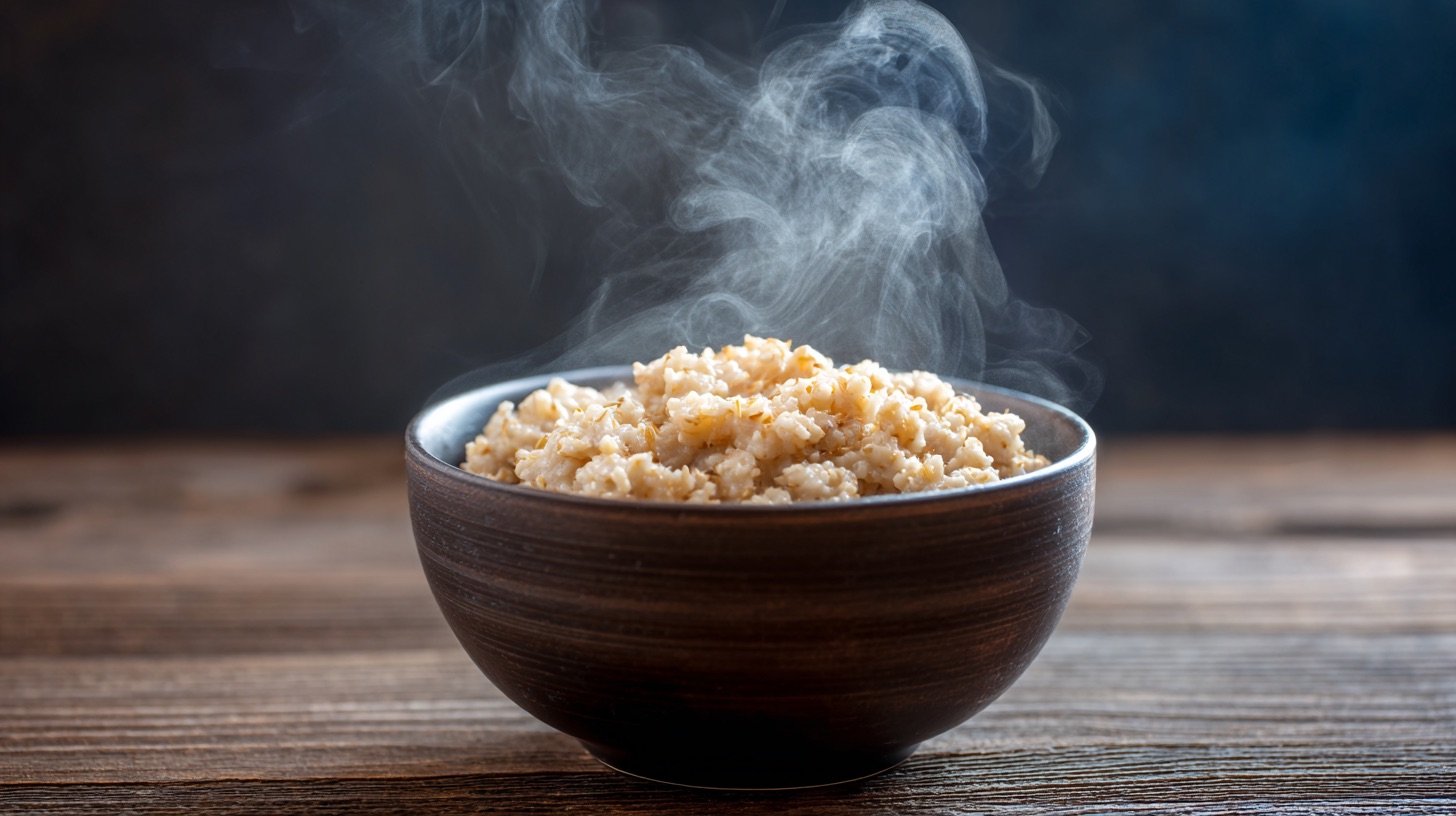
Three Rules Before You Cook Any Congee
Congee looks simple, but three details decide whether it helps or hurts your stomach.
Temperature matters more than ingredients. Let the pot cool to around 60 degrees Celsius before eating, so it feels warm but never burns your mouth. Drinking scalding-hot congee day after day irritates the esophagus and stomach lining. Ladle it out, wait three to five minutes, then eat.
Thickness should match your stomach. If your digestion is weak, go thin: one part rice to eight parts water, cooked until the grains fall apart. If the congee is your whole meal, go thicker, about one to six, and add an egg or a plate of greens on the side.
Keep a regular time. Breakfast congee works best between 7:00 and 8:30 a.m. If you eat congee for dinner, finish at least three hours before bed, or food will still be sitting in your stomach when you try to sleep.
- Choosing grains: millet is prized for soothing the stomach, plain white rice is neutral and gentle, and glutinous rice is sticky and heavy, so use less of it if your digestion is weak.
- Heat control: bring to a boil over high heat, then simmer on low for at least 35 minutes, until the grains bloom and the liquid turns thick and silky.
In traditional Chinese food therapy, known as shiliao, food is chosen the way medicine is chosen: not just for calories, but for its warming, cooling, moistening, or drying character. Congee is the classic vehicle for shiliao because it is warm, soft, and easy to adjust to the person eating it. The recipes below follow that logic, but they are everyday cooking, not prescriptions.
Five Warming Congee Recipes, With Exact Amounts
Each recipe serves two people for one meal. Together they cover the four most common autumn and winter complaints: a cold, weak stomach, bloating, dryness, and general tiredness.
1. Yam and Millet Congee: Start Here for a Cold, Bloated Stomach
You need: 80 g millet, 150 g Chinese yam (tiegun yam if you can find it), 4 pitted red dates, and 900 ml water. Wear gloves when peeling the yam; its slippery sap can make your hands itch. Cut it into 2 cm pieces.
- Rinse the millet twice. No need to soak it. Drain and set aside.
- Bring the water to a boil, add the millet, lower to a simmer, and cook for 20 minutes, stirring along the bottom twice so it does not stick.
- Add the yam and red dates and simmer for another 20 minutes, until the yam melts at a touch and the broth turns thick.
- Turn off the heat and rest for five minutes before serving. If you like it sweet, add a small spoon of honey only after the congee has cooled below 60 degrees.
This one is mild enough for an empty stomach first thing in the morning. People who feel constantly bloated often notice lunch feels less heavy after three mornings of this as breakfast.
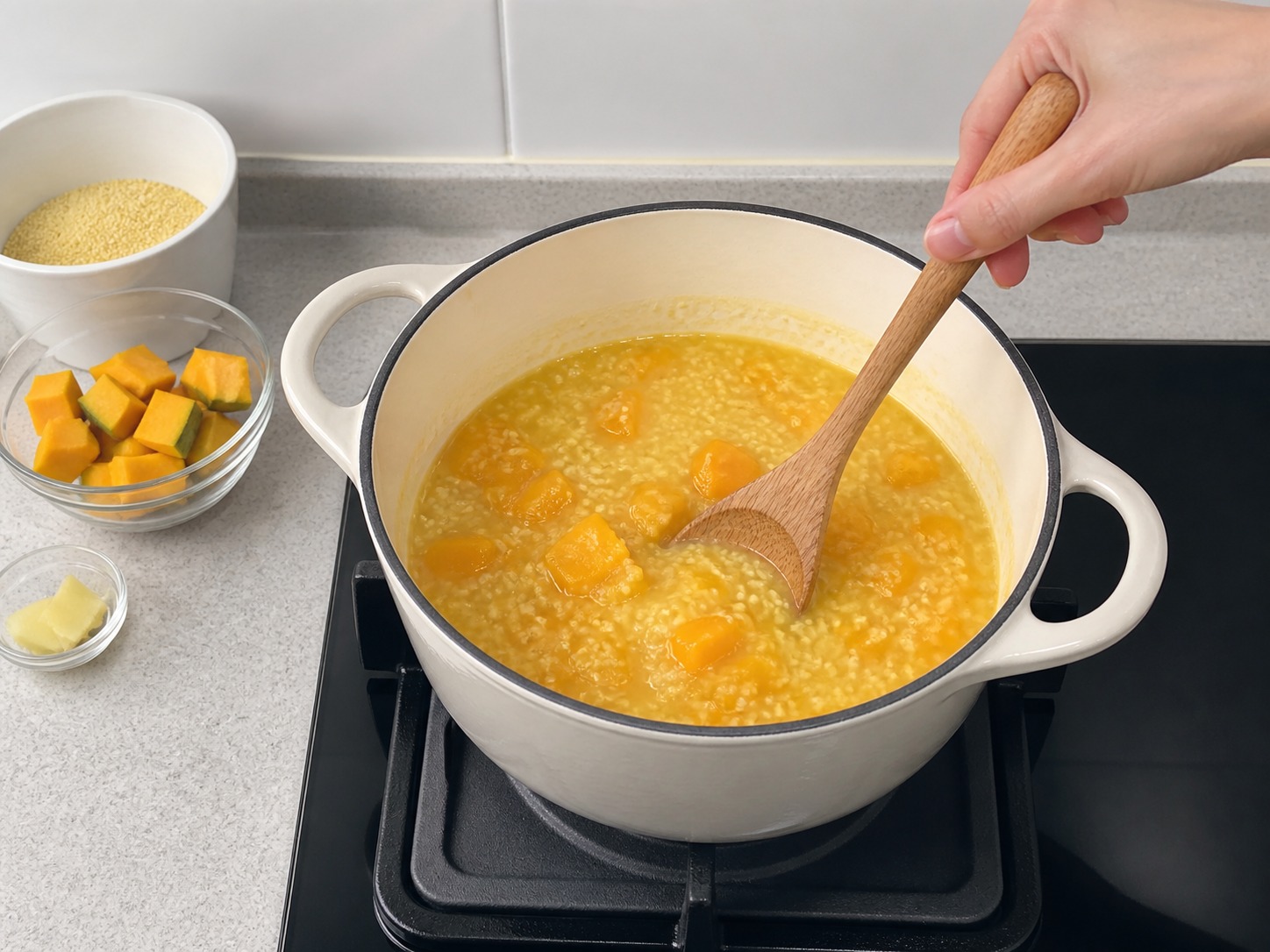
2. Pumpkin and Red Date Congee: For People Who Are Always Cold
You need: 70 g white rice, 200 g pumpkin, 5 pitted red dates, 2 slices of old ginger, and 800 ml water. Pick a hard-skinned, deep-yellow old pumpkin; it is sweet enough that you need no extra sugar.
- Peel and seed the pumpkin and cut it into 3 cm chunks. Rinse the rice.
- Add the rice and ginger to the pot, bring to a boil, then simmer for 15 minutes.
- Add the pumpkin and red dates and simmer for another 25 minutes, until the pumpkin dissolves into the congee.
- Fish out the ginger slices before serving; their warmth is already in the broth.
Pumpkin is warming in nature, red dates are traditionally used to support qi and blood, and ginger drives out cold. Drink it and your palms slowly warm up. It suits dinner for people whose hands and feet stay cold all winter. One caution: pumpkin contains natural sugars, so if your blood sugar runs high, cut the pumpkin to 120 g and replace half the rice with brown rice.
3. Lotus Seed, Lily, and Snow Fungus Congee: For Dryness and Restless Sleep
You need: 60 g white rice, 30 g dried lotus seeds, 20 g dried lily bulbs, 10 g dried snow fungus, 10 g rock sugar, and 1,000 ml water. Soak the snow fungus in cold water for two hours first, then trim off the yellow, hard root and tear it into small pieces.
- Soak the lotus seeds for one hour and the lily bulbs for 30 minutes, then drain.
- Add the rice, lotus seeds, and snow fungus to the pot, bring to a boil, then simmer for 30 minutes.
- Add the lily bulbs and simmer for another 20 minutes. Any longer and the lily bulbs dissolve completely.
- Add the rock sugar, stir until dissolved, turn off the heat, and rest for five minutes.
With the heating on and the air dry, many people get chapped lips, a dry throat, and trouble falling asleep. This recipe leans moistening and is best in the afternoon or at dinner. If you dislike bitterness, remove the green lotus hearts. And make sure the snow fungus is fully soaked and fully cooked.
4. Ginger, Red Date, and Glutinous Rice Congee: After You Catch a Chill
You need: 60 g glutinous rice, 40 g white rice, 15 g old ginger, 6 pitted red dates, 15 g brown sugar, and 800 ml water. The six-to-four ratio of glutinous to plain rice matters: all glutinous rice turns sticky and hard to digest.
- Rinse the mixed rice and soak for 30 minutes to shorten cooking time.
- Cut the ginger into fine shreds and snip the red dates in half so they release flavour faster.
- Add the rice and ginger shreds to the pot, bring to a boil, then simmer for 30 minutes.
- Add the red dates and brown sugar and simmer for 10 more minutes, until the sugar dissolves.
This is the bowl for after rain, cold wind, or that chilled feeling deep in the stomach. Fifteen grams of ginger is enough; more will taste harsh and can irritate a sensitive stomach. It is warming by design, so skip it when you have mouth ulcers or signs of excess heat.
5. Chestnut and Lean Pork Congee: A Full Meal for Tired, Run-Down Days
You need: 80 g white rice, 120 g shelled chestnuts, 100 g pork tenderloin, 50 g carrot, 5 g ginger shreds, and 900 ml water. Choose chestnuts with hard shells that do not dent when pressed; boil them for 10 minutes first and they peel much more easily.
- Cut the pork into fine shreds, toss with a small spoon of cooking wine and a pinch of salt, and marinate for 10 minutes.
- Add the rice, chestnuts, and diced carrot to the pot, bring to a boil, then simmer for 30 minutes.
- Add the pork shreds and ginger, stir to separate, and turn off the heat as soon as the pork changes colour. Overcooking makes it tough and dry.
- Season with half a spoon of salt, sprinkle spring onion, and rest for three minutes before serving.
With meat, grain, and vegetables in one bowl, this counts as a complete dinner. Chestnuts are starchy, so skip the steamed buns or noodles with this meal. If you have kidney disease, halve the portion or switch to the plain yam and millet congee instead.
Pairing Mistakes: Six Combinations to Avoid
These are the most common autumn and winter traps. Check yourself against them.
- Plain congee with pickles as a long-term breakfast: one dish of pickled mustard greens or fermented tofu easily adds more than 3 g of salt. Eaten daily, that is a real burden on blood pressure. Swap in a boiled egg or blanched spinach.
- Plain congee with fried dough sticks or fried cakes: fried food plus refined white rice means high fat and a fast blood-sugar spike, a bad mix for anyone prone to greasiness or acid reflux. A whole-wheat steamed bun or steamed sweet potato is far gentler.
- Too much sugar or honey in the bowl: two spoonfuls of white sugar add nearly 100 kilocalories to a single bowl, a real concern for people with diabetes. Taste it plain first, and add only half a spoon if it truly feels bland.
- Reheating leftover congee again and again: overnight congee kept in the fridge is fine, but reheat it only once, and bring it to a full rolling boil before eating. Repeated reheating spoils the texture and raises bacterial risk.
- Drinking it while it is still scalding: drinks above 65 degrees Celsius are classified by the World Health Organization as a possible carcinogen risk for the esophagus when consumed long term. Let it cool a little.
- An empty-stomach bowl with no protein: a week of breakfasts that are only white congee leaves you hungry before noon and invites blood-sugar swings. Add an egg to the bowl, or pair it with a glass of milk or a small portion of tofu.
Yam, chestnut, and snow fungus can each trigger individual allergies, so try a small amount the first time. If you take regular medication, do not add medicinal herbs such as astragalus, codonopsis, or angelica to your congee without asking your doctor first.
In Chinese medicine, jianpi, often translated as strengthening the spleen, does not mean the anatomical spleen alone. It refers to supporting the whole digestive system: appetite, absorption, and energy. That is why these recipes focus on warm, soft, easy-to-digest grains rather than raw or heavy foods.
A Simple Weekly Plan That Actually Sticks
Congee only helps if you eat it on a rhythm. Here is a week you can copy directly: yam and millet congee on Monday and Thursday mornings, pumpkin and red date congee for Tuesday dinner, lotus seed, lily, and snow fungus congee for Wednesday dinner, ginger and red date congee on Friday when you come home late or chilled, chestnut and lean pork congee as a Saturday lunch, and normal meals on Sunday to give your stomach a change.
After two weeks, most people notice their stomach no longer feels hollow in the morning, bloating after lunch eases, and nighttime dryness comes less often. If after two weeks you still have frequent acid reflux, bloating, diarrhea, or unexplained weight loss, see a gastroenterologist and rule out gastritis or ulcers before talking about food therapy.
The simplest first step: buy millet, yam, and red dates tonight, and cook your first pot of yam and millet congee tomorrow morning. Autumn and winter are long. Take care of your stomach now, and every meal all winter will taste better.
Quick Answers
What is the best congee for a weak stomach? Start with yam and millet congee, cooked thin at one part grain to eight parts water, eaten warm but not hot.
Can I eat congee every day? Yes, if you vary the recipe and always pair it with some protein, such as an egg, milk, or tofu, rather than eating plain white congee alone.
Is congee good for blood sugar? Plain white congee raises blood sugar quickly. Choose thicker, mixed-grain versions, add protein and vegetables, and keep sweeteners to a minimum.
How hot should congee be when I eat it? Around 60 degrees Celsius: comfortably warm, never scalding. Let it rest for a few minutes after ladling.
Can I reheat leftover congee? Once, and only to a full boil. Do not reheat the same pot repeatedly.
Disclaimer: This article is everyday dietary guidance for general reference only. It is not medical treatment and makes no promise of any therapeutic effect. People with diabetes, kidney disease, gastric ulcers, gout, or other conditions should watch the ingredient notes above and consult a doctor before adjusting portions or adding herbs. Individual responses vary. If symptoms persist, seek medical care promptly.