You wake up, turn your head toward the alarm clock, and your neck refuses to cooperate. It feels as if someone tied a rope around your neck overnight, and your shoulder is so heavy that lifting your arm takes real effort. Most people’s first instinct is to rub the sorest spot right in the middle of the shoulder. That spot is very likely Jianjing, one of the most useful acupoints for everyday shoulder and neck tension.
In traditional Chinese medicine, an acupoint is a specific point on the body where stimulation is believed to influence the flow of qi — the body’s vital energy — along pathways called meridians. Jianjing, known in English as the “Shoulder Well” point, sits on the gallbladder meridian and has been used for centuries to ease stiffness in the neck, shoulders, and upper back. You do not need to believe in meridian theory to benefit from it, though: the point sits right on top of the trapezius muscle, the large muscle that carries much of the tension from desk work, poor posture, and stress.
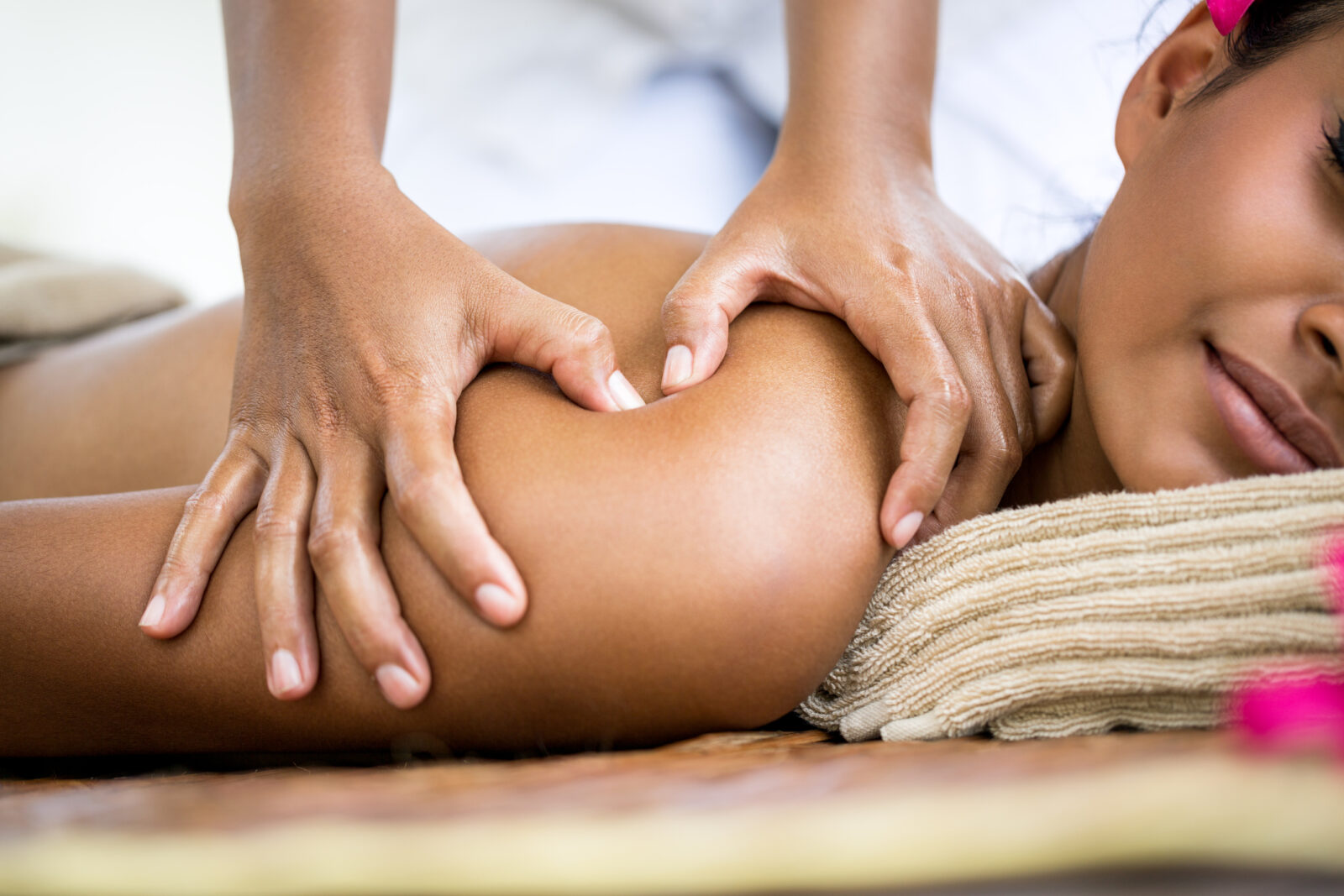
Finding Jianjing: Three Steps to the Right Spot
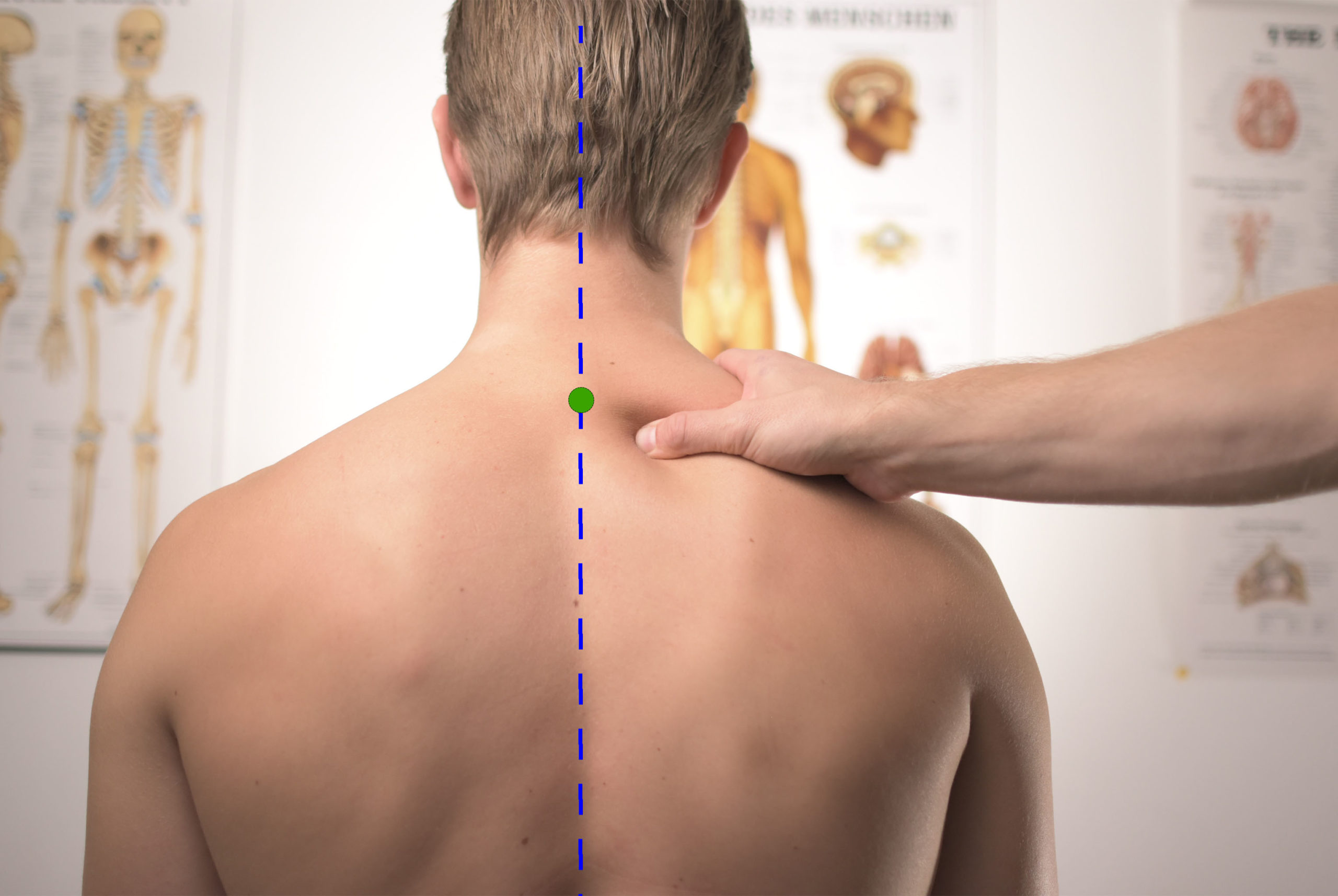
Jianjing sits at the highest point of the shoulder, roughly at the midpoint of the line between the base of the neck and the tip of the shoulder. You do not need to memorize any classical verse to find it. Follow these three steps, and most people get it right on the first try.
First, lower your head slightly and feel for the most prominent bone at the back of your neck — that is the spinous process of the seventh cervical vertebra. Second, run your fingers sideways from that bone toward the outermost bony tip of the shoulder, the acromion. Third, find the midpoint of that line and press down: you should feel a full, slightly tender mound of muscle that gives a distinct sore, heavy sensation when pressed. There is one on each shoulder, and comparing the two sides makes it easier to confirm you have found the right place.
Common Mistakes When Locating It
One frequent error is pressing above the collarbone or along the side of the neck. A point above the collarbone sits too far forward and tends to feel sharp rather than deeply sore; the muscles on the side of the neck sit too high, and pressing them pulls at the head. The real Jianjing point is directly on top of the shoulder — when your arm hangs naturally at your side, it sits on the most rounded, highest part of the shoulder. If you cannot comfortably reach behind yourself, ask a family member to help locate it, or mark the spot on your shoulder in front of a mirror first.
Body shape changes the feel of the point slightly. Slimmer people can usually feel the bony landmarks clearly, so the midpoint is easy to find. People with thicker shoulder muscles should first relax the shoulder and let the arm hang loose before searching; if you tense up while hunting for the point, you can easily mistake a hard knot in the trapezius for the acupoint itself. The test is not pain but sensation: a correct press produces a clear feeling of soreness, fullness, and heaviness, like pressing on a taut rubber band.
How to Massage It: Pressure, Rhythm, and Three Techniques
Jianjing responds best to steady pressing and kneading, not to sudden pinching or pounding. Use about 60 to 70 percent of your maximum strength — enough that the soreness is obvious and tolerable, but not so much that the area hurts more afterward. Coordinate with your breathing: exhale slowly as you press down, inhale as you release. One press and release counts as one repetition.
Thumb Pressure: The Everyday Method
Place the thumb of the same-side or opposite hand on the point, with the other four fingers gripping the shoulder to stabilize it. Press straight down for 3 to 5 seconds, release for 1 to 2 seconds, and repeat 10 to 15 times for one set. Do 1 to 2 sets per day, resting about 30 seconds between sets. Afterward, your shoulder should feel looser and warmer — not bruised, and not sharply painful.
The Pinch-and-Knead Method: For Thicker Muscles
If your shoulder muscles are thick, or if pressing with one hand feels awkward, try pinching instead. Grasp the muscle around Jianjing between your thumb and your index and middle fingers, lift gently, and knead slowly, as if working a piece of dough, for 1 to 2 minutes. This method is gentler and suits people who are sensitive to pressure or trying the point for the first time.
Palm-Heel Circling: The Low-Effort Option
When your thumb gets tired, switch to the heel of your palm. Place it over Jianjing and make small circles around the point, about one circle per second, for 2 to 3 minutes. Because the palm spreads the pressure over a wider area, it rarely causes local bruising, which makes it a convenient choice during a lunch break at the office.
Whichever technique you choose, keep three rules in mind. First, never press on broken skin or an area that is red, swollen, hot, or painful to the touch. Second, mild redness that fades within half an hour is normal; if the area still hurts a day later, you pressed too hard. Third, do not work the same spot continuously for more than 5 minutes — muscles need rest too, and overstimulation can leave the shoulder stiffer than before.
Stiff Neck and Desk-Related Shoulder Pain: What to Do Differently
A stiff neck, often called a “crick in the neck,” usually announces itself in the morning: you can turn your head one way but not the other, and the shoulder on the same side feels tight along with it. Before you start rubbing broadly, figure out where the pain is centered. If the worst pain is on the side of the neck, Jianjing is only a supporting player. If the top of the shoulder feels heavy and lifting your arm is an effort, Jianjing is the main target.
On the day of a stiff neck, try this sequence. First, apply a warm towel at around 40 degrees Celsius (about 104 degrees Fahrenheit) to the neck and shoulders for 10 minutes and let the muscles soften. Then press Jianjing lightly with your thumb — 2 to 3 seconds per press, 8 to 10 repetitions — using about 20 percent less force than usual. The goal is to release tension, not to press the pain away. Finish by moving your neck slowly: nod forward and back, and turn gently from side to side, 5 times each, keeping every movement within a range that does not worsen the pain.
For people who sit at a desk all day, shoulder pain rarely appears overnight. After two hours in front of a computer, the shoulders creep upward without you noticing, and the trapezius stays contracted for hours. Hard knots form most easily right around Jianjing. A fixed daily routine works better than occasional rescue attempts: around 3 p.m., stand up, leave your desk, circle Jianjing with your palm heel for 2 minutes, then shrug your shoulders up and let them drop completely 5 times. After a week of this, many people notice the heavy afternoon feeling in their shoulders easing considerably.
There is one more scenario that is easy to overlook: catching a chill. Sleeping with the window open in autumn and winter, or sitting under a direct air-conditioning vent in summer, can leave the shoulders tight and heavy the next morning. In this case, always warm up first — massage after a warm compress works far better than massage alone. Press without warming, and the cold air can undo the relaxation almost as soon as you finish.
When Not to Press: Four Red Lines to Remember
Jianjing is a relatively strong point, so four situations call for extra caution. First, pregnant women should avoid strong stimulation of Jianjing. This is a long-standing traditional contraindication and a clear precaution in modern massage practice; if you are pregnant and your neck and shoulders ache, consult your doctor and choose gentler relaxation methods instead. Second, never press if the shoulder has an injury, fracture, skin infection, or local redness, swelling, and heat — pressing can make the damage worse.
Third, if a cervical spine problem is flaring up acutely, or if your arm already feels numb or weak, do not try to press through it yourself. See a doctor first to identify the cause. Fourth, people with serious heart disease, poorly controlled high blood pressure, clotting disorders, or those taking anticoagulant medication should ask a doctor before pressing this point. The area around Jianjing is rich in blood vessels and nerves, and excessive force or duration carries unnecessary risk. Older adults and people with osteoporosis should likewise keep the pressure light and favor kneading over firm thumb pressure.
Stop immediately and seek medical advice if any of these occur during or after massage: pain clearly worse than before you started, numbness in the arm, dizziness or nausea, rapid local swelling, or a bruise that keeps spreading. These signals mean the stimulation exceeded what your body could handle, or that the root of the pain is not simple muscle tension.
Making Jianjing Massage a Three-Minute Daily Habit
The value of Jianjing is not in how hard you press, but in finding it accurately, pressing steadily, and doing it consistently. Remember three numbers: press for 3 to 5 seconds at a time, spend 3 to 5 minutes per session, and do 1 to 2 sessions a day. Combined with a warm compress and slow neck movements, this is usually enough to ease most desk-related shoulder and neck tension. On a stiff-neck day, go lighter, move slower, and warm up first. On an ordinary workday, a fixed afternoon break beats waiting until the pain becomes unbearable.
You can start tonight: before bed, locate the Jianjing point on both shoulders and press each one gently 10 times to learn what the sore, heavy sensation feels like. Then, during tomorrow’s lunch break, try a set of palm-heel circling. Once this small movement joins your daily rhythm, your shoulders may loosen up sooner than you expect.
Quick Answers
Where exactly is the Jianjing point? At the highest point of your shoulder, at the midpoint of the line between the prominent bone at the back of your neck and the bony tip of your shoulder. Pressing it should feel sore and heavy, not sharp.
How hard should I press? About 60 to 70 percent of your maximum strength — a clear, tolerable soreness. The shoulder should feel looser and warmer afterward, not bruised or more painful.
How long and how often? Press 3 to 5 seconds per repetition, 10 to 15 repetitions per set, 3 to 5 minutes per session, 1 to 2 sessions a day. Do not work the same spot for more than 5 minutes continuously.
Can I massage Jianjing if I woke up with a stiff neck? Yes, but gently: warm compress first, then lighter thumb pressure (2 to 3 seconds per press, 8 to 10 times), followed by slow, small neck movements that do not worsen the pain.
Who should avoid strong stimulation of Jianjing? Pregnant women, anyone with a shoulder injury, fracture, skin infection, or local swelling and heat, and anyone with acute cervical spine symptoms such as arm numbness or weakness. People with serious heart disease, poorly controlled hypertension, clotting disorders, or those on anticoagulants should consult a doctor first.
When should I see a doctor instead of massaging? If pain lasts more than 3 days, keeps getting worse, or comes with arm numbness or weakness, dizziness, or rapidly spreading swelling or bruising.
Disclaimer and safety note: This article is educational information about traditional Chinese wellness practices and is not medical advice. It does not promise any therapeutic effect. Keep pressure comfortable, never press on broken skin or an inflamed, infected, or fractured area, and avoid strong stimulation of the Jianjing point during pregnancy. If pain persists for more than 3 days, keeps worsening, or is accompanied by numbness, weakness, dizziness, or swelling, stop self-massage and seek professional medical care promptly rather than delaying treatment.