You have been on your feet all day — teaching a class, working a retail shift, or running errands across town — and by evening your calves feel heavy, like they are filled with lead. Then, in the middle of the night, a cramp locks your calf into a hard knot and wakes you up. Most people rub the middle of the calf and wonder why it does not help. The spot they are looking for is lower down, in the dip between the two bulges of the calf muscle. Find it, press it for three minutes, and that tight, heavy feeling starts to let go. That spot is Chengshan, BL57.
Where Is Chengshan (BL57)? Find It in Three Steps
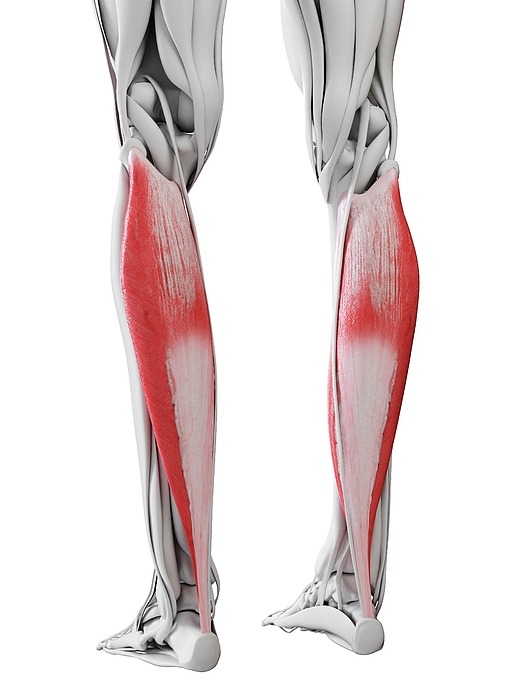
Chengshan — literally “bearing the mountain” — sits on the Bladder meridian of the foot-taiyang channel. In traditional Chinese medicine, a meridian is a pathway along which qi (vital energy) is said to flow through the body; the Bladder meridian runs down the entire back of the body, from the head to the little toe, passing through the back of the calf. The point lies on the midline of the back of the calf, in the hollow between the two heads of the gastrocnemius muscle — the big muscle that forms the calf. In other words, it is not on the fullest part of the calf, but just below it, in the groove where the two muscle bellies separate.
Follow these three steps and you will find it on the first try:
- Sit down and stretch one leg out straight, then point your toes and gently tense the foot. The calf will bulge, and a clear vertical groove will appear down its middle.
- With the thumb of the other hand, trace down the midline of the back of the calf. When you reach a hollow where the two muscle bellies part and your thumb sinks in slightly, you have found Chengshan.
- Relax the toes and press once more to confirm: the hollow becomes shallower when the muscle relaxes, but the spot is still there, and light pressure still brings on a dull, achy sensation.
As a cross-check, measure down from the crease behind the knee to roughly the lower half of the calf. Do not worry about exact centimeters — the hollow between the two muscle bellies is the landmark. Feel both legs and compare; finding the spot on one side makes the other side much easier to locate.
What Is Chengshan Traditionally Used For?
In traditional Chinese medicine, the name Chengshan evokes the image of the calves bearing and supporting the weight of the body, like a mountain carrying its load. Classical texts record the point mainly for problems of the lower back and legs, and later acupuncture and tuina (Chinese therapeutic massage) practice kept it as a go-to point for calf complaints.
In everyday self-care, people usually turn to Chengshan for a few familiar kinds of discomfort:
- Calf cramps: a cramp that strikes in the middle of the night and jolts you awake, or calves that feel tight and stiff after exercise. Pressing Chengshan is one of the first things many people try.
- Heavy, achy calves after a long day on your feet: a full day behind a counter, on a delivery route, or sitting eight hours at a desk can leave the calves feeling leaden, and the area around Chengshan often feels especially tender when pressed.
- Lower back and leg soreness: when a sore lower back comes with tightness down the back of the legs, Chengshan is often mentioned together with Weizhong (BL40), the point behind the knee — both sit on the Bladder meridian and are traditionally linked to the waist and legs.
- Hemorrhoids and constipation: classical texts also list Chengshan for hemorrhoids and constipation, which relates to the route the Bladder meridian is said to follow through the body.
It is important to be clear about what this means: these are categories from traditional theory, not promises of modern medical treatment. Pressing an acupoint is best understood as a daily relaxation technique — a way to help local muscles loosen up and ease temporary soreness. It cannot replace proper examination and treatment for a specific condition. If cramps keep coming back or pain persists, the first step is to find out why.
How to Press It: Pressure, Duration, and Steps
There is nothing fancy about pressing Chengshan. Three things matter: the right spot, steady pressure, and enough time. Too light and it feels like a tickle; too hard and you can bruise the calf.
A full session takes about six to ten minutes. Work through the steps in this order:
- Warm up for one minute: rub your hands together until they are warm, or lay a warm towel over the calf for a minute so the muscle softens first. If you have just finished exercising and the muscle is still warm, skip the towel and go straight to the next step.
- Press to find the achy feeling: place the pad of your thumb on Chengshan and increase the pressure slowly until you feel a dull ache, a sense of fullness, or a faint tingling — then stop there. Do not keep pushing harder. That achy sensation is what practitioners call the deqi feeling (the sense of the point “responding”), and it is the most reliable sign that you are on the right spot.
- Rub in small circles: keep the pressure steady and make small circles centered on the point, about one circle per second. Do not slide your finger across the skin; move the tissue underneath with it.
- Three to five minutes per side: work one leg for three to five minutes. When the achy feeling starts to ease, switch to the other leg. Once both sides are done, give the calves a few light pats, stand up, and walk a few steps to feel the difference.
- Finish with a gentle stroke: with both hands, lightly stroke the calf from the ankle toward the knee three to five times to help the relaxed muscle settle.
Once or twice a day is a good rhythm — for example, once after getting up in the morning and once before bed. If a cramp has just struck, you can press the point right away, but wait for the worst few seconds to pass and the muscle to soften slightly first; rubbing hard through peak pain only makes it worse. Do not do intense exercise or splash cold water on the calf right after a session.
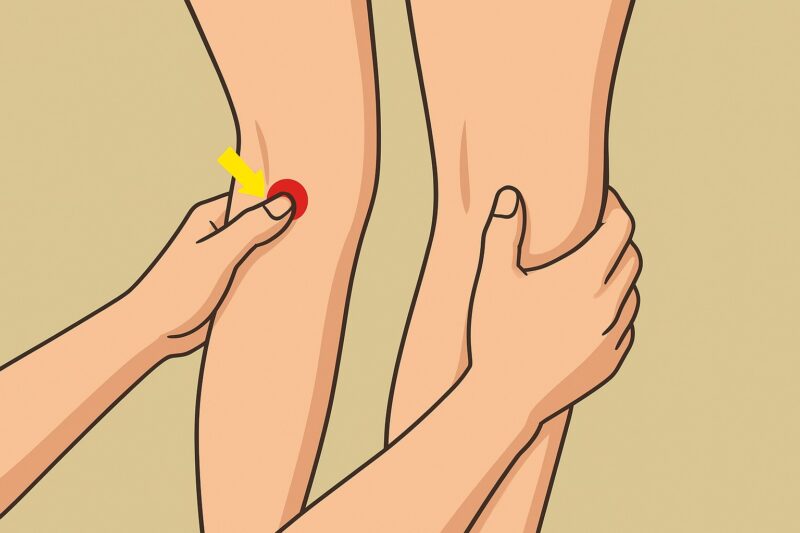
There is a simple test for the right amount of pressure: after one or two minutes of pressing, the achy sensation should stay within a range you can tolerate while still talking normally. If you want to pull away from the pain, you are pressing too hard. Better to press a little lighter and rub a little longer than to force it once with heavy pressure.
Who Benefits, and Who Should Hold Off
Pressing Chengshan suits some people more than others. It is not something everyone needs to do every day. These groups tend to find it most helpful:
- People who stand or sit all day: teachers, shop assistants, nurses, drivers, programmers — anyone whose calves feel heavy and whose ankles feel swollen by evening will often find a nightly session a pleasant way to unwind.
- Exercise enthusiasts: after running, hiking, or playing sports, the calves feel tight and the next day brings soreness. Stretching after exercise, followed by pressing Chengshan, often makes recovery feel noticeably easier.
- People prone to calf cramps: cramps at night, cramps while swimming, or cramps after getting cold. Regular pressing, combined with keeping warm and staying hydrated, can help reduce the tension that comes with an attack.
- Older adults: legs that feel heavy and tire easily on walks. Pressing the calves is a gentle form of daily self-care — just use lighter pressure and shorten each side to two or three minutes.
But in a few situations, hold off — or check with a doctor first:
- Broken, red, swollen, or ulcerated skin on the calf: pressing will irritate the wound and raise the risk of infection. Wait until the skin has fully healed.
- Severe varicose veins in the lower leg: if you can see clearly twisted clusters of veins on the calf surface, or there is already skin discoloration or ulceration, firm pressing may make things worse.
- Pregnancy: calf cramps are very common during pregnancy, but the pressure and frequency of acupoint stimulation need extra caution — ask your obstetrician first.
- Diabetic foot, blocked arteries in the legs, or blood-thinning medication: circulation and sensation in the lower legs may already be impaired in these cases, and pressing hard on your own carries risks. Always ask a doctor first.
- Sudden calf swelling, heat, and pain with no clear cause: get it checked by a doctor before trying to press it away — self-massage can mask symptoms that need attention.
If pressing makes the calf hurt sharply, or if large bruises appear the next day, the technique or the pressure is off. A small bruise that fades in two or three days is nothing to worry about, but if bruising keeps happening, stop and check whether you are pressing slightly off the point or simply too hard.
A Seven-Day Practice to Make It Stick
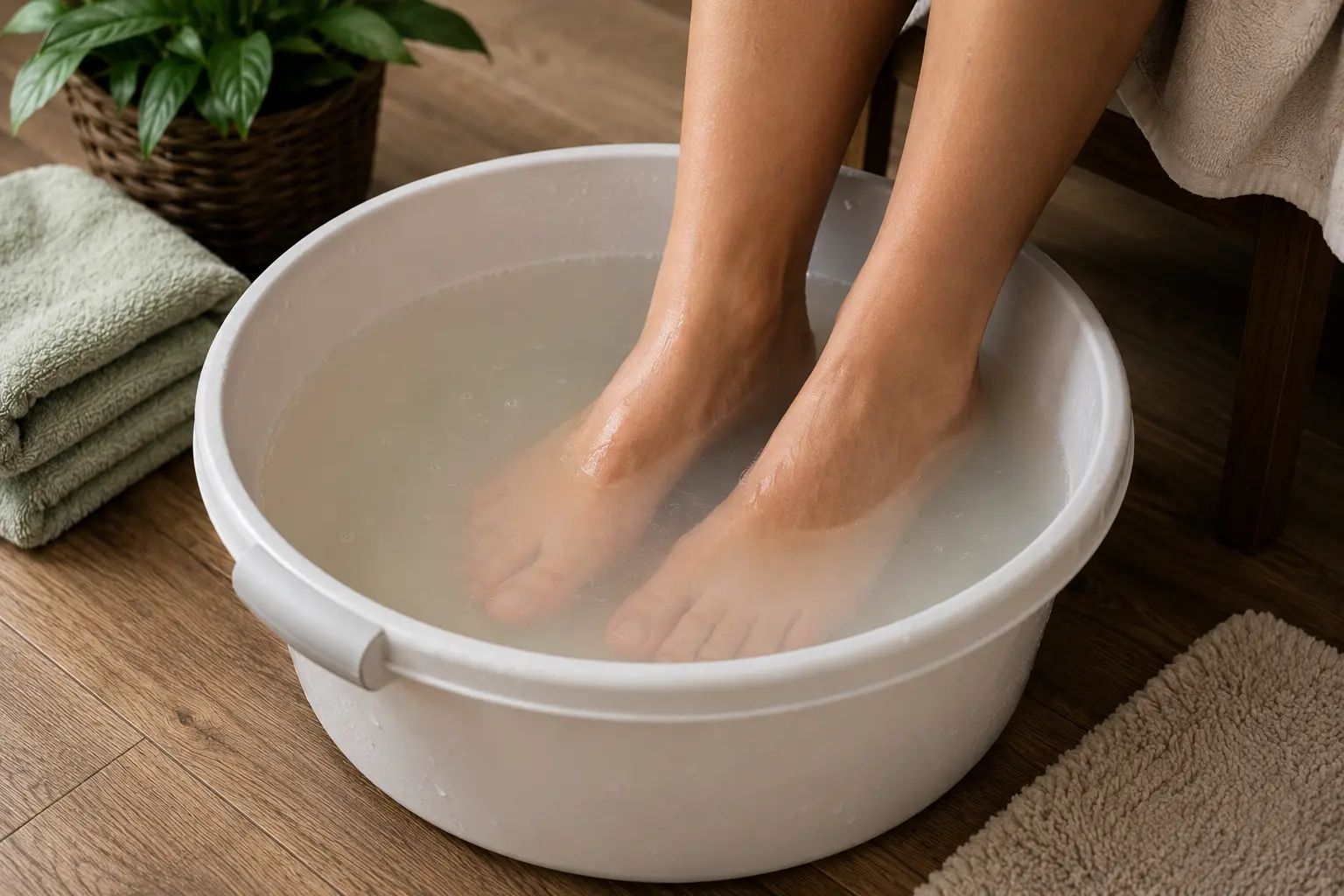
The value of Chengshan is not in one hard session. It is in finding the spot accurately, pressing steadily, and keeping it up. Set yourself a small seven-day practice: every night before bed, soak your feet in warm water for five minutes, dry them, then press both Chengshan points as described above — three minutes per side — and finish with a few light strokes up the calf. After seven days, you will have a clear sense of how your calves feel.
Four mistakes are easy to make, so note them in advance. First, pressing only one side and forgetting the other — do both sides so the work is balanced. Second, going straight for heavy pressure to save time — acupressure works through a sustained, tolerable ache, not a moment of sharp pain. Third, giving up after one session because nothing changed — three days on, two days off will not build a habit. And fourth, treating pressing as a cure-all — if cramps keep recurring or pain lasts more than a week, do not tough it out; see a doctor.
You can start tonight: find Chengshan with the three steps, confirm the achy feeling with a light thumb press, then rub in small circles for three minutes. It is a small action — the point is doing it every day. If you notice unusual pain, changes in the skin, or worsening discomfort during the practice, stop, rest, and observe; seek medical care promptly if needed.
Quick Answers
How do I know I found the right spot? Point your toes to tense the calf, find the hollow where the two muscle bellies part, then press — a dull, achy, slightly tingling feeling means you are on it. No ache usually means you are a little off; move the thumb a few millimeters and try again.
How hard should I press? Hard enough to feel a tolerable ache while still talking normally. If you want to pull away, it is too much. Lighter and longer beats harder and shorter.
How long and how often? Three to five minutes per leg, once or twice a day. A seven-night routine — warm foot soak, then three minutes per side — is an easy way to build the habit.
Can I press it during a cramp? Yes, but wait for the worst few seconds to pass and the muscle to soften slightly first. Rubbing hard through peak pain only makes it worse.
When should I see a doctor instead? If the calf suddenly swells, feels hot, or hurts for no clear reason; if cramps keep coming back; or if pain lasts more than a week. The same applies if you are pregnant, have diabetes or circulation problems, or take blood-thinning medication — ask a doctor before pressing.
Does pressing Chengshan cure anything? No. It is a traditional self-care technique for relaxing the calf and easing temporary soreness, not a treatment for any disease.
Disclaimer: This article is for general information only and is not a substitute for medical advice. It cannot be used to diagnose or treat any condition. The traditional uses described here come from Chinese medicine literature and are not a promise of any therapeutic effect. Acupressure is a form of everyday self-care; it does not replace medication or proper medical treatment. If you have a medical condition, are taking medication, are pregnant, or have any special health circumstances, please consult a doctor first. Seek medical care promptly if pain, swelling, or any other symptom persists or worsens.