Three months into your Tai Chi practice, you can do Grasp the Sparrow’s Tail without thinking. Then your teacher calls out “Ban Lan Chui” — Parry, Block, Punch — and suddenly your punch looks like you are shoving a door open. The problem is almost never your arm strength. It is the half-step your feet never took.
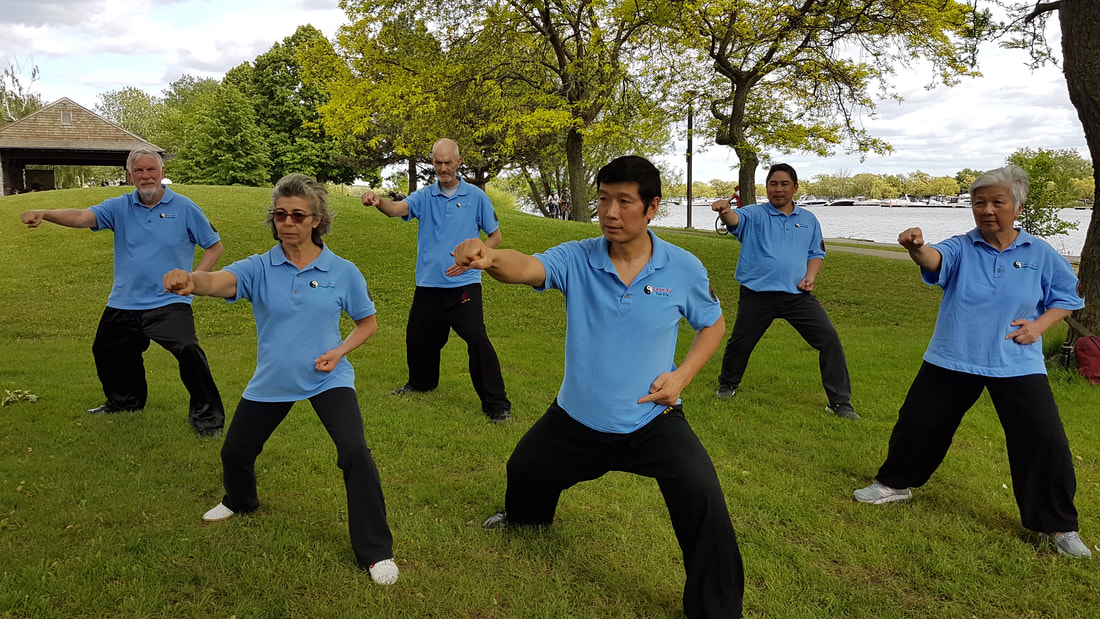
Ban Lan Chui (搬拦捶) is one of the most practical single movements in Tai Chi: a short sequence that teaches you to redirect an incoming force, clear a path, and strike — all in about four to five seconds. In Chinese, the name breaks down into three verbs: ban (搬, to deflect aside), lan (拦, to block), and chui (捶, to punch). Each verb is one beat of the same movement. This guide walks through the full sequence, the footwork and hand shapes that make it work, how power travels from the ground to the fist, and the five mistakes almost every beginner makes.
Step-by-Step Technique
Ban Lan Chui flows as one continuous motion — ban, lan, chui — with no pause in between. When it is smooth, the whole sequence takes roughly 4 to 5 seconds. When you are learning it, break it into five beats and practice each one separately before joining them together.
- Step out and deflect (ban): Step your left foot half a step forward and to the left, shifting your weight onto the left leg first. Your right palm sweeps across from your left chest toward the right, palm facing down, fingers pointing right — as if you were gently pushing a half-open door aside. The palm leads; the shoulder stays down.
- Turn the waist and block (lan): Turn your waist about 30 degrees to the left. Your left palm threads out from under your right arm and blocks toward the front-left, palm facing outward. Keep the left palm below shoulder height, elbow slightly bent, as if you were using the back of your hand to fend off an arm reaching toward you.
- Draw the fist back (蓄势): Your right palm returns to your waist and closes into a fist, knuckles facing up, resting beside your right hip. As you draw it back, drop your shoulders and relax — do not shrug, and do not clench the fist hard. Leave a little space inside the grip, as if you were holding a raw egg without breaking it.
- Step into the bow stance and punch (chui): Your right foot steps forward half a step into a right bow stance, about 70 percent of your weight shifting forward. The right fist drives forward over the left palm, knuckles up, fist facing the target straight ahead. Stop at about 70 percent of full extension — never lock the arm straight.
- Settle and reset: Hold the punch for half a second, check that your weight is on the front leg and your front knee tracks over your toes, then slowly draw the right foot back and return your weight to center.
When you are first learning, split the sequence apart: 20 deflecting palms, then 20 blocking palms, then join them and add the punch. Fifteen minutes a day is enough — most people have the order memorized within a week.
Footwork and Hand Shapes
The stance behind Ban Lan Chui is the right bow stance (弓步, gong bu). Your feet sit about two and a half foot-lengths apart, front to back. The front foot points forward, angled outward about 15 degrees; the back foot turns out about 45 degrees. The front knee bends but stays behind the toes, the back leg presses straight, and the back heel never leaves the ground. Your weight splits roughly 70 percent front, 30 percent back. Keep your spine upright, as if a thread were pulling gently upward from the crown of your head.
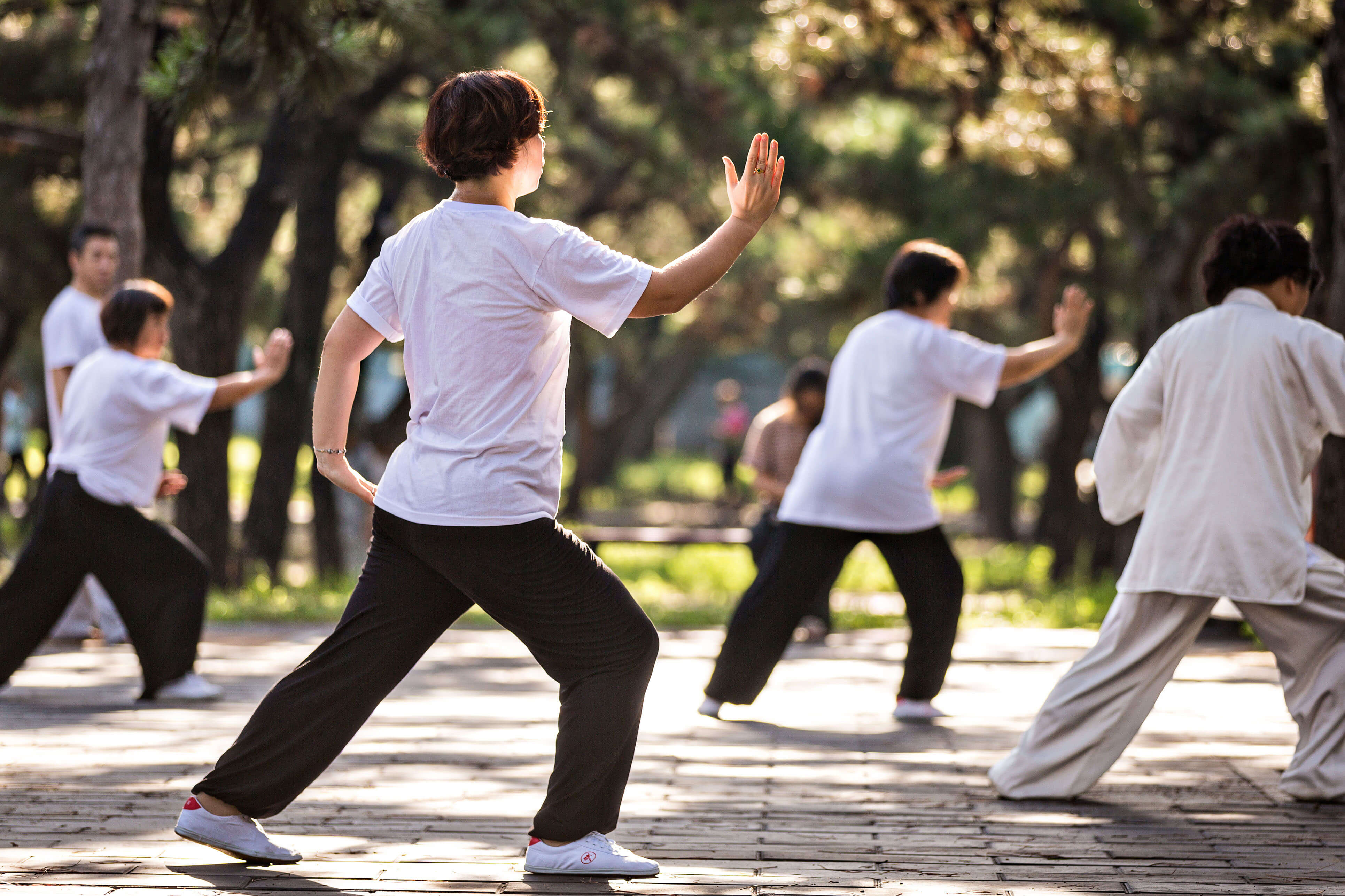
Two footwork mistakes show up again and again. First, the step is too short — the feet end up only one and a half foot-lengths apart, so the weight cannot transfer forward and the punch has to come from the arm alone. Second, the back heel lifts off the ground, leaving you punching on tiptoe with no root at all. Fix: draw two chalk lines on the floor, two and a half foot-lengths apart, and practice 10 reps a day along them — a foot off the line is instantly visible.
The three hand shapes each have a distinct form, and confusing them blurs the whole movement. The deflecting hand is an open palm: fingers naturally extended and together, palm facing down. The blocking hand is also an open palm, but with the palm facing outward and the fingers pointing up. The punch is a fist: four fingers curled in, thumb pressing on the second joint of the middle finger, knuckles flat. Grip at about 70 percent — too tight stiffens the arm, too loose loses structure.
Hands and feet must arrive together. The left foot moves first for the deflecting palm; the waist turns first for the blocking palm; the right foot steps in as the punch goes out. Practice in front of a mirror and watch whether your front knee and your punching hand land at the same moment — if they are half a beat apart, start again.
Power and Breathing
The power in Ban Lan Chui starts at the floor. Pressing the back leg into the ground sends force up through the leg to the waist; the waist turns, and the force travels through the shoulder to the fist. The waist is the axle — the arms are only the end of the chain. Punch with the arm alone and only about 30 percent of your strength reaches the target.
Breathing follows the rhythm of the strike. Inhale during the deflecting and blocking palms, letting the breath settle low in the abdomen — in traditional Chinese practice this is called sinking the breath to the dantian (丹田), the area just below the navel regarded as the body’s center of energy. Exhale in the instant the punch goes out, letting the air slip gently through your nose or mouth. Never hold your breath. As you exhale, the abdomen draws in slightly, as if you were wringing out a towel — the twist is what sends the power out.
There is a simple self-test for whether your power is coming from the right place. Stand about one fist’s distance from a tree trunk and punch, stopping 3 centimeters short of the bark — never actually hit the tree. If you finish leaning forward or wobbling, the force came from the arm. If you finish standing solidly in place, rooted to the ground, the power came up from your feet. Run this check 5 times a day; it teaches more than 50 blind repetitions.
Build your volume gradually. Start with 8 to 10 repetitions a day — doing the movement correctly matters far more than doing it often. After two weeks, build up to 20 a day in two sets, resting 1 minute between sets. Mild soreness afterward is normal; if it has not eased by the next day, cut the count in half.
Common Mistakes
- Mistake 1: Leaning back as you punch. Many people are afraid of punching into empty air, so they keep their weight on the back leg and lean the torso backward — the fist never reaches its target. Fix: shift 70 percent of your weight onto the front leg before the punch. Imagine a thread from your chest pulling the fist forward — let your body follow it.
- Mistake 2: Blocking too high. The left palm rises to eye level or even above the head, the shoulder hikes up, and the armpit opens wide. Fix: keep the blocking palm between chest and chin height, sink the elbow, and leave about a fist’s width of space under the armpit. The shoulder stays relaxed and down.
- Mistake 3: The front knee collapsing inward. The front knee caves toward the center while the toes point outward, so the knee and the toes no longer line up — over time, this is what makes knees hurt. Fix: glance down each time you step in — the knee should point toward the second toe. Slightly past the toes is fine; collapsing inward is not.
- Mistake 4: Locking the punching arm straight. The fist travels to its farthest point and the elbow locks fully straight, even hyperextending, so the arm sticks out like a rod. Fix: always keep a little in reserve. Hold the elbow slightly bent, stop at 70 percent of your reach, and let the elbow sink naturally as you draw the fist back.
- Mistake 5: Breathing out of sync with the movement. The whole sequence is done on one held breath, followed by a big gasp — or worse, chatting while punching. Fix: slow down. One movement, one breath: inhale on the deflect and block, exhale on the punch. Only speed up once the breathing is automatic; if the breath falls apart, stop and start over.
Do not try to fix all five at once. Focus on one per week — this week the knee, next week the blocking palm. Within three months the movement will look noticeably cleaner. Ask a partner to film a 30-second clip and check it against these five points; video is more honest than a mirror.
Quick Answers
How long does one repetition take? About 4 to 5 seconds once smooth; beginners can take 8 to 10 seconds per repetition while learning the order.
How many repetitions a day? Start with 8 to 10, done well. After two weeks, build to 20 a day in two sets of 10 with a 1-minute rest between sets.
Which leg carries the weight? Roughly 70 percent on the front leg in the final bow stance, 30 percent on the back leg. The back heel stays on the ground the whole time.
How high should the blocking palm be? Between chest and chin height, with the elbow sunk and about a fist’s width of space under the armpit. Never above the shoulders.
Can I practice this indoors? Yes — you need about two square meters of clear floor space. Two chalk lines on the floor, two and a half foot-lengths apart, will keep your footwork honest.
A One-Week Practice Plan
Ban Lan Chui trains three things working together: a steady bow stance, clear deflecting and blocking hands, and a waist that turns smoothly to deliver power. Here is a practical week: Monday to Wednesday, 15 minutes a day — 20 repetitions each of the deflecting palm, the blocking palm, and the punch, done separately. Thursday and Friday, join the full sequence together, 15 repetitions a day, finishing each session with 5 rounds of the tree test. On Saturday, ask a partner to film you and check the footage against the five common mistakes. Take Sunday off to let your muscles recover — and notice which part felt smoothest this week and which part stuck. Next week, practice the part that stuck.
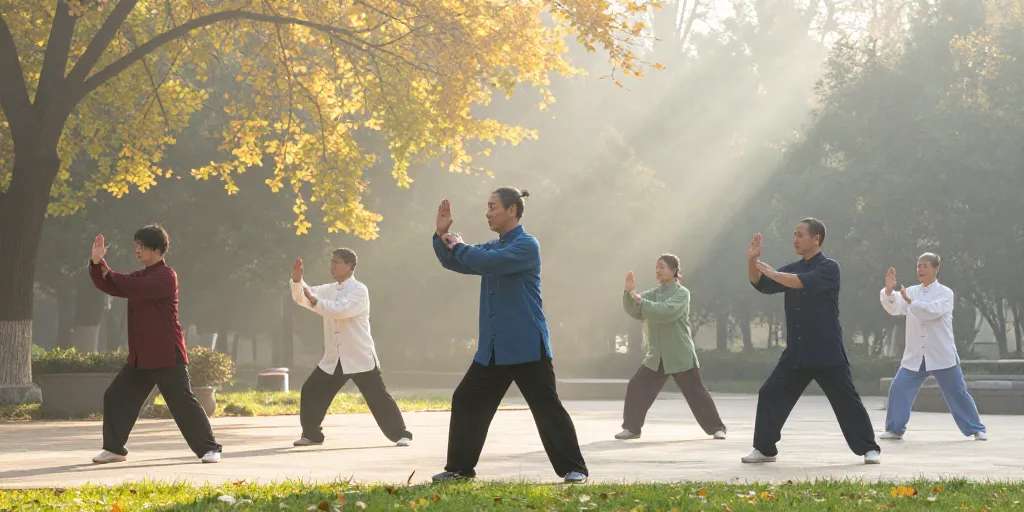
Keep it up for a month — 15 minutes a day — and Ban Lan Chui will stop being a sequence you recite and start being something your body knows. Once it feels natural, try it inside the full Tai Chi form and see whether the footwork and power hold up as the form flows around it.
Safety note: Practice gradually and within your limits. Adjust the depth of your bow stance and the number of repetitions to your own fitness — do not force a low stance or a high volume. If you have a history of knee, lower back, or shoulder injury, or any medical condition or joint problem, consult a doctor before you start practicing. Stop immediately and rest if you feel joint pain, dizziness, or chest tightness. Tai Chi is a traditional form of exercise; this article is cultural and instructional in nature and makes no promises about health benefits or therapeutic effects.