At 7 a.m. on the winter solstice in Beijing, the sky is still dark. By 5 p.m., the streetlights are already on. The whole day gets only about 9 hours and 20 minutes of daylight — the shortest day of the year. If your hands and feet have felt colder than usual lately, if you sleep and still feel tired, or if your appetite has quietly grown, you are not imagining it. Your body is responding to the solstice.

Dongzhi, the Winter Solstice, is one of the 24 solar terms in the traditional Chinese calendar — a farming calendar that has guided daily life for over 2,000 years. It falls between December 21 and 23 each year (in 2026, it is December 21). On this day the sun shines directly on the Tropic of Capricorn, and the Northern Hemisphere has its longest night and shortest day. The old saying goes, “On the winter solstice, yang is born” — the coldest days are still ahead, but the turn toward longer days has already begun. Wellness in this season is about matching that turn: guard against the cold in front of you, and do not overdo the warming up.
What the Weather Is Really Like Around Dongzhi
The coldest stretch of winter starts counting from the solstice. Folk tradition calls it shujiu, “counting the nines”: nine-day periods counted from Dongzhi, one nine, two nines, all the way to nine nines (81 days), which brings you to spring. The rhyme goes, “During the first two nines, you can’t even take your hands out of your pockets; during the third and fourth nines, you can walk on ice.” The third nine — roughly ten days in — is usually the coldest stretch of the year.
Cold fronts arrive more often in this window. In most of northern China, average temperatures drop below 0°C. The North China Plain often sees -8°C to -5°C at night, and parts of the northeast can fall below -20°C. The south is not below freezing, but the damp cold is no easier on the body: in the Jiangnan region (the lower Yangtze delta), temperatures around the solstice average 5°C to 8°C with humidity often above 70%, and that wet chill goes straight through a thin coat.
After the solstice, daylight grows by about one minute a day. It is a slow turn, but it is a turn — and your routine should turn with it. The point of winter wellness is not to fight the season but to move with it: keep warm, eat to support the body, and keep a steady, modest amount of movement.
Eating for the Season: Warming Foods, Done Right
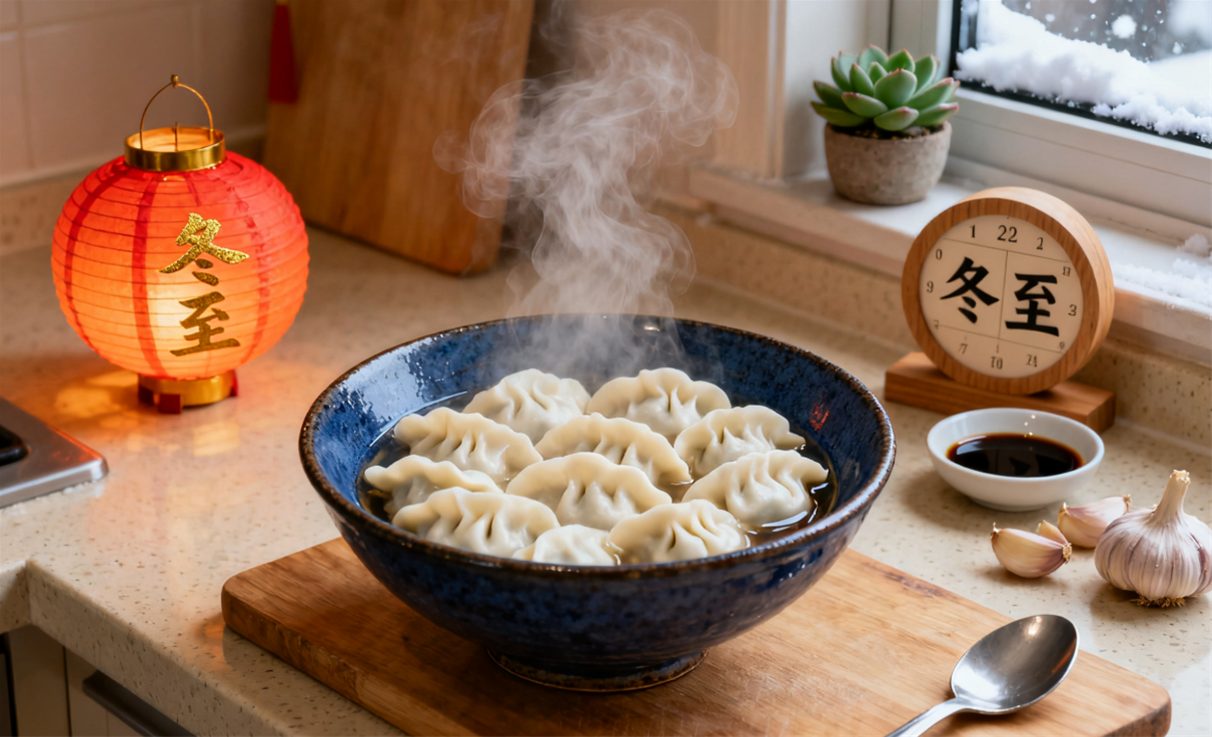
Dongzhi is famous for dumplings. In northern China there is a saying: “If you don’t have a bowl of dumplings on the winter solstice, no one will care if your ears freeze off.” The legend behind it credits Zhang Zhongjing, a Han-dynasty physician, with giving dumplings to people whose ears were frostbitten. Beyond the story, dumplings are genuinely good winter food: the wrapper provides carbohydrates, and a filling of lamb with Chinese cabbage, chives, or mushrooms covers protein and vitamins in one bite. Lamb dumplings suit people whose hands and feet are always cold — once or twice a week is plenty, as too much can leave you feeling overheated and irritable, what traditional Chinese medicine calls “rising internal heat.”
Three foods worth adding to your winter table
Root vegetables. White radish and pork rib soup takes about 40 minutes in one pot: the broth comes out clear and sweet, and radish helps the stomach handle richer winter meat. Steamed Chinese yam takes just 15 minutes, comes out soft and mild, and suits elderly people and children with weaker appetites.
Nuts. Three or four walnuts a day, or six to eight roasted chestnuts, make a far better 3 p.m. snack than biscuits or milk tea — they keep you full for hours without the sugar crash.
Black foods. Traditional Chinese dietary wisdom holds that black foods nourish the kidneys, which in this system are considered the body’s storehouse of winter energy. Soak black beans for 4 hours and cook them into congee, or stir a small spoonful of black sesame seeds into your morning porridge.
Three things to pull back on
- Cold and raw food. Skip iced drinks for now, and let fruit from the fridge sit out — or cut it and soak the pieces in warm water for 5 minutes before eating.
- Too much salt. Cured meats, pickled vegetables, and salty condiments are fine two or three times a week in a small dish, but heavy salt makes you thirsty and sends you to the bathroom more often at night.
- Late dinners. Try to finish supper by 6:30 p.m., and stop eating at least 3 hours before bed. A late, heavy meal is the most common reason people wake up groggy in winter.
Sleep and Daily Routine: Go to Bed Early, Get Up Late
The Huangdi Neijing (Yellow Emperor’s Inner Classic), the foundational text of Chinese medicine, advises for winter: “Go to bed early and rise late; wait for the sunlight.” In practice, that means being in bed by 10:30 p.m. and getting up between 6:30 and 7 a.m. — 7 to 8 hours of sleep. If you leave for work at 5:30 a.m., shift your alarm half an hour later and use 10 minutes of stretching instead of hitting snooze; you will feel more awake, not less.
Three parts of the body lose heat fastest and deserve extra protection. The head: wear a hat when you go out, and on windy days wrap a scarf around the back of your neck — many people wake up with a stiff neck and headache the day after their head and neck catch a cold draft. The waist and belly: make sure your blanket covers your waist while you sleep; if you run cold, warm the bed with a hot water bottle for 15 minutes before sleeping, then remove it. The feet: soak them around 9 p.m. in water at about 40°C for 15 to 20 minutes, deep enough to cover your ankles, until your forehead feels faintly warm — then dry them immediately and put on socks.
In a heated room, 20°C to 22°C is the comfortable range; above 24°C, the air gets dry and your skin starts to itch. Open the windows twice a day for 15 minutes each time to let in fresh air.
Movement: Gentle, Regular, About 30 Minutes a Day
Winter exercise has two classic mistakes: running in the cold wind at dawn, and pushing so hard you end up drenched in sweat. A steadier plan is to exercise after 10 a.m. or between 3 and 5 p.m. Brisk walking is the easiest habit to keep: aim for 100 to 110 steps per minute, about 3,000 steps in 30 minutes, and stop when your body feels warm and there is a light sweat on your forehead.
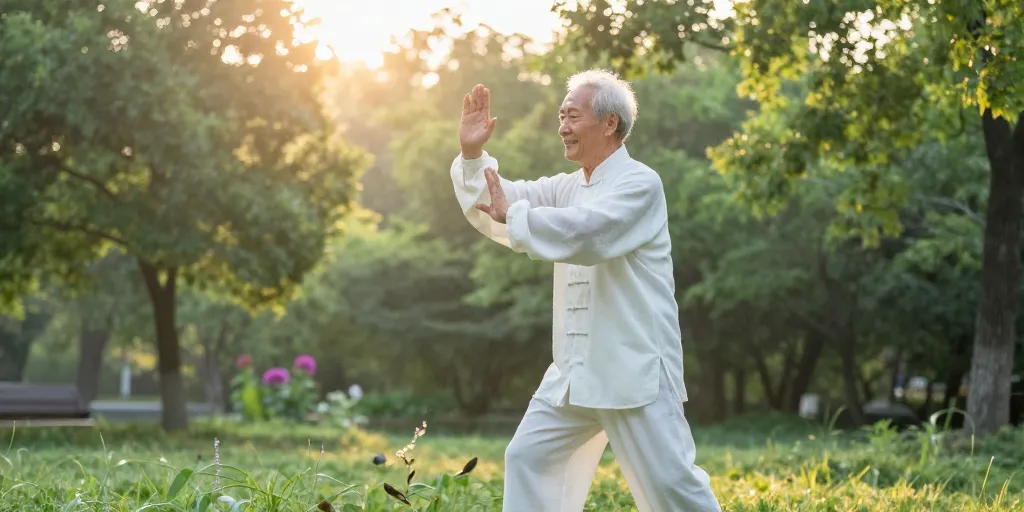
Baduanjin — the “Eight Brocades,” a set of eight gentle qigong movements that has been practiced in China for over 800 years — fits this season well. The full set takes 12 to 15 minutes and needs only a living room. Try “Holding Up the Sky to Regulate the Triple Burner” (the sanjiao, in Chinese medicine the body’s three energy centers) six times after waking, breathing deeply as you stretch: your chest will feel noticeably more open. “Seven Bounces Behind the Back” — rising onto your toes seven times and dropping your heels lightly — helps blood flow back up from the calves; office workers who sit all day will notice their heavy-legged afternoon feeling ease off if they do it once at midday. Wear soft-soled shoes, and do not practice on slippery tiles.
The simplified 24-form Tai Chi is another good choice: one set takes 5 to 6 minutes, and two or three sets a day is enough. “Cloud Hands” and “Parting the Wild Horse’s Mane” are genuinely helpful for shoulder, neck, and hip mobility — after four weeks or more, turning your head and bending over feel noticeably easier. If your knees are weak, do not sink the bow stance too low; keep your weight higher and your knee behind your toes. Judge the intensity by one rule: you should not feel tired the next day. After sweating, dry off right away and change out of damp clothes.
Dongzhi Traditions: Dumplings, Tangyuan, and Counting the Nines
Customs differ between north and south, but they share two themes: family reunion, and welcoming the return of light. The north eats dumplings; the south eats tangyuan, glutinous rice balls in sweet soup — usually four to six in a bowl, sesame or peanut filling being the most common. People with diabetes can eat two or three small ones and drink less of the sweet soup. In the Jiangsu and Zhejiang region, Dongzhi also brings red bean sticky rice: soak the red beans overnight, steam them with glutinous rice, and serve with a small dish of pickled vegetables for a simple festival meal.
Counting the nines is a folk way of marking the winter, nine days at a time from the solstice until spring. In the old days, families would draw a “nine-nines cold-dispelling chart” on Dongzhi and fill in one stroke each day, counting down to spring — a lovely activity to do with children. Dongzhi is also a day for honoring ancestors: many people return to their hometowns to visit family graves and leave simple, clean offerings. A bunch of flowers or a plate of fruit is enough.
Quick Answers
When is Dongzhi in 2026? December 21. It falls between December 21 and 23 every year.
What should I eat on the winter solstice? Warm, nourishing food: lamb dumplings once or twice a week, root-vegetable soups, a small handful of nuts each day, and black beans or black sesame in porridge. Cut back on iced drinks, very salty foods, and late dinners.
What time should I sleep in winter? In bed by 10:30 p.m., up between 6:30 and 7 a.m. — 7 to 8 hours. Keep your head, waist, and feet warm.
What exercise suits the solstice season? Brisk walking, Baduanjin, or the simplified 24-form Tai Chi, about 30 minutes a day, ideally after 10 a.m. or between 3 and 5 p.m. Stop when you are lightly warm, not drenched.
What is “counting the nines”? A folk countdown from the solstice: nine periods of nine days (81 days in total) until spring. The third nine is usually the coldest.
The Short Version
Winter wellness around Dongzhi comes down to three things. Eating: warm and nourishing, lamb dumplings or a stew once or twice a week, a handful of nuts a day, and easy on cold, raw, and salty food. Sleeping: in bed by 10:30 p.m., up after 6:30 a.m., a 15-minute foot soak before bed, and head, waist, and feet kept warm. Moving: 30 minutes a day of brisk walking or one round of Baduanjin, stopping at a light sweat — never overdoing it.
From the solstice onward, the days grow longer, one minute at a time. There is no need to rush your routine: first block the cold, then look after your appetite, then fix your exercise habit in place. By the time the third nine has passed, your body will tell you that this winter is going more smoothly than the last.
Three small things to do today: soak your feet at 9 p.m. tonight, leave your hat and scarf by the door before bed, and mark a daily 30-minute exercise slot in your calendar. None of them costs anything — keep them up until Lichun (the Start of Spring), and you will feel the difference yourself.
Disclaimer: This article is for general information and cultural reference only and is not a substitute for professional medical advice, diagnosis, or treatment. If you have a medical condition, a chronic illness, or take medication, consult a doctor before changing your diet, exercise, or sleep routine. If you feel chest tightness, dizziness, or joint pain during exercise, stop immediately and seek medical attention.