Picture a sparrow landing on your forearm. It weighs almost nothing, but if you flinch, it is gone. Grasp the Sparrow’s Tail (Lan Que Wei) is named after that touch: you hold the bird gently enough to keep it, firmly enough that it cannot escape. It is the single most important movement in Tai Chi, and it hides half the art inside one sequence. Ward Off, Roll Back, Press, and Push — four energies, one continuous chain. Get the footwork wrong, and no amount of pretty hand shapes will save it.
What Grasp the Sparrow’s Tail Actually Trains: Four Energies in One Chain
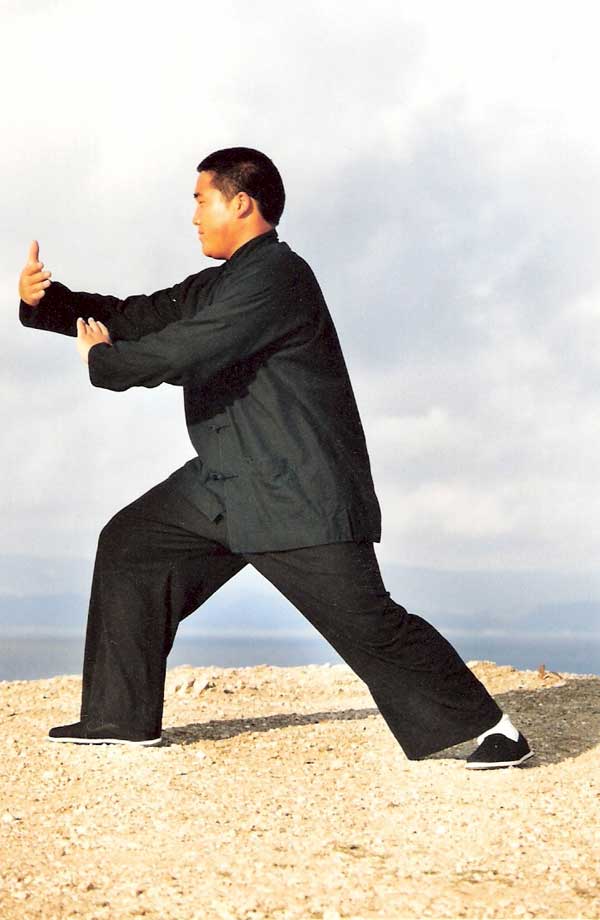
Grasp the Sparrow’s Tail is not four separate moves. It is one chain of force, flowing from one energy into the next. Ward Off (Peng) pushes up and forward to meet incoming force, like an arm holding back a door that is falling toward you. The elbow stays down, the shoulder stays relaxed, and the power travels from the soles of your feet, through the waist and hips, out to the forearm.
Roll Back (Lu) follows the incoming force and guides it backward, the way you might gently lead someone’s arm past you. Your waist turns, and the other person finds nothing to push against. Press (Ji) sends both hands forward together — one hand leads, the other pushes from behind, and all the force converges on a single point. Push (An) drives both palms forward level, shoulders sunk, elbows dropped, weight shifting steadily ahead.
A full sequence takes about 8 to 10 seconds, roughly 2 seconds per energy. Most beginners break it into four frozen poses: stop, breathe, rearrange, start again. The energy dies in every gap. Here is a simple test: after one round, ask yourself whether the four energies flowed like water, one into the next, without a single hitch. If you felt a pause, that pause is the thing to fix.
Footwork: Bow Stance, Empty Stance, and Shifting Your Weight
Footwork is the foundation of this movement. Ward Off uses a left bow stance: step your left foot forward about one and a half foot-lengths, toes turned outward about 45 degrees. The front leg bends, knee tracking in the same direction as the toes. About 70 percent of your weight sits on the front leg, 30 percent on the back. The back foot pushes against the ground, heel down, the whole back leg working like a supporting pole.
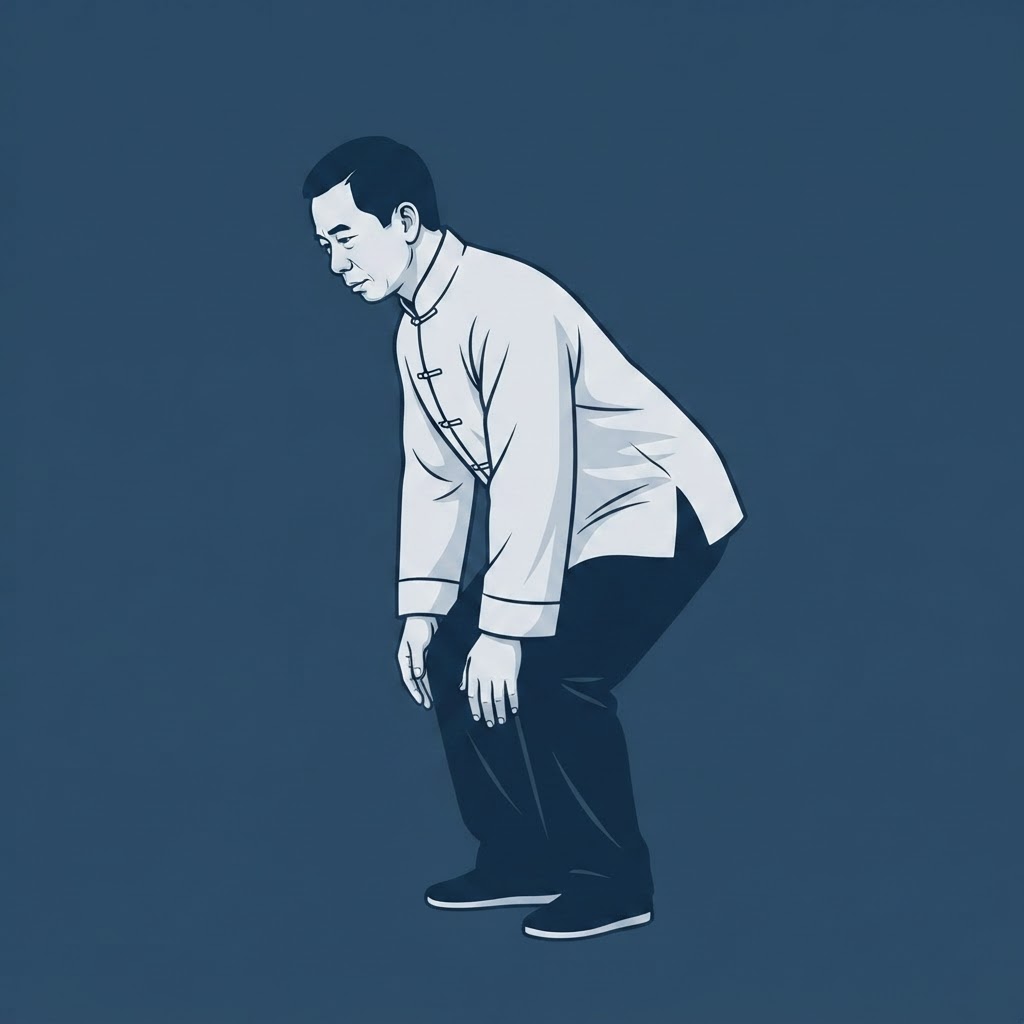
Moving into Roll Back, sink your weight backward. Your right foot steps in half a step, and you arrive in a left empty stance: the left toes touch the ground, the heel slightly raised, about 80 percent of your weight now on the right leg. This backward sit is not leaning back. Think of sitting on a tall stool: tailbone tucked slightly, back straight. The classic mistake here is collapsing backward at the waist — the moment your lower back caves, Roll Back turns into a tug-of-war.
Press and Push return to the bow stance. Push off the ball of the front foot, send your weight from the back leg to the front, and keep the two feet about shoulder-width apart sideways. One number to remember: the front knee should never travel past the toes in a bow stance. Go past them, and the knee takes too much load — it will complain after a few weeks of it.
Hand Shapes: Let the Waist Lead the Hands
The hands follow the waist and hips. They never move on their own. In Ward Off, both hands hold an imaginary ball: the left forearm lies across the chest, palm facing inward, the right hand resting on the inside of the left forearm, elbows sunk, with enough space between the arms to fit a fist. Let the shoulders drop. Your armpits should feel like they are holding an egg — squeeze too tight and it breaks, let go and it drops.
In Roll Back, both hands guide backward and to the right, left hand above, right hand below, as if carrying a ball behind you. The waist turns 30 to 45 degrees to the right. Wherever the hands go, the waist goes with them. In Press, the right hand pushes forward while the left hand supports the right forearm, two forces joining into one. In Push, both palms go out together, the heels of the palms leading, fingers slightly raised — and the shoulders must not ride up as the palms leave.
The trick to syncing hands and feet is counting beats: foot arrives, hand arrives, waist arrives, all at the same moment. If the foot gets there first and the hand is still on the way, or the hand arrives while the foot is still traveling, the coordination is broken. When practicing slowly, count “one, two” in your head — one movement per step — and only link everything into a continuous flow once the pieces line up.
Five Common Mistakes and How to Fix Them
- Front knee collapsing inward. The front knee caves toward the midline, and after weeks of practice the inside of the knee starts to ache. Fix it: aim the knee in the direction of the second toe. Imagine a wall in front of your knee and let the knee glide lightly along it.
- Shoulders rising and elbows lifting. The moment you exert force, the shoulders climb toward the ears and the arms go stiff. Fix it: sink the shoulders and drop the elbows before you start Ward Off, keeping the elbow tips pointing down. Three rounds in front of a mirror will show you the difference.
- All the weight on the front leg. In the bow stance the back leg goes slack, and your whole body tips forward. Fix it: press the back heel firmly into the ground, keep the 70-30 split between front and back legs, and only move on once you are stable.
- Hands and feet doing their own thing. The foot is already in place while the hand is still halfway there. Fix it: slow down to half your normal speed. Only speed up again once hands and feet arrive together. Slow and clean beats fast and messy.
- Holding your breath and rushing the beat. Tension makes you hold your breath, and the movement speeds up on its own. Fix it: inhale on Ward Off, exhale on Roll Back, inhale on Press, exhale on Push. Let the breath set the pace, and let the force come out on the exhale.
Ten Minutes a Day: Practice One Movement Until It Is Yours
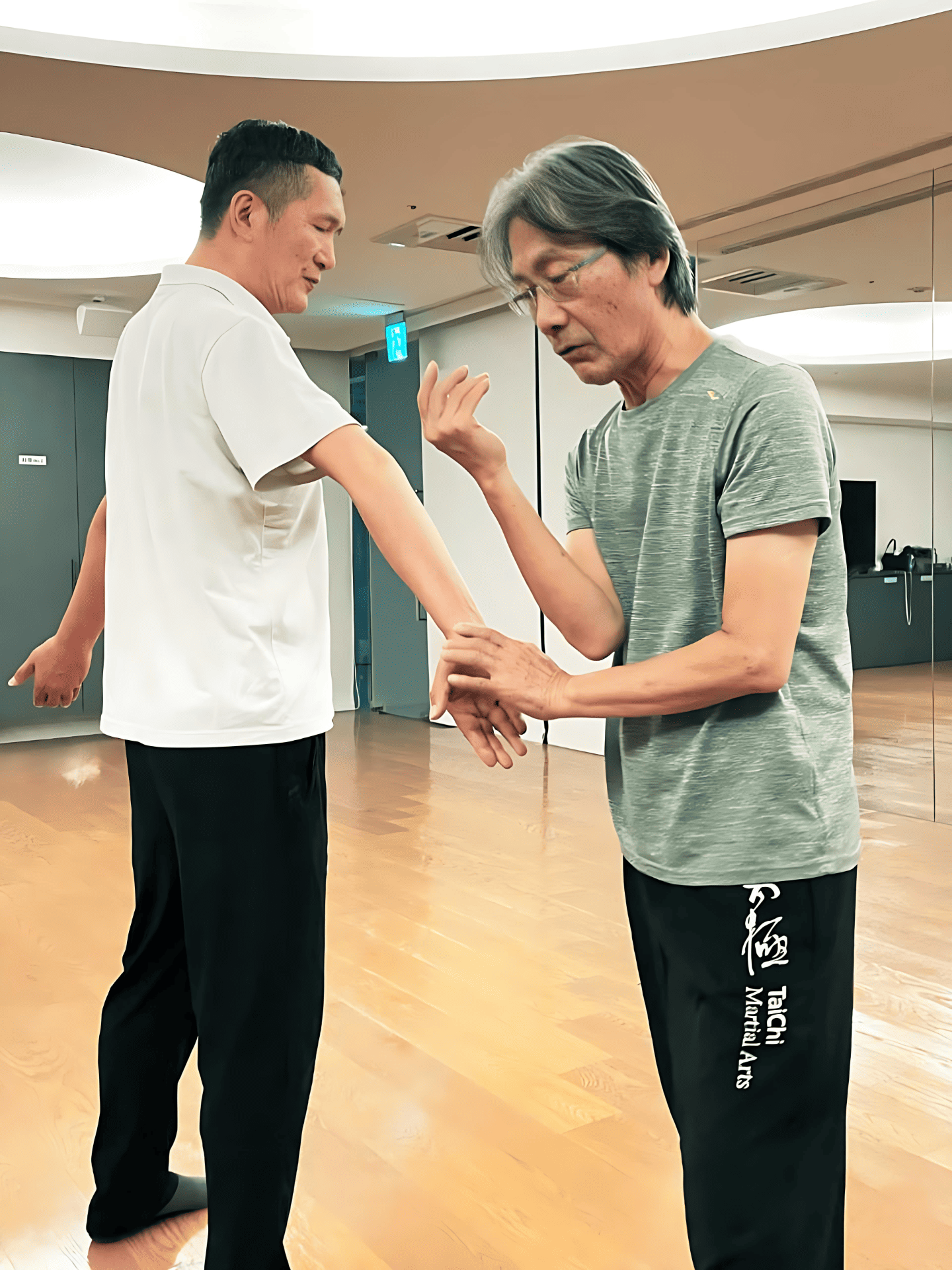
Do not try to learn everything at once. Ten minutes a day is enough. Practice the single movement slowly, 5 repetitions, about 40 seconds each, 3 times on each side, with one minute of standing and steady breathing in between. After a week, you will have walked through Grasp the Sparrow’s Tail about 70 times, and the coordination between footwork and hand shapes will start to build itself.
In the second week, link Grasp the Sparrow’s Tail after the Opening movement and walk the two together, checking whether the transition feels smooth. To measure your progress, record a 30-second video of yourself and watch it back: is the knee collapsing inward? Are the shoulders rising? Does your upper body wobble when the weight shifts? Watching your own video teaches you more than a hundred rounds of careless practice.
Master this one movement, and half of the rest of Tai Chi falls into place. Start today with just Ward Off and Roll Back. Go slower, stay steadier, and get the footwork and the hand shapes to agree with each other.
Quick Answers
How long does one full Grasp the Sparrow’s Tail take? About 8 to 10 seconds at practice speed, roughly 2 seconds per energy. If it takes you 20 seconds, you are probably pausing between the four energies — that pause is the first thing to work on.
Which side should I learn first? Start with the left bow stance as described here, then practice the mirror image on the right. Most forms teach one side first and add the other later; learning both from the start keeps your body balanced.
Why does my knee hurt in the bow stance? The two usual causes are the knee drifting past the toes, or the knee collapsing inward. Check both: knee behind the toes, knee tracking over the second toe, and about 70 percent of the weight on the front leg. If pain persists, shorten the stance and see a doctor.
Do I need to breathe in a special pattern? A simple pattern works well: inhale on Ward Off, exhale on Roll Back, inhale on Press, exhale on Push. The real rule is never to hold your breath — force goes out on the exhale.
How many repetitions per day? Five slow repetitions on each side, about ten minutes total, is a solid daily practice. Consistency matters far more than volume: 70 careful repetitions a week will teach you more than 200 rushed ones.
Safety note: Go gradually and practice within your limits. Keep the bow stance comfortable, never let the front knee pass the toes, and stop immediately if anything hurts. Protect your knees and lower back, and consult a doctor before starting if you have knee or back problems, arthritis, high blood pressure, or any other medical condition. This article is for cultural learning and general fitness reference only and makes no promise of any health benefit.