Three months after moving into her new apartment, Lin Yue noticed she was avoiding her study. Her desk faced a west-facing window, and by 3 p.m. the sun hit her screen directly, forcing her to squint. Turning to grab a book meant stepping around stacks of old magazines on the floor, and her chair backed onto the doorway, so every passerby made her turn around. She did not dislike reading. The room itself kept getting in her way. Then she changed just three things: she turned the desk to a different wall, added an adjustable desk lamp, and put up two rows of shelves. The room stopped feeling like a storage closet and became a place where she could actually sit down and stay.
Feng shui, the traditional Chinese practice of arranging living spaces to support comfort and balance, treats the study not as a showcase for ornaments but as a practical summary of how people sit well for long periods: light that does not glare, a seat with something solid behind it, a clear path in and out, and belongings that are easy to find. This guide breaks that wisdom into five practical tips, each with measurements and steps you can copy directly.
1. Desk Position: A Solid Wall Behind You, Open Space Ahead
The traditional phrase is “a seat with a mountain behind it,” meaning that when you sit down, a solid wall should be at your back rather than a door, a window, or a walkway. Modern living logic points the same way: with an open passage behind you, part of your attention stays on guard for movement, and deep focus becomes hard to hold. Lin Yue used to sit with her back to the door, turning around four or five times in half an hour whenever family members walked past. Once she moved to a solid wall, that sense of being interrupted dropped sharply.
In practice, place the desk against a solid wall and leave about 10 centimeters between the chair and the wall, just enough to move freely without feeling pinned. Leave at least 60 centimeters of open floor in front of the desk, so your eyes can travel past the desktop into some breathing room instead of hitting a wall the moment you look up. If only one wall is available, turn the desk sideways against it rather than putting the chair with its back to the door just to face a window view.
A common mistake is pushing the desk directly under a window. By day, light from behind causes heavy screen glare; by night, the dark glass turns into a mirror, and the reflection flickers at the edge of your vision. Windows work best on the left or right side of the desk, so daylight enters from the side, bright but never straight into your eyes.
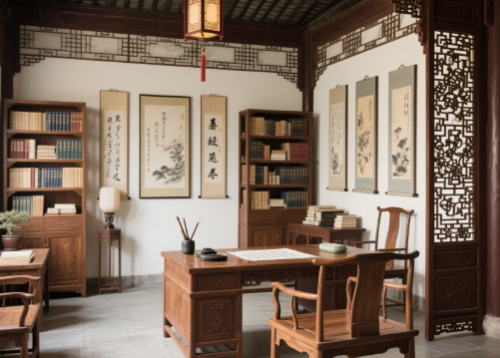
2. Lighting: Borrow Daylight by Day, Use Two Layers at Night
Study lighting has two enemies: too dim and too harsh. Low light strains the eyes, and after half an hour of reading you find yourself rubbing them. Direct glare throws off the contrast between paper and screen and hurts just as much. The old saying “a bright hall” translates today into one rule: light should be enough, and it should be soft.
During the day, use natural light but give the window a layer of sheer curtain. Sheer fabric scatters direct sunlight. After Lin Yue hung a cream-colored sheer curtain on her west-facing window, the harsh 3 p.m. sun became even, diffused light, the desk stayed bright enough, and the screen stopped reflecting. Adding a blackout curtain behind the sheer layer gives extra flexibility for naps or video calls.
At night, one ceiling light is not enough. Light from overhead casts shadows from your body and arms onto the desk, leaving the writing area darker than expected. A better setup is two layers: a ceiling light that keeps the whole room from feeling gloomy, plus a desk lamp that brings the desktop up to full brightness. Place the lamp on the opposite side of your writing hand, so a right-handed writer puts it at the front left and the hand shadow never covers the writing. Choose a neutral color temperature around 4000K. Warmer light invites drowsiness, while colder light feels harsh.
3. Storage: Keep Daily Books Within Reach, Move the Rest Out of Sight
Most messy studies are not messy because they hold too many books. They are messy because every book sits in plain view. A wall of shelves packed edge to edge means pulling out three books to reach the one you want, and after a while you simply stop tidying. The feng shui idea of “concealing” fits well here: everything needs its own place, and the visible surface stays calm.
A practical method is the three-zone system. Within arm’s reach, on the desktop and the first shelf, keep the 5 to 10 books you are currently reading. On the middle shelves, within one easy stretch, keep reference books you might need this month. On the high shelves and inside closed cabinets, store old books and materials you rarely use. After sorting this way, Lin Yue’s desk held only a novel in progress and a notebook, and more than 40 magazines that had lived on the floor went into a low cabinet with doors. The floor was suddenly clear.
You only need three storage tools: wall shelves, a low cabinet with doors, and a file basket. Shelves suit daily books because they are easy to grab. A closed cabinet hides clutter and looks clean. A basket beside the desk collects papers and receipts that have not been filed yet; empty it once a week so “temporary piles” never become permanent ones.
The desk itself needs the same discipline. Keep long-term desktop items to seven or fewer: computer, lamp, water glass, pen holder, notebook, current book, and one small decorative piece. Beyond that count, the desk quietly turns messy again.
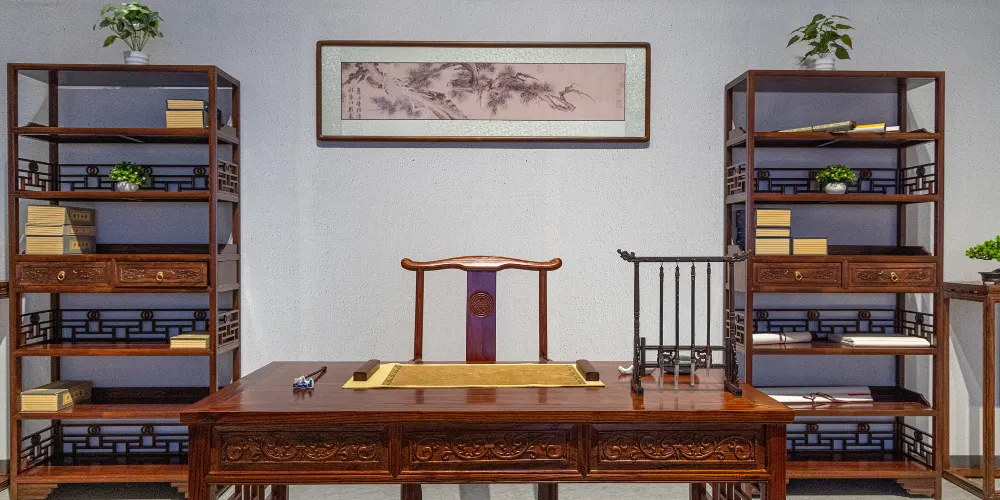
4. Movement and Airflow: No Door Facing the Desk, Room to Stand Up
In traditional terms, the “qi opening,” meaning the flow of air and movement through doors and windows, matters greatly in a study. The classic warning is a “door clash”: a door that opens directly onto the desk, so anyone entering stands face to face with the reader and both feel awkward. The modern version is simpler: the walking path should let people come and go without disturbing someone at work.
The test is easy. Stand in the doorway and look in. If your eyes land directly on the back of the chair or on the seated person’s face, the layout needs adjusting. The usual fix is rotating the desk 90 degrees so it sits sideways to the door, or placing a low bookshelf between the door and the desk as a buffer that blocks the sightline and adds storage.
Anyone who sits for hours also needs a way to get up and move. Leave at least 70 centimeters behind the chair so you can stand, turn, and stretch without bumping into anything. If the room allows a small side table or a lounge chair, switching seats when you tire helps you keep reading longer than staying stuck in one chair. Open the window at least twice a day for 10 to 15 minutes each time. Fresh air in a stuffy room lifts your energy noticeably.
5. Color and Decor: Light Base, No More Than Three Accents
Walls and large furniture in a study suit light colors: cream white, light gray, natural wood. These tones reflect light gently, feel unoppressive over long hours, and make book and screen colors easier to tell apart. Dark walls with dark furniture may photograph well, but in a small study they shrink the space and demand an extra lamp even in daytime.
The traditional rule for decor is “few and fine,” and it still holds. One or two objects you genuinely like, such as a small shade-tolerant plant or a paperweight with personal meaning, give the study character. Beyond three decorative items, visual focus scatters and the desk feels cluttered again. Choose plants that tolerate low light and need watering only about once a week, and avoid thorny plants or strongly scented ones right beside your hands.
Wall art follows the same limit: one painting or one piece of calligraphy, hung where your eyes naturally rest, about 15 degrees above your seated eye level. Hung too high, it forces you to crane your neck; hung too low, the shelves hide it. Choose something you enjoy looking at. The point is not an auspicious meaning but a daily lift: a favorite line or a pleasing image greeting you each time you look up is part of what makes a study feel like yours.
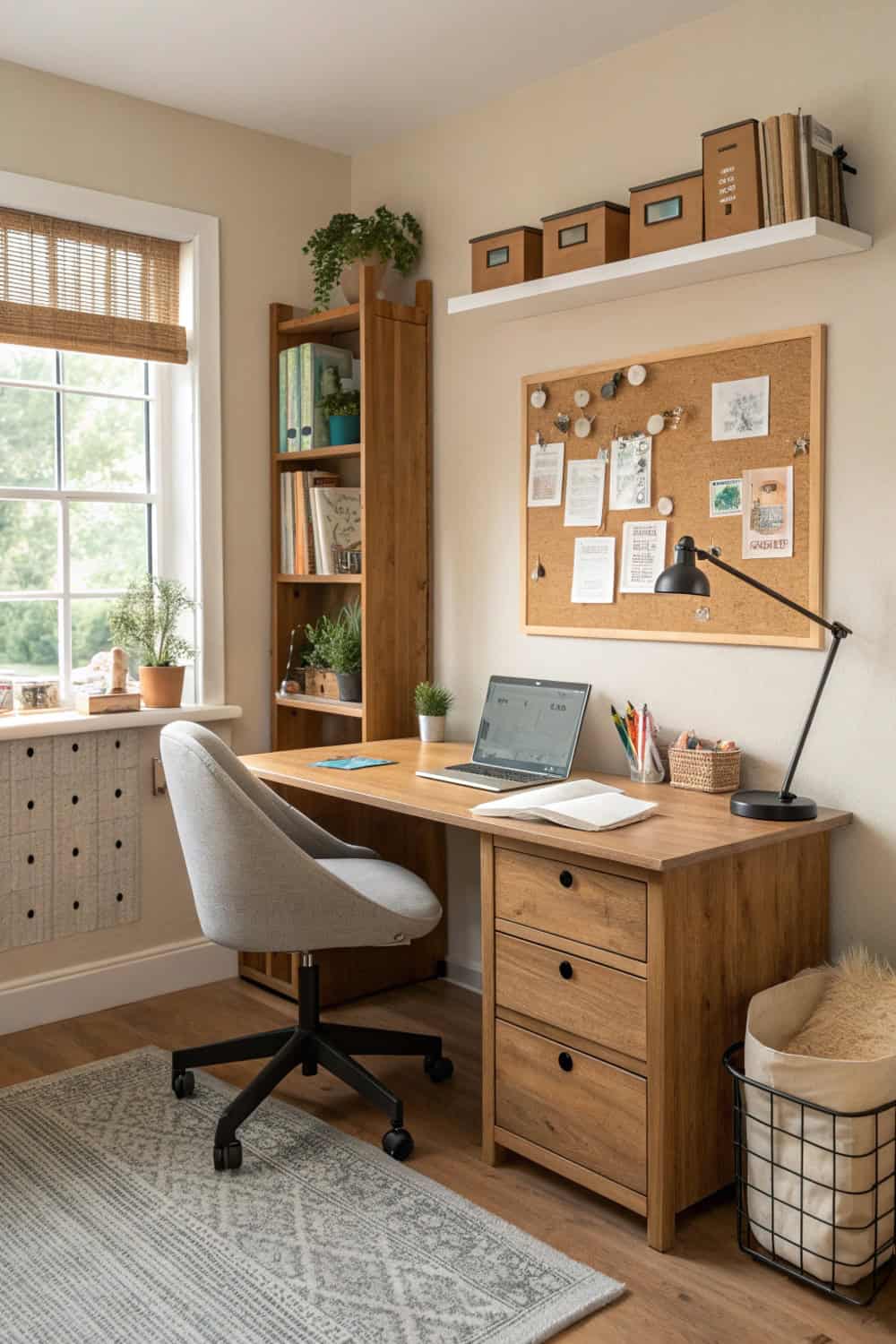
Quick Answers
What are the five study room feng shui tips? Desk against a solid wall with open space ahead; sheer curtains for daylight plus a two-layer lamp setup at night; three-zone storage by frequency of use with seven or fewer items on the desk; a doorway that does not face the desk directly and at least 70 centimeters behind the chair; light-colored walls and furniture with no more than three decorative accents.
Where should a study desk go? Against a solid wall, with about 10 centimeters between chair and wall and at least 60 centimeters of open floor in front. Keep windows to the side of the desk, not directly behind it, to avoid screen glare.
What is the best lighting for a study? Diffused daylight through sheer curtains by day, and a ceiling light plus a desk lamp at night. Place the lamp opposite your writing hand and choose a neutral light around 4000K.
How do I stop my study from getting messy again? Sort books into three zones by how often you use them, move rarely used books into closed cabinets, keep the desktop to seven items, and empty the desk-side paper basket once a week.
Do I need an expensive renovation? No. Most of these changes take a single weekend: turn the chair to face a solid wall, hang a sheer curtain, position a desk lamp correctly, and do one three-zone sort of the shelves.
Start with the three changes that affect comfort most. First, move the chair so a solid wall is at your back, and sit with that setup for a week to feel whether your focus improves. Second, add a sheer curtain to the window and a correctly positioned desk lamp. Third, sort the shelves by the three-zone method and move rarely used books into a closed cabinet. If the room still will not let you settle after those three steps, only then consider new furniture or a different room layout. A good study does not depend on expensive furniture. It depends on every object being where it belongs, so that once you sit down, you do not want to leave.
One note: this article presents traditional Chinese living culture and modern interior-use logic to help readers make a study more comfortable and usable. It does not make predictions about any individual’s fortune or destiny. Room orientation and daylight differ from home to home, so adjust any tip to your own room before applying it. The best layout is the one that fits your space.