It is mid-October, and the osmanthus trees downstairs are in bloom. Aunt Li, who lives on the third floor, walks past them every morning on her way to the morning market, but lately she barely notices the scent. For weeks she has felt a weight on her chest, as if a stone were pressing down. Food tastes flat. She wakes at 3 a.m. and cannot get back to sleep. A small argument with her daughter-in-law nearly brings her to tears. She went to the hospital and had her heart and lungs checked. Everything came back normal. The doctor told her the problem was emotional blockage: stress held in too long, now showing up in the body.
In traditional Chinese medicine, this pattern has a name: qi stagnation constitution. Qi (pronounced “chee”) is the energy that drives the body’s functions, roughly comparable to vitality or life force. When qi stops flowing smoothly, mood goes first, and physical discomfort follows. Autumn and winter make it worse. Days grow shorter, temperatures drop, people stay indoors, and the stuck feeling deepens. Learning to work with it now, before the coldest months arrive, is far easier than trying to fix it in January.
This guide explains how to recognize the pattern, and what to do about it in three practical areas: mood, diet, and movement. Nothing here is exotic or expensive. Most of it fits into an ordinary day.
How to Tell: The Signs Worth Taking Seriously
The core of qi stagnation is simple: qi is not moving. When that happens, the body sends signals from several directions at once. The first group shows up in mood and digestion. You sigh often, and only after a long sigh does your chest feel a little looser. Your mood swings more than usual: anxious one hour, irritable the next, flat and uninterested the next day. When you get nervous, your stomach bloats, you burp, and your appetite drops. Two bites in, you feel full and pressed down.
The second group hides in sleep and small physical details. You struggle to fall asleep, wake in the middle of the night, and lie there replaying the day’s conversations. Women may notice breast tenderness before their period, or cycles that become irregular. Some people feel a constant lump in the throat, something they can neither cough up nor swallow, even though examinations find nothing wrong there.

One sign on its own means very little. Everyone sighs, and everyone has a bad night now and then. The pattern matters when three or four signs appear together and last more than a month. That is the point to take it seriously. A constitution type is a reference point for daily care, not a diagnosis. If you suspect something is medically wrong, get checked first and rule out real disease before adjusting your lifestyle.
Give Your Feelings a Daily Exit
For qi stagnation, mood comes first, because the root is usually unspoken emotion. People with this pattern do not lack feelings. They swallow them. A slight at work goes unanswered. A disagreement at home gets shelved. Week after week, the unsaid things pile up, and the body carries the load. The fix is not to become a different person. It is to give feelings a regular, scheduled exit.
Start with a walk after dinner. Thirty minutes, no earphones, no work calls. Just walk, look at the trees and the sky, and let your mind step out of the day’s business. Many people find that the tightness they carried through dinner loosens somewhere around the second kilometer, without them trying to solve anything at all. The walk works precisely because it asks nothing of you.
Writing is another good outlet. Keep a notebook by the bed and spend ten minutes before sleep writing three lines: the most uncomfortable moment of the day, what you actually thought at the time, and one thing you could do about it tomorrow. It does not need to be well written. It is for your eyes only. Once feelings become sentences, a tangled mess turns into separate items, and separate items are much easier to handle.
Other people matter more than most advice admits. Someone with qi stagnation tends to retreat and brood alone. Break that habit deliberately. Schedule at least one easy get-together a week: cook a meal with a friend, play a game of badminton, wander through a morning market together. The conversation does not need to be deep. The point is company. Simply having someone beside you lets a wound-up nervous system relax.
One warning, and it is important. If low mood lasts more than two weeks, interferes with eating or sleeping, or brings uncontrollable crying and loss of interest in everything, do not tough it out. Talk to a counselor or a doctor. Seeking help is not weakness. It is taking responsibility for yourself.
Eating for Flow: Three Kinds of Food for Autumn and Winter
The dietary principle for qi stagnation is straightforward: eat lightly, keep digestion easy, and favor foods that help qi move. Cut back on greasy, spicy, and very sweet food. These tend to worsen bloating and irritability, especially in the colder months when the body is already sluggish.
Three groups of food are worth adding this season. The first helps qi move: aged tangerine peel (chenpi), finger citron (foshou), and rose buds. The simplest way to use them is tea. Try 3 grams of tangerine peel with 2 grams of rose buds, steeped in hot water, one cup in the afternoon when your chest feels tight or your stomach feels bloated. It is gentle, fragrant, and easy to make a habit.
The second group supports digestion: Chinese yam (shanyao), millet, and pumpkin. A pot of yam and millet porridge on a cold evening is warm, easy on the stomach, and genuinely comforting. Eat a bowl for dinner, and your stomach will not sit heavy through the night, which often means better sleep as a side effect.
The third group is seasonal produce: white radish, celery, and citrus fruit. White radish is traditionally valued for easing qi; it works in soup or cold salad. Celery is crisp and light, good stir-fried. Citrus fruit is worth eating for the smell alone: peeling two segments of an orange releases a fragrance that lifts a dull afternoon.
Moderation applies to all of this. Qi-moving foods are daily care, not medicine, and more is not better. One cup of tangerine peel tea a day is enough. If you produce a lot of stomach acid, go easy on sour drinks. As for winter feasting, lamb hotpot once or twice a week is plenty. Eat it too often and the heat builds up, irritability rises, and you are back where you started. Pair rich meals with vegetables and you will feel the difference.
- Breakfast: millet porridge with a boiled egg, plus a small plate of cold celery salad. Light and warming.
- Lunch: a staple, one meat dish, one vegetable dish, and a soup. Keep oil and spice low, and stop at about 70 percent full.
- Dinner: finish before 7 p.m. if you can, with porridge, noodles, or steamed dishes, so your stomach gets real rest overnight.
- Snacks: when hunger strikes in the afternoon, eat a citrus fruit or a small handful of nuts, not milk tea and cake.
Move Every Day: Walking, Baduanjin, and Tai Chi
Traditional Chinese medicine has a saying: sitting too long injures qi. For someone with qi stagnation, a whole day in a chair is the worst possible routine. Exercise does not need to be intense. What matters is regularity and stretching.
Brisk walking is the easiest option and the hardest to quit. Thirty minutes a day, at a pace where you sweat lightly and your heartbeat rises but you can still talk normally, is exactly right. In autumn and winter, wait until the sun is up before heading out, avoid the coldest early-morning air, and wear a jacket you can take off as you warm up.
Baduanjin, the “Eight Brocades” qigong routine, is a second option, and two of its movements are especially helpful here. “Holding Up the Sky to Regulate the Triple Burner” stretches the whole torso upward, and “Drawing the Bow to Shoot the Eagle” opens the chest and sides. Practice for 15 minutes a day, moving slowly and breathing with each motion, and many people feel their chest open up afterward. Tai chi suits weekends better: a full 24-form set takes about 40 minutes in the park, warms the body, and quiets the mind at the same time.
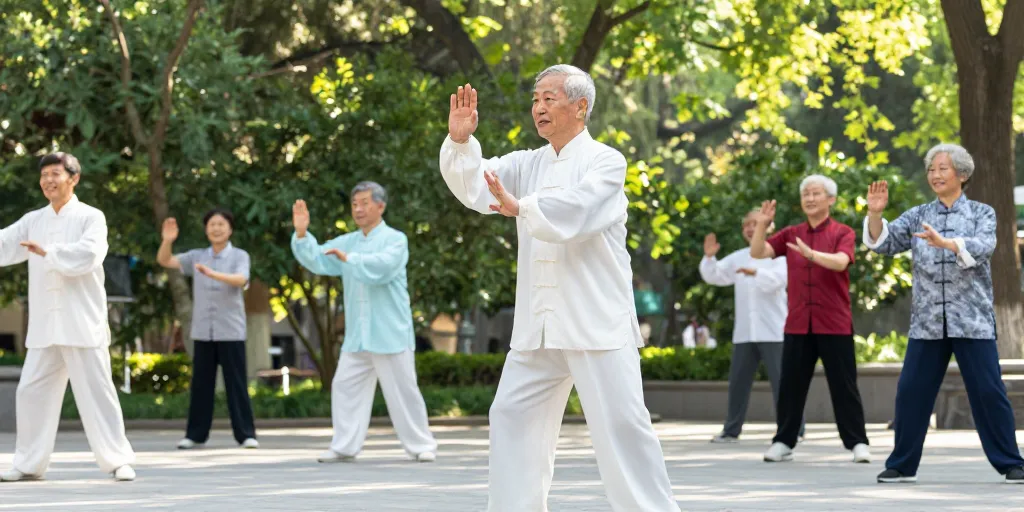
Fix a time and keep it. Between 5 and 6 p.m. works well for many people. Once the habit is set, you stop relying on willpower. When the hour arrives, your body expects to move.
Two cautions. First, do not do vigorous exercise at your worst emotional moment. A sudden spike in heart rate when you are already distressed can bring dizziness or palpitations. Second, dry off and add a layer right after exercising in cold weather. Catching a cold on top of low mood makes everything harder. The goal of movement is to finish feeling better, not exhausted. Feeling better is what makes you come back tomorrow.
Quick Answers
How do I know if this applies to me? Look for three or four signs together, lasting more than a month: frequent sighing, chest tightness, mood swings, bloating under stress, poor sleep, or that lump-in-the-throat feeling. One sign alone is not enough to conclude anything.
What is the single most useful daily habit? The 30-minute walk after dinner. It costs nothing, needs no equipment, and combines movement, fresh air, and time away from screens. If you do only one thing from this guide, do that.
Is tangerine peel tea safe for everyone? One cup a day is gentle for most people, but if you have excess stomach acid or reflux, keep it infrequent and weak. It is a daily-care drink, not a treatment.
Can exercise make things worse? Gentle, regular movement helps. Intense exercise during an emotional low point can backfire, so save hard workouts for days when you feel steadier.
When should I see a doctor instead? If chest tightness, insomnia, or low mood does not improve after several weeks of lifestyle adjustment, or if symptoms get worse, get checked promptly. Heart, digestive, and mental health problems can look similar and need proper diagnosis.
A 21-Day Start: Three Small Things
There is no shortcut for qi stagnation. The whole approach fits in one sentence: keep qi moving. Give feelings a daily exit instead of holding them in. Eat lightly and favor foods that ease digestion. Move 30 minutes a day, choosing walking, Baduanjin, or tai chi.
None of this is difficult. The hard part is sticking with it. Try a 21-day test: walk for 30 minutes every day, write three lines in a notebook before bed, and eat yam and millet porridge three times a week. After 21 days, look back and ask honestly whether the chest tightness and restless nights have eased. For many people, the answer is yes, and the habit continues on its own.
If nothing improves, or symptoms grow heavier, see a doctor and rule out heart, digestive, or psychological causes first. Constitution care is daily maintenance, not treatment. Finding the real cause, then adjusting, is what actually helps. This autumn and winter, may you eat well, sleep soundly, and feel lighter inside.
Disclaimer: This article is for general reference only and is not a substitute for professional medical advice. It does not promise any treatment effect. If your symptoms are severe, persistent, or interfere with daily life, please consult a qualified medical professional promptly and follow their diagnosis and treatment plan.