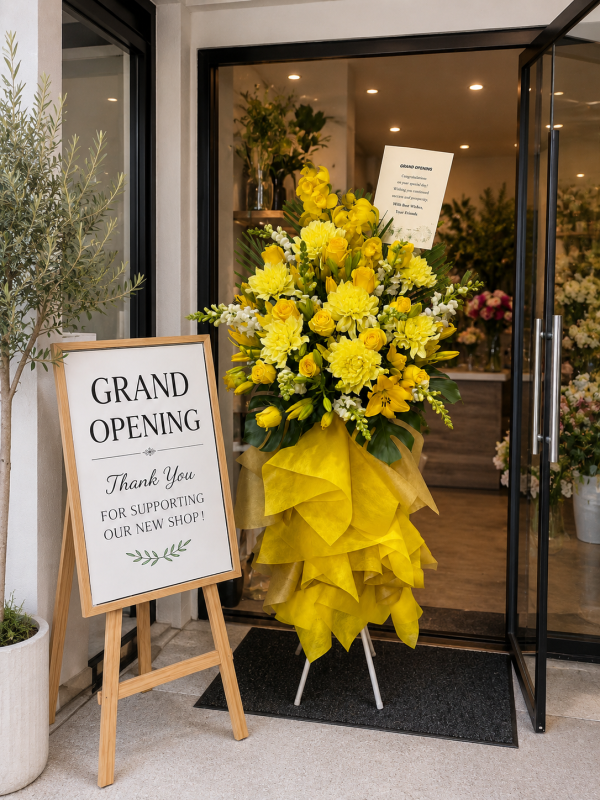
Two shops open on the same street, one week apart. The first one cuts a red ribbon to a crowd, flower baskets lined up on both sides of the door. The second one just quietly lifts its shutter, and nobody notices. The difference is rarely luck. It is preparation: a date picked in advance, an hour fixed, and a run sheet that keeps the morning from falling apart.
In China, picking an opening date is part of that preparation. Families and shop owners have consulted the traditional almanac for centuries before opening a business, getting married, or moving house. This guide explains how the system works, how to read it without getting lost in jargon, and how to turn it into a practical plan for opening day. Treat everything here as cultural custom and a planning aid, not as a prediction about your business. A good date will not save a bad location, weak products, or poor service. Those are the things you polish every day.
What an Auspicious Day Actually Means
The traditional Chinese almanac, called the Tongshu or Huangli, marks each day with a list of suitable and unsuitable activities. For a shop opening, look for three terms in the “suitable” column: kaishi, which means opening a business; jiaoyi, which means making a transaction; and liquan, which means signing a contract. If kaishi appears, tradition counts the day as suitable for opening. If all three appear together, the old rulebooks rate it a step more solid.
There is a second layer called the Jianchu system, a cycle of twelve “day officers” that rotate one per day. Six of them – Chu, Wei, Ding, Zhi, Cheng, and Kai – are classed as auspicious days, while the other six – Jian, Man, Ping, Po, Shou, and Bi – are classed as inauspicious. Take a real example: a neighborhood noodle shop owner finds a day marked “suitable for kaishi” with the officer Cheng on duty, and books the ribbon-cutting for that morning. Another weekend day looks convenient, but its suitable list only mentions rituals and prayers, with no kaishi at all, so he pushes the opening back a week. The rule of thumb is simple: the suitable activity comes first, the day officer is a second check. When both line up, there is the least room for argument at home.
One practical warning before you circle anything on the calendar. A lucky date has to match your readiness. If the renovation bill is unpaid, the business license has not arrived, or staff training is only half done, the “lucky” day becomes a deadline that hurts you. Write the opening checklist first, confirm everything can be ready within three days of the date, and only then pick the nearest suitable day from the list.

Clashes: Check the Zodiac and the Direction
The part of date-picking people ask about most is chong and sha, usually translated as “clashes” and “afflictions.” The clash part is straightforward once you see the pattern. The Chinese calendar runs on twelve Earthly Branches, which pair off into six opposing pairs: Zi clashes with Wu, Chou with Wei, Yin with Shen, Mao with You, Chen with Xu, and Si with Hai. Mapped onto the twelve zodiac animals, that gives Rat versus Horse, Ox versus Goat, Tiger versus Monkey, Rabbit versus Rooster, Dragon versus Dog, and Snake versus Pig.
So if the shop owner, or whoever will lead the ceremony, was born in the Year of the Horse, a Horse day is traditionally counted as clashing with them, and they would pick a Goat day or a Tiger day instead. The key detail is whose zodiac counts: it is the person in charge on the day, not the whole staff. If partners run the shop together, use the legal representative or the person actually cutting the ribbon. Settle this one standard early, or every family member will argue from a different one.
The “sha” side is about direction rather than animals. The best-known is Sansha, the “Three Killings,” which rotates by year: in Shen, Zi, and Chen years it sits in the south; in Yin, Wu, and Xu years in the north; in Si, You, and Chou years in the east; in Hai, Mao, and Wei years in the west. There is also Suipo, the direction opposite the year’s ruling position – if the year’s Tai Sui, or Grand Duke, sits in the east, Suipo sits in the west. In practice the fix is small and concrete. If the shop door faces south and the south is afflicted that year, hold the ribbon-cutting inside and leave only the flower baskets outside. You do not need to rebuild the shopfront; you just move the ceremony a few steps.
Picking the Hour: Late Morning Works Best
The traditional day is divided into twelve shichen, or double-hours, each lasting two hours: Zi runs 11 p.m. to 1 a.m., Chou 1 to 3 a.m., Yin 3 to 5 a.m., Mao 5 to 7 a.m., Chen 7 to 9 a.m., Si 9 to 11 a.m., Wu 11 a.m. to 1 p.m., Wei 1 to 3 p.m., Shen 3 to 5 p.m., You 5 to 7 p.m., Xu 7 to 9 p.m., and Hai 9 to 11 p.m. Opening ceremonies almost always land in the morning, for reasons that have nothing to do with mysticism: the full team is present, the light is good, customers start drifting in, and the ceremony ends right as the lunch rush begins.
The two most-used slots are Chen (7 to 9 a.m.) and Si (9 to 11 a.m.). Chen suits breakfast shops and market stalls that open early anyway. Si suits most other shops, and times with an 8 in them – 9:58, 10:08, 10:18 – are popular because 8 sounds like the word for prosperity in Chinese, so the time itself feels like a good omen. Say the ribbon-cutting is set for 10:08: rehearse at 9:30, finish the ceremony in about 15 minutes, and you are ready for the first customers walking in.
Hours clash just like days do. A Si day calls for avoiding the Hai hour; a Wu day calls for avoiding the Zi hour. The safer method is to check both: a day that does not clash with the person in charge, and an hour that does not clash either. Keep the whole ceremony under 20 minutes – a short speech, the cutting, a group photo, and done. Do not let it drag past the chosen hour while waiting for a late guest.

The Opening-Day Run Sheet
Once the date and hour are fixed, everything else is a minute-by-minute plan. The schedule below is written for an 80-square-meter neighborhood shop; a bigger store just adds staff, the order stays the same.
- Three days before: Confirm licenses are on the wall, and test the checkout system, QR ordering, and price lists end to end. Flower baskets, banners, red cloth, scissors, and the tray should arrive a day early, not on the morning itself.
- One day before: Deep-clean the shop and stock shelves to at least 80 percent full. Empty shelves are the most visible thing on opening day. Send friends and regular customers the opening time, address, and parking details.
- 8:30 a.m. on the day: Owner and staff arrive early. Lights on, air conditioning on, background music on. Check the pavement outside, set the flower baskets symmetrically, and hang the banner straight.
- 9:30 a.m.: Guests sign in and take their photo positions. The host runs through the sequence once, and the scissors get a test cut – nothing kills the moment like ribbon that will not cut.
- At the chosen hour: The host speaks for no more than 3 minutes, then the cutting, the photo, and the firecrackers or confetti. Afterward the owner stands at the door to greet customers while staff return to their stations. The first order must be fast and correct.
- Before noon: Take stock once: what sold fast, where the bottlenecks were, what customers asked about most. Review it that evening, write the problems down, and fix them first thing the next morning.
Three Mistakes to Avoid
- Chasing the date, ignoring the preparation. If staff are untrained and the system is untested, the liveliest ceremony will not rescue the customer experience. The date is the finishing touch; preparation is the foundation.
- Letting the hour hold the business hostage. If the ceremony is set for 10:08 and guests still have not arrived by 10:20, dragging it out half an hour empties the crowd. Ask guests to arrive by 9:30 and build in buffer time.
- Treating the almanac as a guarantee. Auspicious days, clashes, and hour selection are traditional customs – a way of seeking good fortune and peace of mind. Whether a shop lasts depends on location, product, price, and service.
Quick Answers
How do I find a good opening date? Open the Tongshu almanac and look for kaishi in the suitable list, ideally with an auspicious day officer such as Cheng or Kai. Then cross out any day that clashes with the zodiac sign of the person leading the ceremony. What remains is your shortlist.
What time should the ceremony start? Late morning is the default: Chen (7 to 9 a.m.) for early-opening food businesses, Si (9 to 11 a.m.) for most shops. Keep it under 20 minutes and rehearse half an hour before.
What if the shop door faces an afflicted direction? Move the ceremony, not the shop. Hold the ribbon-cutting inside, keep the flower baskets outside, and avoid setting off firecrackers toward the afflicted direction that year.
Whose zodiac sign matters if several partners own the shop? The person who leads the ceremony on the day – usually the legal representative or the one cutting the ribbon. One standard, agreed in advance, prevents arguments.
Does a lucky date guarantee success? No. Date selection is a traditional custom that gives the opening a good start and a sense of occasion. Location, product, pricing, and daily service decide whether customers come back.
Two things you can do today. First, open your calendar app and circle every day in the next two weeks marked suitable for kaishi, then cross out the ones that clash with the owner’s zodiac sign. Second, write the opening-day run sheet with a named person responsible for each time slot, print it, and pin it behind the counter. A steady date and a tight plan leave you free on the morning itself to stand at the door and smile at the first customer who walks in.