Three nights in a row, you wake up to hallway light spilling under the door, and your neck feels stiff by morning. Before you blame the mattress, look at where the bed sits. The bed, the mirror, and the lighting are things you live with every single day, and how they are arranged shapes how well you sleep. Here are five practical points you can check against your own bedroom tonight.
1. Put the Headboard Against a Solid Wall
In traditional feng shui — the Chinese system of arranging living spaces in harmony with their surroundings — a headboard backed by a wall is called having a “mountain behind you.” In plain language, it means this: when you lie down, something solid and unmoving sits behind your head, and your body relaxes because nothing can approach from that side.
When the headboard floats in the middle of the room, or your head points toward a walkway, every sound and draft in the night — a door closing, someone passing — travels straight toward your head. Light sleepers startle awake far more easily in that position.
The practical standard is simple: the headboard should sit flush against a wall with no door or window, with no gap between the board and the wall. If your headboard is only about 60 centimeters tall and still feels empty once it is against the wall, hang a framed print of roughly 40 by 50 centimeters above it, or prop two thick cushions behind your pillows to fill the visual gap.

One common mistake is putting the headboard against the bathroom wall. Water pipes behind a thin partition carry the sound of flushing and running water, and at 2 a.m. that noise sounds far louder than it does by day. If you cannot avoid that wall, move the bed to another wall, or hang a thick curtain over the shared wall as a modest sound buffer.
In a small bedroom of around 10 square meters, the only suitable wall may have a radiator on it. In that case, leave about 5 centimeters between the headboard and the radiator for airflow — there is no need to press the bed hard against the heat source just to satisfy the rule.
2. Do Not Let the Bed Face the Door Head-On
A bed with its foot pointing straight at the bedroom door is the most common layout problem in bedrooms. The moment the door opens, the whole bed is on display: hallway light, voices, and footsteps come straight in, and the person sleeping is effectively in a “watched” position. Falling asleep takes longer when your body feels exposed.
One household in a 68-square-meter two-bedroom apartment in Beijing ran into exactly this. The bedroom door opened onto the living room, the foot of the bed faced the door, and the occupant reported tossing and turning for 40 minutes every night. After rotating the bed 90 degrees so the headboard rested against the side wall, the time to fall asleep dropped to under 20 minutes.
Fix it in this order of preference. Best: move the bed to the wall perpendicular to the door. If the room will not allow that, place a screen or a wardrobe about 1.2 meters tall between the bed and the door as a visual barrier. Last resort: hang a curtain over the door and pull it closed at night — it blocks much of the direct light and line of sight. Whichever option you choose, leave at least 50 centimeters between the side of the bed and the wall, so you can get in and out easily and change the sheets without a struggle. Do not shove the bed into a corner just to dodge the door.
3. Keep Mirrors Away from Facing the Bed
“A mirror should not face the bed” is one of the most repeated pieces of advice from older generations, and the reasoning is very practical. Waking up in the middle of the night, in dim light, half asleep, and catching a moving figure in the mirror — your own reflection — is startling. Once your heart is racing, falling back asleep becomes much harder. Sliding wardrobe doors with mirrors, dressing-table mirrors, and full-length standing mirrors are the usual culprits.
Check it the easy way: lie on the bed and scan the room. Any mirror in which you can directly see your own reflection counts as “facing the bed.” Three fixes, in order of convenience. First, move the mirror to the side wall, parallel to the bed. Second, cover the mirror with a cloth at night — a curtain track mounted above the mirror lets you pull the cover across in two seconds. Third, swap to a wardrobe with solid doors and put the mirror inside the door, so it only appears when you open it.
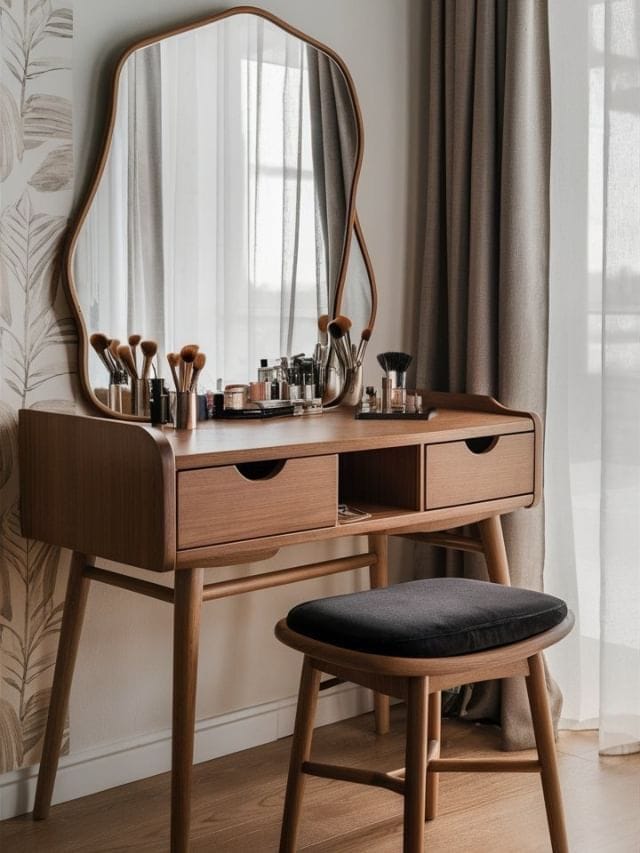
If the dressing table can only sit opposite the bed, choose a folding mirror: close it when you are done, and you gain a flat surface for a book as well. The point is not superstition — it is removing a startling sight from the one room where your nervous system is supposed to stand down.
4. Layer the Lighting in Three Levels, Not One Ceiling Light
Many bedrooms rely on a single ceiling light that is either glaring or too dim, and it has to serve every purpose: reading, scrolling on your phone, and getting up at night. Your eyes and your sleep rhythm both suffer. Traditional wisdom says the living room should be bright and the bedroom dim — the bedroom’s light should be softer than the rest of the house. The fix is to split the lighting into three layers.
- Overhead light: for entering the room, changing clothes, and cleaning. Choose a warm-white light around 3000K; a 24-watt LED ceiling fixture is enough for a 12-square-meter bedroom. A dimmable model with a remote is ideal, so you can turn it down with one tap before bed.
- Bedside lamps: the workhorses for reading and talking before sleep. Pick a warm yellow light around 2700K, with the shade pointing down or fitted with a glare shield, so the light falls on the book and the bedding rather than into your eyes. The switch should be within arm’s reach, so a nighttime trip does not start with fumbling in the dark.
- Night light: for getting up at night only. Plug it into a corner within one meter of the bed, and keep it as dim as possible — just bright enough to see the floor and avoid tripping. A motion-sensor night light that switches on when you walk past and off when you lie back down is better for sleep than one that glows all night.
Placement matters too. Do not mount the main light directly above the bed — lying down and staring up into the fixture is uncomfortable. Shift it about 30 centimeters toward the foot of the bed and the glare problem mostly disappears. If you have a pendant lamp, keep it at least 1.8 meters above the bed surface so sitting up does not mean bumping your head.
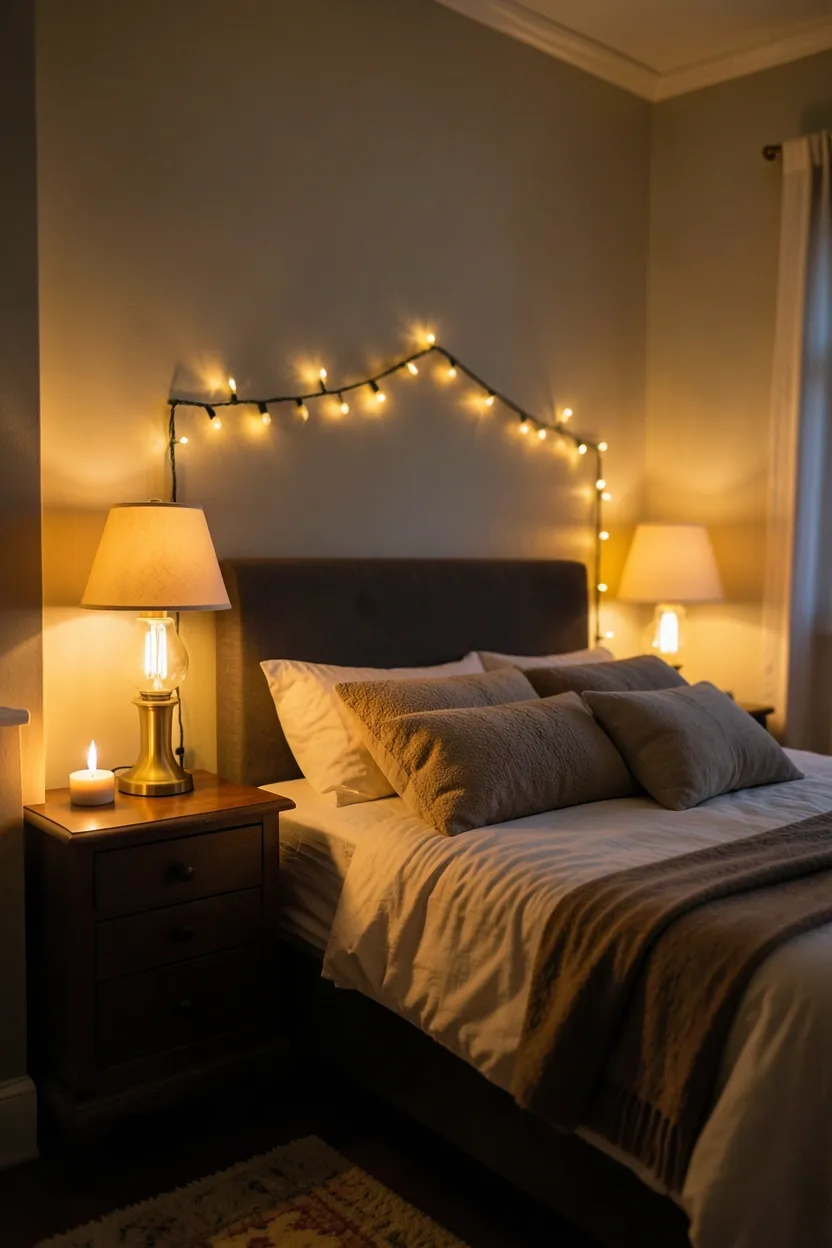
5. Leave Walkways on Both Sides and Keep Under the Bed Clear
Leaving 50 to 60 centimeters of walkway on each side of the bed sounds trivial, but it shapes your daily routine: you get up in the morning without climbing over your partner, you walk to the bathroom at night without squeezing sideways, and two people can stand on either side when changing the sheets. When one side of a double bed is pressed against the wall, the person on that side climbs in and out every day — over time, their back and knees pay for it.
Under the bed deserves the same attention. The traditional saying is “an empty space under the bed lets the air flow,” and the everyday translation is straightforward: stuff the space under the bed with old shoe boxes, out-of-season quilts, and spare suitcases, and dust and dampness collect where the vacuum cleaner cannot reach. In humid southern climates, mold follows. Keep only the current season’s storage boxes under the bed — no more than two, on wheels, so you can pull them out to clean. Move out-of-season clothes to the top of the wardrobe or a storage room instead of pressing everything under the mattress.
If there is room at the foot of the bed, add a low bench about 80 centimeters wide or a luggage rack. Clothes you change out of at night and the outfit for tomorrow morning finally have a home, and the bedroom looks tidier without any extra effort. Tidiness itself is calming: when your eyes meet no piles of clutter, your mind settles more easily. That, in the end, is what these old rules are really about.
Start Tonight: Change Three Things First
Bedroom feng shui, stripped of mystique, is traditional living wisdom translated into modern habits: headboard against a solid wall, bed not facing the door, mirrors not facing the bed, three layers of light, and clear walkways with an uncluttered space underneath. None of it costs much money, and none of it requires renovation. A single weekend afternoon is enough to do all five.
Work in this order. Tonight, before bed, do two things: cover or turn away any mirror facing the bed, and plug a motion-sensor night light into the corner near the bed. This weekend, move the bed if it needs moving and clear out what is stored underneath. Then watch for a week: are you falling asleep faster, and are you waking up startled less often? The bedroom is where you spend seven to eight hours a day. Making it comfortable, convenient, and restful is the most practical value these old ideas still hold today. This guide presents traditional Chinese residential culture for reference and for improving your living experience; it makes no claims about fate or fortune, and it promises no luck-changing effects.
Quick Answers
What is the single most important rule? Headboard firmly against a solid wall with no door or window. It is the cheapest fix and the one most people feel first.
My bed has to face the door — what now? Put a screen or a wardrobe between the bed and the door, or hang a door curtain and close it at night. Blocking the direct line of sight and light does most of the work.
Can I keep a mirror in the bedroom at all? Yes — just place it on a side wall parallel to the bed, cover it at night, or keep it inside a wardrobe door. The problem is only a mirror you can see your reflection in while lying in bed.
What color temperature should bedroom lights be? Around 3000K for the overhead light and 2700K warm yellow for bedside lamps, with a very dim motion-sensor night light for nighttime trips.
Does feng shui change my luck? No. This guide treats feng shui as traditional cultural knowledge about comfortable living spaces, not as a way to predict or alter fortune.