At 9 a.m. sharp, Mark sits down, opens his laptop, and the screen blocks half the window. To his left sit three stacks of files; the coffee on his right spilled once last week and nearly took the keyboard with it. It’s not that he doesn’t work hard. It’s that his desk has been working against him the whole time.
Feng shui is often translated as “wind and water,” but at its core it is an ancient Chinese way of thinking about environments: how the arrangement of a space shapes the way you feel and work in it. Applied to an office desk, it turns out to be surprisingly practical — less about luck, more about light, posture, and reach. This guide translates classic desk feng shui into plain, actionable habits for modern office workers.
Talk About Light Before Talking About Feng Shui
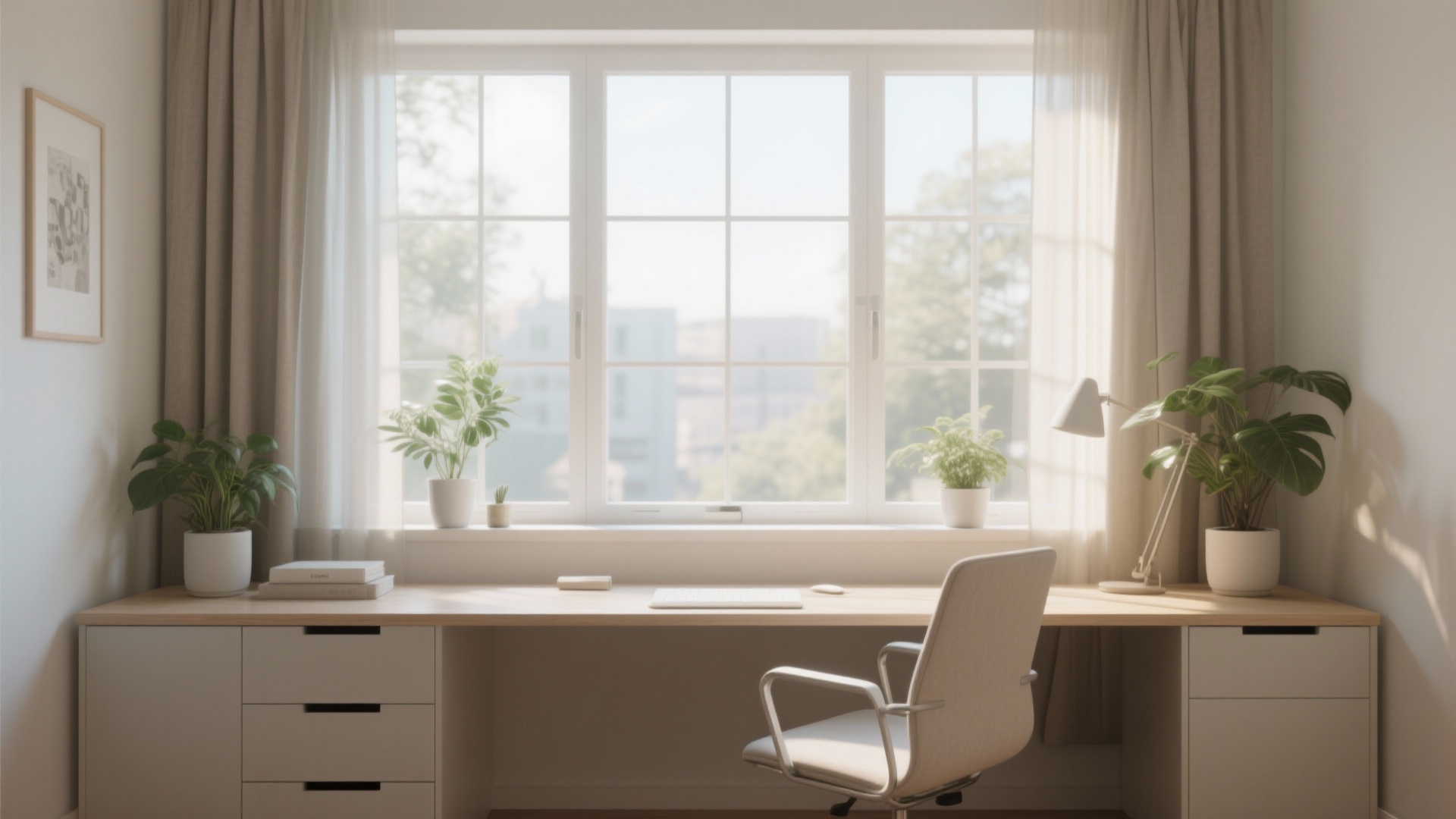
Traditional feng shui has a word for it: mingtang (bright hall) — the space in front of you should feel open and well lit. Move that idea into an office, and the two closest equivalents are light and sightlines.
If you can choose your desk, pick one near natural light where the sun never glares directly on your screen. A designer friend moved from a windowless corner to a desk near a window last year and almost stopped using the overhead lights during the day. She said the biggest change wasn’t her eyesight — it was her shoulders. In the dim corner she had hunched forward toward a too-dark screen; three months in, her neck hurt so badly she could barely lift her head.
Can’t get a window seat? A desk lamp placed front-left (if you’re right-handed) throws light from over your left shoulder, so your writing hand never casts a shadow. That arrangement lines up neatly with the old rule of “bright on the left, dim on the right”: the things you need to see clearly live on your left, while the right side stays quiet and calm.
The Green Dragon and the White Tiger, Translated: Left Side Busy, Right Side Clear
This is the most quoted desk rule in office feng shui: zuo qinglong, you baihu — “left green dragon, right white tiger.” In the old language, the left is the dragon: active and raised; the right is the tiger: still and low. Translated into today’s office vocabulary, it’s really a system for managing your reach.
If you’re right-handed, all your fine motor work happens on the right. So within the 30 centimeters (about a foot) to the right of you, keep exactly two things: your mouse and one pen. Files, phone, water bottle, snacks — all of them go left. The logic is mechanical: reaching from the mouse across the keyboard to grab a water bottle swings your elbow over the entire keyboard zone, and doing that dozens of times a day means knocking something over is only a matter of time.
The left side, by contrast, can be a little livelier: stand your most-used reference materials in a row, place a plant about 30 centimeters to the left of your monitor with the leaves clear of the screen. Left side active, right side still — the dragon and tiger turn out to agree with the anatomy of your arms.
Your phone deserves its own spot. On the left, picking it up for a quick glance is effortless; on the right, every screen flash hijacks your attention. When you’re on a deadline or in a meeting, flip it face-down on a folder to your left — out of sight, out of mind.
Back Against Something Solid, Nothing Blocking Your View
Feng shui’s golden rule for seating is zuoshi chaokong — “sit solid, face open”: your back should have support, and your view ahead should be clear. In an office, this is essentially ergonomics in plain language.
If your back faces a walkway with colleagues passing all day, you’ll brace yourself without noticing. A colleague in testing sat like that for months — he’d turn around twenty or thirty times a day, and his neck was always the sorest on the team. He eventually swapped desks with a neighbor to get a seat against a solid wall, and a week later he said he had felt, for the first time, what “a neck that doesn’t ache at 6 p.m.” was like.
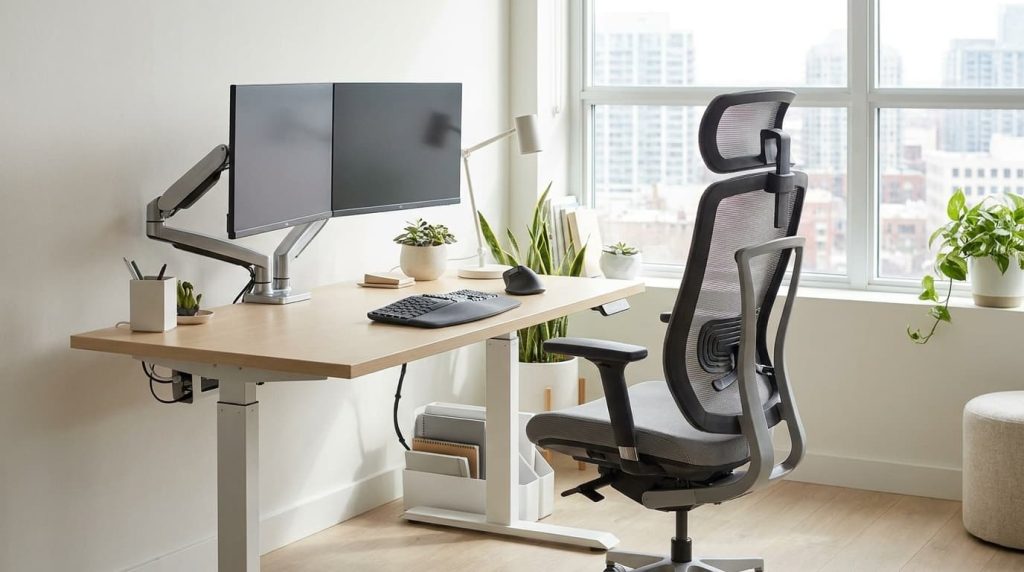
Can’t move to a wall seat? Choose a chair with a high backrest, or put a plant about a meter tall or a filing cabinet behind you. The requirement is simple — the back of your head needs to believe it is safe back there.
And ahead of you: keep 50 to 70 centimeters between your eyes and the monitor, with your gaze angled about 15 degrees downward. If you face a blank white wall too close, the feeling of pressure is real — hang a reasonably large landscape photo, or pull the monitor back a little to give your eyes somewhere to go. The old term is mingtang open, “a spacious bright hall”; the modern term is: don’t leave your sightline nowhere to rest.
Plants and Decluttering: The Most Down-to-Earth Chapter in Feng Shui
People often ask which plant brings a promotion. That question needs a dose of cold water first: no plant will earn you a raise. But plants are genuinely useful — just for different reasons.
A pothos or snake plant beside your monitor gives your eyes a green target to glance at once an hour, letting your focusing muscles relax. The watering itself helps too: spending 30 seconds each morning watering and rotating the pot works like a tiny “boot-up ritual” for your brain.
More important than the plant is decluttering. Feng shui calls clutter sha — literally “harmful energy,” which sounds mystical until you translate it as visual noise. The messier the desk, the slower you find things and process information, and the more mistakes you make. You don’t need a study to prove it — just look at your own desk. If locating a file means digging through three stacks of paper, you’ll never remember where that file lives.
Set yourself a hard rule: no more than five permanent residents on the desktop; everything else goes in drawers or cabinets. Every Friday before you leave, spend ten minutes filing or binning anything you haven’t touched all week. Don’t hesitate as you toss: a file untouched for three months won’t suddenly matter in the fourth.
Open Plan and Hot Desks: No Fixed Seat? There Is Still a Way
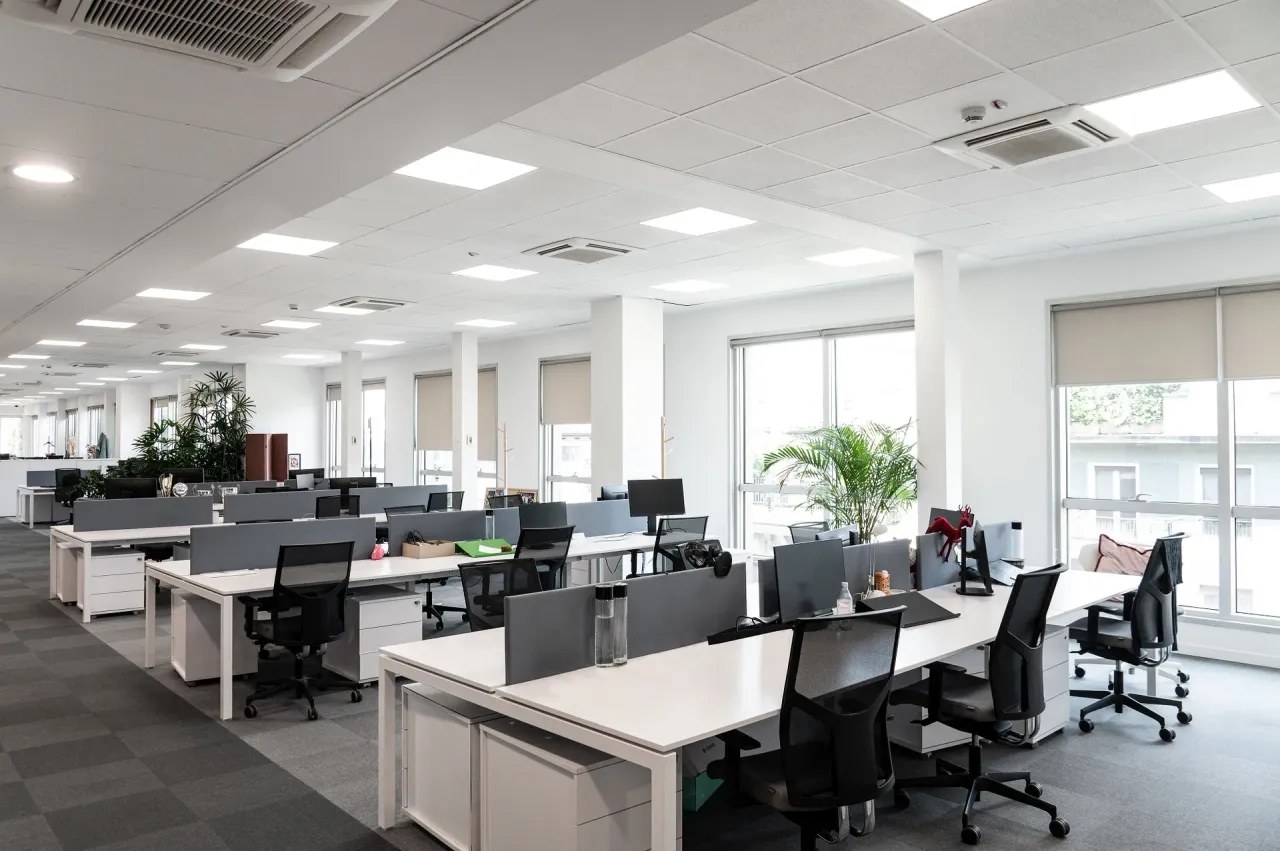
Not everyone has a personal desk. In open-plan offices and hot-desking setups, the seat changes daily — does any of this still apply?
It does, but the game changes. With a fixed desk you play the layout; with a hot desk you play portability. Pack a small kit — notebook, pen, water bottle, earphones — and arrange them in the same order wherever you land: notebook and water on the left, mouse and pen on the right. Ten seconds, and your dragon and tiger are in position.
Meeting rooms work the same way. For a long meeting, pick a seat with a wall behind you and a clear view of the door — not for any energy field, but for peace of mind: you can see who walks in instead of turning around. The seat directly across from the door works too; the view is the widest, and you never have to twist around to address someone.
Working from a hotel room on a business trip follows the same logic: stand your suitcase behind you as a “back,” swing the lamp to your front-left. A few moves and even a strange room becomes workable quickly. That’s the most valuable part of feng shui thinking: at heart it’s a methodology for making a person feel settled — and that works in any city.
Starting This Weekend: A Ten-Minute Desk Review
The whole guide comes down to one sentence: make your desk work with you, not against you. Strip away the mystique from the green dragon, white tiger, bright hall, and solid back, and what remains is environmental wisdom the old Chinese worked out with their bodies — light should be good, the back should be steady, and frequently used things should sit within easy reach.
One boundary needs stating plainly: rearranging your desk won’t get you promoted, and it changes no one’s luck. What it can change is how your eight hours a day feel — whether your neck aches, whether your eyes tire, how fast you find things. Those small things add up, and your working state follows. Read feng shui as culture, use it as method — but don’t buy it as a lottery ticket.
This weekend, take ten minutes and do these three things:
- Turn around and look behind you. Is it a wall, a high chair back — or a busy walkway? If it’s a walkway, ask for a different seat next week, or slide a filing cabinet behind you as a buffer.
- Reorganize your left side. Arrange things by frequency of use, nearest first: water bottle, notebook, everyday files. Keep only the mouse and one pen within 30 centimeters on the right.
- Bin any file untouched for three months, then wipe the desk. Leave five items on top. After the wipe, even the monitor will look clearer.
Monday morning, sit down and take one deep breath. If everything feels within reach, this guide did its job.
Quick Answers
Can feng shui really change my luck at work? No — and this guide claims no such thing. What it changes is comfort and efficiency: better light, a calmer sightline, and things within reach. If your shoulders hurt less and you find files faster, your workday genuinely improves. Everything beyond that is superstition.
My desk faces a pillar / my back faces the door. Am I doomed? No desk position is a curse. The fixes are practical: a tall plant or cabinet buffers a walkway behind you; a landscape photo breaks the pressure of facing a wall or pillar. Comfort first, symbolism second.
Do I need to buy feng shui ornaments or a lucky plant? No. The plant in this guide is there for your eyes and your morning ritual, not for fortune — any easy-care green plant works. Spend the money on a decent chair or lamp instead.
I hot-desk and never sit in the same spot. Does any of this apply? Yes — the portable kit is the answer. Same five items, same left/right arrangement, ten seconds to set up anywhere. The consistency is the point: your brain learns the pattern and settles in faster, desk after desk.