7:00 in the morning, at the corner of a quiet residential block. A man in his sixties bends forward, both hands shaping claws, then slowly rises — the posture of a tiger about to pounce. A few seconds later he’s crouching and swaying like a bear; then, standing on one leg with arms spread wide, unmistakably a bird taking flight. A passerby stops to ask what he’s doing. “Wuqinxi,” he grins. “The five animals. Fifteen minutes a day, and my shoulders haven’t felt this loose in years.”
Wuqinxi (五禽戏, wu-qin-xi, literally “five-animal frolics”) is one of the oldest movement practices in China — a set of flowing exercises that imitate the postures of the tiger, deer, bear, monkey, and bird. Legend credits its creation to Hua Tuo, the renowned physician of the Han dynasty (c. 140–208 CE), who believed the human body works the same way a door hinge does: used regularly, it never rusts. His famous line, “flowing water never stagnates,” is the whole philosophy in five words.
Don’t mistake it for a martial arts form. Wuqinxi is closer to a gentle mix of stretching, light cardio, and breathwork. China’s national sports authority even standardized a modern version, which is why you’ll see whole neighborhoods of retirees practicing it at dawn. This guide breaks down each animal one by one — no equipment, no class, one square meter of floor.
Each Animal Has a Job: The Quick Map
Before learning the moves, remember what each animal is for. Each of the five “plays” targets a different part of the body:
- Tiger (tiger pounce, tiger lift): upper-body strength and spinal mobility. Perfect for desk workers with stiff shoulders.
- Deer (deer butting, deer running): waist rotation and the cervical spine — a lifeline for anyone with a stiff neck from looking down at phones.
- Bear (bear rolling, bear swaying): slow, grounded swaying and sinking. Builds leg stability and balance.
- Monkey (monkey lifting, monkey picking): hand–eye coordination and quick full-body movement. Loosens every joint.
- Bird (bird stretching, bird flying): chest-opening stretches and single-leg balance.
Beginners shouldn’t rush to “complete the whole set.” Learn each animal’s signature move first, then string them together.
The Five Animals, One by One
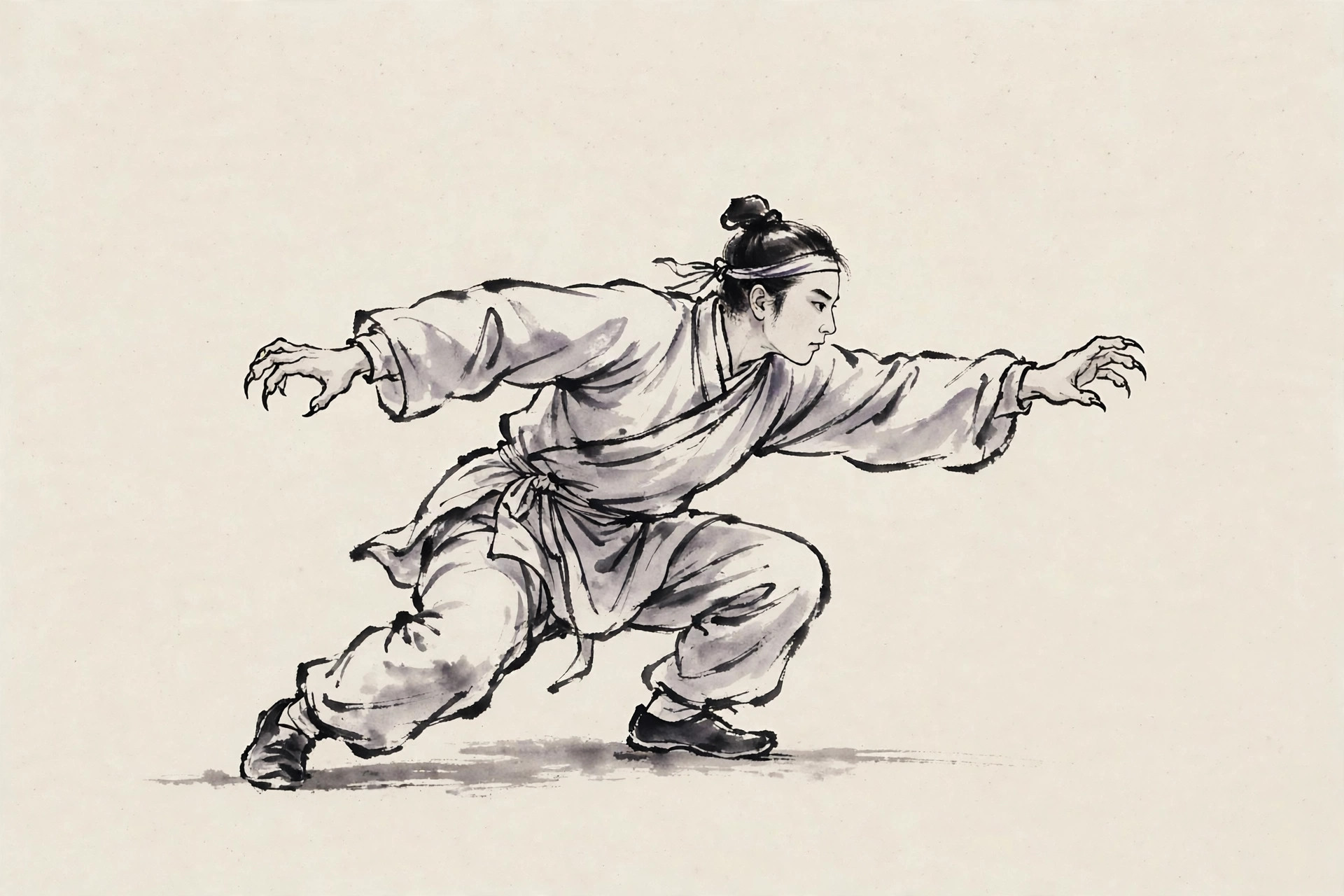
Tiger: The Pounce and the Recovery
The signature move is the tiger pounce. Stand with feet slightly wider than shoulder-width. Shape your hands into “tiger claws” — fingers spread wide, fingertips firm, as if pinning prey to the ground. Bend forward and downward as though pouncing, exhaling through your mouth with a soft “ha” sound. Then slowly rise, inhaling through your nose, straightening your spine one vertebra at a time.
The secret isn’t pouncing hard — it’s pouncing and recovering. The slow rise back up is where your spine gets its stretch.
You’ll feel it in: your thighs, shoulders, and wrists. After a long day at a desk, six pounces will noticeably loosen a heavy-feeling shoulder girdle. Keep your knees tracking over your toes — never let them collapse inward.
Deer: The Alert Look-Back
The deer butting move is the most characterful of the five. Step your left foot half a pace forward and shift your weight onto it. Raise both hands overhead like antlers, pushing gently up and forward, while turning your head to look back over your left shoulder. Imagine you’re a deer in a forest that has just heard a sound behind it.
That “look back” is exactly the motion your cervical spine almost never gets — and it explains why office workers love this move.
You’ll feel it in: both sides of your neck and your waist. Turn slowly; never whip your head around. Four reps per side after a long screen session works wonders. Neck-safety tip: if you feel dizziness or a sharp twinge, reduce the turning range immediately.
Bear: The Heavy, Honest Sway
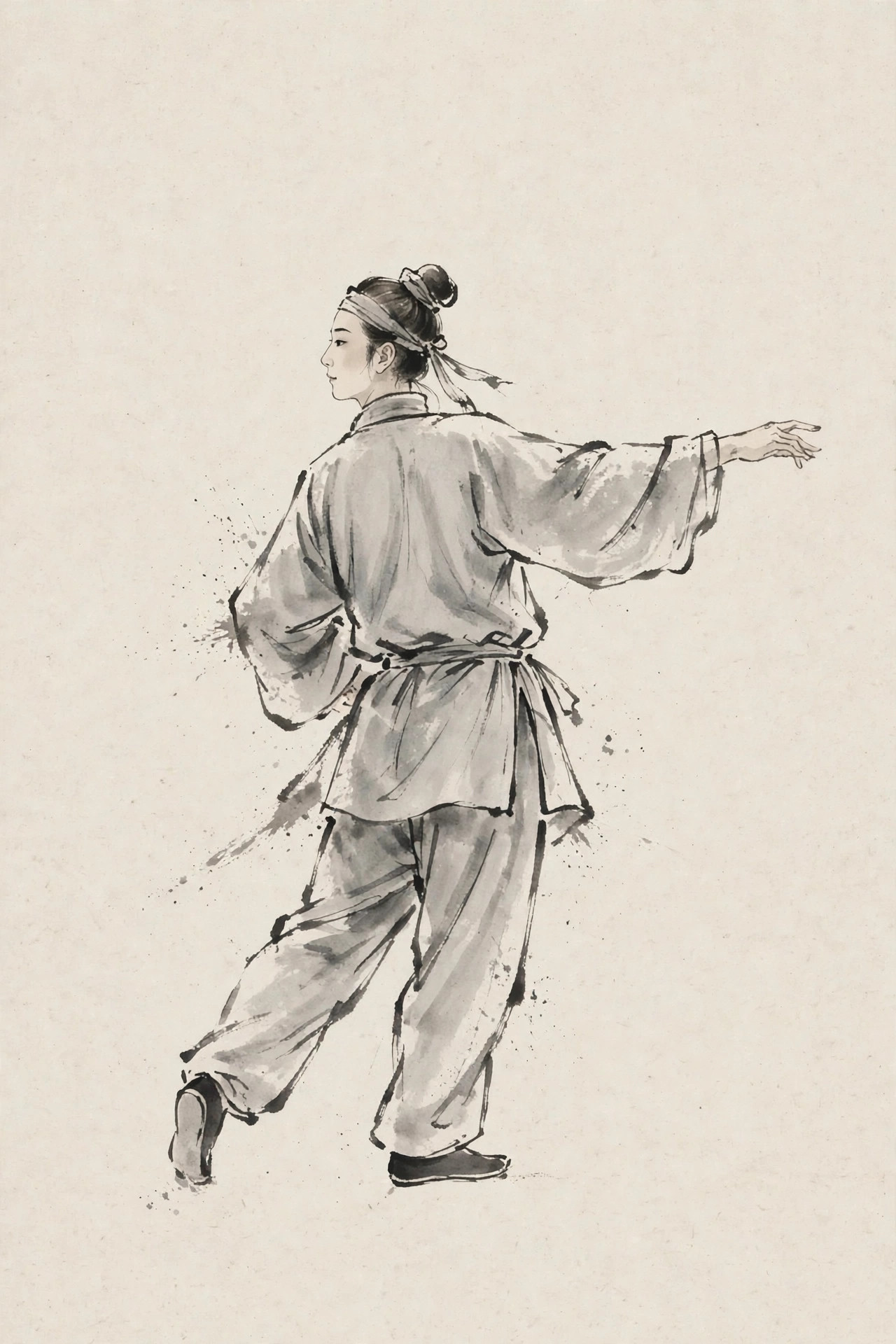
Bear rolling is the clumsiest-looking — and arguably most nurturing — move in the set. Stand with feet apart, hands resting on your knees, and sway your body side to side like a bear, shifting your weight from leg to leg. Let your waist lead: your hips trace a circle, and your upper body rocks along like a roly-poly toy.
You’ll feel it in: a warming lower back and heavy, rooted legs. This is the move most recommended for older practitioners: two minutes of swaying and your feet feel planted. Keep your knees softly bent — never locked — and keep the soles of your feet on the floor as your weight transfers.
Monkey: The Quick Fruit-Picking
Monkey picking trains coordination. Step your left foot forward, reach your right hand up as if picking a peach from a branch above your head, swing your left arm back, and let your torso lean back slightly before returning to upright. Alternate sides.
Hands, eyes, waist, and legs all move at once — that’s the point. You’ll feel it in: your side waist and shoulder joints. Choose your own range: reach as high as is comfortable, and don’t wrench your back trying to “grab” an imaginary peach.
Bird: The Wing Spread and Balance
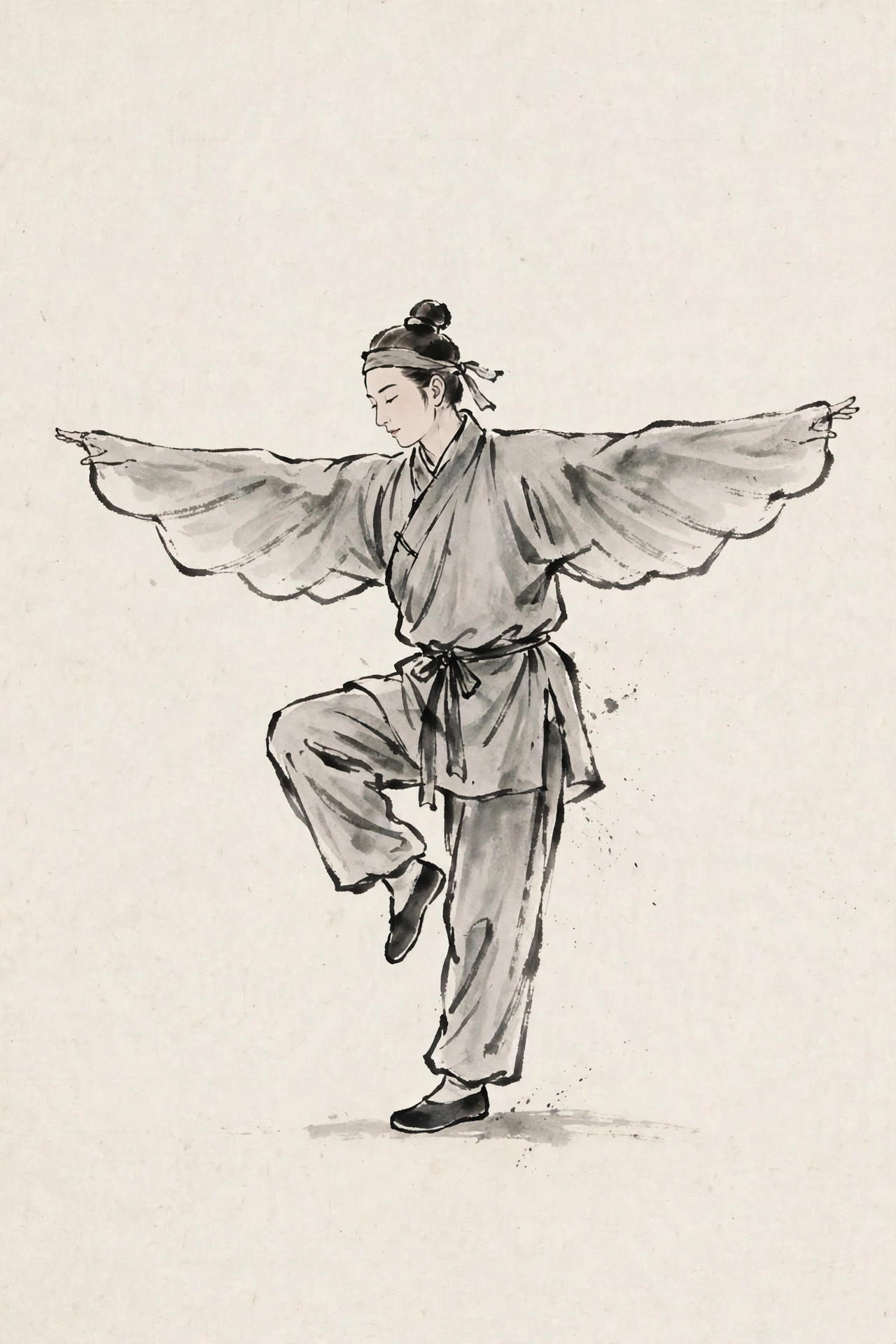
Bird stretching is the prettiest move in the set. Spread both arms out to the sides like wings and lift them, while raising one leg behind you, holding the “big X” shape for three seconds. Switch sides. This is the balance test — and there is no shame in holding a wall with one hand while you learn it.
You’ll feel it in: your chest opening and your standing ankle working hard. Three reps per side daily, and your single-leg stability will be noticeably better within a month.
Your 15-Minute Daily Sequence
Once you know each animal, practice them in this order. The full set takes about 15 minutes:
- Warm-up (2 min): march in place, rotate your wrists and ankles, take five deep breaths.
- Tiger (3 min): 6 pounces + 6 tiger lifts. Wakes the body up and gets the blood moving.
- Deer (3 min): 4 deer-butting reps per side + 1 minute of light deer-running in place. Focus on loosening the neck and waist.
- Bear (3 min): 2 minutes of swaying + 8 sinking sways. Settle down and steady the legs.
- Monkey (2 min): 6 picking reps per side + 10 light hops (toes barely leaving the floor).
- Bird (2 min): 3 bird stretches per side, finishing with slow, deep arm-opening breaths.
The one breathing rule: inhale through your nose as your body opens and rises; exhale gently through your mouth as you pounce, sink, or fold. Never hold your breath — that is the single most common beginner mistake, and it’s the main cause of practice-time dizziness. If your breath can’t keep up, slow the movement down. Breath always outranks form.
The Desk-Worker Shortcut: Three Moves at Your Workstation
No space, no time? Practice the “desk trio” during your lunch break:
- Seated tiger pounce: sit upright, shape your hands into tiger claws, push forward and lean in as you exhale; inhale and return. Six reps — targets stiff shoulders directly.
- Seated deer look-back: sitting tall, slowly turn your head to look back over each shoulder, four times per side. Keep your shoulders still; only the neck turns.
- Standing bird stretch: stand up beside your desk, raise your arms out and up while breathing deeply, five times. One square meter is all you need.
A programmer I know did these three every lunch break for three months and had noticeably fewer neck flare-ups. That’s one person’s experience — but moving beats not moving, every time.
Four Beginner Pitfalls
Pitfall 1: Holding your breath under effort. The moment you tense up, you stop breathing. If your breath feels short, shrink the movement. Breathing wins every argument.
Pitfall 2: Going fast and forceful. Wuqinxi is meant to be slow; slow is where the flavor is. A warm, mild ache is normal. Sharp pain or grinding joints mean: stop immediately.
Pitfall 3: Training without recovering. Fifteen minutes of practice followed by a 2 a.m. bedtime defeats the purpose. Hua Tuo’s “flowing water” was about sustained, gentle consistency — and regular sleep is part of the deal.
Pitfall 4: Chasing textbook perfection. Every body has a different range of motion. A 60-year-old and a 25-year-old won’t do the same deer look-back, and that’s fine. Your standard is simple: a gentle stretch, never pain.
Quick Answers
Do I need to memorize the whole set before starting? No. Learn one animal per day over five days, then start the sequence. Most people feel comfortable with the full 15 minutes within two weeks.
I’m over 60 — is this too much? Wuqinxi was practically made for this. Start with the bear and bird movements (the gentlest), skip the hopping, and build up over a month. If you have knee or blood-pressure issues, check with your doctor first.
Morning or evening practice? Morning is ideal — it’s a gentle full-body reboot after a night of stiffness. Evening works too, but finish at least an hour after dinner and at least an hour before bed.
Wuqinxi or Baduanjin — which should I learn first? Both are classic Chinese qigong sets of similar length. Baduanjin is simpler and more linear — a better first routine. Wuqinxi is more playful and varied — better once you want more whole-body movement and balance work. Many practitioners do both.
Safety note: build up gradually, from small range to larger. If you have old knee or back injuries, high blood pressure, or heart conditions, consult a doctor before starting. Stop immediately and rest if you feel dizzy, chest tightness, or sharp joint pain. Avoid practicing within an hour after a meal. This article introduces a traditional wellness practice for cultural and educational purposes only — it makes no promises of therapeutic effects and is not a substitute for medical advice.