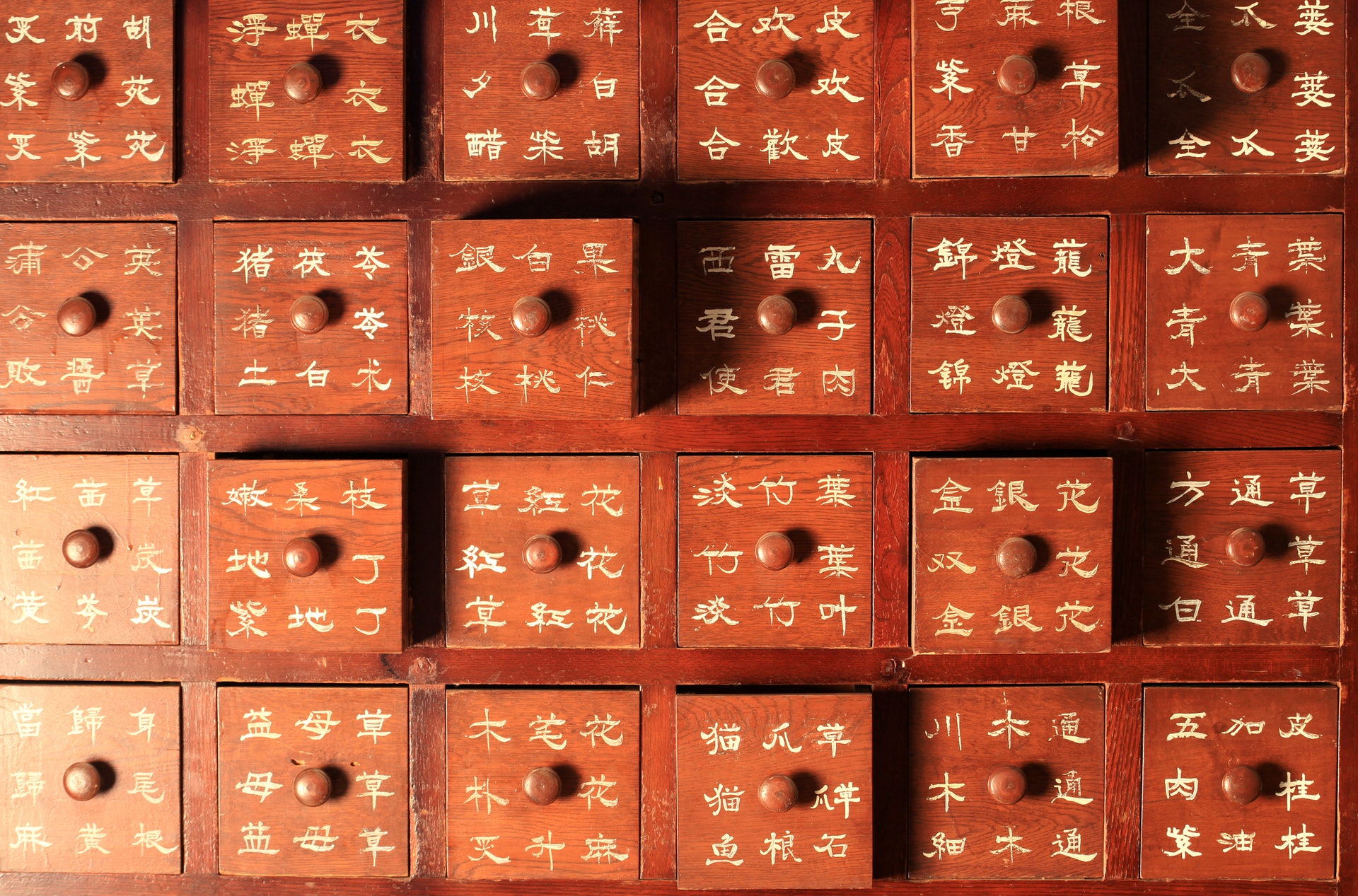
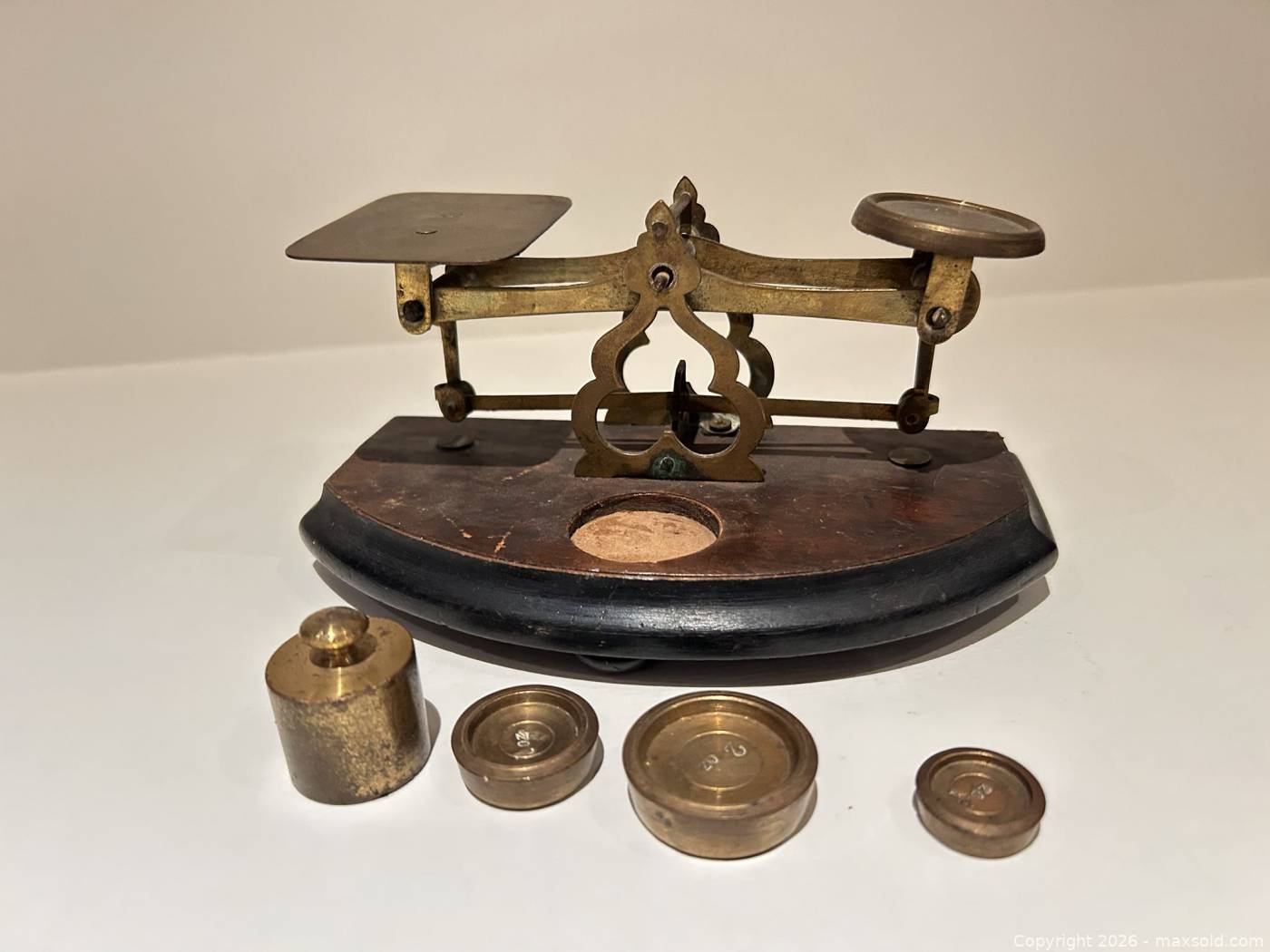
Picture an old Chinese pharmacy. The shopkeeper lays your prescription on one pan of a brass scale, then adds herbs to the other, pinch by pinch, until the beam hangs level. Nothing there is random — every herb is there to restore balance.
That image is the single best entry point into one of the most misunderstood ideas in BaZi (八字, “Eight Characters” — the traditional Chinese birth-chart system that maps your birth year, month, day, and hour onto eight characters built from the five elements). Last time we met the chart’s ten roles, including the Day Master (日主) — the “self” at the center. The natural next question: what do you do with that knowledge?
The answer lives in a concept called Yongshen (用神), often translated as the “Favorable Element” — the thing everyone wants to know and almost everyone gets wrong. This lesson makes no predictions and reads no one’s chart; it is pure cultural literacy: what Yongshen means, why the ancients invented it, and the three traps that catch every beginner.
Yongshen: The Balancing Point of a Chart
Imagine a BaZi chart as a balance scale. The Day Master sits at the center. On one side sit its supporters (in the Ten Gods (十神) vocabulary — the system that labels every character by its relationship to the self — these are the Seal/Resource and Friend elements); on the other side sit the forces that pressure, drain, or consume it (Power/Officer, Output/Expression, and Wealth elements). Whoever has the numbers decides which way the scale tips.
The ancient view was that a chart tipped too far is “out of harmony” — like a student who scores full marks in every language class and fails every science class. What fixes that kind of imbalance? Not more of what’s already strong, but a prescription that restores equilibrium. Yongshen is exactly that: the “balancing prescription” — and crucially, it is not the element you lack. It is the force that would bring the scale back to level.
Imagine a team of ten where everyone is brilliant at execution and nobody can do the accounting. The team doesn’t need “more people” — it needs an accountant. That one role is the team’s Yongshen: the hire that makes the whole structure work.
Technically the idea comes in two parts. The Yong Shen (用神, literally “useful god/spirit”) is the lead herb in the prescription — the main force. The Xi Shen (喜神, “pleasing god/spirit”) is the supporting herb that helps the lead one work. In practice people bundle them together and say “Xi-Yong Shen” (喜用神) to mean the one or two elemental forces that would push the chart toward balance.
The Core Logic: “Support the Weak, Restrain the Strong”
The entire Yongshen system rests on a four-character principle: 扶抑 (fú yì) — support and restrain. You look at where the Day Master stands on the scale, and there are only two situations:
Situation 1: The Day Master is too weak. Too few supporters on its side. Say the Day Master is a small flame (Ding Fire) ringed by water and earth — water extinguishes fire, earth drains it. Here Yongshen means support: bring in wood to feed the flame (the Resource/Seal element), or more fire to keep it company (the Friend element). You are nursing the flame back to life.
Situation 2: The Day Master is too strong. Too many supporters. Say the Day Master is a towering tree (Jia Wood) with water feeding it everywhere and more wood crowding in — the tree grows wild, branches sprawling. Here Yongshen means restrain: bring in metal to prune it (the Power/Officer element), fire to vent the excess (the Output element), or earth to give its energy somewhere to go (the Wealth element). You are giving the tree some discipline.
Hold onto that feeling: support the weak, restrain the strong. Everything fancier in the system grows out of this one root.
The 3-Step Reading Method: From Scale to Prescription
A professional reader weighs dozens of details, but for a culture enthusiast, three steps are enough to follow almost any public discussion of Yongshen.
Step 1: Judge the Day Master’s strength — count heads on each side
The classical method checks three dimensions, remembered as “得令, 得地, 得势” (dé lìng, dé dì, dé shì):
- Dé lìng (“holding the mandate”): look at the birth month. Does the Day Master’s element get along with the month’s element? Wood born in spring (the Tiger and Rabbit months) is “in season” — the strongest possible footing.
- Dé dì (“holding the ground”): look at the branches under the Day Master, especially the day branch and hour branch. The branches are the Day Master’s “territory” — wood sitting on Tiger, Rabbit, Pig, or Goat branches has deep roots.
- Dé shì (“holding the momentum”): look for allies among the stems. More of the same element on the stems (another Jia or Yi for a wood Day Master), or the element that feeds it (water feeding wood), counts as backup.
Two out of three usually means a strong Day Master; one or zero usually means weak. This is a beginner’s head-count — real reading also weighs clashes, combinations, and transformations — but the direction is right: first find out which way the scale tips.
Step 2: Check for a “special constitution”
Most charts follow the support-and-restrain route, but a small minority are “follow-the-flow” charts (从格, cóng gé). When the Day Master is so weak that nothing can save it — or so strong that nothing can hold it back — the ancients did something counterintuitive: they stopped fighting and went with the dominant force instead.
Imagine someone swept into a fast river. Thrashing against the current only exhausts them; going with the flow and looking for a place to climb out is the wiser move. In a follow-the-flow chart, the overwhelming side itself becomes the Yongshen.
The bar for this judgment is very high, and beginners misclassify charts constantly. One rule of thumb is enough: when someone says “this chart follows the flow,” they are discussing a rare edge case — don’t try to apply it to yourself.
Step 3: Check the climate — Tiao Hou
Tiao Hou (调候) means “adjusting the climate,” and it is the most humane layer of the system. Strength alone isn’t enough; you also have to ask whether the chart is “cold” or “hot.”
Someone born in winter (the Pig, Rat, Ox months) with a chart full of water and metal is frozen solid. Even if the Day Master isn’t particularly weak, the ancients would prioritize a climate-adjusting Yongshen: a touch of Bing or Ding Fire to warm the chart up — like lighting a stove in a cold room. Make the person comfortable first, then talk about everything else.
Someone born in summer (the Snake, Horse, Goat months) with blazing fire and parched earth needs the opposite: Ren or Gui Water to cool things down. The climate Yongshen and the strength-based Yongshen sometimes coincide and sometimes differ — classical texts have argued about the tension for a thousand years.

Two Worked Examples (Fictional)
The two charts below are entirely fictional, invented only to demonstrate the reasoning. They correspond to no real person.
Example 1: Weak self needs support
Hypothetical chart: the Day Master is Ding Fire, born in winter (the Rat month). The stems are crowded with metal and water; the branches hold no roots of wood or fire. Running the three steps:
- Strength: Ding Fire is a small flame, born in water’s season (no mandate), rootless in the branches (no ground), with no helpers on the stems (no momentum) — weak. The scale tips hard toward the draining side.
- Constitution: weak, but the month branch still hides a trace of fire — not “extremely weak.” Normal support-and-restrain applies.
- Climate: winter water is cold, and the flame is feeble. Wood feeds fire and also loosens earth — two birds with one stone.
Reading: this type of chart would typically take wood (the Resource element) as Yongshen, with fire (the Friend element) as the helper. Wood is the firewood; fire is the company — add the wood first, then the company, and the flame can grow. Again, this is a cultural demonstration, not a judgment about anyone’s fate.
Example 2: Strong self needs restraint
Hypothetical chart: the Day Master is Jia Wood, born in spring (the Rabbit month). The stems are full of water and wood; the branches link Tiger-Rabbit-Dragon in a row. Running the three steps:
- Strength: Jia Wood in spring holds the mandate; branches full of wood hold the ground; stems with water feeding and wood backing hold the momentum — strong. The scale tips toward the Day Master.
- Constitution: strong, but not “so strong nothing can restrain it.” Normal support-and-restrain applies.
- Climate: spring wood is neither frozen nor scorched — climate adjustment isn’t the main issue.
Reading: this type of chart would typically take metal (Power) or fire (Output) — either prune the overgrown tree, or give its energy an outlet. As before: a demonstration of logic, not a prediction of fortune.
Three Classic Misconceptions
With the basic logic in place, here are the three most widespread misunderstandings — spotting them will inoculate you against most of the sales talk out there.
Myth 1: “Fill in whatever element you’re missing.”
This is the most popular and the most wrong. A chart missing fire does not mean fire is your Yongshen. Back to the team analogy: a team of ten accountants missing a salesperson gains nothing from hiring an eleventh accountant. The missing element may be exactly what the chart doesn’t need — or even what harms it. Yongshen is about what the chart needs, not what it lacks. That distinction should be carved into every beginner’s mind on day one.
Myth 2: “Yongshen is good, its opposite is bad.”
Yongshen and its counterpart (忌神, jì shén, the “unfavorable element”) are relative terms, not moral labels. Yongshen simply means “the force that favors balance right now.” And it changes: luck cycles shift every ten years, annual cycles every year, and the head-count on each side of the scale is always moving. What is favorable this year may turn unfavorable next year. Treating Yongshen as a lucky charm to carry around is a misunderstanding of the whole idea.
Myth 3: “Once you know your Yongshen, you can change your fate.”
The classic sales pitch goes: “Your Yongshen is water, so wear more black and move north.” Leaving aside whether the reading is even right, the logic is backwards. Yongshen is the ancients’ analytical tool for describing a chart’s structure — a way to read the manual, not a workshop for modifying the machine. Read it as culture and it’s fascinating; use it to “hack your fate” and you’re likely to pay a foolishness tax.
Quick Answers
Is Yongshen the same as my “lucky element”? Roughly — “lucky element” is the folk translation. But “lucky” misleads: Yongshen isn’t a charm, it’s a structural role. Think “the element that restores balance,” and you’ll never be misled by the word “lucky.”
Can Yongshen change over a lifetime? The natal chart’s Yongshen is usually stable, but the effective balance shifts with each ten-year luck cycle and each year. Professionals spend most of their effort on those moving parts, not on the static chart.
My chart is missing two elements — does that matter? Not by itself. Remember the team analogy: what’s missing only matters if the structure needs it. A chart can be perfectly balanced while “missing” elements.
Can I work out my own Yongshen online? Free calculators give you the Day Master and a rough strength reading — fine as an exercise. A reliable Yongshen, though, involves clash-combination analysis and special-chart screening that calculators gloss over, which is exactly why the sales pitches in Myth 3 deserve skepticism.
Summary: Read the Chart’s Manual in Three Steps
This lesson boils down to three sentences: Yongshen is the force that pushes a chart toward balance; the logic is “support the weak, restrain the strong”; the beginner’s method is check strength, check constitution, check climate. Combined with last lesson’s Day Master and Ten Gods, you can now read a BaZi chart’s basic structure — which of the eight characters is the “self,” who supports it, who pressures it, which way the scale tips, and which “herb” the prescription is missing.
What next? Two paths:
- Go deeper: the natural next lesson is “Luck Cycles and Annual Cycles” (大运/流年) — the head-count on each side of the scale changes every ten years and every year, and understanding why Yongshen moves with them is what unlocks BaZi’s dimension of time.
- Try it hands-on: pull up a free BaZi chart for your own birth data (plenty of tools online) and do exactly one thing: run the three steps to judge the Day Master’s strength. Don’t rush to conclusions — just practice the head-count. Getting it wrong is fine; the ancients started by miscounting too.
A final reminder: this series is cultural education. It explores how the ancients observed and categorized human experience — it makes no claims about any individual’s destiny.
中文版:八字入门第二课:喜用神是什么?三步看懂命局的用神逻辑
For cultural and educational purposes only. Nothing here predicts any individual’s fortune or destiny.