The 24-form simplified Tai Chi routine takes about five minutes to perform — and has 24 move names to remember. For beginners, the hardest part isn’t the difficulty of the movements. It’s reaching move 8 and blanking on what move 9 is supposed to be. This guide gives you a memory system: learn the sequence in four chunks, and you’ll have the full order down in three days.
A quick note before we start: “24-form” here means the standardized simplified routine created in 1956, the version taught in parks and schools across China and worldwide. If you learn this sequence, you can join any group practice anywhere and follow along.
First, the Full Roster: 24 Moves in Four Groups
Don’t try to memorize 24 names at once. Split them into four groups of six:
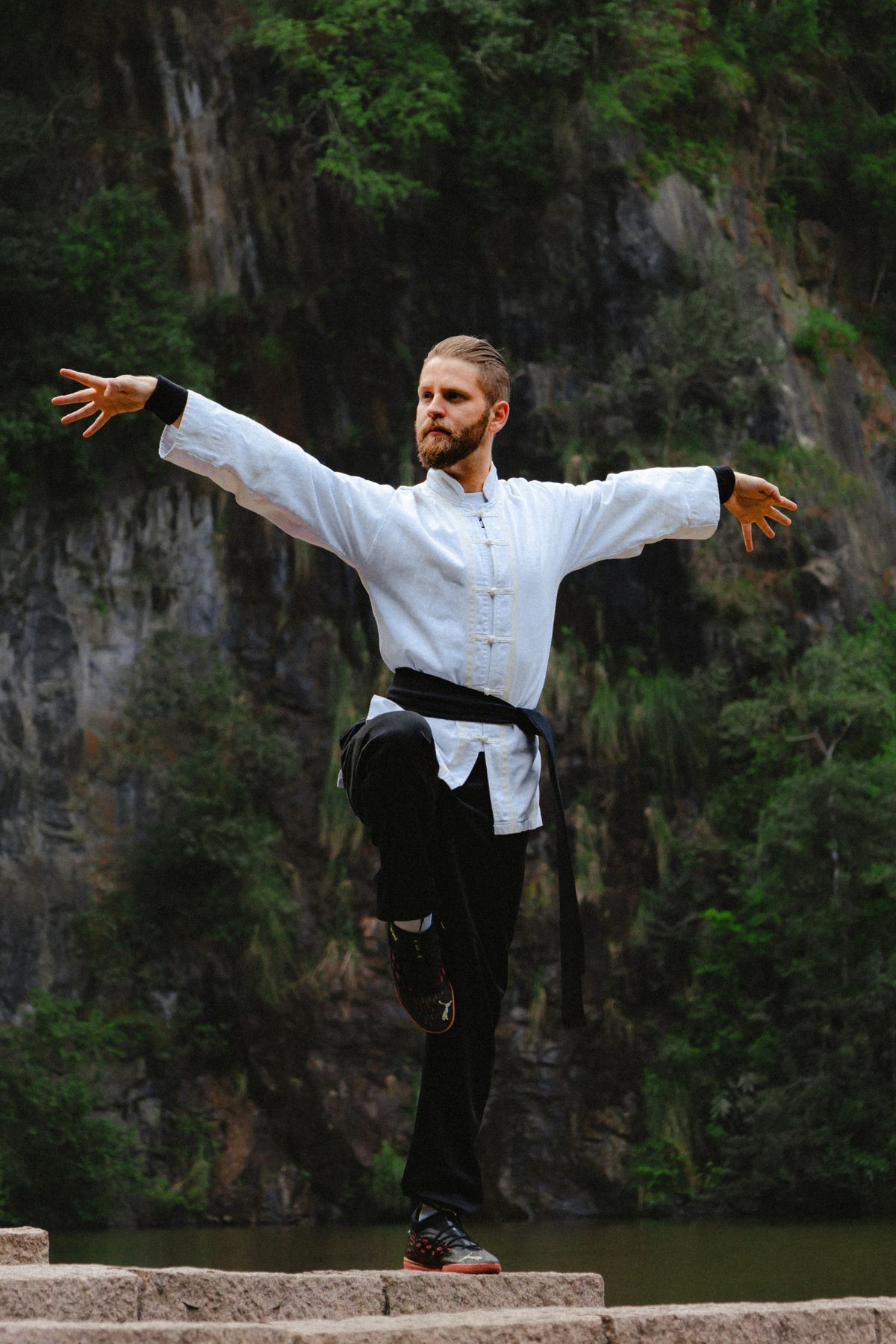
- Opening group: Commencement, Part the Wild Horse’s Mane (left & right), White Crane Spreads Its Wings, Brush Knee and Push (left & right), Play the Lute
- Flow group: Repulse Monkey (left & right), Grasp the Sparrow’s Tail (left), Grasp the Sparrow’s Tail (right), Single Whip, Wave Hands Like Clouds, Single Whip
- Power group: High Pat on Horse, Right Heel Kick, Strike Both Ears with Fists, Turn and Left Heel Kick, Snake Creeps Down (left) + Stand on One Leg, Snake Creeps Down (right) + Stand on One Leg
- Closing group: Fair Lady Works at Shuttles (left & right), Needle at Sea Bottom, Fan Through the Back, Turn, Deflect, Parry and Punch, Apparent Close-Up, Cross Hands, Closing Posture
Count them and you might get 25 — that’s because Single Whip appears twice in the flow group but counts as one form, and moves done on both sides (like Part the Wild Horse’s Mane) also count once. That’s how the official 24 is calculated. Don’t scare yourself with the math; just learn the groups.
Opening Six: “Rise, Part, Crane, Brush, Lute”
Your memory cue for the opening: “Rise, Part, Crane, Brush, Lute.” Commencement (hands float up, then press down) → Part the Wild Horse’s Mane (once each side, arms separating like parting tall grass) → White Crane Spreads Its Wings (one hand rising, one pressing down, like a crane flashing its wings) → Brush Knee and Push (hand sweeps past the knee, step into a bow stance and push) → Play the Lute (empty stance, hands rounded as if cradling a lute).
Common stumble: after finishing Part the Wild Horse’s Mane on both sides, don’t jump straight into White Crane — there’s a turn in between. Shift your weight fully onto the right leg first, then turn. Rushing the transition is where beginners lose their balance.
The Middle Stretch: Repulse Monkey to Cloud Hands — Where Flow Gets Tested
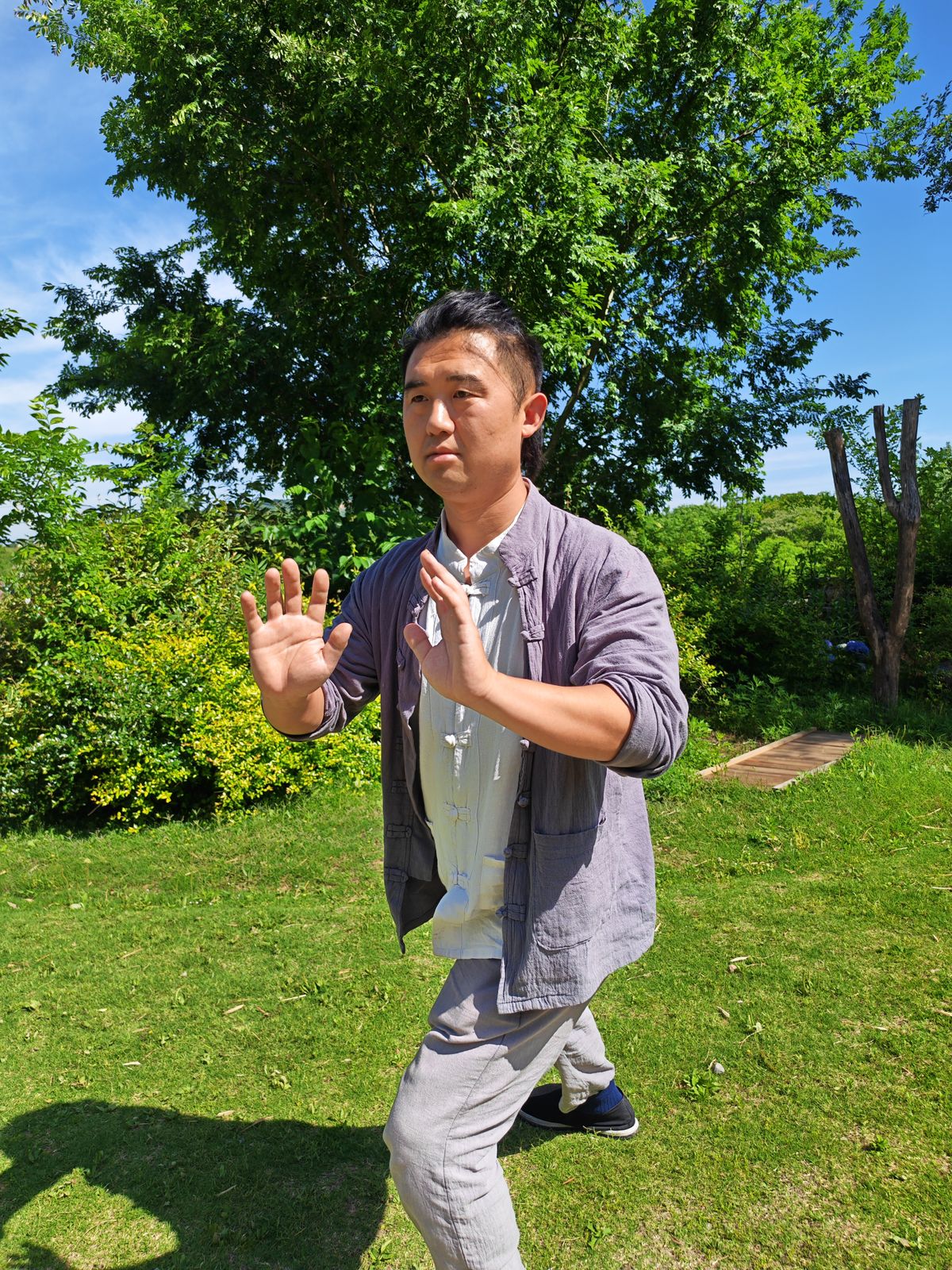
Your cue: “Retreat, Sparrow, Whip, Cloud, Whip.” Repulse Monkey is the retreating technique — you literally step backward while striking. Then Grasp the Sparrow’s Tail, left side followed by right side, a connected combination of four energies (peng ward-off, lü roll-back, ji press, an push). Then Single Whip → Wave Hands Like Clouds (hands drifting like clouds crossing the sky) → Single Whip again.
Common stumble: Cloud Hands is where everyone does the “same hand, same foot” shuffle. The rule: hand goes left, foot goes left. Let your eyes follow your hands — never look down at your feet. Your feet know where they are; your eyes will only confuse them.
The Power Group: Heel Kicks and Low Stances — The Fitness Watershed
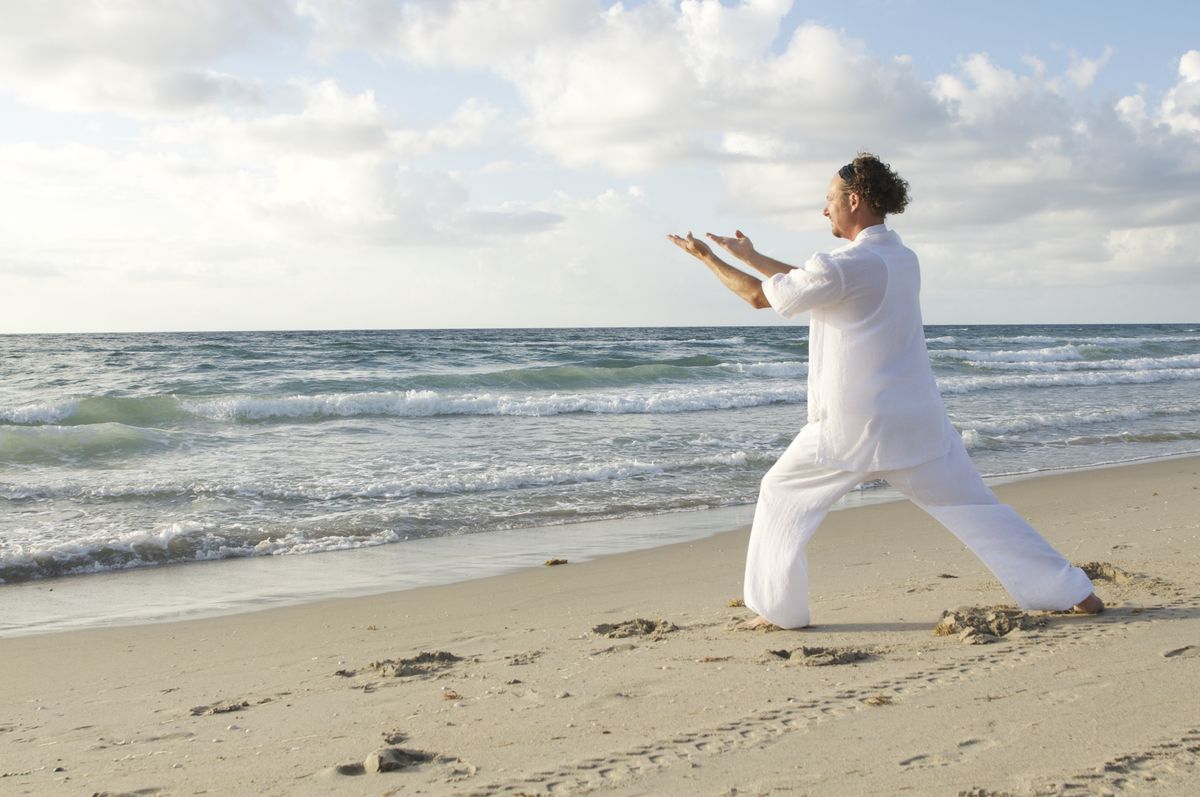
Your cue: “Pat, Kick, Ears, Turn-Kick, Down-Up, Down-Up.” Right Heel Kick and the turning Left Heel Kick test single-leg balance; Snake Creeps Down into Standing on One Leg — on each side — is the lowest fitness point of the entire routine.
Advice for beginners: don’t crouch too deep in the low postures. In Snake Creeps Down, extending the straight leg fully is enough — depth without stability is just wobbling. During the one-leg stands, fix your eyes on a single point ahead of you; if you’re swaying badly, practice next to a wall you can touch.
This group is also where your legs will tell you the truth about your fitness. That’s fine — it’s supposed to be the hard part. The routine was designed with a difficulty curve: gentle opening, flowing middle, demanding power section, calming close.
The Closing Sequence: “Shuttle, Needle, Fan, Punch, Seal, Cross, Close”
Your cue: “Shuttle, Needle, Fan, Punch, Seal, Cross, Close.” Fair Lady Works at Shuttles → Needle at Sea Bottom (bend forward, palm threading downward) → Fan Through the Back → Turn, Deflect, Parry and Punch (the only explosive strike in the whole routine) → Apparent Close-Up → Cross Hands → Closing Posture.
Note: the closing posture isn’t just “being done” — it’s the formal cool-down. Press both hands downward three times, let your breath settle into the lower abdomen, and stand quietly for ten seconds before walking off. Skipping this is like sprinting to a stop instead of jogging down.
Three Key Moves, Explained in Detail
Part the Wild Horse’s Mane: The Arms “Part,” They Don’t “Push”
Most beginners turn this into a stiff-armed forward shove. Wrong. The correct feeling: both arms arc outward like you’re parting two clumps of tall grass, elbows staying softly bent the whole time. As the arms separate, let your body weight turn with them — front leg bowing, back leg pressing into the ground. The power starts from the feet, travels up through the legs and waist, and only then reaches the arms.
Brush Knee and Push: Coordinating the Upper and Lower Hands
One hand sweeps past the knee (don’t actually touch it — keep the palm about four inches away) while the other pushes forward simultaneously. The old saying is “hand arrives, foot arrives, eye arrives”: the pushing hand, the stepping foot, and your gaze must all land at the same moment. When they don’t, the move looks scattered; when they do, it looks like one clean gesture.
Deflect, Parry and Punch: The Routine’s Only Explosion
Turn, deflect (brush aside), parry (seal off), punch — four actions in one continuous burst. At the instant of the punch, the waist and hips twist and the fist simply rides that rotation out. Beginners should do it slowly fifty times to find the continuity first; power comes later, and it comes from the twist, not from arm muscle.
Full Run-Through: Play the Whole Set to the Cues
Once the cue chains are memorized, walk through the full routine at this pace on your first complete attempt:
- Opening group (about 1 minute): take the Commencement slowly — inhale as the hands float up, exhale as they press down. Do Part the Wild Horse’s Mane on both sides without skipping one; hold White Crane Spreads Its Wings for two full seconds before moving on.
- Flow group (about 1 minute 20 seconds): this is the smoothest stretch of the routine. Repulse Monkey steps back five times, Grasp the Sparrow’s Tail once per side, Wave Hands Like Clouds three times. Keep the breathing natural — never hold it.
- Power group (about 1 minute 30 seconds): the fitness low point. Keep the supporting leg slightly bent on the heel kicks — never lock it straight. If the one-leg stands wobble, lock your eyes on a fixed point ahead.
- Closing group (about 1 minute 10 seconds): the punch is the routine’s one explosive moment — it’s fine to let out a little sound with it. After Cross Hands, close out: press the hands down three times and stand still for ten seconds.
Five minutes total. Week one: one full round a day. Week two: two rounds a day with five minutes rest between. After a month, you’ll catch yourself starting to critique your own movements — congratulations, that’s the real beginning.
3 Methods for Memorizing the Cues
- Chunk it: memorize one group per day; four days and you’re done. Cramming all 24 at once is how sequences get scrambled.
- Speak as you move: say each move’s name out loud as you perform it. Muscle memory holds sequences better than your thinking brain does.
- The bedtime replay: lying in bed with eyes closed, walk from Commencement to Closing Posture in your mind. Whatever spot you get stuck on becomes tomorrow’s first drill.
FAQ
Do I need to memorize the Chinese names? Not at first. The English cue chains above are enough to learn the order. The Chinese names become useful later, when you train with Chinese-speaking teachers or want to look up a specific move.
How slow should “slow” be? Slow enough that you could stop and hold any position comfortably. If you’re rushing to keep up with a video, the video is too fast for you right now — find a slower one or practice without it.
When do I stop thinking about the sequence? Usually after 2–4 weeks of daily practice. Once the order is automatic, your attention frees up for what actually matters: the quality of each movement. That’s when Tai Chi starts getting interesting.
Memorized sequences are just step one. Step two — putting genuine energy into each move — comes a few months down the road. Tonight, memorize the opening cue chain. Tomorrow morning, play it through once.
Practice within your limits; consult a qualified professional if you feel unwell.
中文版:太极拳24式口诀