Push open the window in the morning and the grass is edged with white frost. Your breath hangs in the air for a second before it fades. Frost’s Descent has arrived. In the Chinese solar term calendar, it is the closing note of autumn — the last step before winter knocks on the door in earnest.
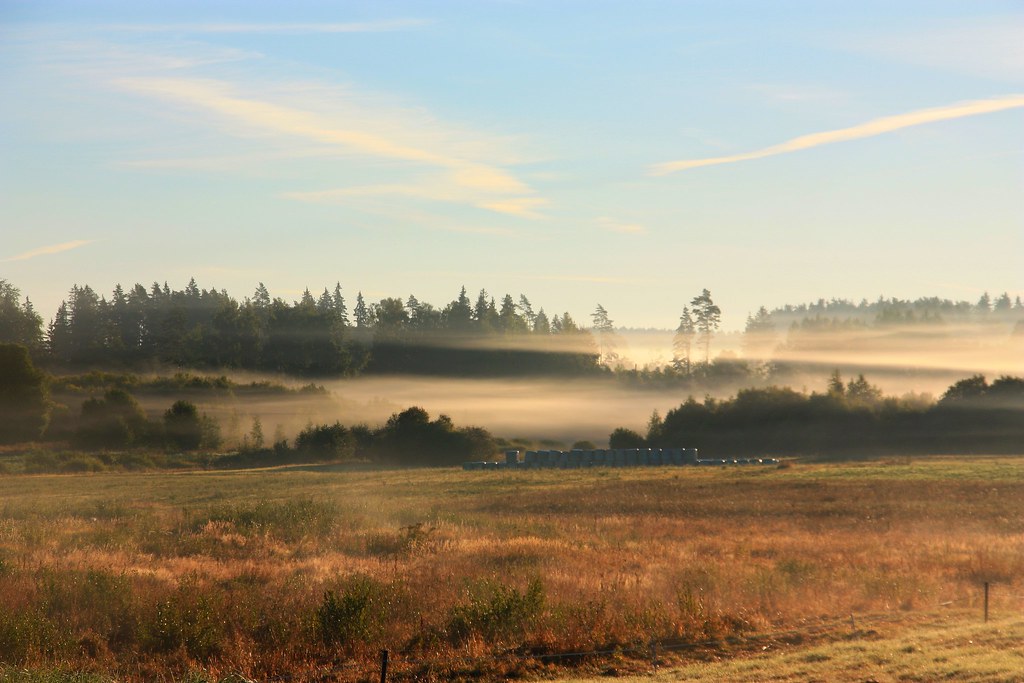
Frost’s Descent, or Shuangjiang in Mandarin, is the eighteenth of the twenty-four solar terms (jieqi), the traditional Chinese system that divides the year by the sun’s position and by what the weather actually does. It usually falls around October 23. The old saying goes that when frost descends, autumn reaches its full stop: dew turns to frost, plants begin to yellow and wither, and the temperature drops a little more noticeably every day.
That sounds poetic, but it is also practical. For centuries, people in China have used this turning point to adjust three things at once — what they eat, how they dress and sleep, and how they move. This guide follows that same logic, in plain, usable detail. No exotic ingredients, no complicated routines. Just the small changes that make the cold weeks ahead noticeably easier.
What Actually Changes When Frost’s Descent Arrives
Three shifts define this season, and once you can name them, the advice that follows starts to make sense.
First, the gap between day and night widens. A daytime high of around 20 degrees Celsius is still common, but nights often fall below 10 degrees. A difference of more than 10 degrees within a single day is normal, not unusual. That is why the same jacket can feel perfect at noon and far too thin by seven in the evening.
Second, the air turns dry. In northern China, relative humidity often drops below 40 percent at this time of year. Lips crack, skin feels tight, and many people wake up with a dry throat. It is not a cold — it is the season. The body loses moisture faster than most people realise, and drinking habits that worked in summer no longer keep up.
Third, cold fronts arrive in waves. The temperature rarely slides down gently. More often, a single cold front drops it by 5 to 8 degrees overnight. You go to bed in mild weather and wake up to a different season. That sudden change, more than the cold itself, is what tests the body’s ability to adapt.
After Frost’s Descent, the north settles into late autumn while the south finally says goodbye to the lingering heat. A coat is just right during the day, but an evening breeze cuts straight through it. This back-and-forth between warm and cold is the season’s real challenge — and the reason the old advice is always about layering, warming up gradually, and never letting a chill settle in.
Traditions of the Season: Persimmons, Chrysanthemums, and Climbing High
Frost’s Descent has its own folk customs, and behind each one is a piece of seasonal common sense.
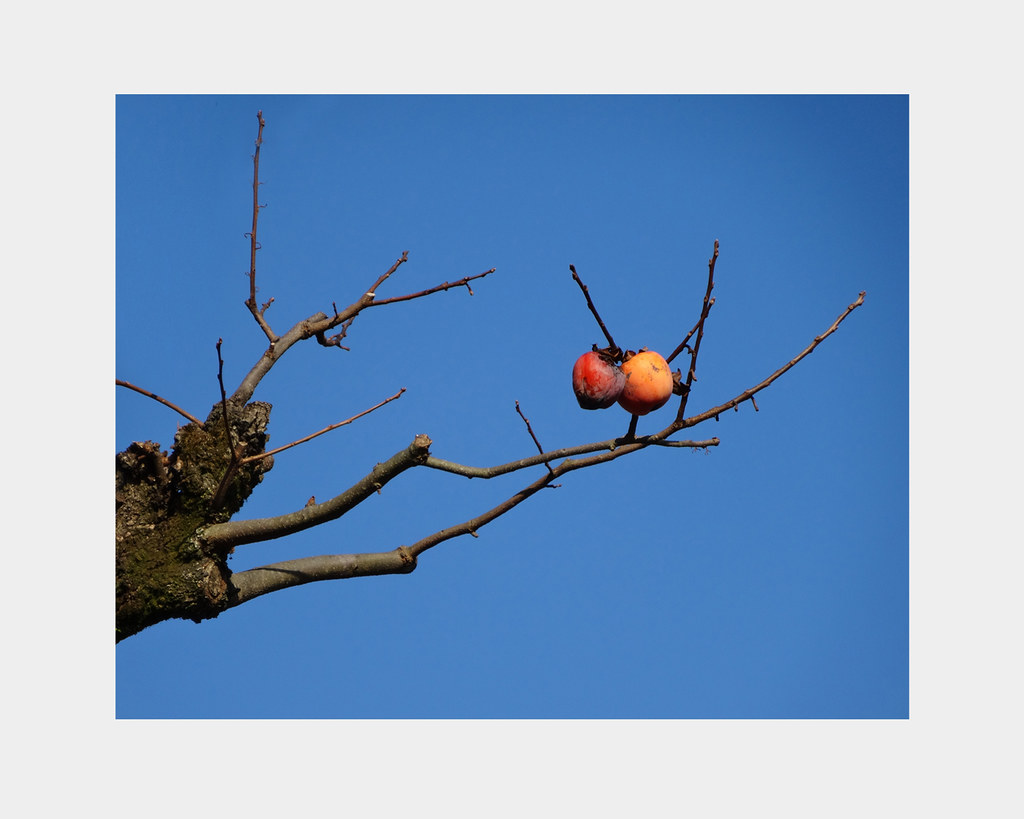
Eating persimmons is the most famous. Persimmons ripen exactly at this time of year — soft, sweet, and fragrant. An old saying claims that eating persimmons at Frost’s Descent keeps a runny nose away. Whether or not you believe the folk claim, the underlying point is sound: eat what is in season, at its best. Choose persimmons that feel slightly soft, spring back gently when pressed, and show an even orange-red colour. One or two a day is enough. Persimmons are cooling in nature in traditional Chinese dietary thinking, so eating them on an empty stomach or in large quantities can upset the stomach. People who tend to feel cold in the stomach or who are prone to loose stools should be especially careful.
Admiring chrysanthemums is another tradition. Chrysanthemums bloom at their fullest in autumn, and people have long gone out to enjoy them around Frost’s Descent — partly for the view, and partly as an excuse to get outside while the weather is still mild enough to enjoy. Pick a weekend morning between 9 and 11, when the sun is up and the temperature has recovered, and take a walk through a park. A chrysanthemum show is a good destination, but the real benefit is the walk itself: fresh air, gentle movement, and sunlight before the deep cold sets in.
Climbing high completes the trio. The custom overlaps with the Double Ninth Festival (Chongyang), which falls nearby on the lunar calendar. The idea is the same: the autumn sky is clear and high, so climb a hill, walk up some steps, work up a light sweat, and let the sun warm you. There is no need to chase speed or height. Forty-five minutes to an hour, walking until you feel a light sweat, is ideal. A good pace is one where your heartbeat is clearly faster but you can still hold a normal conversation. That intensity suits most people.
What to Eat: Moisten the Dryness, Warm the Stomach
Food at Frost’s Descent comes down to two words: moisten and warm. The air is dry, so the body needs moisture and foods that soothe dryness. The temperature is falling, so meals should be warming rather than chilling. Get those two right and the rest follows naturally.
Start by Drinking Enough Water
In dry autumn weather, many people only reach for water when they already feel thirsty — by which point the body has been short of fluid for a while. Aim for 1,500 to 1,700 millilitres a day, sipped in small amounts rather than gulped in one go. Start the morning with a glass of warm water, about 200 millilitres, to soothe a throat that has dried out overnight. Keep a cup on your desk and take a few sips every hour. That steady habit works far better than two large glasses in a rush after work.
Three Moistening Foods, Simply Prepared
Pears. Pears are at their seasonal best right now. Peel a snow pear (xueli), cut it into chunks, add a few pieces of rock sugar, and simmer gently for 20 minutes. The result is a simple stewed pear that soothes the throat and eases a dry cough. Half a pear to one a day is enough. People with a weak, cold stomach or a tendency to loose stools should eat less raw pear — stewed is gentler and safer for them.
White radish. White radish, also called daikon, is mostly water, easy to digest, and perfect for soup at this time of year. Cut it into chunks and simmer with pork ribs or lamb for about 40 minutes, adding a few slices of ginger to remove any gamey smell. The soup comes out clear and savoury, the meat tender. Two or three times a week, with a staple food on the side, it makes a warming dinner all by itself.
Lily bulbs and white fungus. Soak dried lily bulbs, then simmer them with white fungus (tremella, sometimes called snow fungus) and a few red dates for about 30 minutes, until the fungus releases its gel and the soup turns slightly thick. This sweet soup works well as a light evening snack — a small bowl is plenty. It is soothing, easy to make, and fits the season’s need for moisture without being heavy.
Two Things to Eat Less Of
Spicy, stimulating food. Chilli and Sichuan pepper in large amounts can add internal heat and make a dry mouth and sore throat worse. This is the season to ease off, not to double down on heat.
Cold and raw food. Iced drinks and fruit straight from the fridge can irritate the stomach when the weather is already cold. Let fruit sit at room temperature for half an hour before eating it, and do not drink yoghurt the moment it comes out of the fridge. Small habits like these spare the stomach a daily shock.
Daily Living: Clothing, Sleep, and Bathing
The core of daily care at Frost’s Descent is warmth and regularity, with special attention to the three places that feel the cold first: the neck, the belly, and the feet.
Dress for the morning and evening, not for noon. The coldest moments are when you leave in the morning and when you come home at night, so carry one more light layer than the midday temperature seems to require. You can always take it off and carry it. The neck is vulnerable to wind — wear a thin scarf in the morning, or turn up your coat collar to cover the back of the neck. Feet get cold fastest of all. In the evening, soak them in warm water at about 40 degrees Celsius for 15 to 20 minutes, deep enough to cover the ankles, until your forehead feels faintly warm with sweat. Dry them thoroughly afterwards and put on socks; do not walk barefoot on a cold floor.
Sleep warm, but not overheated. After Frost’s Descent, swap a thin blanket for a slightly thicker one, keeping the belly and shoulders covered through the night. A bedroom temperature of 18 to 22 degrees Celsius is comfortable for most people — too hot and sleep turns restless, too cold and you risk catching a chill. In the hour before bed, stop scrolling on your phone late into the night. Aim to be in bed before 11 p.m. and up between 6:30 and 7 a.m. That rhythm matches the autumn advice to sleep early and rise early, and most people feel the difference within a few days.
Keep bath water moderate, not scalding. When the weather turns cold, a very hot shower feels tempting, but water at 38 to 40 degrees Celsius for 10 to 15 minutes is enough. Water that is too hot, for too long, strips the skin’s natural oils and leaves it drier and itchier afterwards. Within three minutes of stepping out, apply a little body lotion to lock in moisture, paying extra attention to the elbows and shins, where skin dries out first.
How to Move: Slower, Warmer, Without Breaking a Heavy Sweat
The exercise rule for this season is simple: keep moving, do not get chilled, and do not sweat heavily. A heavy sweat followed by a cold wind is the classic way to catch a chill. After exercising, dry off promptly and add a layer.
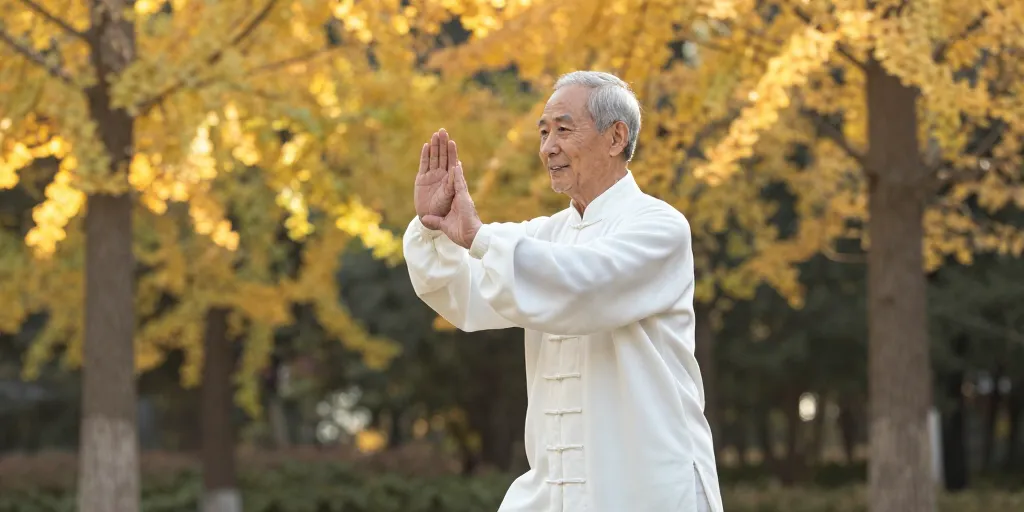
Tai Chi. Tai Chi (Taijiquan) suits Frost’s Descent perfectly — slow movements, a small range of motion, and little chance of a heavy sweat. Practice between 7 and 8 in the morning, in an open space in your neighbourhood or a park, for 20 to 30 minutes. From the opening posture to the closing one, a full set leaves the body gently warm and the hands and feet comfortable. One detail matters: keep your knees behind your toes. Squatting too low puts unnecessary strain on the knees.
Baduanjin. Baduanjin, the Eight Brocades, is a traditional Chinese qigong routine of eight gentle movements. The whole set takes 10 to 15 minutes, which makes it ideal for a lunch break or after work. Movements such as Holding Up the Sky to Regulate the Triple Burner and Drawing the Bow to Shoot the Eagle stretch the shoulders and back and loosen the waist — exactly what a day of sitting demands. Breathe slowly as you move: inhale as the hands rise, exhale as they fall, and never hold your breath.
Walking and slow jogging. A 30-minute walk after dinner, at about 100 steps per minute, is enough to warm the body and work up a light sweat. If you like running, shift your run to after 9 a.m. or before 4 p.m., avoiding the coldest hours of the early morning. Run for 20 to 30 minutes, then dry off and change into dry clothes right away. The run itself is only half the routine — what you do in the five minutes after it matters just as much.
Three Things to Remember
Seasonal wellness at Frost’s Descent does not need to be complicated. Hold on to three things and the rest falls into place.
- Eat to moisten and warm. Rotate pears, white radish, and white fungus through the week, drink enough water, and go easy on spicy and cold food.
- Dress to stay warm. Add a layer for the morning and evening, protect the neck, belly, and feet, and soak your feet in warm water before bed.
- Move slowly and steadily. Tai Chi, Baduanjin, or a 30-minute walk every day — stop at a light sweat, and dry off promptly.
You can start this weekend. Buy two persimmons and a snow pear in the morning, simmer a pot of white radish and pork rib soup in the evening, soak your feet for 15 minutes before bed, and go downstairs at 7 the next morning for one round of Baduanjin. Seasonal wellness works like that: small things, done properly, one at a time. The body notices.
Quick Answers
When is Frost’s Descent? Around October 23 each year. It is the eighteenth of the twenty-four solar terms and marks the end of autumn.
What should I eat most at this time? Seasonal, moistening foods — stewed pears, white radish soup, and lily bulb with white fungus — plus enough water through the day. Eat fewer spicy and cold foods.
What is the best exercise for this season? Slow, gentle movement: Tai Chi in the morning, Baduanjin at lunch or after work, or a 30-minute walk after dinner. Avoid heavy sweating followed by cold wind.
How do I dress for the big day-night temperature gap? Layer for the morning and evening, not for noon. Protect the neck with a scarf or a raised collar, and keep the feet warm.
Can I still eat persimmons if my stomach is sensitive? One or two ripe persimmons a day is fine for most people, but avoid eating them on an empty stomach or in large amounts. If your stomach tends to feel cold or you are prone to loose stools, eat less and choose fully ripe fruit.
Is a foot soak really helpful? A 15 to 20 minute soak in water at about 40 degrees Celsius warms the feet and helps the body relax before sleep. Dry your feet thoroughly afterwards and wear socks.
This article is for general information only and is not a substitute for medical advice. It makes no promise of treatment or cure. If you have a chronic condition, are taking medication, or feel unwell, please consult a doctor or qualified healthcare professional before changing your diet or exercise routine.