It’s 3 p.m. You’ve been at the keyboard for three hours straight. Your neck is tight, your wrist aches, and shaking your hands out does nothing. Now try this: on the outside of your elbow sits a point called Quchi. Three minutes of pressing it, and that dull, heavy ache in your forearm often loosens up noticeably. This guide shows you exactly where it is, how to find it on the first try, how to press it, and when to leave it alone.
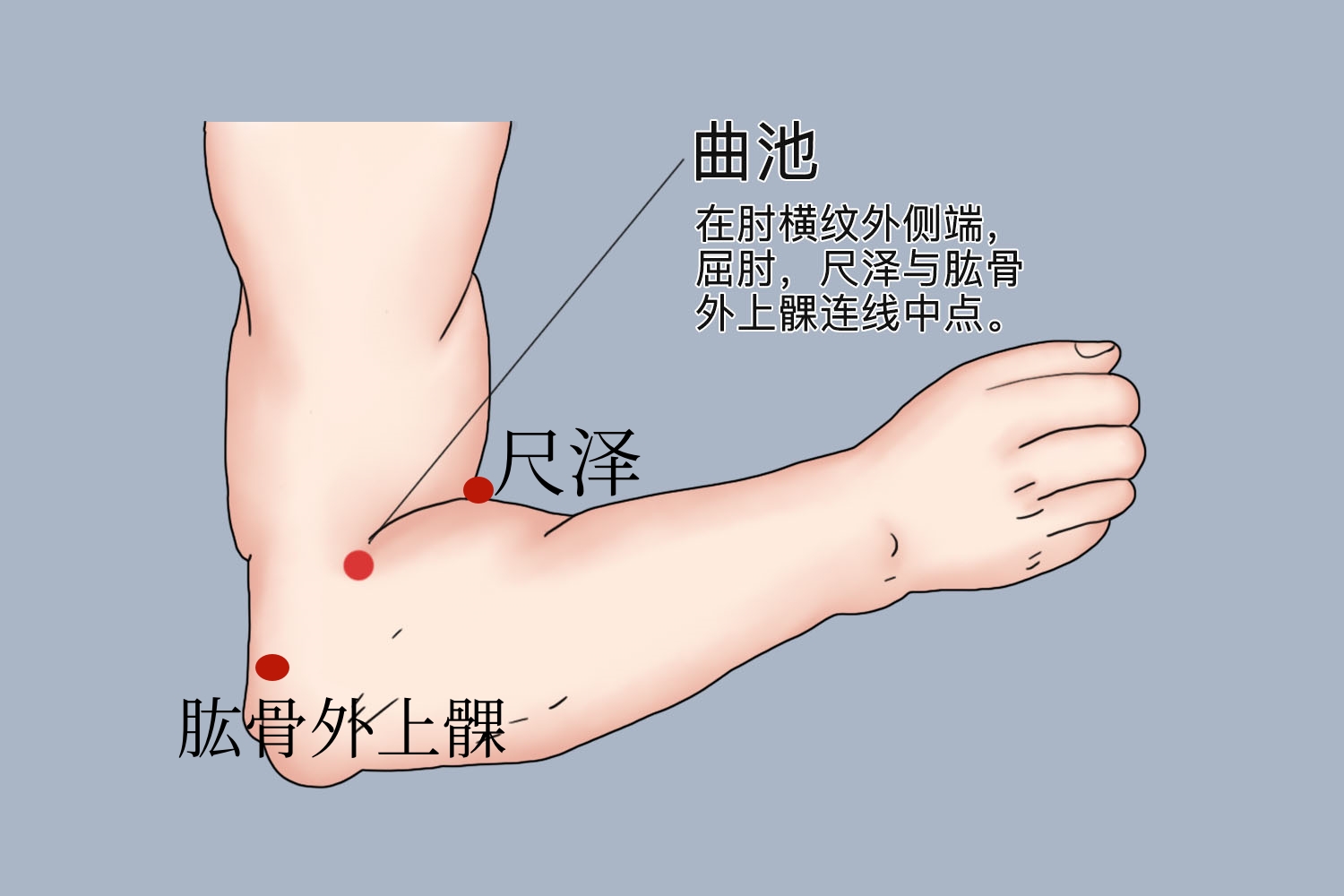
Where Is Quchi (LI11)? A Pool at the Bend of the Elbow
Quchi — pronounced “choo-chee” — is an acupoint on the Large Intestine meridian, one of the twelve main meridian pathways in traditional Chinese medicine. The name is a small piece of poetry: qu means “bent” and chi means “pool.” Bend your elbow and a shallow hollow appears on the outer side of the joint, like a little pool of water. The point sits right there, which is how it got its name.
In traditional Chinese medicine, Quchi is classified as a He-sea point — a category of points located near the elbow and knee where the meridian’s qi is said to gather and sink inward, like a river flowing into the sea. He-sea points are traditionally used to help regulate the flow of qi and blood along a meridian. Quchi is one of the most commonly used points on this meridian, and it shows up in traditional formulas for arm and shoulder soreness, as well as for toothache, throat discomfort, and itchy skin.
Anatomy gives a more concrete picture. Quchi sits near the origin of the forearm extensor muscles — the muscles that straighten your wrist and fingers — and close to branches of the radial nerve. If you spend your days typing, gripping a mouse, carrying a child, or lifting boxes, these are exactly the muscles that get overworked. Quchi sits right at their source, which is why pressing it often produces a distinct, deep soreness that other spots on the arm don’t.
How to Find It in Three Steps
You need no tools and no experience. One hand is enough, and if you follow these three steps, you’ll find it on your first attempt.
Step 1: Bend Your Elbow to Ninety Degrees
Let your arm hang naturally, then bend it so your upper arm and forearm form roughly a right angle, as if you were holding a cup of water. In this position, the bony landmarks around the elbow are at their clearest, and the point is easiest to feel. Trying to find it with your arm fully straight is a common mistake — the landmarks shift, and you’ll end up pressing the wrong spot. Take the extra second to bend the elbow.
Step 2: Feel for the End of the Elbow Crease
With your elbow bent, a horizontal skin crease appears across the inside of the elbow. Run your thumb along that crease toward the outside of the arm until you reach its end. There you’ll feel a bony bump — the lateral epicondyle of the humerus. Quchi lies in the small depression just in front of that bump, at the outer end of the elbow crease. Press the pad of your opposite thumb gently into that area and you’ll feel a shallow hollow.
Step 3: Confirm It with a Dull Ache
Once you’ve found the hollow, press your thumb in with a little more force. If you feel a clear, dull ache — sometimes with a mild tingling that spreads toward your wrist — you’re on the point. If you feel nothing, move your thumb half a centimeter up or down around the hollow and try again. You have one Quchi on each arm, and the technique is the same on both sides.
Three Ways to Press It: Pick the One That Fits the Moment
There’s no single correct technique. Different situations call for different pressure, so here are three methods, from gentlest to strongest. Choose by how your arm feels and how much pressure you can tolerate.
Press and Hold: Best for Beginners
Place the pad of your opposite thumb directly on the point and press straight down. Hold for three to five seconds, release, and repeat ten to fifteen times. The pressure should produce a dull ache, not sharp pain — about the force you’d use to press a ripe peach without breaking its skin. This slow, gentle rhythm is ideal for your first try, and it works well as a wind-down before bed.
Circular Rubbing: The Most Even Sensation
Keep your thumb on the point and make small circles around it, about one centimeter across — twenty circles clockwise, then twenty counterclockwise. Circular rubbing spreads the stimulation evenly and is less likely to hurt than a hard press, which makes it a good choice when your forearm is already very sore and you just want it to ease off slowly. Keep the pad of your thumb in contact with the skin rather than sliding back and forth, which can chafe. If you’re worried about friction, do it through a thin layer of clothing.
Press, Then Move: Better Results Afterward
When you’re done pressing, don’t go straight back to work. Straighten your arm, make a fist and open it ten times, then slowly rotate your wrist — five circles clockwise, five counterclockwise. Pressing first loosens the tight muscle; moving the arm afterward helps circulation carry away the metabolic waste that builds up in tired tissue. Three to five minutes per side, once or twice a day, is plenty. You don’t need to press until your arm goes numb.
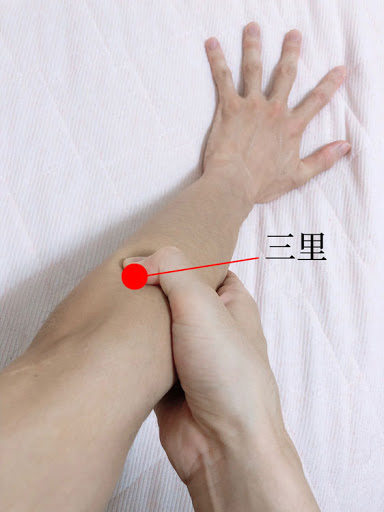
When It Helps Most: Four Everyday Situations
Quchi is not a cure-all, but in the following everyday situations it genuinely earns its place in your routine.
- After hours at the mouse, wrist aching: Two or three hours of typing or spreadsheet work leaves the outside of the forearm tight and the fingers on your mouse hand a little stiff. Three minutes on Quchi, then a few wrist circles, and the ache usually eases by more than half. Programmers, writers, and accountants who live at a computer can build it into their hourly stretch break.
- After carrying heavy bags or a child: Hauling a ten-kilo shopping bag home, or holding a ten-kilo toddler for half an hour while they fall asleep, pulls hard on the outer forearm muscles. A few minutes of pressing Quchi once you’re home takes much of that heavy feeling away.
- When a stiff neck drags your arm down with it: When your neck is stiff and your shoulders feel heavy, most people only rub their neck and forget the arm entirely. The Large Intestine meridian runs from the hand up the arm toward the shoulder and neck, so loosening the arm from the far end can help the stiffness in the shoulder and neck ease as well.
- After exercise, when the forearm is tight: Badminton, dumbbells, pull-ups — all of them leave the forearm extensors tight and sore. Spend two or three minutes on Quchi while you stretch after a workout and the muscles tend to relax faster. Keep the pressure light here: the muscles are already fatigued, and heavy pressure can make the soreness worse.
Who Should Skip It, and What to Watch For
Acupressure looks gentle, and usually it is — but it isn’t right for everyone, or for every moment. Take these situations seriously.
- Broken, red, swollen, or inflamed skin: If there’s a cut, eczema, or a hot, swollen patch on your elbow, don’t press the point directly. Wait until the skin has healed. Pressing broken skin can make an infection worse.
- Pregnancy: Quchi is traditionally considered a relatively strongly stimulating point, so pregnant women should not press it on their own. Any acupressure during pregnancy should be discussed with a doctor first.
- Blood-clotting problems or blood-thinning medication: Pressing can cause bruising under the skin more easily in this group. Ask a doctor before pressing, and use much lighter pressure than usual if you do.
- An elbow problem of its own: Tennis elbow, a sprained elbow, or an elbow still recovering from a fracture means the tissue around the point may be inflamed or healing. Pressing it yourself can make the pain worse — get a doctor’s guidance instead.
- Pain that keeps getting worse after pressing: The dull ache from normal acupressure should fade within a few minutes. If pain lasts more than half an hour after you stop, or if your arm goes numb, weak, or swollen, stop pressing and see a doctor promptly.
A few practical details: wash your hands and trim your nails before you start; use the dull ache as your guide, and stop immediately if you feel sharp pain; keep each session to five minutes per side at most, and no more than three times a day; and within half an hour after a meal, or when you’re exhausted, stick to a few light rubs only.
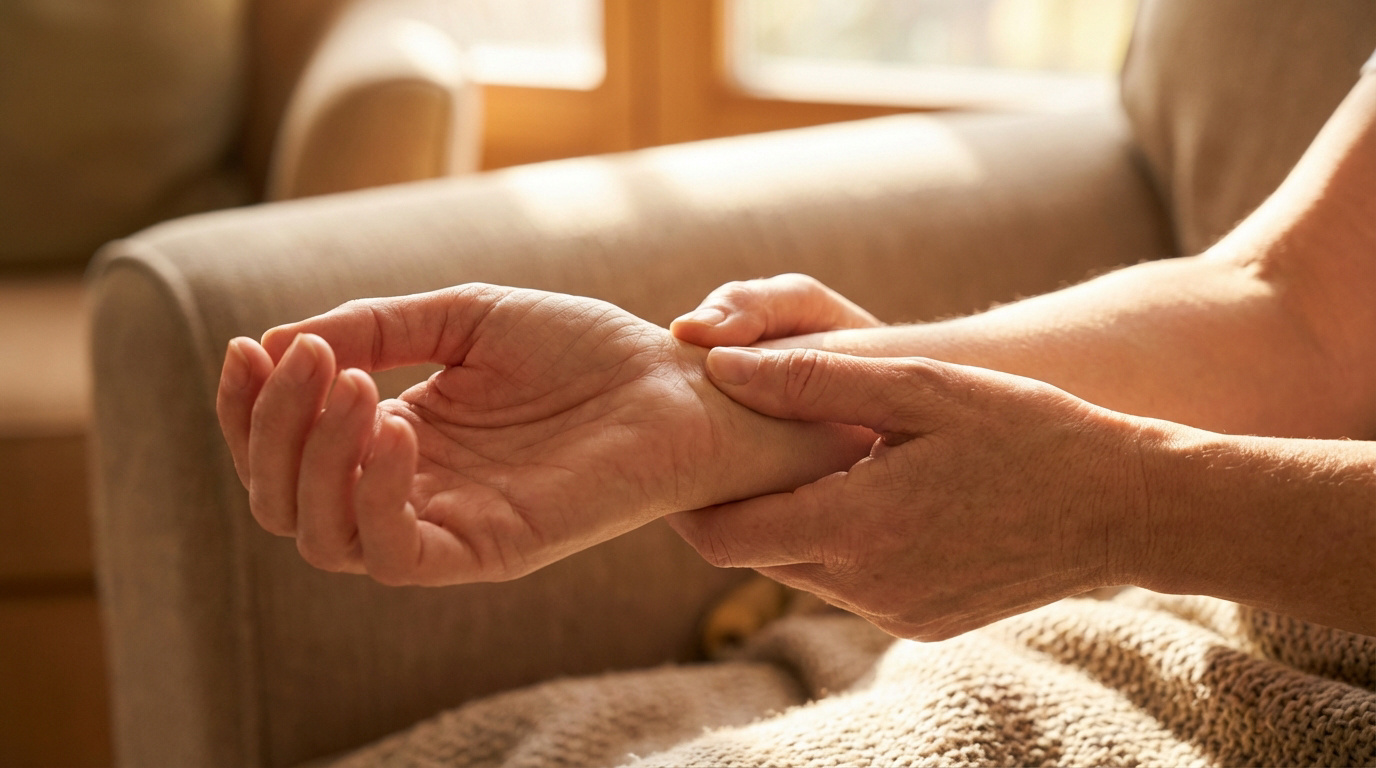
Quick Answers
How often should I press Quchi? Once or twice a day is enough — three to five minutes per side, morning and afternoon. More is not better; over-pressing can leave the area sore the next day.
Which thumb do I use? Use the thumb of the opposite hand: right thumb for the left elbow, left thumb for the right elbow. That angle gives you the most control over pressure.
Should it hurt? It should feel like a deep, dull ache — sometimes called a “good ache.” Sharp or stabbing pain means you’re pressing too hard or slightly off the point. Ease off and reposition.
Can I press it through clothing? Yes. A thin sleeve actually helps, because it stops your thumb from dragging on the skin. Thick clothing dulls the sensation too much, so roll the sleeve up if you can.
How long until I notice a difference? Many people feel the forearm loosen during the very first session. The lasting effect comes from repetition: make it a habit for a week, and that heavy, aching feeling that usually arrives at 3 or 4 p.m. tends to show up later, or feel lighter.
What if it doesn’t help? If the soreness doesn’t ease after a few sessions, or it keeps coming back worse, don’t push through it. See a doctor to check for underlying issues such as tendonitis or nerve compression — acupressure can ease everyday muscle fatigue, but it can’t fix a medical condition.
Quchi is easy to find and easy to press. The hard part is remembering to do it. Try building it into your day: every morning and afternoon, take three minutes, bend your elbow to ninety degrees, find the hollow at the outer end of the elbow crease, and press or rub for three to five minutes. Then move your wrist and fingers. A week from now, notice whether that mid-afternoon heaviness in your arm arrives later than it used to — or barely arrives at all.
Disclaimer: This article is educational information about traditional Chinese acupoint self-care and is for general reference only. Acupressure is not a substitute for medical care and does not guarantee any therapeutic effect. It can only help ease temporary muscle soreness and fatigue. Do not press this point if you have broken skin, are pregnant, have a blood-clotting condition, take blood-thinning medication, or have an elbow injury. If pain persists, worsens, or is accompanied by numbness, weakness, or swelling after pressing, stop and see a doctor.