It’s 10 p.m. You’ve been typing all day, and the moment you shut your laptop, your hands do something on their own: you clench your fist, then slowly open it again. Right in the center of your palm, there’s a spot that feels faintly warm. That spot is Laogong — and in traditional Chinese medicine, it’s one of the easiest acupoints to use on yourself. No needles, no herbs, no equipment. Just one hand pressing the other.
Old practitioners like to say, “When Laogong is warm, your hands stop feeling cold.” Office workers, students, and older adults have all used this little point for generations as a quick way to unwind. This guide shows you exactly where it is, what it’s traditionally used for, and three simple ways to press it — plus the situations where you should leave it alone.
Where Is Laogong? Make a Fist and You’ll Find It
Laogong, known in English as Pericardium 8 (PC8), sits on the Pericardium meridian — one of the twelve main meridians, the channels through which qi, or vital energy, is said to flow in traditional Chinese medicine. Its location is easy to find: spread your palm flat, then curl your fingers into a loose fist. The spot where the tip of your middle finger touches your palm is Laogong. Another way to picture it: about one finger-width above the middle of the palm crease, roughly between the second and third metacarpal bones. Each hand has one, in the same place on both sides.
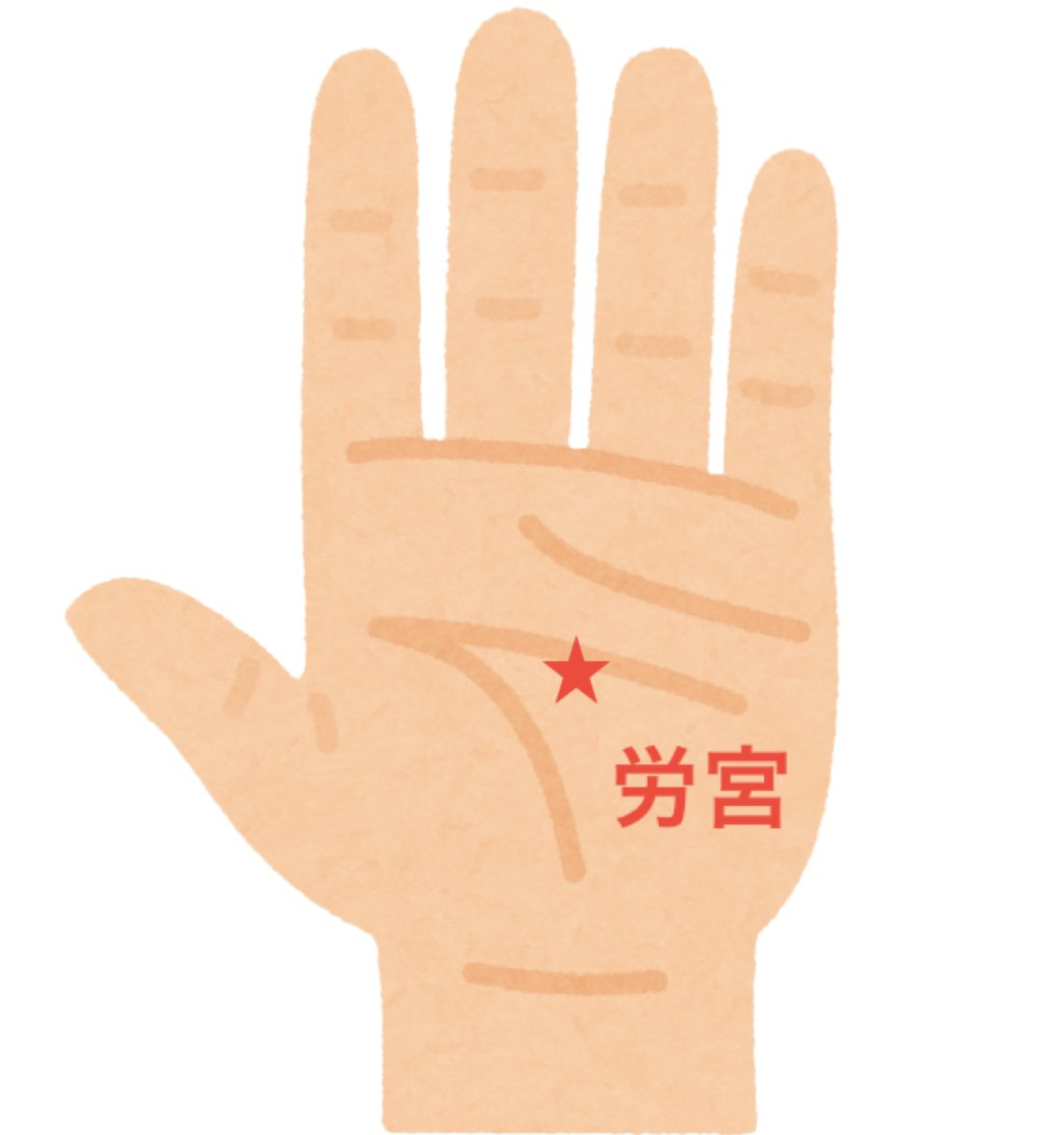
First-timers usually make two mistakes. The first is pressing too far toward the edge of the palm. The second is touching the spot for half a second and moving on before giving themselves time to confirm it. Try this instead: wash and dry your hands, sit down, and relax your shoulders. Make a fist with your right hand, then press the thumb of your left hand gently into the center of your right palm. Move it in small circles until you find a spot that feels slightly sore or swollen when pressed — a dull, achy tenderness rather than sharp pain. That ache is your confirmation. Once you’ve found it, you’ll remember the feeling, and next time you’ll locate it in three seconds.
There’s also a simple cross-check: press your two palms together, fingers naturally aligned. Laogong sits roughly in the middle of where the palms meet. If your hands are cold in winter, rub them warm first — the achy sensation becomes much clearer. And don’t worry about millimeter precision. Hand size and shape shift the exact spot by a few millimeters from person to person. Trust the ache, not a ruler.
What Is Laogong Traditionally Used For?
In traditional meridian theory, Laogong is the “spring point” (ying point) of the Pericardium meridian, associated with clearing excess heat from the heart and calming the mind. In everyday self-care, people reach for it in a few common situations:
- A restless mind at night: You’re lying in bed, but your brain is still running through the day’s work. Press and knead Laogong for 3 to 5 minutes before sleep, and many people report that their palms slowly warm up while the irritability fades with them.
- Cold hands and feet: After a winter afternoon of typing or scrolling on your phone, your fingers feel stiff and frozen. Rub your hands warm, then focus on Laogong for about 2 minutes and knead between the fingers as well. As circulation picks up, your palms warm faster than they would from rubbing alone.
- Dry mouth, bitter taste, or a fluttery, anxious chest: After a late night, your mouth feels parched and your chest feels uneasy. An old saying goes, “Laogong belongs to fire — drain the fire and the heart settles.” Press gently while breathing deeply: add a little pressure as you exhale, ease off as you inhale. After a few rounds, the dryness often feels noticeably better.
- Achy hands after long use: Typing, crafting, or gripping a steering wheel for hours leaves your palms sore and your fingers stiff. Once the muscles around Laogong relax, the whole hand feels more flexible again.
One thing needs to be said clearly: Laogong is a self-care aid for everyday relaxation, not a treatment for disease. It can help you unwind and ease temporary discomfort, but it is not a substitute for medical care. Chest tightness or pain that doesn’t go away, a racing heart accompanied by sweating or dizziness, or long-term insomnia all need a doctor — don’t try to wait them out with acupressure alone.
Three Ways to Press It — Pick the One That Fits the Moment
Pressing Laogong isn’t about fancy technique. What matters is pressure, rhythm, and consistency. The three methods below suit different situations. Pick one and stick with it for 2 to 4 weeks before judging how it feels.
Method 1: Thumb Kneading — Best for Bedtime and Office Breaks
Press the pad of your opposite thumb onto Laogong. Use enough pressure to feel that dull ache, but never sharp pain. Rub in small clockwise circles 30 times, then counterclockwise 30 times, and repeat on the other hand. Do this 2 to 3 times a day, about 3 minutes per hand. A quick session during your lunch break can leave your palms warm and your head a little clearer for the afternoon meeting.
Method 2: Rubbing Both Palms Together — Best for Cold Hands in Winter
Press your palms together and rub briskly 20 to 30 times until they feel warm. Then interlace your fingers, press the palms firmly together, and hold the pressure on Laogong for 10 seconds. Release and press again, repeating 5 to 8 times. One minute of this in the hallway before heading out can keep your hands from going cold so fast on the bike or at the bus stop.
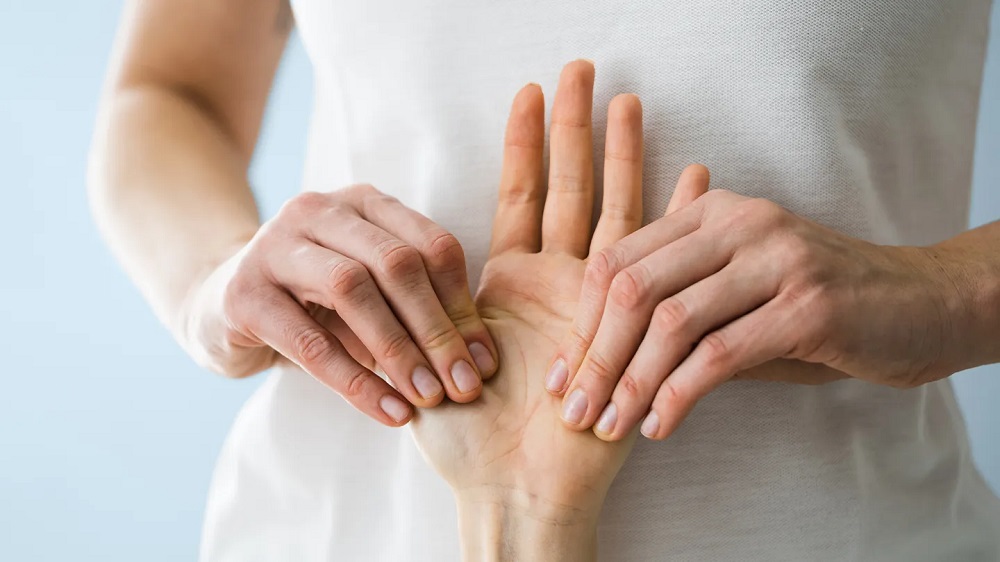
Method 3: Pressing with Slow Breathing — Best for an Anxious, Restless Evening
Lie down or lean against your headboard. Press your thumb on Laogong: press gently as you breathe in, then slowly deepen the pressure to that achy point as you breathe out, hold for 3 seconds, and release. Ten slow breaths make one set; do two sets. As your breathing slows, your whole body relaxes faster. Many people anchor this to their bedtime routine — right after brushing their teeth — and find the pre-sleep restlessness fades over time.
Whichever method you choose, remember three numbers: pressure should feel achy, not painful; each session lasts 3 to 5 minutes; and 2 to 3 sessions a day is enough. Afterward, sip a small cup of warm water, keep your hands warm in winter, and don’t plunge them into cold water right after pressing.
Who Can Use It — and Who Should Be Careful
Laogong acupressure has a low barrier to entry, and most people can do it safely. It’s especially handy for three groups: office workers who sit at a desk all day and use their hands constantly; people who struggle to fall asleep or feel restless before bed; and anyone whose hands and feet run cold in winter. For students, a few minutes of pressing before an exam can also help steady nerves when palms are sweaty with tension.
But in several situations, you should skip self-massage or talk to a doctor first:
- Broken skin, burns, or an eczema flare-up on the palm: Don’t press on damaged skin. Wait until it has healed.
- A recent fracture or sprain: If the hand is still swollen and painful within 48 hours of an injury, leave it alone and follow your doctor’s advice.
- Pregnancy: Acupoint stimulation during pregnancy calls for caution. Check with your obstetrician or a qualified Chinese medicine practitioner before pressing Laogong.
- Serious heart disease or poorly controlled high blood pressure: The massage itself isn’t dangerous, but don’t treat it as therapy. See a doctor first if you feel unwell.
- Diabetes or reduced sensation in the hands: If you can’t feel pressure well, it’s easy to press too hard. Ask a family member or doctor to guide you.
One more reminder: if pressing causes redness, swelling, or worse pain — or if you’ve pressed for two or three weeks with no change at all — stop. Try a different way to relax, and see a doctor if needed. Self-care should feel comfortable, moderate, and sustainable. More pain doesn’t mean more benefit.
Make Three Minutes a Daily Habit
The benefit of Laogong isn’t in pressing hard once — it’s in remembering it every day. Anchor it to three moments you already have: rub your hands warm and press for 1 minute before heading out in the morning, knead with your thumb for 3 minutes during your lunch break, and do the breathing method for 2 minutes before bed. That’s less than ten minutes a day, at almost zero cost, and it gives both your hands and your mind a small window to relax.
Try it tonight: wash your hands, dry them, sit on the edge of the bed, and find that achy spot in the center of your palm with your thumb. Rub 30 circles clockwise, 30 counterclockwise, then switch hands and do it again. Keep it up for two weeks and notice what changes — maybe bedtime feels less restless, or your hands stay warm a little longer in the cold. Write down what you feel. A method that suits you is a method worth keeping.
Quick Answers
Where exactly is Laogong? Make a loose fist: the spot where your middle fingertip touches your palm is Laogong (PC8), about one finger-width above the middle of the palm crease. Both hands have one.
How hard should I press? Firm enough to feel a dull ache, never sharp pain. If it hurts, you’re pressing too hard.
How long and how often? 3 to 5 minutes per session, 2 to 3 times a day. One method, practiced for 2 to 4 weeks, is enough to judge whether it helps you.
Can I do it every day? Yes. Daily gentle practice is the point — consistency matters more than intensity.
When should I stop and see a doctor? If pressing causes redness, swelling, or worsening pain, or if symptoms like chest tightness, a racing heart with dizziness, or persistent insomnia continue, stop and seek medical care promptly.
Safety note: Use gentle pressure only — it should feel achy, never painful. Do not press on broken skin, burns, or areas affected by eczema. Pregnant people, and anyone with a serious heart condition, poorly controlled high blood pressure, diabetes, or reduced sensation in the hands, should consult a doctor before trying acupressure. This article is for everyday self-care reference only and makes no promises about results. If discomfort persists, please seek medical attention promptly.