It’s 10 p.m. You finally get home after another long day of overtime, collapse onto the sofa, and your temples are throbbing. Your chest feels like something heavy is sitting on it. When you finally get into bed, you toss and turn for an hour. The next morning you catch yourself in the mirror — dry eyes, a short fuse, ready to snap at the smallest thing. Most people chalk it up to being tired. In traditional Chinese medicine (TCM), a system of healing built over more than two thousand years around the idea that the body’s energy, called qi, flows along pathways known as meridians, this pattern is often described as stagnant Liver qi — energy that has stopped moving smoothly and started to pile up. And on the top of your foot there is a point that practitioners call the Liver meridian’s “pressure valve”: Taichong, or Liver 3 (LV3). Three minutes a day with it, and many people say their chest feels looser, their temper cools, and falling asleep gets easier. This guide shows you exactly where it is, how to press it, and when to leave it alone.
Taichong is an acupoint — a specific spot on the body used in traditional Chinese medicine. It is the source point of the Liver meridian, the pathway traditionally linked to the liver and to the smooth flow of emotions. You don’t need to accept any of that framework to try it: what matters is the spot, the pressure, and the three quiet minutes before bed.
Where Taichong Is: A Three-Step Way to Find It
Taichong sits on the top of your foot, between the first and second metatarsal bones — the long bones that run from your toes toward your ankle. Finding it is easier than it sounds. Just remember one thing: the gap between your big toe and your second toe.
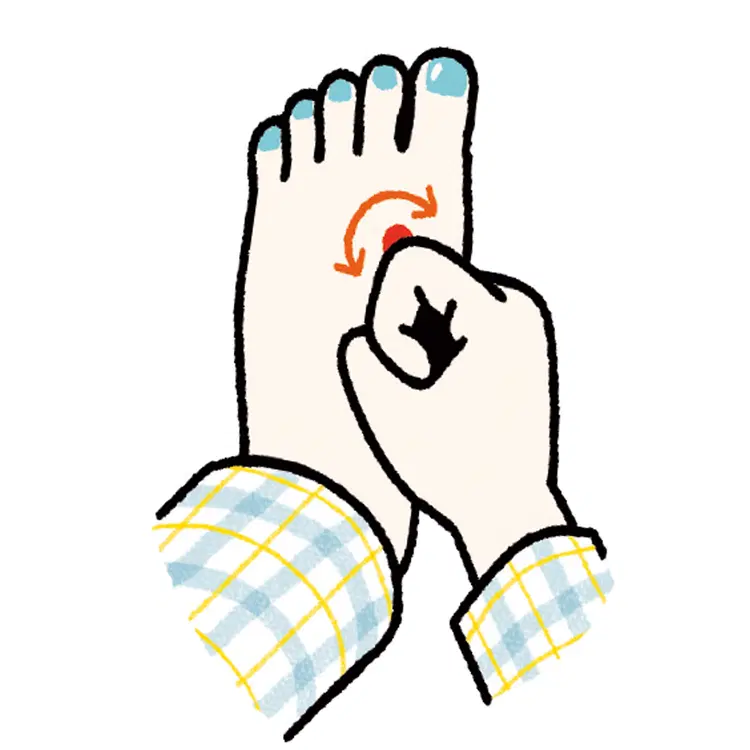
Step 1: Find the gap between your big toe and your second toe
Sit down and rest one foot on the opposite knee, top of the foot facing up. Run your finger along the gap between your big toe and your second toe, slowly sliding from the web of the toes toward your ankle.
Step 2: Feel for the hollow where the bones meet
After about 3 to 4 centimetres, you will feel the place where the two metatarsal bones come together. Just past that point there is a clear little hollow. Press it gently and you should feel a dull ache — that is Taichong. There is one on each foot, and you should work both sides.
Step 3: Check it with the “achy” test
Your body will tell you whether you have found the right spot. Press straight down with the pad of your thumb, starting light and gradually adding pressure. If you feel a distinct soreness, a dull ache, or a faint tingling, you are in the right place. If all you feel is pain on the surface of the skin, you are probably off by a little — shift about half a centimetre back toward the toe gap and try again. Don’t confuse it with Xingjian (Liver 2): that point sits in the same toe gap but much further forward, right at the base of the web between the toes. Taichong is further back, closer to the middle of the top of the foot.
How to Press It: Four Techniques for Different Moments
There is more than one way to work Taichong, and different moments call for different techniques. The core rule never changes: moderate pressure, aim for that dull ache, two to three minutes per foot — about five minutes for both sides.
Press and hold: the everyday method
Place the pad of your thumb on the point and press straight down. When the ache appears, hold for 3 to 5 seconds, then release slowly. Repeat 10 to 15 times. This is the simplest method, and you can do it anywhere — at your desk, on the sofa, waiting for a train.
Small circles: best before bed
Keep your thumb on the point and rub in small circles — 30 clockwise, then 30 counter-clockwise — with steady, even pressure. Circles are gentler than pressing and holding, which makes them ideal for the 30 minutes before bed. Pair them with slow breathing, and many people say their eyelids start to feel heavy within five minutes.
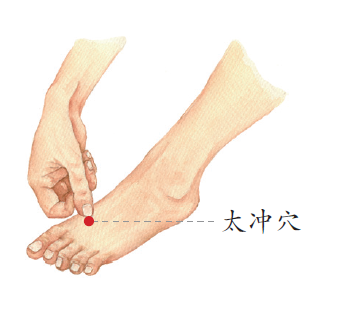
The pinch: for when frustration flares up
A colleague’s remark in a meeting has your blood boiling, or a traffic jam has you gripping the steering wheel. Use your thumb and index finger to squeeze the point together — pinch for 5 seconds, release for 2, and repeat 8 to 10 times. The pinch gives stronger stimulation and works faster, but don’t rely on it alone day after day; people with delicate skin can bruise if they use it too often.
Tapping: best after a foot soak
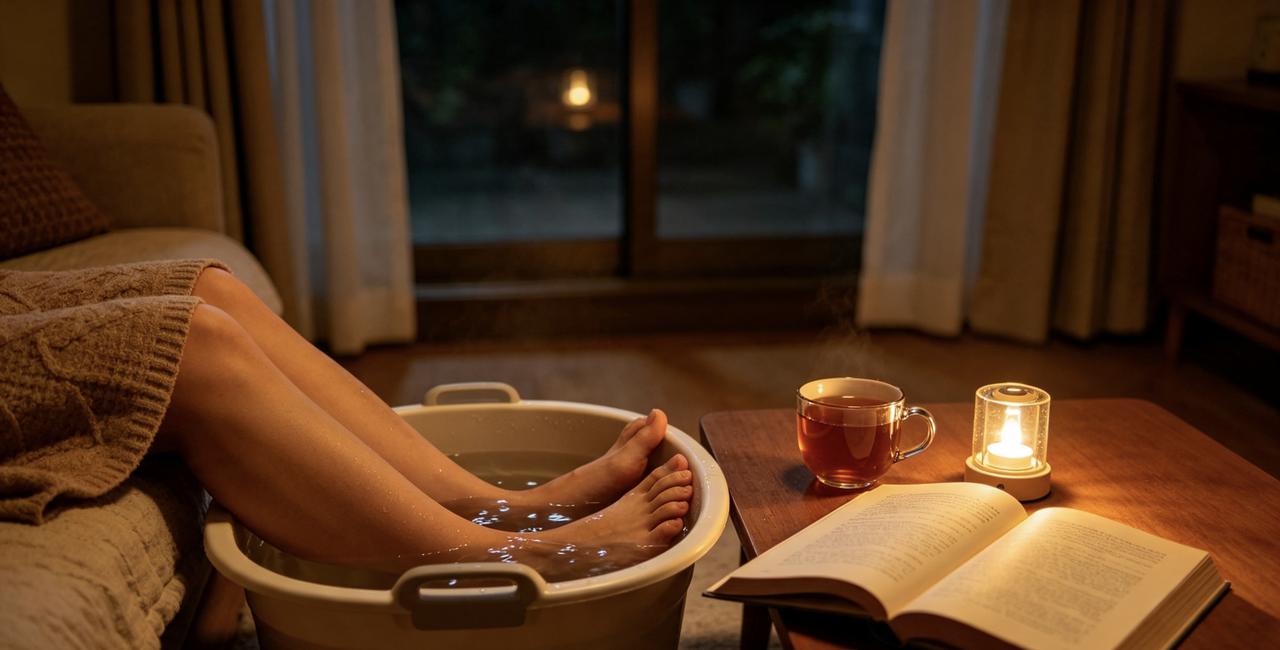
After soaking your feet in warm water for 15 minutes, blood flow to the feet is already open. That is the moment to tap the top of the foot around Taichong with a loosely closed fist, 30 to 50 light taps, or to run a massage stick along the gap between the first and second metatarsals, front to back, 20 times. The ache will feel noticeably stronger than it does on dry skin.
Timing matters too. For most people, two windows work best: between 9 and 10 p.m., before bed, to help the body wind down; and between 3 and 5 p.m., when the afternoon slump hits, your eyes feel dry, and a couple of minutes of pressure can take the edge off the fatigue.
When It Helps Most: Five Everyday Situations
Taichong is sometimes called the Liver meridian’s “venting point,” and in traditional practice it is used for discomfort linked to stuck Liver qi. The five situations below are the ones people mention most often. One thing to be clear about first: acupressure is a daily self-care habit, not a substitute for medicine or a doctor.
- Irritable, ready to snap: A week of overtime, less than six hours of sleep a night, and the smallest thing sets you off. Press Taichong for five minutes before bed, with ten slow, deep breaths. Many people say the tightness in their chest starts to loosen.
- Headache, head pressure, dry eyes: Eight hours or more staring at a screen leaves your temples tight and your eyes dry and sore. While you press Taichong with one hand, gently press your temples with the other — two minutes on each side — and the pressure in your head often eases.
- Trouble falling asleep, vivid dreams, waking in the night: You get into bed at 11 p.m. and are still awake at 1 a.m., or you fall asleep only to wake around 3 a.m. and lie there for hours. Three minutes on Taichong before bed, plus a ten-minute foot soak, can help the body settle.
- Tight chest, sighing a lot: Your chest feels blocked, and you keep sighing without noticing — a deep breath is the only thing that feels good. Press Taichong for two minutes, then gently rub along both sides of your ribcage ten times; the stuffy feeling often lightens.
- Pre-menstrual irritability and breast tenderness: In the three to five days before your period, your mood swings and your breasts feel sore. Pressing Taichong for three minutes a day in the week before your period may help ease the tension and soreness — but pause during the first two days of your period if your flow is heavy.
Six Things Not to Overlook
Taichong looks simple, but it isn’t for everyone, and it isn’t for every moment. These six situations deserve extra care.
- Aim for an ache, not pain. A mild soreness is enough. If it hurts so much you wince, you are pressing too hard — the muscles tense up and the whole thing backfires. If the skin stays red for more than 30 minutes afterwards, or a bruise appears, halve the pressure next time.
- Don’t press over broken skin. If the top of your foot has a cut, cracked skin, a blister, or an active fungal infection with itching and peeling, pause until the skin has healed. Pressing can spread the infection or make it worse.
- Pregnant people should be cautious. Taichong is traditionally thought to stimulate the uterus, so pregnant people — especially in the first and third trimesters — should not press it on their own. If you want to try it, ask your doctor first.
- Wait 30 minutes after eating. Right after a meal, blood is busy in the digestive system, and pressing a foot point can leave your stomach unsettled. Give it half an hour.
- Take extra care with blood-clotting problems. If you have a clotting disorder or take blood-thinning medication, heavy pressure raises the risk of bruising under the skin. Press very lightly, or ask your doctor first.
- See a doctor if symptoms persist or get worse. If headaches, sleeplessness, or chest tightness last more than two weeks without improving — or if you notice chest pain, difficulty breathing, or a sharp rise in blood pressure — don’t try to push through it with massage alone. Get checked promptly and find out the cause.
A Three-Minute Habit Before Bed
What makes Taichong worth keeping is not that it is dramatic — it is that it is easy. It is right there on the top of your foot. No tools, no cost. Three minutes before bed: press and hold, then small circles, one foot, then the other. Keep it up for two weeks, and many people notice steadier moods, faster sleep, and a clearer head in the morning. The trick is to attach it to something you already do — brushing your teeth, or your evening foot soak — because a small habit you keep beats a strong session you do once.
Try it tonight. Find that small, achy hollow. Press down with your thumb, hold for five seconds, release slowly, repeat ten times — then switch feet. Three minutes, and the day has somewhere to go.
Quick Answers
Where exactly is Taichong (LV3)? On the top of your foot, between the first and second metatarsal bones, about 3 to 4 centimetres back from the web between your big toe and your second toe. Slide your finger along the toe gap toward your ankle until you feel a hollow with a dull ache when pressed.
How long should I press it? Two to three minutes per foot, about five minutes for both sides. Press and hold for 3 to 5 seconds, 10 to 15 times, or rub in small circles, 30 in each direction.
When is the best time? Between 9 and 10 p.m. before bed, or between 3 and 5 p.m. during the afternoon slump. Avoid the 30 minutes right after eating.
How hard should I press? Until you feel a dull soreness or a faint tingling — never sharp pain. Faint redness that fades within a few minutes is fine; redness lasting over 30 minutes or a bruise means you pressed too hard.
Can I press it when I’m angry or stressed at work? Yes — that is what the pinch technique is for. Pinch for 5 seconds, release for 2, repeat 8 to 10 times. But don’t use the pinch as your only method every day, especially if your skin bruises easily.
Who should avoid it? Anyone with broken, infected, or fungal skin on the top of the foot; pregnant people should check with a doctor first; and anyone with a clotting disorder or on blood-thinning medication should press very lightly or ask a doctor first.
How soon will it work? Some people notice a difference within a few days; others feel little. Give it about two weeks of daily practice before deciding whether it suits you — and don’t press harder if it feels slow.
Disclaimer: This article is educational information about traditional Chinese health culture and acupressure. It is not medical advice, and it does not diagnose, treat, or promise to relieve any condition. Use gentle pressure only, and avoid broken skin. If you are pregnant, have a blood-clotting condition, take blood-thinning medication, or have a serious heart or circulation condition, consult a doctor before trying it. If symptoms persist or get worse, seek medical care promptly. Stop immediately and get help if you feel unwell.