You wake up, look in the mirror, and your forehead and nose are already shiny. You wash your face, drink a glass of water, and your mouth still feels sticky and bitter. Later, in the bathroom, you need to flush twice. If two or three of these sound familiar, this autumn-winter guide is written for you.
In traditional Chinese medicine (TCM), a system of health theory developed in China over thousands of years, the body is described through patterns called constitutions. A constitution is not a disease diagnosis. It is a general tendency: how your body tends to react to food, weather, stress, and seasons. One of the most common patterns is damp-heat, and autumn and winter are the seasons when it tends to cause the most trouble.
What Is a Damp-Heat Constitution?
Dampness, in TCM language, means a heavy, sticky kind of moisture inside the body. Think of a humid summer day when the air feels thick and nothing dries properly. Heat means internal warmth and irritation, the kind that shows up as redness, oiliness, or restlessness. Put them together and you get a body that feels oily, sticky, and sluggish at the same time.
The signs usually appear in a few places. Skin and hair are often the first to give it away: an oily face that shines again within two hours of washing, hair that goes flat and greasy if you skip one wash, dandruff, and breakouts that are red, swollen, and slow to heal. Some people also get spots on their back.
Your mouth and tongue offer more clues. A bitter, sticky taste in the morning that water does not wash away, a thick yellowish coating on the tongue, and sometimes bad breath are all typical. Digestion tells its own story too: loose, sticky stools that cling to the bowl, darker yellow urine even when you drink enough water, and a sense of heaviness, as if you never quite feel rested no matter how long you sleep.
Weight is another common complaint. People with this pattern often say they gain weight easily and struggle to lose the soft layer around the waist. That is not a lack of willpower. In TCM terms, dampness slows the body’s processing, so food and fluid are not moved through as efficiently as they should be.
Ticking three or four of these boxes does not mean you have a confirmed damp-heat constitution. It only suggests a tendency. Constitution identification is a self-observation tool, not a medical diagnosis, and it should never replace a visit to a doctor when something feels wrong.
Autumn and Winter Eating: Light Does Not Mean Bland
When the weather turns cold, the instinct is to reach for rich, spicy, and fatty food: hot pot, barbecue, spicy noodles, sweet milk tea, strong alcohol. For a damp-heat body, that is exactly the wrong direction. Greasy food adds dampness, spicy food adds heat, and sugary food feeds the sticky, sluggish feeling. The meal tastes great, and the next morning your face may break out and your mouth may feel worse than before.
The autumn-winter rule is simple: eat light, but keep it warm and gentle. Light does not mean boiled vegetables in plain water. It means less oil, less salt, less sugar, and fewer heavy sauces, with cooking methods like steaming, boiling, stewing, and cold-tossing instead of deep frying. Mix some whole grains into your staple foods: coix seed (also called Job’s tears, a small grain used in Chinese cooking for its mild, drying quality), adzuki beans, and brown rice all work well in porridge or steamed rice.
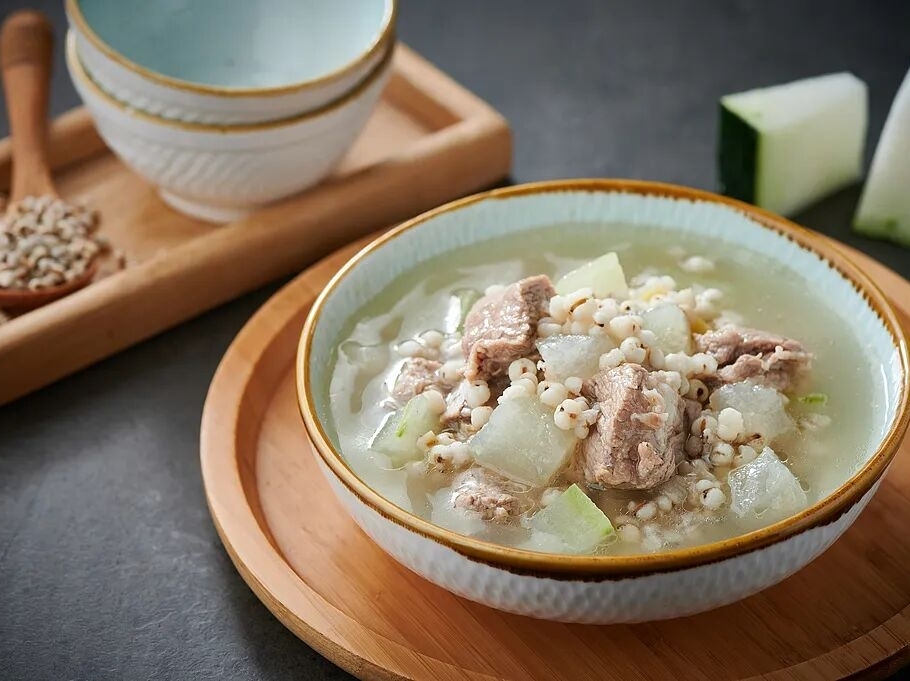
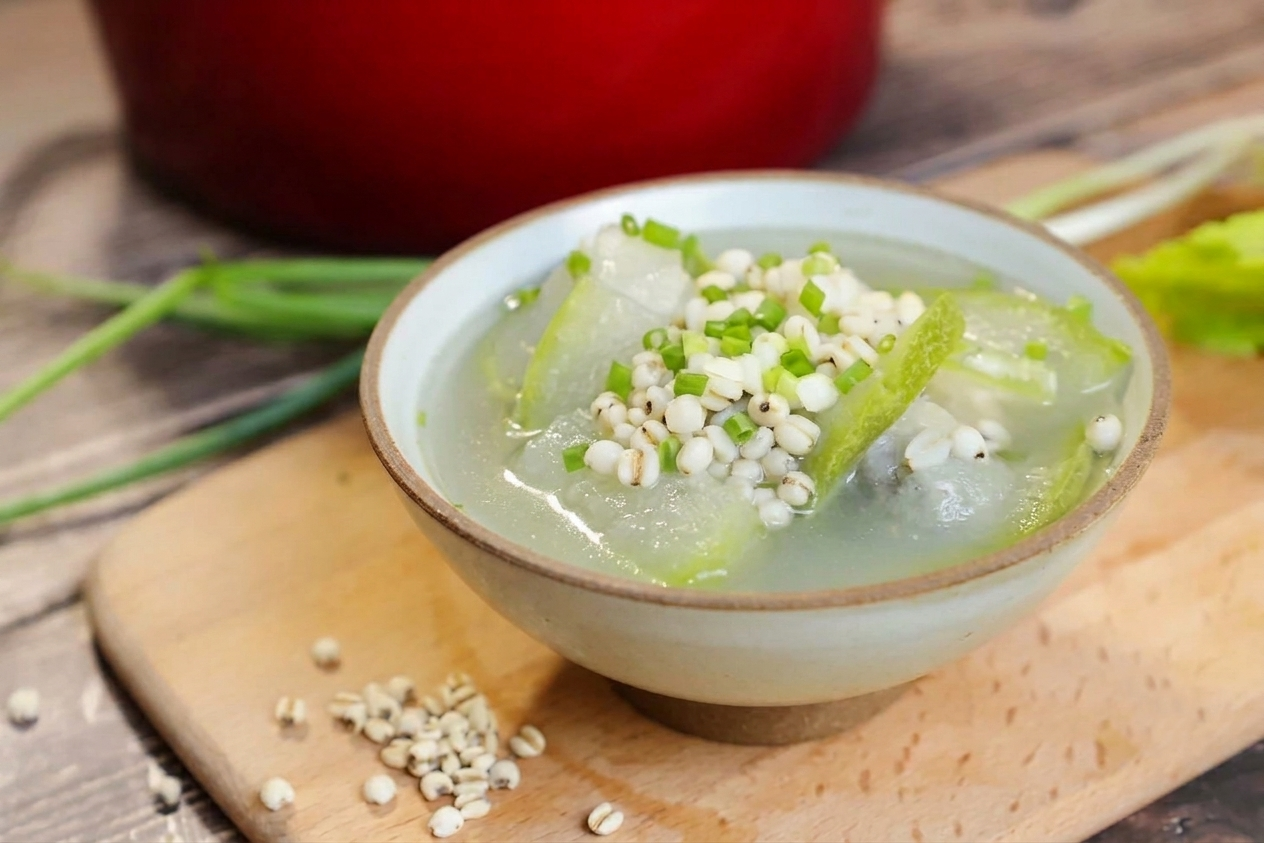
Several seasonal ingredients suit this pattern especially well. Coix seed supports digestion and helps clear dampness; a small handful, about 30 grams, cooked into porridge two or three times a week is enough. Winter melon promotes fluid balance and feels refreshing in soup, whether with pork ribs or shrimp. Mung bean sprouts are cooling and light, good tossed cold with a little vinegar or quickly stir-fried. White radish, lotus root, celery, and bitter melon are also good choices. Rotate them through the week rather than eating the same one every day.
Here is a one-day menu you can copy directly. Breakfast: coix seed and adzuki bean porridge, a boiled egg, and cold-tossed mung bean sprouts. Lunch: steamed fish, stir-fried celery, winter melon soup, and half a bowl of brown rice. Dinner: yam and pork rib soup with stir-fried seasonal vegetables and a smaller portion of staple food. If you want something sweet later, choose a small piece of fruit instead of milk tea or cake.
One detail about drinking water: autumn and winter air is dry, so many people gulp large amounts of water at once and end up feeling bloated. With a damp-heat tendency, sip slowly through the day, about 1,500 to 1,700 milliliters in total, in small amounts. Soup counts toward that total, so drink less plain water on days when you have soup.
Movement and Daily Routine: Move the Dampness Out
Dampness dislikes movement. Sitting all day slows circulation, and that sluggishness lets dampness settle. Autumn and winter exercise does not need to be intense. The goal is a light sweat, a warm body, and no exhaustion the next day. Brisk walking is the easiest habit to keep: 30 to 40 minutes a day, at a pace where you can talk but not sing, four or five days a week.
Baduanjin, a set of eight gentle stretching and breathing exercises from Chinese tradition, and tai chi are both well suited to this season. Two Baduanjin movements are especially relevant here: “Holding Up the Heavens to Regulate the Triple Burner,” which stretches the whole torso upward, and “Raising One Arm to Regulate the Spleen and Stomach,” which works the sides of the body and the digestive area. Practice for 15 to 20 minutes a day, moving slowly and breathing evenly. If you prefer running, a slow 20 to 30 minute jog is plenty in cold weather. Change out of sweaty clothes right away so damp clothing does not chill you.
Daily routine matters as much as exercise. Try to be in bed by 11 p.m. Late nights strain digestion, and many people notice a thicker tongue coating the morning after staying up late. Keep your living space ventilated and dry. In damp weather, open windows for fresh air, run a dehumidifier if you have one, and air out bedding regularly. A damp bed makes the heavy, tired feeling worse. Keep bath water comfortably warm rather than very hot, and limit soaking to about 15 minutes, drying off fully before leaving the bathroom.
One habit is easy to overlook: if you sit at a desk, stand up every hour for five minutes. Get a glass of water, walk a lap around the office, stretch. When the afternoon slump hits, resist the milk tea and snacks. A short walk often clears the drowsiness better than sugar does.
Two Traps to Avoid
The first trap is overdoing tonic foods. Autumn and winter are traditional tonic seasons, and lamb soup, donkey-hide gelatin, ginseng, and deer antler all make their appearance. But a body that already carries excess dampness and heat does not need more richness. Piling on tonics is like adding fuel to a fire: people often end up with dry mouth, breakouts, constipation, or stickier stools. Before taking any tonic, ask yourself two questions: is my tongue coating thick, and are my stools sticky? If the answer to either is yes, eat lightly for two weeks first.
The second trap is drinking herbal cooling tea every day. Cooling teas can calm heat in the short term, but drunk daily for months, their cold nature weakens digestion. Weaker digestion handles dampness even less well, and the dampness builds up further. It becomes a cycle. Cooling tea suits only the occasional flare-up, a sore, dry mouth for two or three days, and then you stop once the symptom eases. It is not an everyday drink.
A related warning: do not copy every damp-clearing tea or detox recipe you find online. Bodies differ, and so do underlying conditions. A formula that helped someone else may not suit you. If you have a chronic illness or take regular medication, ask your doctor before trying any herbal remedy.

Start With Three Small Things
You do not need a dramatic overhaul. Start with three small changes and hold them for two weeks: eat lightly, cutting back on oil, spice, and sugar, and adding coix seed, winter melon, and mung bean sprouts to your meals; walk briskly for 30 minutes a day or practice Baduanjin for 15 minutes; and get to bed before 11 p.m. while keeping your room dry and aired. After two weeks, go back to the signs at the start of this article and check whether the oiliness, sticky mouth, and sticky stools have eased. That comparison will tell you more than any single day.
If a month of these habits brings no improvement, or if you notice persistent diarrhea, unexplained weight loss, or long-lasting bitter taste together with abdominal pain, do not push through on your own. See a doctor, a gastroenterologist, or a qualified TCM practitioner. Constitution care is daily maintenance, not treatment, and real warning signs belong in a clinic.
Autumn and winter care is not about one burst of effort. It is about small daily choices, repeated. Start tonight: one less spoon of oil in dinner, one hour earlier to bed. Your body will answer gradually, and that slow feedback is exactly how you know the routine is working.
Quick Answers
What is a damp-heat constitution? In TCM, it is a body pattern combining heavy, sticky dampness with internal heat. Common signs include oily skin, breakouts, a bitter sticky mouth, a thick yellow tongue coating, and sticky stools. It is a tendency, not a diagnosis.
What should I eat in autumn and winter? Light, warm, gentle food: less oil, salt, and sugar, more steaming and stewing. Coix seed, adzuki beans, winter melon, mung bean sprouts, white radish, and lotus root are good seasonal choices.
What should I avoid? Rich and spicy food, milk tea, strong alcohol, heavy tonic foods when dampness signs are present, and daily cooling teas. Each adds dampness or heat, or weakens digestion over time.
What exercise works best? Brisk walking for 30 to 40 minutes, four or five days a week, or 15 to 20 minutes of Baduanjin or tai chi daily. Aim for a light sweat, not exhaustion.
When should I see a doctor? If symptoms do not improve after a month of lighter habits, or if you have persistent diarrhea, unexplained weight loss, or lasting pain. Those need professional assessment, not home care.
Disclaimer: Constitution identification and the dietary and lifestyle suggestions in this article are for general health reference only. They are not a substitute for professional diagnosis or treatment. If you have symptoms of illness, please consult a qualified healthcare professional. This article does not promise any therapeutic effect.