It is 2 a.m. You wake up feeling hot, kick the blanket off, and five minutes later you feel chilly again. In the morning your mouth feels like it is lined with paper. You drink two glasses of water and you are still thirsty. If this routine sounds familiar, the problem may not be that you are “not drinking enough water.” In traditional Chinese medicine (TCM), it may point to a body constitution that leans toward yin deficiency.
Autumn and winter are already dry seasons, so this is the hardest time of year for people with this pattern. The good news is that winter can also be the best season to turn things around, if you adjust in the right direction.
First, Check the Pattern: What Does Yin Deficiency Feel Like?
Yin deficiency is a TCM term for a state in which the body’s cooling, moistening resources are relatively low. In this framework, “yin” refers roughly to the fluids and nourishing substances that keep the body moist and calm. Think of the body as a pot with a low water level: the flame has not grown bigger, but there is less water to balance it, so everything starts to feel dry and hot.
Body constitution, or “tizhi” in Chinese, is another TCM concept: it describes a person’s relatively stable pattern of physical tendencies, such as whether they tend to run hot or cold, tire easily, or dry out quickly. It is not a diagnosis, and it can shift gradually with lifestyle.
People with a yin-deficient tendency often notice several of the following. If three or four sound like you, it is worth paying attention:
- Dry mouth and throat. You drink plenty of water but never quite feel quenched, and your lips crack and peel easily.
- Hot palms and soles, flushing in the afternoon or evening, waves of heat that come and go, and night sweats that leave your sleepwear damp.
- Dry, hard stools every two or three days, and darker, smaller amounts of urine.
- Dry, irritated eyes after long screen time, and dry skin that flakes on the legs in autumn and winter.
- Restlessness, trouble falling asleep, waking easily in the night, a slightly fast heartbeat after waking, and a tongue that looks red with a thin coating or almost no coating.
An everyday example: your colleagues are wearing sweaters and still have cold hands, while you feel overheated in a single shirt, find a room set to 26 degrees Celsius stifling, and notice your face flushing after lunch as if you had just exercised. That “hot, not cold” tendency is a classic yin-deficient leaning.
Do Not Mix Them Up: Yin Deficiency, Yang Deficiency, and Qi Deficiency
All three patterns can bring tiredness and poor sleep, but they point in opposite directions when it comes to heat and cold. Adjusting in the wrong direction can make things worse, so this distinction matters.
- Yin deficiency fears heat: hot palms, dry mouth, night sweats, constipation, a preference for cooler rooms, and a red tongue.
- Yang deficiency fears cold: icy hands and feet that never seem to warm up, a love of hot drinks, loose stools after eating something cold, and a pale, swollen tongue with teeth marks along the edges. In TCM, “yang” refers roughly to the body’s warming, activating energy.
- Qi deficiency fears tiredness: a quiet, low voice, breathlessness after climbing two flights of stairs, sweating easily without feeling hot (a weak, “empty” sweat rather than a heat sweat), a pale face, and frequent colds. “Qi” is a TCM concept often translated as vital energy, the force that powers the body’s functions.
There is also a common mixed picture: dry mouth and a feeling of heat on top, but sticky stools and a thick tongue coating underneath. That combination, sometimes described as yin deficiency mixed with dampness, is harder to sort out on your own. If your picture is mixed, it is wiser to talk to a qualified TCM practitioner once than to copy a recipe from the internet and hope it fits.
Autumn-Winter Eating: Nourish Yin Without Creating Dampness
Here is where many people get it backwards. Winter is the season of warming foods, but for a yin-deficient body, lamb, longan fruit, and ginger duck are like adding fuel to a fire. Plenty of people feel it after one hot pot meal: worse thirst, breakouts, and a sleepless night. The guiding idea for yin deficiency in autumn and winter is gentle, moistening nourishment, not heavy warming tonics.
Foods worth eating more often include:
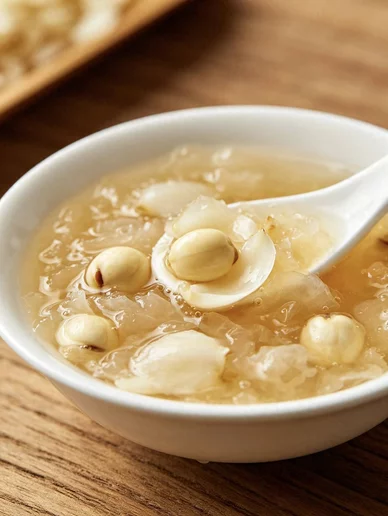
- Moistening foods for the lungs and fluids: pear, lily bulb (baihe, the edible bulb of the lily plant), snow fungus (yin er, also called white fungus or tremella, a jelly-like mushroom used in sweet soups), lotus root, and water chestnut. Stewed pear with lily bulb in autumn, or a snow fungus and lotus seed soup in winter, are classic home recipes. Two or three times a week is plenty; there is no need to make them every day.
- Cooling, nourishing proteins: duck, lean pork, soft-shelled turtle (only occasionally), and eggs. As a soup, duck with winter melon suits a yin-deficient body far better than a lamb stew.
- Staples and beans: black sesame, black beans, Chinese yam (shan yao), lotus seeds, and goji berries (gouqi, small red berries used in teas and soups). Black sesame paste with yam porridge in the morning is filling and moistening, and much gentler than fried dough sticks with soy milk.
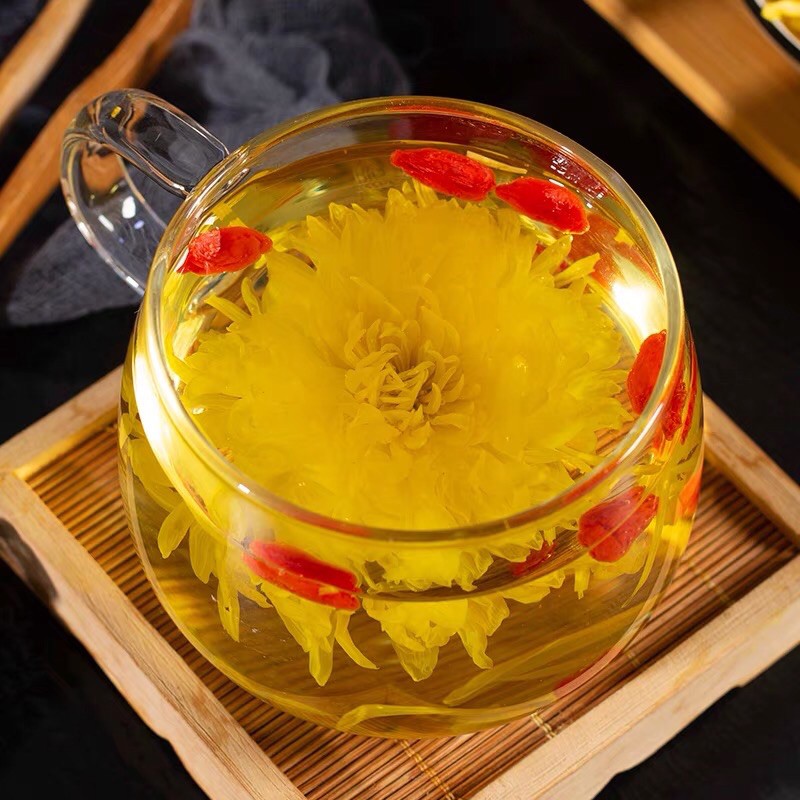
- Drinks: plain water, light honey water, and chrysanthemum and goji tea. Aim for about 1,500 to 1,700 milliliters of water a day, sipped in small amounts through the day rather than gulped down only when you already feel parched.
Foods to go easy on: chili, Sichuan pepper, barbecue, deep-fried food, strong alcohol, strong coffee, and heavy tonics such as deer antler, ginseng, and donkey-hide gelatin (ejiao). None of these are “bad” in themselves; they are simply warming and drying, which is the opposite of what a yin-deficient body needs. Ejiao in particular is often marketed as a cure-all tonic for women, but if your tongue coating is thick or your digestion is weak, it can just as easily leave you bloated and more overheated.
Daily Rhythm and Exercise: Close the Leaks That Drain Yin
Two habits drain yin fastest: staying up late and sweating heavily. If you are still awake after 11 p.m., you are spending down the very reserves that are already low. In autumn and winter, aim to be in bed by 10:30 p.m. and up around 7 a.m. A 20-minute nap at midday is ideal; if you cannot fall asleep, simply resting with your eyes closed still counts.
For exercise, choose activities where you stop at a light sweat:
- Baduanjin (the Eight Brocades, a gentle set of eight qigong movements), tai chi, yoga, slow walking, and swimming in water that is not too cold, for 30 to 40 minutes at a time.
- Put heavy-sweat workouts on hold for now, or scale them back: running hard, hiking steep trails, and high-intensity interval training all cost a yin-deficient body double.
- After exercising, rehydrate with warm water in small sips, not ice water gulped down, and dry off before stepping out into the wind.
One detail that is easy to miss: central heating and air conditioning in autumn and winter can push indoor humidity below 30 percent, which makes dry skin and a dry nose much worse. A bowl of water in the bedroom or a humidifier can keep humidity around 40 to 60 percent, and that alone can ease thirst and flaking skin noticeably.

Five Traps to Avoid
- Trap 1: “Dry mouth means I should drink more water.” Yin-deficient dryness is not simple dehydration. Forcing down huge amounts of water only adds nighttime trips to the bathroom and puffiness. Moistening foods and good sleep do the real work; water is just the support act.
- Trap 2: “Winter means tonics, and more is better.” Tonics must match the constitution. For yin deficiency, gentle and moistening nourishment is right; heavy warming tonics tend to bring heat, insomnia, and worse constipation.
- Trap 3: “Night sweats and hot flushes must be menopause or calcium deficiency.” Hormonal change is a real consideration for middle-aged women, but young people and men can be yin-deficient too. Do not settle on a self-diagnosis the moment a symptom appears.
- Trap 4: “I tried moistening foods for a few days and nothing changed, so it does not work.” Constitution shifts are measured in months, not days. Give diet and sleep changes 4 to 6 weeks before judging them; feeling nothing after a few days is normal.
- Trap 5: “When symptoms flare, take a strong heat-clearing medicine.” Bitter, cold herbs such as coptis (huanglian) and bezoar detox pills are not everyday health products. Taken often, they can upset the stomach and dull the appetite. Clearing heat is not the same as daily maintenance.
A Simple Action List for Autumn and Winter
You do not need to change everything at once. Two or three items a week is a realistic pace:
- Eat gentle and moistening foods: rotate snow fungus, lily bulb, pear, lotus root, duck, and Chinese yam through your week, and go easy on spicy barbecue and heavy warming tonics.
- Keep a steady sleep rhythm: in bed by 10:30 p.m., up around 7 a.m., with a 20-minute midday rest, giving your body time to replenish.
- Choose gentle exercise: Baduanjin, tai chi, or slow walking, stopping at a light sweat rather than chasing a drenching workout.
- Keep indoor air moist: aim for 40 to 60 percent humidity, especially in heated rooms.
- Observe for 4 to 6 weeks: check whether dry mouth, night sweats, and constipation have eased before deciding to adjust further.
Yin deficiency is not a disease; it is a body pattern that needs steady, long-term care. Dry autumn and winter air is a challenge, but also an opportunity. Eat moistening foods, sleep enough, move gently, and the body’s water level rises slowly. The days of feeling hot, thirsty, and sleepless get fewer.
Quick Answers
Is yin deficiency a disease? No. It is a TCM description of a body tendency, not a medical diagnosis. Many people live with it for years without realizing it, and it usually shifts gradually with diet, sleep, and exercise habits.
Can I just drink more water to fix a dry mouth? Water helps, but it is not the whole answer. If the dryness comes with night sweats, hot palms, and constipation, the pattern needs moistening foods and better sleep as well. Drinking large amounts at once can also mean more nighttime bathroom trips.
Should everyone eat warming tonics in winter? No. Warming tonics suit people who run cold, not people who run hot. If warming foods make you flushed, restless, or constipated, they are probably the wrong match for your constitution.
How long before I notice a change? Give it 4 to 6 weeks of steady habits. Sleep often improves first, then skin and stool patterns. If symptoms keep getting worse, or new symptoms appear, see a doctor rather than adjusting on your own.
This article is for general information only. It is not medical advice, and it does not promise any specific effect. Body constitution patterns vary from person to person. If you feel unwell, if symptoms persist or worsen, or if you are considering herbs or supplements, please consult a qualified doctor or TCM practitioner first, and do not self-medicate.