You open the window in the morning and cold air rushes in. Yesterday at noon you were still sunbathing in a single layer; today you have to dig out the heavy jacket. When First Frost arrives on October 23, these two-seasons-in-a-day days will only get more frequent.
In the traditional Chinese calendar, the year is divided into 24 solar terms, each marking a shift in climate and farming rhythm. First Frost (霜降, Shuāngjiàng) is the 18th of the 24 and the last one of autumn: dew condenses into white frost, late autumn wraps up, and winter is on the way. These final days of autumn are when your body needs you most. Here are four things to get right, and you’ll glide into winter smoothly.

1. Eating: Moisten First, Warm Later
Around First Frost, the weather has two labels: dry and cold. Humidity keeps dropping, so mouths go dry, skin flakes, and throats feel scratchy in the morning. Meanwhile, day-to-night temperature swings often stretch past 10°C, and a weak stomach catches the chill easily. The eating strategy is simple: handle the dryness first, then add gentle warmth.
In TCM, autumn is said to be ruled by the dryness pathogen (燥邪, zàoxié) — not a germ, but a seasonal climate factor. When dryness dominates, it “steals” moisture from the body first: the lungs and large intestine are considered the organs most vulnerable, which is why dry coughs and constipation spike in late autumn. Foods that are naturally moistening counter exactly this: they replenish what the season takes away, before you ask your digestion to handle anything heavy.
The Moisturizing Crew: White Foods and Seasonal Fruit
The star of this season is the Asian pear (雪梨). It’s juicy and naturally moistening, ideal if your mouth is dry or you have a dry cough. Keep it simple: core one snow pear and cut it into chunks, add 20 grams of dried lily bulbs (百合, a traditional soothing ingredient) and a little rock sugar, simmer in water for 30 minutes. Two to three times a week is plenty — light and not greasy.
Lily bulbs and white fungus (银耳, snow fungus) are also great partners. A slow-cooked white fungus and lotus seed soup — a full hour on low heat — turns rich and gelatinous, and it’s kind to people with dry skin or shallow sleep.
Warm Roots for a Delicate Digestion
Gentle warming comes from root vegetables. Chinese yam (山药) supports the spleen and stomach — in Traditional Chinese Medicine (TCM), the spleen is the system’s digestive engine, so “weak spleen” roughly means sluggish, easily upset digestion. If your appetite is off or you tend toward loose stools in late autumn, eat more of it: 300 grams of yam, peeled and cut into chunks, stewed with 500 grams of pork ribs and 3 slices of fresh ginger for an hour, once or twice a week. Pumpkin, millet, and sweet potato are equally gentle — a bowl of pumpkin millet porridge in the morning protects your stomach far better than greasy breakfast food.
Three reminders: drink 1,500 to 2,000 ml of warm water a day — don’t wait until you’re thirsty; cut back on spicy food, barbecue, and hotpot for these two weeks (they add dryness on top of dryness); and hold off on heavy “autumn fattening” feasts — your digestion isn’t ready, and overdoing it leads to bloating and heat symptoms instead.

2. Daily Routine: Sleep Enough, Protect Five Cold-Sensitive Spots
The old saying for First Frost is “go to bed early, get up late” — not laziness, but going with the season. In TCM, autumn and winter are the time when yang energy (the body’s active, warming force) draws inward, so you should draw inward too. Get to sleep between 10:30 and 11:00 p.m., and allow yourself 20 to 30 extra minutes in bed in the morning so your body can “boot up” in warmth. People who skimp on sleep catch colds most easily in late autumn, and mouth ulcers love to visit them too.
For staying warm, keep a priority list — five spots hate the cold most: neck, shoulders, waist and belly, knees, and ankles. A chilled neck makes your whole body feel icy, so add a light scarf for morning and evening outings. Don’t sleep with your shoulders exposed; pull the covers up. A cold belly invites diarrhea, so keep a heat patch handy if you chill easily. Knees and ankles are the “weather forecasters” for many middle-aged people — wear long pants on cooling days, don’t rush to bare your ankles, and soak your feet in 40°C water for about 15 minutes. Warm feet, warm body.
Two more practical details: if you ride an e-bike or stand in the wind waiting for the subway, choose a windproof jacket — blocking wind matters more than sheer thickness. And if you run the air conditioner or floor heating indoors, humidity can drop below 30%: set out a basin of water or run a humidifier to keep it at 40–60%, and your nose and skin will thank you.
3. Mood: Dissolve the Autumn Blues in Daily Life
Deep in autumn, many people feel unaccountably low: the dark comes early, the leaves are gone, the streets are quieter, and there’s a hollow feeling inside. TCM has a name for this seasonal sadness — 悲秋 (bēiqiū), the “autumn melancholy” — and modern research agrees: less daylight affects serotonin, so moods really do dip. It’s not weakness. Your body is answering the season.
The fixes are easy; the key is being proactive: get 20 to 30 minutes of morning sun every day — on the balcony or a walk around the block — it’s the cheapest mood recharge there is; share a hot meal with friends — hotpot, mutton soup, steaming noodles — voices and warmth are the best dispellers of gloom; and add a little “putting away” ritual to life — seasonal decluttering, airing the bedding, adding a cold-hardy green plant to the balcony. It shifts your attention from what’s gone to what’s being tidied.
If low mood lasts more than two weeks — nothing interests you, sleep and appetite change noticeably — don’t tough it out alone. Talk to family, and see a doctor or counselor when needed. Seasonal mood problems are common, and early attention works best.
4. Exercise: Gentle Wins; Timing Matters More Than Intensity
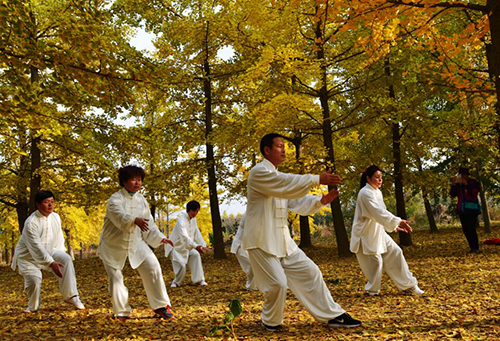
After First Frost, exercise should be gentle, consistent, and never let you catch a chill. Three good options: brisk walking, 30 minutes a day, at a pace where you can still hold a conversation and break a light sweat; tai chi and Baduanjin, slow flowing movements that coordinate breath, friendly to joints, doable in any park or open lot; jogging or cycling are fine too, but forget personal records — your heart and lungs are already working harder in late autumn.
When you exercise matters more than the exercise itself: avoid the coldest window, 5:00 to 7:00 a.m., and pick 9:00–10:00 a.m. or 3:00–4:00 p.m., after the sun is up and the air has warmed. If you’re an older adult with a morning exercise habit, move it to after sunrise. Warm up for 5 to 10 minutes, paying attention to knees, ankles, and shoulders; once you sweat, dry off and add layers immediately — sweating in the wind is the fastest way to catch a cold.
For frequency, 3 to 5 times a week, 30 to 45 minutes each is enough. If you’re wiped out all day after a workout or can’t sleep at night, you’ve overdone it — scale back to a level that leaves you comfortable and fresh the next day. The late-autumn goal is to move blood, stay warm, and bank energy — not to break limits.
Quick Answers
Is First Frost always on October 23? It usually falls on October 23 or 24, varying slightly by year — this year it’s October 23. It marks the transition from late autumn to early winter.
Can I start “winter tonics” now? Not the heavy kind. First moisten (pears, lily bulbs, white fungus), then warm gently (yam, millet, pumpkin). Rich, greasy tonics this early often cause bloating.
What’s the single most important habit? Sleep. An 10:30 p.m. bedtime does more for late-autumn immunity than any supplement.
Is autumn melancholy a real thing? Yes. Shorter daylight genuinely affects serotonin and mood. Daily morning sun and social warmth are simple, evidence-backed counters — and persistent low mood deserves professional attention.
Does foot soaking really work, or is it just comfort? Mostly comfort — and comfort counts. Warm water on the feet improves local circulation and helps many people fall asleep faster. Keep it to 40°C and about 15 minutes; longer or hotter can leave older adults dizzy.
Your 10-Day Action Checklist
First Frost is autumn’s full stop and winter’s preview. The four keys — moistening-then-warming food, early sleep and warm spots, proactive mood care, gentle well-timed exercise — need no overhaul, just consistency. Here’s your ten-day checklist: tonight, lights out by 11 p.m.; tomorrow, buy pears, lily bulbs, and yam; dig out the scarf and heavy jacket and put them by the door; schedule one hot meal with friends; move morning workouts to after 9 a.m. Tick them off one by one, and glide into winter.
中文版:霜降将至:秋末养生的四个关键点
Disclaimer: This article is for general wellness education only and is not medical advice. Everyone’s body is different — if you have hypertension, diabetes, respiratory conditions, or other chronic illnesses, or are taking medication, consult a qualified healthcare professional before changing your diet or exercise routine. Nothing here promises any therapeutic effect. If symptoms persist, please seek medical care promptly.