6:30 in the morning, at the park in the middle of the neighborhood. An elderly man with gray hair slowly raises both hands, palms facing the sky. By the time he finishes the whole routine, there’s a light sheen of sweat on his forehead. You walk past him every day — but have you ever wondered why this slow, gentle set of movements, Baduanjin, has survived for over 800 years?
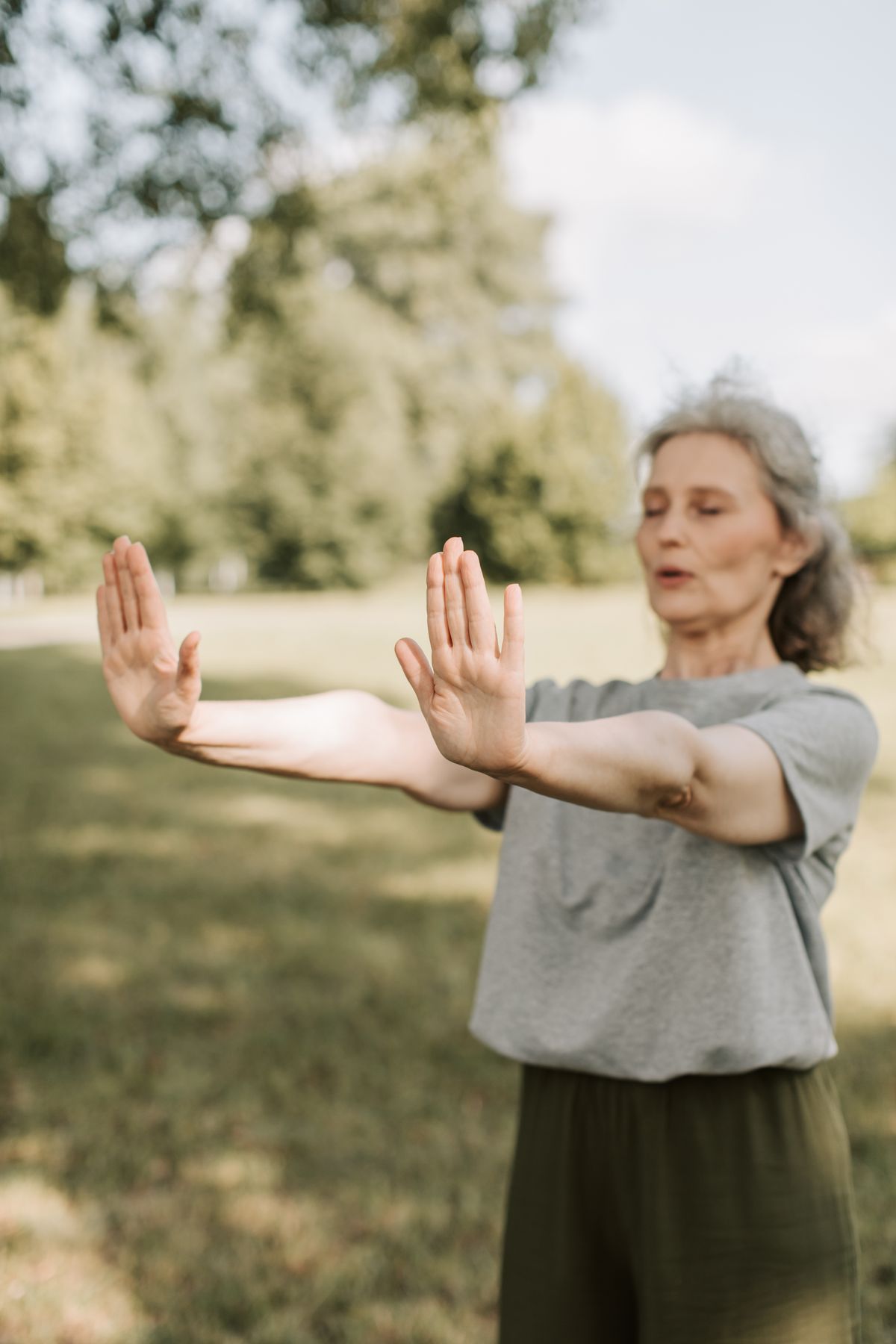
The answer is simple: it moves every joint in your body, it’s gentle enough for an 80-year-old, and the results are real enough to feel within three months. This guide breaks all eight movements down, one by one. Just follow along.
Before You Start: Three Rules
Rule 1: Slow is fast. Do each movement 6–8 times; the full set takes 12–15 minutes. If you’re short on time, do fewer reps — never speed up.
Rule 2: Let your breath follow the movement. Inhale as your arms rise and your body opens; exhale as you press down and draw back. Never hold your breath — if you’re holding it, you’re pushing too hard.
Rule 3: Keep your knees behind your toes. In every horse stance, align your knees with your toes and tuck them slightly inward to protect the joints. This is where beginners get hurt most often.
The First Three: Reaching Sky, Drawing Bow, Single Lift
Movement 1: Holding Up the Sky to Regulate the Triple Burner
Stand with feet together, interlace your fingers, turn your palms upward and press toward the sky while looking up at the backs of your hands. Hold 3 seconds, then slowly lower. Repeat 6 times.
Works on: neck, shoulders, and thoracic spine. If you sit at a computer all day, your shoulders will loosen after the very first rep.
Common mistake: shrugging. Let your shoulders drop as you press up, relax your neck, and imagine a thread gently lifting the crown of your head.
Movement 2: Drawing the Bow to Shoot the Eagle
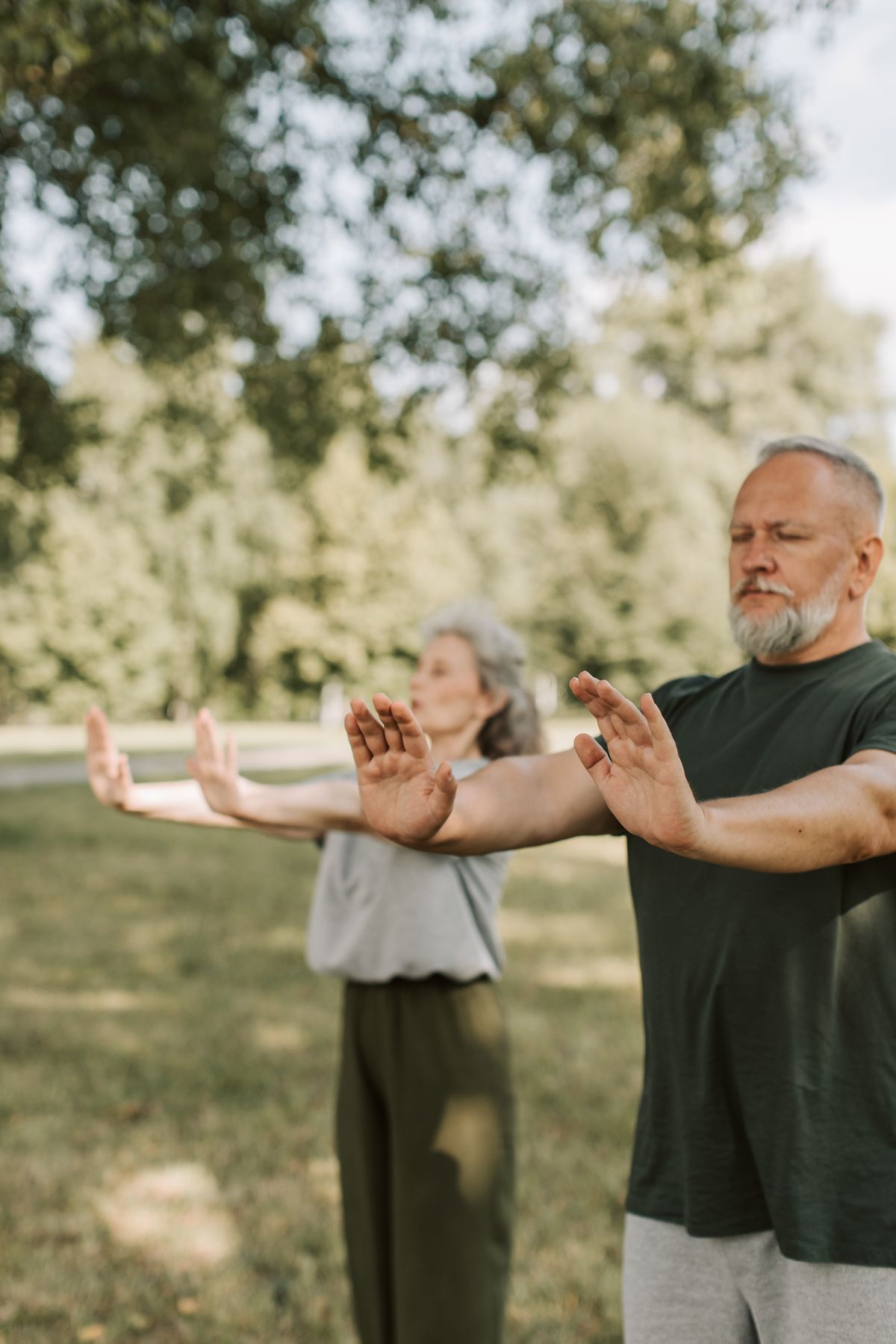
Take a horse stance. Form a loose “V” with your left thumb and index finger and push forward as if nocking an arrow; pull your right hand back as if drawing a bowstring. Keep your eyes on your left index finger. Do 4 reps per side.
Works on: chest and shoulders. The chest-opening motion directly counteracts rounded, hunched posture.
Common mistake: a stance so wide you can’t stay stable. Feet about twice shoulder-width apart is plenty; sink your weight without squatting too deep.
Movement 3: Single Lift to Regulate the Spleen and Stomach
Turn your left palm up and press it overhead while your right hand presses down, turning your torso slightly left. Alternate sides, 4 reps each.
Works on: obliques and side waist. One hand up, one hand down — your spine gets a gentle twist that desk-bound lower backs love.
Common mistake: the lifting hand never passes overhead. Straighten the arm and push one inch past your limit.
The Middle Two: Looking Back, Swaying Head and Tail
Movement 4: Looking Back to Ease the Five Strains and Seven Injuries
Keep your feet planted and slowly turn your head to look back over your left shoulder, eyes reaching as far behind as you can. Hold 2 seconds at the limit, then return. Do 4 reps per side.
Works on: the cervical spine. Turn only as far as you can without dizziness — if your neck is sensitive, move at half speed.
Movement 5: Swaying Head and Tail to Release Heart Fire
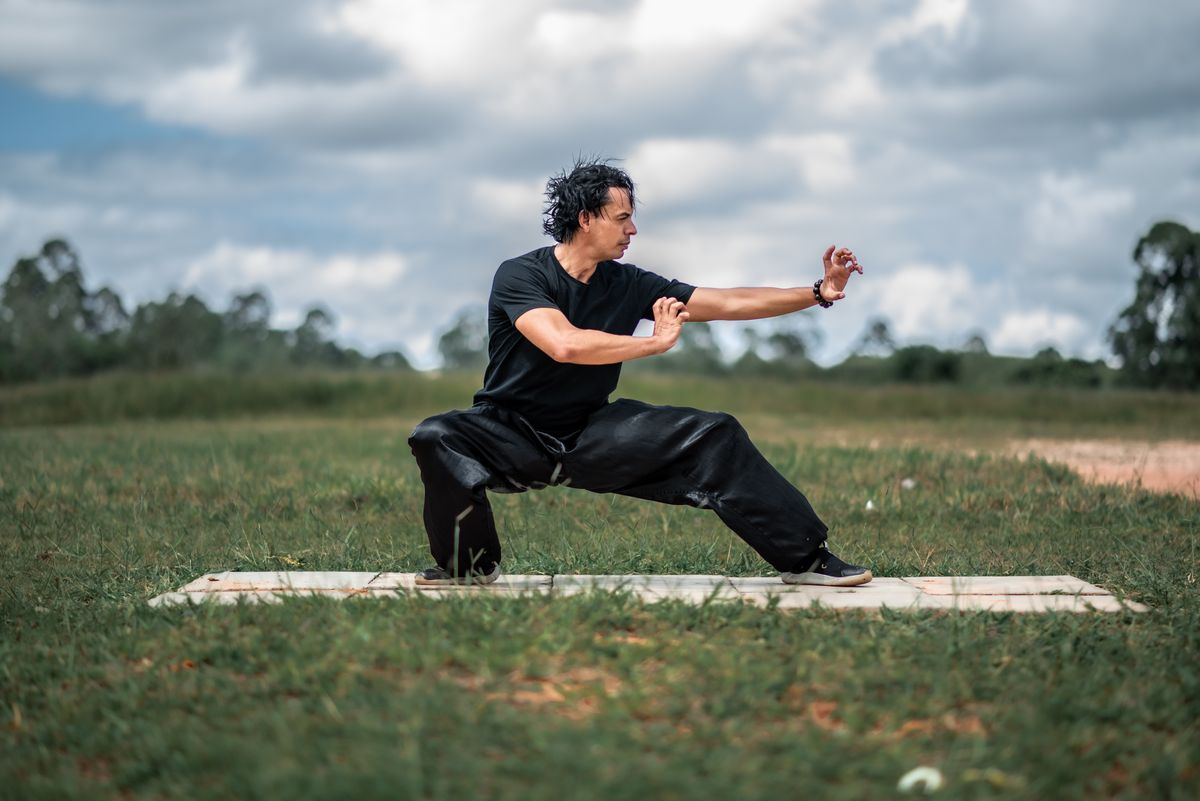
Take a horse stance, rest your hands on your knees. Sway your head from lower-left to lower-right while your hips swing the opposite way, like an old ox swishing its tail. Do 4 reps per side.
Works on: lumbar spine and tailbone. Keep the motion round — don’t whip it with brute force.
Common mistake: staring at the ground. Keep your gaze level; the head sways, the tail follows.
The Final Three: Touching Toes, Punching, Seven Bounces
Movement 6: Touching the Toes to Strengthen Kidneys and Waist
Stand with feet together, raise both hands overhead, then bend forward and slide your hands down your legs to “climb” toward your feet. Touch wherever you can reach, hold 3 seconds, and rise. Do 6 reps.
Works on: lower back and hamstrings. Can’t reach your feet? Completely normal — check again in three months.
Common mistake: rounding the back. Hinge from the hips first, then lower the head; keep the back as flat as you can.
Movement 7: Clenching Fists and Glaring to Build Strength
Take a horse stance, fists at your waist. Punch your left fist forward, knuckles up, while opening your eyes wide. Alternate sides, 4 reps each.
Works on: upper-body strength and focused intent. “Glaring” isn’t about staring someone down — it’s about concentrating all your attention into the fist.
Movement 8: Seven Bounces Behind the Back to Sweep Away Illness
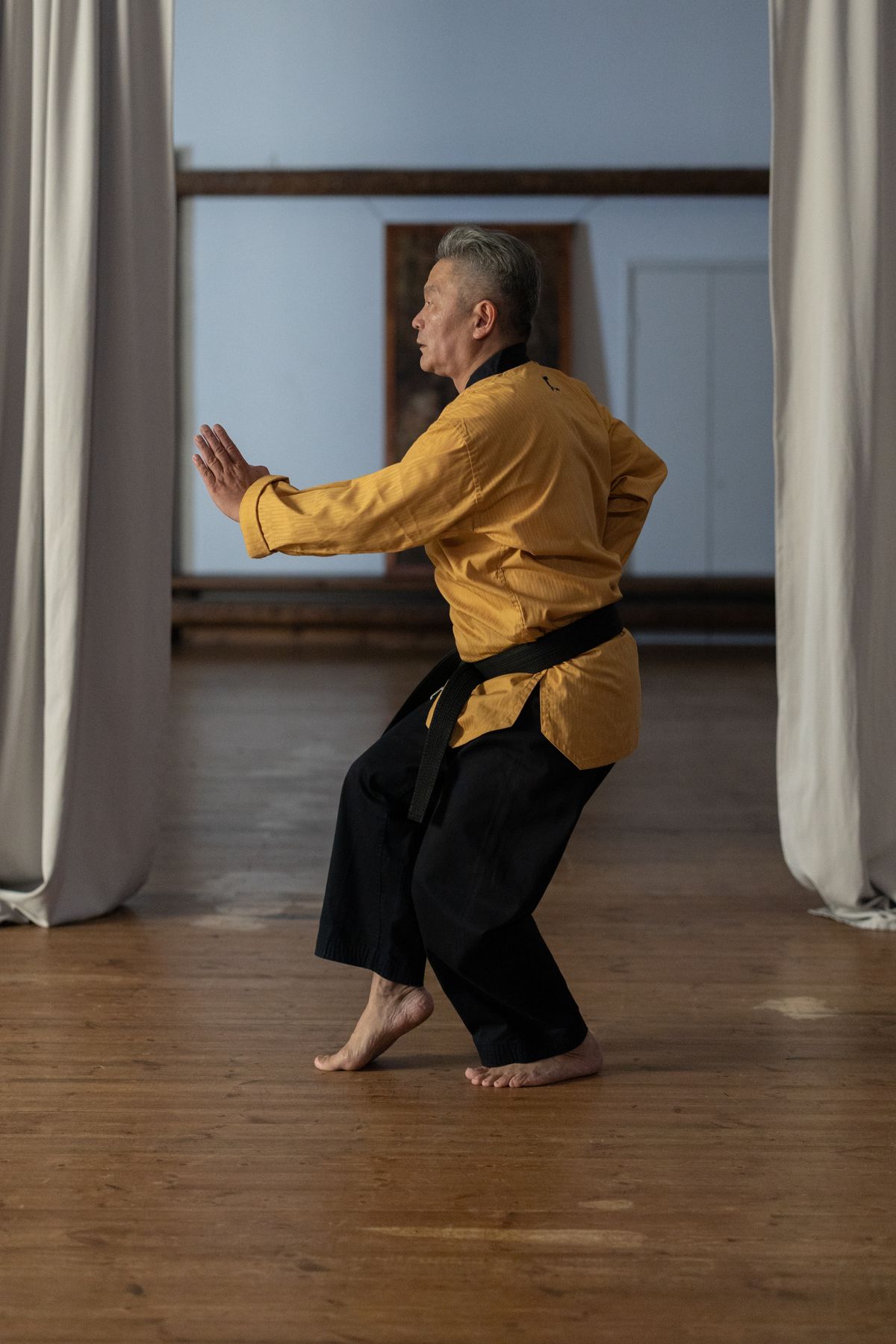
Stand with feet together, hands clasped behind your back. Rise onto your toes, stretch upward, then drop your heels with a light tap. Seven bounces make one set; do 3 sets.
Works on: calves and the soles of the feet. The gentle vibration travels up from your heels — many people feel warmth spreading across their feet afterward. Keep the landing soft; slamming down hurts the knees.
FAQ
Morning or evening? Morning is best — after a night of stiffness, Baduanjin is the perfect “system reboot.” Evening works too, but skip the bouncing movement (Movement 8) before bed; some people find it too energizing.
Can I practice during menstruation or a cold? On heavy flow days, do only the first four movements. With a fever, rest — don’t push through.
How long until I feel results? Neck and shoulder relief can come the same day; sleep and energy changes usually take 4–8 weeks. Ignore anyone promising to “open your meridians in three days.”
Do I need special clothes? Anything loose that lets you raise your arms. Flat, soft-soled shoes are ideal — skip the flip-flops.
Beginner 4-Week Plan
- Week 1: First four movements only, 10 minutes a day. Learn the shapes first.
- Week 2: All eight movements, 15 minutes. Start syncing breath with motion.
- Week 3: Full set plus 2 extra reps per movement, 20 minutes. Notice the stretch in your muscles.
- Week 4: A smooth, continuous 20 minutes. From now on, it’s your morning ritual.
Baduanjin doesn’t reward talent — it rewards repetition. Fifteen minutes a day, and a month from now, every line of this guide will read differently. Start tonight: learn Movement 1, and practice tomorrow morning.
Practice within your limits; consult a qualified professional if you feel unwell.
中文版:八段锦八式图文详解