Look in the mirror and run your fingers along your cheekbones. Feel that gentle ridge on each side of your face, just below the outer corner of your eye? In Chinese physiognomy — known as mianxiang, the traditional art of reading faces — that bone has a name and a reputation. It is called the “cheekbone,” or quan, and old face-reading manuals gave it a striking nickname: the “bone of authority.”
For over a thousand years, practitioners of mianxiang have claimed that the shape of your cheekbones says something about your character and your fortunes. Modern science does not support reading destiny from a face, and this article makes no such claim. What follows is a tour of a piece of Chinese cultural history: how ancient observers looked at a face, named its features, and wove them into a system for understanding people. Everything below is for cultural reference only.
First, Find Your Cheekbones
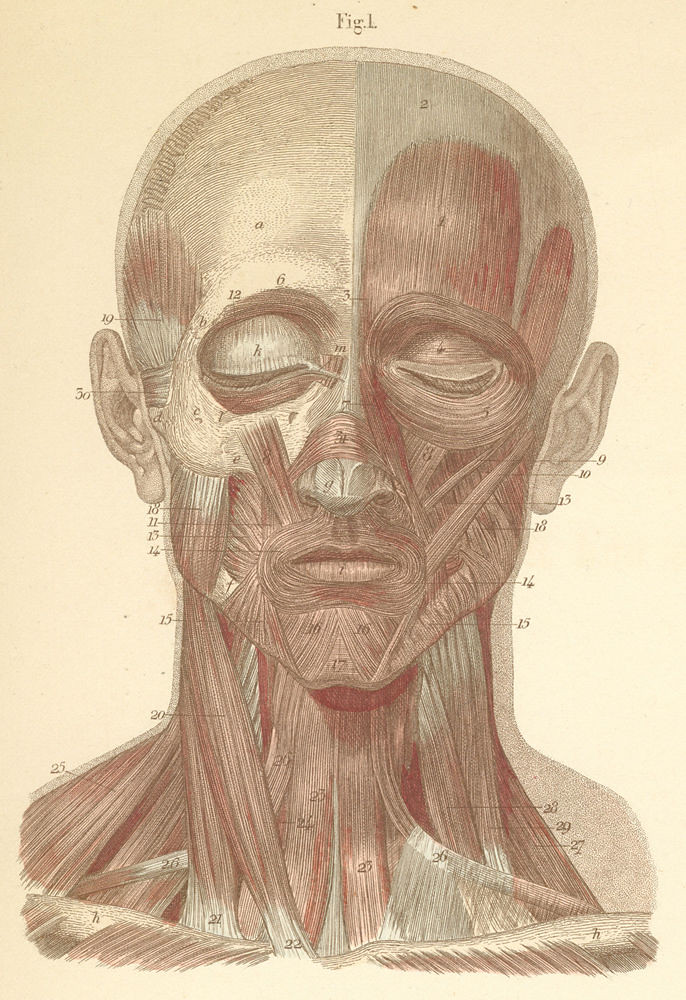
Before any interpretation begins, you need to know exactly where to look. Place a fingertip just below the outer corner of your eye, then slide it toward your ear. The firm, slightly raised bone you feel is the cheekbone. There is one on each side, like two small hills that support the middle of the face.
Traditional face reading treats the cheekbones as one part of a larger structure. Together with the nose and the forehead, they form what old manuals call the “three powers” of the face: the forehead was said to reflect planning and vision, the nose decisiveness, and the cheekbones the ability to carry responsibility.
Cheekbones are not judged on height alone. Traditional readers look at four dimensions: height, width, roundness, and how much flesh covers the bone. A cheekbone that is high and rounded, with a thin layer of flesh over it, earned a favorable name in the old books: “round cheekbones with flesh.” A cheekbone that is high and sharp, with almost no flesh underneath, was called “bare cheekbones” — and the two were read very differently, even though both are high. That distinction matters, because it is where most modern misunderstandings begin.

High or Low: Three Classic Contrasts
Traditional belief holds that people with higher cheekbones act with more drive. An old saying in the face-reading books goes, “high cheekbones carry authority” — meaning such people tend to speak in a steady voice and stand out in a crowd. Picture a team meeting: the person with prominent, well-fleshed cheekbones is often the first to speak, laying out a plan in clear steps — “we can finish this by Friday, in three stages.” The person with flatter cheekbones is more likely to listen to everyone first, then add quietly, “we may need to double-check the budget for step two.” Neither style is better. They are simply different rhythms, and traditional belief holds that both can lead a team well. This is for reference only.
People with lower, flatter cheekbones are traditionally described as easygoing and tolerant. The old books call this pattern “flat cheekbones, calm temper,” and say such people dislike fighting over status. They are thought to suit work that requires long-term cooperation — running a customer service team of a dozen people, for example, where patience matters more than speed. People with higher cheekbones, by contrast, are traditionally seen as better suited to the front line: leading a negotiation, or driving a project through a tight deadline.
One common misreading deserves a correction. High cheekbones that are also sharp and fleshless — the “bare cheekbones” pattern — are traditionally said to give a stern first impression, as if the person were hard to approach. But a first impression is all it is. In many cases the person is simply slim-faced, and gaining three to five pounds softens the whole look considerably.
Why the Cheekbone Is Called the “Bone of Authority”
The nickname comes from the culture of the imperial bureaucracy. In old China, officials were judged by whether they could “shoulder a matter” — carry responsibility without dropping it. The cheekbone, prominent and load-bearing in the middle of the face, became the symbol of that capacity. Traditional belief holds that a person with full, rounded cheekbones is more likely to keep a promise: ask such a friend to help you move house on Saturday at 8 a.m., and he will be downstairs at 7:50, having already borrowed a hand truck. A person with flatter cheekbones might be more easygoing about the plan — perhaps rescheduling to the afternoon if something comes up, but calling first to explain. Both get the job done; the difference is in the approach. This is for reference only.
Traditional belief also links the cheekbone to decisiveness. Someone with high, rounded cheekbones is said to decide quickly: at noon, asked where to eat, the answer comes in three minutes — “the noodle place downstairs.” Someone with lower, flatter cheekbones takes longer, polling colleagues before choosing. Again, this is a difference of habit, not of quality. The quick decider suits fast-changing environments; the careful one suits work where a mistake is costly and double-checking is part of the job.
It is worth saying plainly: character is shaped by family, education, work, and a hundred other forces. Attributing a personality entirely to one bone in the face fits neither common sense nor the original spirit of the tradition.
Cheekbones and Fortune: The Age the Cheekbone Is Said to Govern
Traditional physiognomy divides a lifetime into age bands mapped onto the face. The cheekbone is traditionally associated with the ages of forty to fifty — the decade the Chinese call the years between “no longer confused” (forty) and “knowing the mandate of heaven” (fifty). This is the stage of life when career and family responsibilities are usually at their heaviest, and the cheekbone was used as a symbol of how well a person could bear that weight. This is for reference only.
Within that symbolism, the old books say: rounded, fleshy cheekbones suggest steadier progress after forty, with tasks landing one by one; flatter cheekbones suggest a decade of “holding” rather than pushing — keeping what you have in good order rather than chasing new ventures. Neither reading promises a promotion, a windfall, or any specific outcome. The tradition itself frames this as a symbolic correspondence between a stage of life and a feature of the face, not as a prediction.
There is also a widely repeated idea called “cheekbones and nose in harmony”: the two should balance each other. But the face is a whole. Judging the pairing while ignoring the forehead, the chin, and the complexion — the glow or dullness of the skin, which the old books treated as a sign of current vitality — easily produces a distorted conclusion. Traditional belief holds that the whole face must be read together. This is for reference only.
One more reality check: cheekbone shape is set mainly by genetics and bone development, and it changes with age. A person whose cheekbones look high at thirty will find them looking higher still at fifty, simply because the flesh of the cheeks thins with age. That is a natural process of growing older — not a sudden change of fortune.
Three Warnings: Common Traps When Reading Cheekbones
1. Do Not Judge from a Photo Alone
A phone’s front camera uses a wide-angle lens, and held too close it exaggerates the cheekbones. Beauty filters do the opposite, smoothing them flat. The same face can look a full grade different in a photo taken by the window in natural daylight and in a selfie taken under subway lights. If you want to observe cheekbones, look at a real person in a mirror in daylight — not at a retouched photo.
2. Do Not Take the Old “Bad for Marriage” Sayings Seriously
The most widespread and least supported claim in the old books is that high cheekbones on a woman spell trouble for her husband, or the reverse for a man. This idea comes from a society whose expectations of women were very different from today’s, and many of those old verdicts have lost their context entirely. Traditional belief holds that a high-cheekboned person may be strong-willed — and strong will is not a flaw. At work it often means the person can carry a project and make hard calls. Translating a personality trait directly into a verdict on marriage is a misreading of the tradition, not its essence. This is for reference only.
3. Do Not Use Cheekbones to Pass Final Judgment on Anyone
The oldest rule in physiognomy is also the most ignored: never decide a person’s fate from a single feature. Seeing high cheekbones and concluding someone must be domineering, or seeing flat cheekbones and concluding someone must lack backbone, is exactly the error the old manuals warned against. Real people are more complicated than that. A high-cheekboned person may be gentle and patient at home; a flat-cheekboned person may refuse to yield an inch at the negotiating table. The cheekbone offers one angle of observation. It does not provide a final answer.
Quick Answers
What do high cheekbones mean in Chinese face reading? Traditional belief holds that high, rounded cheekbones with flesh suggest drive, presence, and the ability to carry responsibility. High and sharp with no flesh is read differently — as a stern first impression rather than a character verdict. This is for reference only.
What do low or flat cheekbones mean? Traditional belief holds that flatter cheekbones suggest an easygoing, tolerant character suited to cooperative, long-term work. It is a difference of rhythm, not a ranking.
Why are cheekbones called the “bone of authority”? The nickname comes from imperial-era official culture, where the cheekbone symbolized whether a person could “shoulder a matter” — take on responsibility and see it through. The term quan gu literally means “authority bone.”
Which age do cheekbones govern in traditional physiognomy? The ages of forty to fifty. The reading is symbolic: a stage of heavy responsibility matched to a prominent, load-bearing feature of the face. It predicts no specific event.
Can cheekbones really predict marriage or fortune? No. The old sayings about cheekbones and marriage come from a different social era and have no basis as predictions. Even within the tradition, a single feature was never meant to decide a person’s fate.
How should I actually look at my own cheekbones? In daylight, in a mirror, with your own hands — feel the bone, notice its height and the flesh over it, and treat it as observation, not a verdict. Photos distort; filters flatten; a mirror in natural light is the honest tool.
A Mirror, Not a Verdict
Cheekbone face reading has survived for over a thousand years. Its real interest is not whether it can predict a person’s future — it cannot — but what it records about how ancient observers looked at people. Without psychological tests, they used the bones, the flesh, and the glow of the face to name characters and sort temperaments. That system contains real observation, and real prejudice too, and it deserves to be read with a discerning eye.
If your own cheekbones intrigue you, try two small things. First, look at them in a mirror in natural light — touch the bone, notice its height and shape, and stop at observation without drawing a conclusion. Second, think about your own rhythm of doing things: do you decide first and adjust later, or listen to everyone before you act?
The bones in your face will not decide your life. But they can serve as a reminder: understanding yourself begins with looking carefully. High cheekbones or low, what truly determines how far a person goes is the choices and actions of every day.
English version note: this article presents traditional Chinese physiognomy as cultural heritage, for reference only. It makes no claims about any individual’s destiny or character.