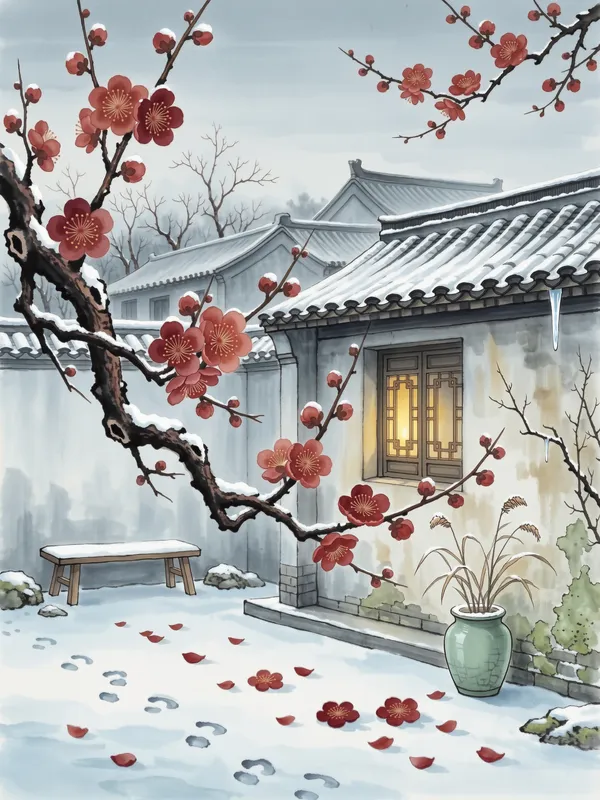
It is six in the morning and still pitch dark outside. Your breath turns to white mist the moment it leaves your mouth, and the tap downstairs has frozen stiff. That is Minor Cold arriving — the coldest stretch of the Chinese year, disguised under a modest name.
Minor Cold (Xiaohan) is the 23rd of the 24 solar terms, the traditional Chinese calendar’s way of dividing the year into 24 seasonal markers. It usually falls around January 5 on the Gregorian calendar. Do not let the word “minor” fool you: an old saying goes “Minor Cold outdoes Major Cold,” meaning this stretch of days is often colder than the Major Cold term that follows it. The weather records agree. In many parts of northern China, the coldest day of the year lands in or around Minor Cold; nighttime temperatures in the North China Plain regularly drop below -10°C (14°F), and even the Yangtze River region south of it can fall below freezing. A damp wind cuts through your coat, and the cold you feel is several degrees worse than the number on the thermometer.
What Makes Minor Cold So Cold: The “Sanjiu” Days
Minor Cold marks the start of the “Sanjiu” period — literally the third nine-day stretch counted from the Winter Solstice. A folk counting rhyme says it plainly: “In the first and second nine-day stretches, hands stay in pockets; in the third and fourth, you can walk on ice.” By the third stretch, the cold has reached its peak: rivers freeze thick enough to walk on, and in northern China today you really can see people skating on frozen lakes.
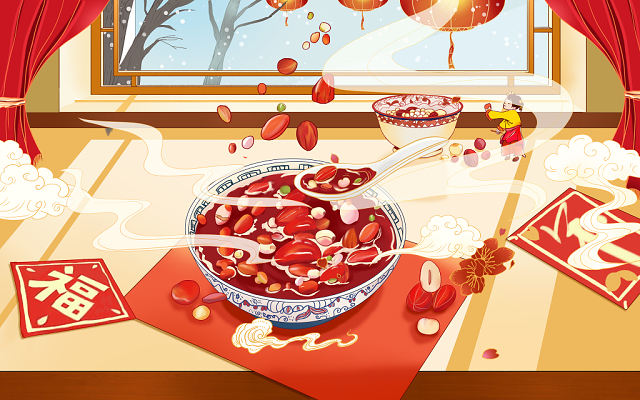
This season also brings two landmark dates that often arrive almost together: Minor Cold and the Laba Festival, the eighth day of the twelfth lunar month. For over a thousand years, families have marked Laba by cooking Laba porridge — glutinous rice, red beans, red dates, peanuts, and lotus seeds simmered together in one pot. It is a festival food, and it also happens to be exactly the kind of warming meal Minor Cold calls for.
Cold fronts sweep through frequently during this term. A single front can drag temperatures down by 6 to 8°C within 24 hours, and a strong wind makes it feel another 3 to 5°C colder. These sudden swings are when people catch colds most easily, and the weather bureau issues more cold-wave blue alerts in this season than in any other month of the year.
Eating for Warmth: Three Foods to Lean On
The key word for Minor Cold eating is “warming nourishment.” The Huangdi Neijing (The Yellow Emperor’s Classic of Medicine), a medical text more than 2,000 years old, teaches that winter is a season for “storing” — conserving energy — and food should follow the same logic: hot, warming, and easy on the body.
The first is lamb. A bowl of lamb soup leaves your whole body warm, and that is not your imagination — lamb is considered warming in nature, rich in protein and iron, and winter is when it suits the body best. In the north, people eat hot-pot lamb during the Sanjiu days; in the south, the classic is lamb soup with angelica root and ginger. The idea is the same. If you find lamb greasy, cook it with white radish (daikon): the radish cuts the richness, and the two stewed together make a broth that is light, savory, and easy to digest.
The second is root vegetables. Fresh vegetables are scarce in winter, but white radish, Chinese yam, and sweet potato are exactly in season. Chinese yam is prized for supporting digestion — steam it or cook it into porridge. Sweet potatoes are best roasted, warm in your hands and filling enough to carry you through a cold afternoon. White radish simmered with pork ribs fills the whole house with fragrance.
The third is black-colored food: black beans, black sesame, black rice, and black wood-ear fungus. In traditional Chinese wellness, dark foods are believed to nourish the kidneys — the organ system associated with winter and with storing the body’s reserves. A bowl of black rice porridge for breakfast, or a spoonful of black sesame sprinkled over your congee, is one of the simplest habits you can adopt.
A few details matter as well. Start the morning with a glass of warm water, never cold water on an empty stomach. Keep late-night snacks to a minimum, and stop eating at least two hours before bed — a full stomach at night makes for restless sleep. Spicy seasonings are fine in moderation, but too much chili heats the body up in the wrong way and works against winter’s “storing.”
Daily Routine: Sleep Long, Guard Three Spots
During Minor Cold, the sun does not rise until around seven in the morning, and darkness falls by five in the evening. The old advice is to follow that rhythm: go to bed early and rise late. Aim to be in bed by 10:30 p.m. and get up after sunrise, around seven. Staying up late is especially costly in winter — the hours between 11 p.m. and 1 a.m. are when the body’s yang energy, its active warmth, is at its weakest.
Three parts of the body are most often left unprotected. The first is the head and neck: wear a hat and a scarf when you go out. A cold draft on the back of the neck is how many winter colds begin. The second is the feet. As the saying goes, “cold enters through the feet” — they are farthest from the heart and have the poorest circulation. Soak them in warm water at around 40°C (104°F) for 15 to 20 minutes in the evening, just until you break a light sweat, then dry them quickly and put on socks. The third is the waist and belly: a chilled lower back aches easily, so do not kick off the covers at night, and wear a long nightshirt that covers the waist.
Indoor temperature deserves attention too. In a heated room, 22 to 24°C (72 to 75°F) is the sweet spot — do not push it above 26°C, or the sharp gap between indoors and outdoors makes catching a cold more likely when you step outside. Heated air is also dry air. Put a basin of water in the room or run a humidifier to keep humidity between 40% and 60%, so your throat does not dry out and hurt.
Movement in Winter: Slow, and Barely Sweat
The rule for winter exercise is simple: move, but do not work up a heavy sweat. Sweating heavily opens the pores and lets the cold in. A light warmth in the body and a thin sheen of sweat on the forehead is enough.
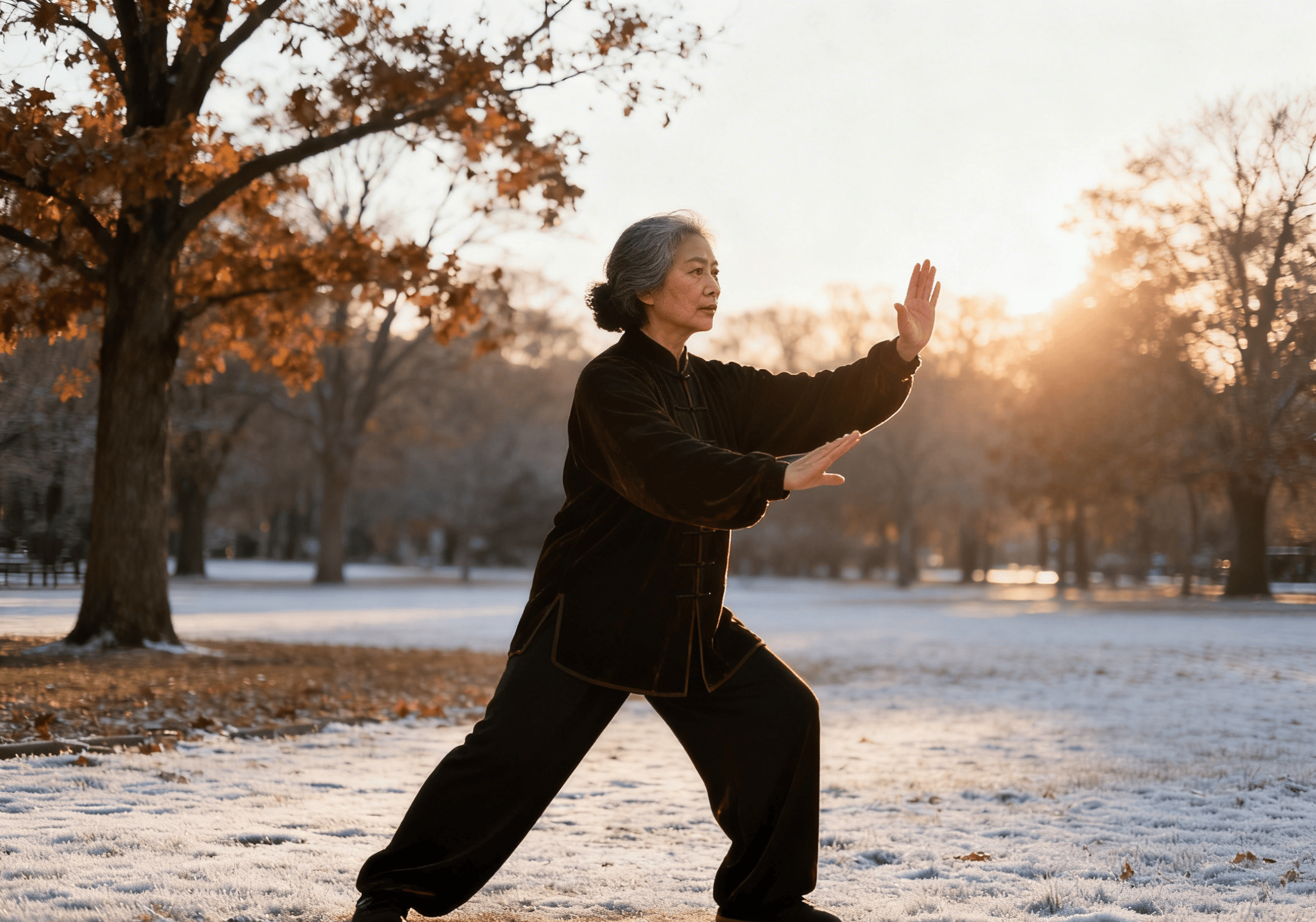
Tai Chi is the best fit for Minor Cold. The 24-form simplified routine takes about six minutes, its movements are slow and small, and when you finish, your hands and feet feel warm. Practice it twice after the sun comes up, around nine or ten in the morning, in the courtyard or the park, and you will feel alert all day. If you do not know Tai Chi, Baduanjin (the Eight Brocades) is a good alternative — moves like “Holding Up the Sky to Regulate the Triple Burner” and “Drawing the Bow to Shoot the Eagle” stretch the whole body and are especially kind to people who sit all day. Fifteen minutes a day is enough.
Walking is the simplest option of all. After dinner, walk for 20 to 30 minutes at a relaxed pace, just enough to warm up. On rainy or snowy days, when the roads are slippery, stay in: march in place at home or do some gentle stretching instead — it works just as well.
Timing matters too. Five or six in the morning is the coldest part of the day, and the air has not yet cleared — it is the worst time to exercise outdoors. Wait until after nine in the morning, or go out around three or four in the afternoon, when the temperature has risen. Warm up for five minutes first, loosening your wrists and ankles, and never jump straight into vigorous movement.
Four Things Not to Overlook
First, do not get up too fast in the morning. Cardiovascular problems occur notably more often in winter than in summer. When you wake up, lie in bed for a minute or two, move your hands and feet, and only then sit up slowly. Rising suddenly sends blood pressure up sharply and can leave you dizzy.
Second, keep the shower water moderate. Around 40°C (104°F) for 10 to 15 minutes is right. Some people love a scalding shower to shake off the chill, but water that is too hot dilates the blood vessels in the skin too quickly — step out into a cold draft, and you catch a chill faster.
Third, let your mood “store” too. Winter days are short, and a run of gray days can leave anyone feeling low. Get to a window for some sunlight during the day, 20 to 30 minutes if you can. On the weekend, meet a friend for a meal and a chat instead of staying shut in at home all day.
Fourth, nourishing food depends on your constitution. Lamb, longan, and red dates feel warming, but if you tend toward dryness and heat — a dry mouth, a tendency to break out — too much of them can leave you overheated. If you run hot, halve the warming foods and eat more white radish and pears, which are cooling and moistening. If you are not sure about your own constitution, eat on the mild side.
The Takeaway: Get Through Minor Cold Well, and Spring Follows
Minor Cold does not ask you to hide indoors and do nothing. It asks you to adjust your rhythm to the season: eat warm food, sleep enough, move gently, and dress warmly. Three small things to start today: put the phone down and sleep before 10:30 p.m.; check your hat and scarf before stepping out in the morning; and take a 20-minute walk after dinner, catching the last of the evening light.
Winter well kept is spring well earned. Put in the work over this month, and when the Start of Spring arrives, your body will feel noticeably lighter.
Quick Answers
When is Minor Cold? Minor Cold is the 23rd of the 24 solar terms and usually falls around January 5. It marks the start of the “Sanjiu” period — the coldest nine-day stretch of the year in much of China.
What should I eat during Minor Cold? Warm, nourishing food: lamb soup, root vegetables like white radish, Chinese yam, and sweet potato, and black foods such as black beans, black sesame, and black rice. Start the day with warm water, and avoid eating late at night.
How should I exercise in this season? Move slowly and avoid heavy sweating. Tai Chi or Baduanjin for about 15 minutes, or a 20 to 30-minute walk, is enough. Exercise after nine in the morning or in the afternoon — never at dawn, when it is coldest.
What are the most common mistakes? Getting out of bed too quickly, showering in water that is too hot, going to bed late, and overdoing warming foods if your constitution already runs hot. Small adjustments — a hat, a foot soak, an earlier bedtime — make the biggest difference.
Disclaimer: This article is a cultural introduction to traditional solar-term wellness and is for general reference only. It is not medical advice. Individual constitutions vary widely, and the dietary and exercise suggestions here may not suit everyone. If you have a chronic condition such as high blood pressure, diabetes, or heart disease, consult your doctor before changing your diet or starting a new exercise routine. Nothing in this article promises any health outcome. If you feel unwell, seek medical care promptly.