It’s 7 a.m. on a January morning. You get out of bed, and your lower belly feels cold to the touch. Your hands stay chilly for an hour, no matter how many times you rub them together. By mid-afternoon, after three hours at your desk, your waist aches and your belly feels bloated. If any of this sounds familiar, there is a small, free habit in traditional Chinese medicine (TCM) that many people try at home: pressing Guanyuan, a point on the lower belly you can find with your own fingers. This guide shows you exactly where it is, how to press it, and when to leave it alone.
Guanyuan — also called Conception Vessel 4, or CV4 — sits on the Ren meridian, the central energy channel that runs down the front of the body in TCM theory. Its name literally means “Gate of Origin,” and in classical texts it is described as a place where the body’s foundational energy gathers. You don’t need to believe any of that to use it. What matters is the technique: find the spot, press it gently, and do it regularly.
How to Locate Guanyuan (CV4)
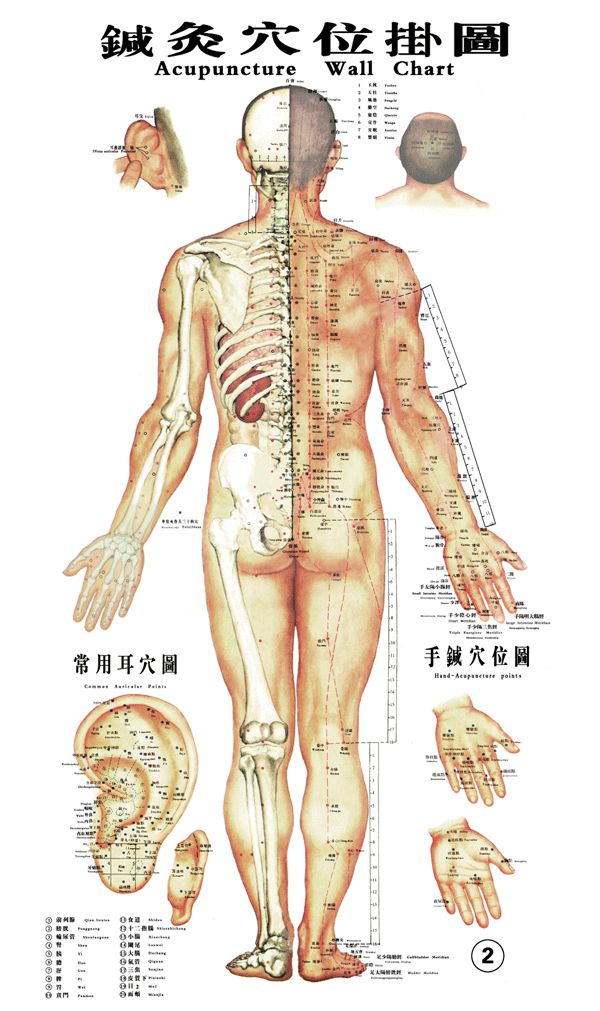
Guanyuan sits on the midline of your lower abdomen, three cun below your navel. A cun is a traditional Chinese body measurement — roughly the width of your thumb at the joint — and in practice the easiest way to measure it is with your own hand.
Press your index, middle, ring, and little fingers together and lay them flat just below your navel. The combined width of those four fingers is about three cun. The lower edge of your little finger marks the spot. Because you are measuring your own body with your own hand, the method self-corrects: a bigger hand belongs to a bigger body, and the proportions still work out.
There is a second way to check. The distance from your navel to the top edge of your pubic bone is about five cun. Guanyuan sits three-fifths of the way down that line. Lie on your back to find it — standing makes your abdominal muscles tense up and throws the measurement off.
Once you have the approximate spot, press lightly with your fingertip. You are looking for a small dip in the tissue, a point that feels slightly tender or heavy when pressed — a dull, achy sensation rather than a sharp pain. That ache is the signal. Sharp, stabbing pain means you are off target or pressing too hard.
Don’t worry if you miss the first time. Most people do. Move your fingertip slowly across the area below your navel, about four finger-widths wide, testing a little at a time until you find the spot where that achy feeling is strongest. Remember it. After two or three tries, your fingers will find it without thinking — locating an acupoint is a skill you learn by doing, not by staring at a diagram.
Pressing Technique: Four Steps to Get It Right
Before you start, do three small things. Wash your hands and trim your nails, so you don’t scratch the skin. Warm your hands first — rub your palms together, or wash them in warm water. Cold hands on a cold belly make you flinch, and the whole session falls apart. If your skin is dry, dab on a little moisturizer or massage oil to reduce friction. In winter, do it under the covers, or warm your belly with a hot-water bottle for two or three minutes first.
Step 1: Press and hold
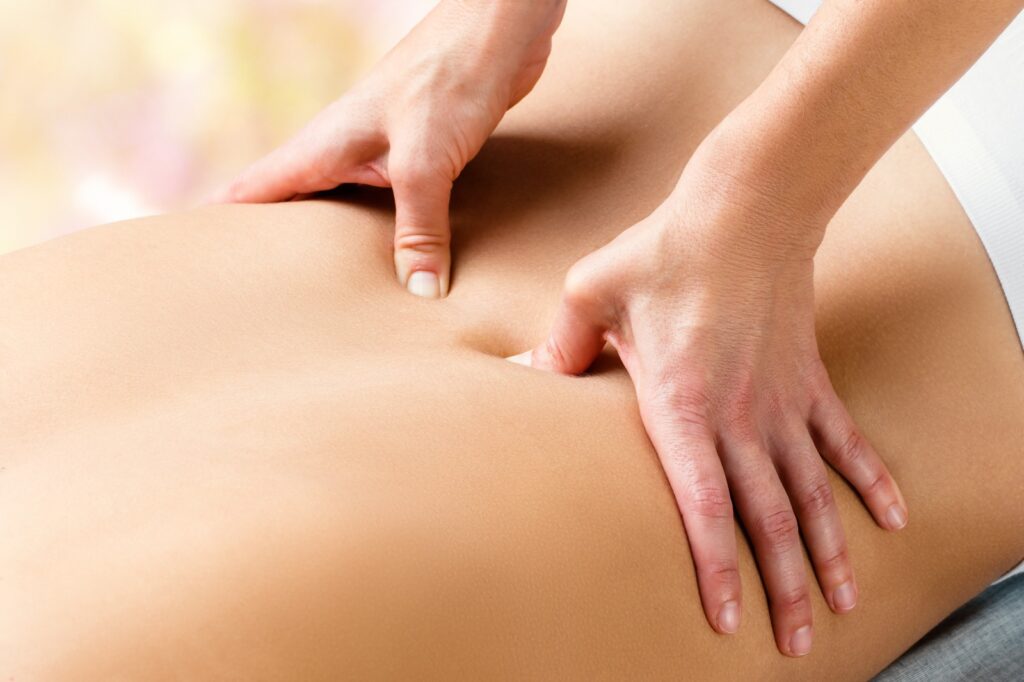
Place the pad of your middle finger on Guanyuan and press straight down. Build the pressure slowly, from light to firm, and stop the moment you feel that dull ache. Hold for about 10 seconds, then release. Repeat five times. The right pressure is “I can feel it, and it feels good afterward.” If you are wincing, you have gone too far.
Step 2: Rub in circles
Rest your palm flat on your lower belly and rub in slow clockwise circles around Guanyuan — in TCM, clockwise is the standard direction for abdominal massage. Each circle takes about two seconds; keep going for two to three minutes. Try to match your breathing to the motion: lighter as you breathe in, slightly heavier as you breathe out. Slow the rhythm down and let your whole body relax with it.
Step 3: Warm with your palm
After rubbing, warm your palms by rubbing them together, then lay one flat over your lower belly and leave it there for a full minute. Let the warmth sink in slowly. Many people notice their belly feels warm afterward — that is this step doing its work.
Step 4: Keep it short and regular
Three to five minutes per session is enough, once or twice a day — after waking up and before bed works well. Don’t press within half an hour of a meal; pressing a full stomach can make you feel queasy. Consistency matters more than intensity. Five gentle minutes every day beats one heroic ten-minute session you only remember once a week.
When to Use It
Cold hands and feet. This is the most common reason people try Guanyuan. Picture a winter afternoon in an air-conditioned office: your hands are still cold at 3 p.m. Take three minutes during your lunch break to press and rub the point, then drink a cup of hot water. Many people feel their belly warm up first, and their hands follow. It is not instant magic — it is a slow change. After a few weeks of daily practice, many people find they tolerate cold a little better.
Long hours at a desk. After three hours of sitting, your lower belly feels heavy and your waist aches. Get up and walk around for five minutes, then sit back down and spend a few minutes on Guanyuan with two or three slow, deep breaths. The tight, bloated feeling usually eases. Compared with sitting there gritting your teeth until 6 p.m., it is a good trade.
Restless nights and frequent trips to the bathroom. Older adults who wake up several times a night or sleep lightly sometimes try a three-minute session about 20 minutes before bed, lying down and rubbing slowly to wind down. It is only a supportive habit, not a treatment. If the number of nighttime trips suddenly jumps, get checked first — pressing a point won’t explain a new symptom.
Period cramps with a cold belly. During menstruation, some women find gentle rubbing on Guanyuan helps with cold, cramping pain — but go lighter than usual, lean on the warm-palm step rather than pressing, halve the pressure, and keep it under two minutes. If the flow is very heavy or the pain is so bad you can’t stand up straight, skip the self-massage and see a doctor.
After exercise. After a run or a round of Baduanjin, when your abdominal muscles feel tight, two minutes of gentle rubbing with slow breathing can help them relax. Just dry off first and wait until the sweat settles — don’t press a cold, damp belly.
Contraindications: When Not to Press
Pregnancy. Do not press Guanyuan while pregnant. In TCM theory this point has a strong stimulating effect, and pressing it during pregnancy carries risk — in the first trimester or the last, it makes no difference. If you are trying to conceive and aren’t sure whether you are pregnant, wait until you know before pressing.
Broken skin or recent surgery. If the skin over your belly is cut, has eczema, a boil, or any open wound, don’t press there — rubbing an unhealed wound can make an infection worse. After abdominal surgery, wait until your doctor explicitly says massage is fine. Don’t guess the timing yourself; go by the follow-up appointment.
Acute illness. Fever, diarrhea, or abdominal pain that is happening right now — skip the massage. When the body is in an acute state, pressing can make things worse. In particular, sudden severe abdominal pain, pain that gets worse when you press, or pain with vomiting or fever means stop immediately and seek medical care. Don’t keep pressing and hope it gets better.
Serious medical conditions. Be cautious if you have an abdominal tumor, abdominal inflammation, a serious heart or blood-vessel condition, or if you take blood-thinning medication. Ask your doctor before trying. Acupressure is a daily self-care habit, not a treatment — when there is a diagnosed condition, your doctor’s judgment comes before anything in an article.
Too much pressure, too much time. A dull ache is enough. Bruising, or soreness that lasts for hours afterward, means you pressed too hard. More than ten minutes in one session is unnecessary — overdoing it tires the abdominal muscles instead of relaxing them. After pressing, keep your belly warm; don’t let cold wind hit it for at least half an hour, and pull your clothes down properly in winter.
Quick Answers
How do I find Guanyuan? Lay four fingers flat below your navel. The lower edge of your little finger, on the midline of your belly, is the spot. Confirm it by pressing lightly — you should feel a dull ache, not sharp pain.
How long should I press each day? Three to five minutes, once or twice a day. Morning and before bed are the easiest times to remember.
Which direction do I rub? Clockwise, in slow circles of about two seconds each, for two to three minutes. Breathe in lightly, breathe out a little heavier.
Can I press it during my period? Yes, gently — lighter pressure, mostly warm-palm work, under two minutes. Skip it if the flow is very heavy or the pain is severe, and see a doctor instead.
How soon will I notice anything? Warmth in the belly can come the same day. Changes in cold tolerance or sleep usually take weeks of daily practice. Anyone promising overnight results is overselling it.
Can I do it after eating? No — wait at least half an hour after a meal.
Make It Part of Your Day
Guanyuan acupressure is a small thing: find the spot four finger-widths below your navel, spend three to five minutes a day pressing, rubbing clockwise, and finishing with a warm palm. It costs nothing and takes almost no time, and it fits easily into a routine for people with cold hands and feet, desk-bound bloating, or restless nights. It also has clear limits: pregnant people, anyone with broken skin or recent abdominal surgery, and people with serious conditions should not press it on their own, and sudden severe abdominal pain needs a doctor, not a fingertip.
It works best alongside three other small habits: keep your belly warm — no bare midriffs in winter, and keep the blanket on at night; walk 20 to 30 minutes a day, or practice a round of Baduanjin, to keep things moving; and get to bed before 11 p.m. instead of staying up late. A point pressed daily plus those habits is worth far more than any single technique on its own. Try it tonight before bed — three minutes, find the ache, and you have already started.
Disclaimer: This article is for reference only and is not a substitute for medical diagnosis or treatment. Pregnant people, anyone with broken skin, people recovering from abdominal surgery, and anyone with a serious medical condition should be cautious and follow a doctor’s advice before trying acupressure. This article makes no promises about results. If you feel unwell at any point, stop immediately and consult a doctor.