Two people earn the same salary. One watches every paycheck vanish into takeout, flash sales, and things they forgot they bought. The other quietly puts a fixed sum aside on payday, and five years later has a down payment. Same income, different relationship with money — and in the old Chinese system of BaZi (the “Eight Characters,” a birth-chart method based on the time of your birth), the second person’s chart often shows something called Zhengcai: Direct Wealth.
BaZi is a traditional Chinese framework for reading personality tendencies from a birth chart. It divides a person’s life into the “Ten Gods” (Shi Shen) — ten archetypes that describe how the chart’s owner relates to the world. Zhengcai, the Direct Wealth star, is the one that governs money: how you earn it, how you keep it, and how you feel about it.
What Zhengcai Actually Means
The rule behind the Ten Gods is simple. In a BaZi chart, your birth day’s Heavenly Stem is called the Day Master — it represents you. Whatever the Day Master “controls” counts as wealth. Take a Wood Day Master, for example: Wood controls Earth, so Earth elements in the chart act as wealth. Earth comes in two kinds. Yin Earth (Ji) has the opposite polarity to Yang Wood (Jia), so it is Zhengcai — Direct Wealth. Yang Earth (Wu) shares the same polarity, so it is Piancai — Indirect Wealth.
Direct Wealth is money you can hold onto steadily: a salary, a fixed income, the profit from running a small shop year after year. Its source is clear, and spending it feels solid. Indirect Wealth is the opposite — a windfall, a lucky break, money that arrives fast and leaves fast. This article is about the steady kind.
Old texts often call Zhengcai the “proper occupation” (Zhengye). It stands for playing by the rules and thinking long-term. People with strong Direct Wealth tend to treat money the same way: no chasing quick money, no shortcuts, slower if necessary, but always out in the open.
Where Zhengcai appears in the chart also matters. In the month pillar it usually connects to work and income; in the day branch it sits closer to a spouse and household spending. One character alone never tells the whole story.
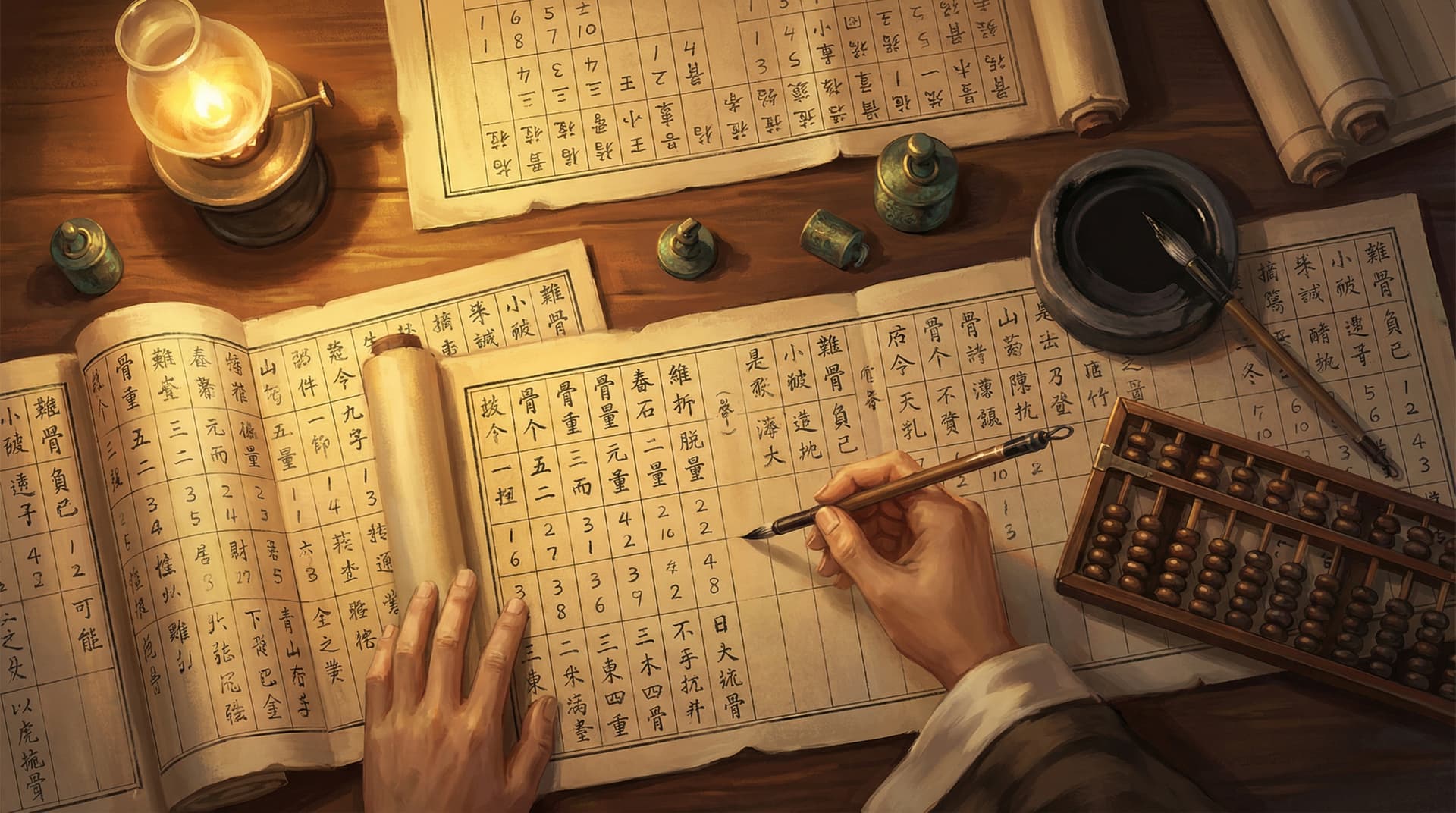
The Personality of Strong Zhengcai
If one word describes people with strong Zhengcai, it is “steady.” They plan ahead, spend within limits, and rarely break a promise. A friend borrows 500 yuan from them, and it goes into their notes app. When they borrow from someone else, they repay early.
Take Xiao Chen, an accountant I know — a classic Zhengcai personality. She earns 8,000 yuan a month. On payday she moves 2,000 yuan straight into a savings account, then divides the rest between rent, food, and transport. In three years she has saved over 70,000 yuan and never once touched the savings account. “Save first, spend later” isn’t self-denial for her. It’s a habit.
People with strong Direct Wealth notice numbers and take details seriously. They compare three shops before buying, read every clause before signing a contract, and when they go into business with a partner, they write down the division of labor and profits first. Others sometimes call this stingy. In practice, it means they rarely get taken advantage of in a partnership — and rarely take advantage of anyone else, either.
Every coin has a flip side. People with overly strong Zhengcai can be too cautious. Presented with a new opportunity, their first thought is “what’s the risk?” They can spend two months agonizing over investing 20,000 yuan in a small project — and by the time they decide, the opportunity is gone. If they guard money too tightly, they can also look small-minded about favors: a friend treats them to dinner, and they immediately start planning how to pay it back, afraid of owing anyone anything.
Zhengcai doesn’t say “rich” or “poor.” It describes an attitude: measured, planned, and trustworthy.
How Zhengcai Earns: Slow Money Beats Fast Money
For people with strong Zhengcai, the most fitting way to earn is “slow money” — a stable profession, a craft, a business built over years, income thickening bit by bit. Teachers, doctors, accountants, craftspeople, small shop owners: many of them have strong Direct Wealth. Their income comes from time and accumulation, not luck.
Picture a breakfast stall. Before opening, its Zhengcai-minded owner works out the numbers: rent 3,000 yuan a month, ingredients 400 yuan a day, labor 5,000 yuan a month. To break even, he needs to sell 120 portions a day at 8 yuan each. After opening, he keeps a daily ledger — which dish sells, which one is left over — and adjusts the menu every week. Three years later, the shop has never gone viral. But it reliably earns 8,000 to 10,000 yuan a month. That is the rhythm of Direct Wealth.
Pushing someone like this into short-term trading or chasing hot trends usually feels wrong. The “buy today, sell tomorrow” pace doesn’t fit their temperament; they lose sleep and check prices compulsively. Fast money needs a different kind of personality. Zhengcai’s strength lies elsewhere.
Things flow more smoothly when Zhengcai pairs well with Shi Shang (Output, the star of talent and creativity). When talent generates wealth, skill becomes income. A carpenter with strong Output takes orders by word of mouth; once his reputation spreads, his order book fills three months ahead and his income rises with it. That path runs on craft and reputation.
Strong Zhengcai doesn’t guarantee wealth in real life. Think of it as a personality map — it shows which road suits you best. What actually determines income is still your career choice, your skills, and your circumstances. A birth chart is a reference, not a verdict.
Zhengcai in Relationships and Family Life
Zhengcai is about rules, and those rules carry over into relationships. People with strong Direct Wealth believe in reciprocity: you help them once, and they will find a way to return it. This “never owe anyone” approach means they may not have many friends — but the ones they keep tend to last.
At home, they are often the one who manages the household budget. A couple earning 15,000 yuan a month together: he suggests saving 3,000, setting aside 2,000 for the children’s education fund, and living on the rest. When the family needs a new 4,000-yuan refrigerator, he compares three brands, checks energy ratings and warranties, and only then decides which one to buy.
Zhengcai also connects to a sense of responsibility in marriage. Old texts compare Zhengcai to the “proper spouse” — in modern terms, a formal commitment to a partner and family: income out in the open, big expenses discussed together, hard times carried together. Not romantic, but reliable.
Still, there is a line to watch. If you keep score too strictly with a partner or with parents, affection starts to taste like accounting. Your parents stay for a few days, groceries cost 200 yuan — do you write that down? A friend gives an 800-yuan wedding gift — do you wait for them to repay it? Count the money carefully, but keep the feelings a little fuzzy.

No Zhengcai in Your Chart? Or Very Weak?
Many people look up their chart, find no Zhengcai at all, and panic: “Does that mean I have no luck with money?” It doesn’t. A chart has only eight characters, and Zhengcai is just one possibility. No Zhengcai doesn’t mean no income, and it certainly doesn’t mean a lifetime of being broke.
One possibility: the wealth is hidden in the Earthly Branches. Nothing shows in the Heavenly Stems, but a hidden stem inside a branch may still hold it. For a Fire Day Master (Bing), no Xin Metal may appear on the surface — yet the Chou branch quietly contains Xin Metal. The wealth is there, just buried deeper, waiting for a favorable ten-year luck cycle (Da Yun) or a yearly cycle to bring it out.
Another possibility: the “Output generates Wealth” route. People with strong Output earn through talent, craft, or expression — wealth is created rather than found. An illustrator with no Zhengcai in her chart earns 12,000 yuan a month taking commissions, no less than someone with strong Direct Wealth. Different source, same result.
A third possibility: the luck cycle fills the gap. If Zhengcai is missing from the original chart, a ten-year period with strong wealth energy can still lift income. BaZi is a dynamic system — the birth chart is only a starting point. Judging a whole life from the original chart alone is a misreading of the system.
Instead of worrying about whether Zhengcai is present, three actions are worth far more: set a fixed savings rate — put aside 10% of your income every month; build one skill to the point where it can earn money; and start tracking expenses — three months of records will show exactly where the money goes. A birth chart is just one lens for understanding yourself. Action is what changes a life.
Zhengcai as a Way of Life
In the Ten Gods system, Zhengcai has never been only about money. It describes a way of living: income with a clear source, spending with a plan, promises kept, family taken care of. That attitude won’t make anyone rich overnight — but it can make life stable, dignified, and with room to breathe.
If your Zhengcai is strong, use that steadiness well: choose a career that compounds over time, sharpen your craft, and guard your credibility. If Zhengcai barely shows in your chart, there is no need to worry — wealth has more than one road, and skill and steady accumulation can lead to the same destination.
Three small steps you can start this month: track your spending for 30 days and see where the money actually goes; set a fixed monthly savings number — even 500 yuan — and save first, spend later; learn one skill each year that can earn money, even if it just means doing your current job a little better. BaZi is a cultural mirror left behind by the ancients. It reflects tendencies and character. The days themselves, though, are lived one by one, by you.

Quick Answers
What is Zhengcai in BaZi? Zhengcai (Direct Wealth) is one of the Ten Gods in BaZi, the traditional Chinese birth-chart system. It represents the element your Day Master controls with opposite polarity — and stands for steady, legitimate income such as a salary or a long-running business.
Does strong Zhengcai mean you will be rich? No. It describes a tendency toward financial discipline — planning, saving, and keeping promises — not a guaranteed income level. Career, skills, and circumstances matter far more.
What if my chart has no Zhengcai? Wealth may be hidden in a branch’s hidden stems, it may come through talent and Output (Shi Shang generating wealth), or it may arrive during a favorable ten-year luck cycle. No Zhengcai does not mean no money.
What is the difference between Zhengcai and Piancai? Zhengcai is steady, traceable income — salary, fixed earnings, a shop’s profit. Piancai (Indirect Wealth) is windfall money: fast to arrive, fast to leave. Both are wealth stars, but they describe very different ways of relating to money.
How can I work with Zhengcai energy? Save a fixed percentage first, build a skill that can earn, and track your spending. The chart points to a tendency; the habits are what make it real.
This article explores BaZi as traditional Chinese culture. It describes tendencies, not predictions — it makes no claims about any individual’s fortune.