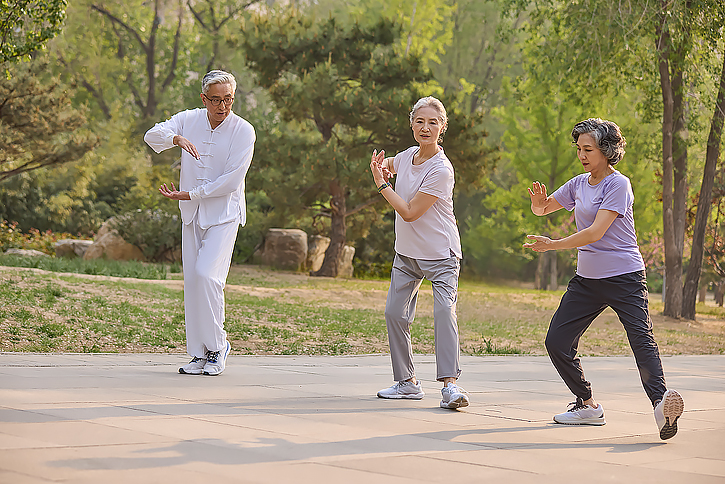
Every morning by the flowerbeds in our neighborhood, Mrs. Chen practices Baduanjin. The first seven movements flow like water — and then, at the closing movement, she barely lifts her heels. She has done this for three years, and she has always wanted to ask: what is this last movement actually training?
It is the most common Baduanjin ending in China, and also the most misunderstood. It looks like nothing. It is, in fact, the movement that ties the whole set together.
What This Movement Is Really For
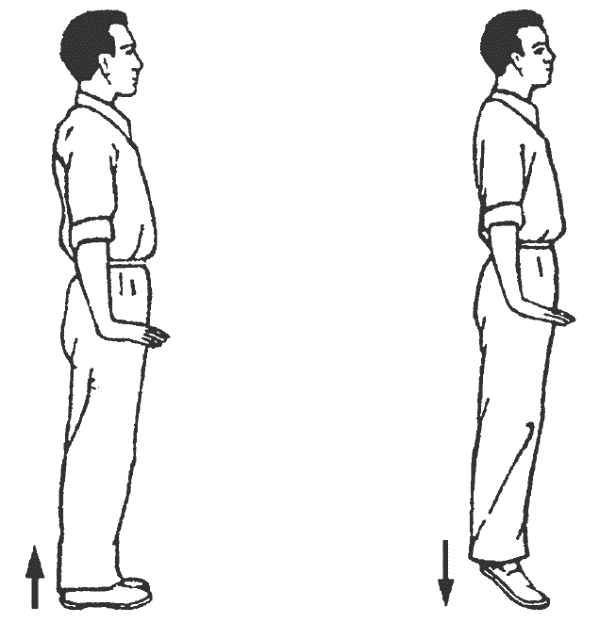
Beihou Qidian Baibing Xiao — “Seven Bounces Behind the Back to Dispel All Illness” — is the closing movement of Baduanjin, the Eight Brocades, a qigong routine practiced in China for more than 800 years. The “seven” is not an arbitrary number: you rise onto your toes and let your heels drop, seven times. Each drop sends a gentle vibration up through the body — from the heels, through the ankles, knees, and hips, up the spine, all the way to the crown of the head, where it settles at the Baihui point, the acupoint at the very top of the skull in traditional Chinese medicine.
Old martial arts manuals say this movement “draws the qi back to its source” — qi being the traditional Chinese concept of vital energy circulating through the body. Translated into plain language, it does three things. First, it relaxes the soles of the feet and the calves. When your heels rise, the muscles at the back of your calves tighten; when they drop, those muscles suddenly release. That tighten-and-release works like a pump for blood in the lower legs. People who stand or sit all day often feel heavy calves and stiff ankles; after seven bounces, the soles of their feet feel warm. Second, it moves the spine. The instant your heels touch the ground, the vibration travels up the spine. The thoracic and lumbar vertebrae that stiffen from hunching over a desk get a small, even shake — more uniform than stretching while seated. Third, it closes the whole set. The first seven movements have stirred the body up; this one is like the drawstring that closes a bag, pulling your attention from your limbs back to the center line of your body. Your heart rate eases down, and you are ready to finish.
Once you understand these three jobs, you see why it cannot be fudged. Lifting your heels without letting them drop is only half a movement. Dropping them too hard turns relaxation into impact. The right force is like setting a ripe peach gently on a table: it has weight, but it does not slam.
Step by Step: From Ready Position to Seven Bounces
Start by standing well. Coming out of the previous movement — “Touching the Toes to Strengthen the Kidneys and Waist” — bring your feet together, let your arms hang naturally at your sides, palms resting against the outside of your thighs. Tuck your chin slightly and look straight ahead, three to five meters in front of you. Drop your shoulders first. Many people shrug the moment they stand up straight, and their shoulders are still sore after the whole set — the problem usually starts right here.
Rise. As you inhale, slowly lift both heels off the ground, shifting your weight onto the balls of your feet. Slowly is the key word: take about three seconds to reach the top; do not spring up. At the top, your calves should feel engaged and your knees should stay slightly bent — never locked. If your knees are locked straight, the vibration gets stuck in the knee joint, and your knees will hurt before anything else does.
Drop. As you exhale, let your heels come gently back to the ground. Drop, not stomp. Imagine a three-millimeter cushion under your heels: the landing makes a sound, but not a bang. The instant your heels touch the ground, your whole body gives a slight shiver. Keep your teeth lightly together so your upper and lower teeth do not click.
Repeat seven times. One rise-and-drop is one bounce; do seven. When you finish the seventh, stand firmly on both heels, give the outside of your thighs a light pat with your hands, and finish. The whole movement takes about a minute. Match it to your breathing; never rush it. Slower is always better than faster.
A quick self-check: after you finish, stand still for a moment. The soles of your feet should feel faintly warm, and your calves should feel loose, not tight. If your knees hurt, your heels hurt, or you feel dizzy afterward, you almost certainly dropped too hard — or you were holding your breath while rising.
How to Breathe With It
Breathing is the most overlooked part of this movement. The rule is simple: inhale as you rise, exhale as you drop. When you inhale, do not shrug your shoulders; let the breath sink to your lower abdomen so your belly swells slightly. When you exhale, part your lips a little, breathe out slowly and completely, and let your shoulders sink with the breath.
Many beginners do it backwards: exhaling as they rise and inhaling as they drop. The direct result is a tight chest — by the fourth or fifth bounce, you want to stop. Another common pattern is holding your breath through the whole thing and finishing all seven bounces with a flushed face. Practicing while holding your breath puts extra pressure on the body, and people with high blood pressure should avoid it in particular.
Here is a rhythm beginners can actually use: count in your head. Rise on one, two, three; drop on one, two. Three seconds up, two seconds down — seven bounces take about thirty-five seconds, and at that pace your breathing follows naturally without forcing it. If you lose count, stop, stand steady, and start again from one. Restarting beats muscling through to the end.
Five Common Mistakes
Mistake 1: Slamming your heels down. Some people think a stronger vibration works better, so they stomp like they are stamping their feet — loud enough for the neighbors downstairs to hear. The heels have no cushioning, so the impact travels straight to the knees and lower back. If you have worn knee joints or a lumbar disc problem, practicing this way adds damage. Fix it by wearing soft-soled shoes and practicing on a wooden floor or grass. Learn the soft landing first; the vibration comes later.
Mistake 2: Locking your knees. When you rise, your legs go stiff and straight, and the knees bow backward. With the knees locked, the vibration cannot travel upward — it gets trapped in the knee joint. Fix it by bending your knees about five degrees before you rise, and keep that slight bend through the whole movement. Afterward your knees should feel warm, not sore.
Mistake 3: Leaning forward or backward. Your body tips forward as you rise and rocks back as you drop, and your center of gravity drifts outside your feet. For practitioners over seventy, the fall risk from this mistake is much higher than for younger people. Fix it by standing about a fist’s distance from a wall: if you sway, your shoulder will touch the wall first and remind you to come back to center.
Mistake 4: Bouncing only the heels while the spine stays stiff. Your heels move up and down, but your neck and waist stay rigid, so the vibration dies at the waist and never reaches the top. Fix it by imagining, at the moment your heels land, that a thread is gently pulling the crown of your head upward. Tuck your chin slightly and lengthen the back of your neck, and the vibration can travel all the way up.
Mistake 5: Fudging the count. Some people stop after three bounces; others keep going past a dozen. Seven is the traditional number — and also a sensible dose for the body. At three or four bounces you have only just found the feeling, so stopping early means you barely practiced. Past a dozen, your calves go sour and your attention wanders, and the closing effect gets worse, not better. A fixed count lets your body build a stable rhythm.
Your First Week: A Day-by-Day Plan
Days 1–3: Practice the pieces. Hold the back of a chair or a wall and practice only the rise-and-drop, three sets of seven a day, resting one minute standing between sets. The goal is to make the soft landing and the slightly bent knees a habit. Do not chase the vibration feeling yet.
Days 4–5: Practice the whole movement hands-free. Add the breathing — inhale on the rise, exhale on the drop. Two rounds of seven a day. After each session, note three things: are the soles of your feet warm, are your calves loose, do your knees hurt? If two out of three feel right, your form is on track.
Day 6 onward: Fold it into the full Baduanjin set. Practice the complete eight movements once or twice a day, doing the closing movement to the standard seven bounces. A full set takes about twelve to fifteen minutes. Do it in the morning before you head out, and your body will feel warm, not stiff.
Best times are half an hour after waking, or an hour after dinner. Do not practice right after a big meal. If you feel dizzy practicing on an empty stomach, drink half a small cup of warm water first. After each session, do not sit down immediately — walk slowly for a minute or two and let your body settle.
Quick Answers
Why seven bounces and not more? Seven is the traditional count in Baduanjin, and it matches what the body can absorb: enough to feel the vibration travel upward, not so many that the calves tire and attention fades. The number is part of the practice, not a target to beat.
Why do my knees hurt after this movement? Usually one of two causes: you are dropping your heels too hard, or your knees are locked straight. Fix both — soften the landing, keep a slight bend in the knees — and the pain usually disappears. If it does not, stop and get your knees checked before continuing.
Can I practice this if I have high blood pressure? Yes, with care: breathe naturally, never hold your breath, and keep the bounces gentle. If you feel dizzy or your chest feels tight, stop immediately and rest.
Morning or evening? Morning is best — it wakes up the legs and spine after a night of stiffness. Evening works too, but practice at least an hour after dinner and keep the landing soft; some people find the vibration too energizing right before bed.
Do I need special shoes? Flat, soft-soled shoes are ideal. Practice on a wooden floor, a mat, or grass. Avoid hard concrete in thin shoes — your heels will feel it.
The Seven Bounces looks like the simplest movement in Baduanjin, and it is the easiest to rush past. It has none of the stretch of “Holding Up the Sky” and none of the power of “Drawing the Bow” — its value is hidden in that one minute of gentle vibration. Mrs. Chen changed just three things — the soft landing, the slightly bent knees, the inhale-on-rise breathing — and after two weeks she told me her feet feel warm after practice, and her calves no longer feel heavy by the afternoon. She is still doing the same seven bounces. The only difference is that before each drop, she now reminds herself: do not slam.
Starting today, give the closing movement one minute. Stand steady, drop your shoulders, bend your knees slightly, rise for three seconds, drop for two, seven times. Then stand still for a moment, feel the warmth in the soles of your feet, and finish. Baduanjin rewards daily accumulation — and when the closing movement is done right, the work of the first seven movements finally lands.
Safety note: Practice gradually and within your limits. Beginners should practice holding a wall or a chair. If you have a knee, lower back, or heel injury, or a chronic condition, consult a doctor before practicing. Stop immediately and seek medical advice if you feel dizzy, short of breath, or experience joint pain during practice. This article is an introduction to a traditional exercise routine for general information only; it makes no promise of any health benefit and is not a substitute for medical advice.