Two twins, born in the same year and the same month. One keeps to himself, happy with a book and a quiet afternoon. The other walks into any room and, within ten minutes, has gathered a small circle around him. The old practitioners of BaZi would say the difference is written in a single symbol: Bijian, the Friend. It is not a verdict handed down by a fortune-teller. It is a thousand-year-old language for describing personality, and it is still surprisingly useful today.
What Is Bijian? A Mirror That Looks Like You
BaZi, literally “Eight Characters,” is the traditional Chinese system of reading a birth chart from four pairs of characters marking the year, month, day, and hour of birth. Within that system, the Ten Gods are ten names the old masters gave to the relationships between the five elements in a chart. Bijian, usually translated as “Friend” or “Peer,” is one of them.
The rule for finding it is simple. In BaZi, the Day Master is the character that stands for the person themselves. Any other character in the chart that shares the Day Master’s element and its yin-yang polarity is Bijian. A Jia Wood Day Master meeting another Jia Wood is Bijian; a Bing Fire Day Master meeting another Bing Fire is Bijian.
The name itself is a picture. “Bi” means side by side, to compare or stand parallel. “Jian” means shoulder. The old texts imagined this relationship as a companion standing shoulder to shoulder with you, about your height, about your strength. It is not authority, like the Officer star, and it is not self-expression, like the Eating God. It is three roles at once: the same kind of person, the partner, and the rival.
Here is a plain example. Suppose someone is a Jia Wood Day Master and two more Jia Woods appear elsewhere in their chart. The old books would say this person has strong Bijian. In modern language, that roughly means: a strong sense of self, a preference for working at their own pace, plenty of peers around them, and a life in which cooperation and competition often arrive together. That is a cultural reading of personality, not a sentence about fate.
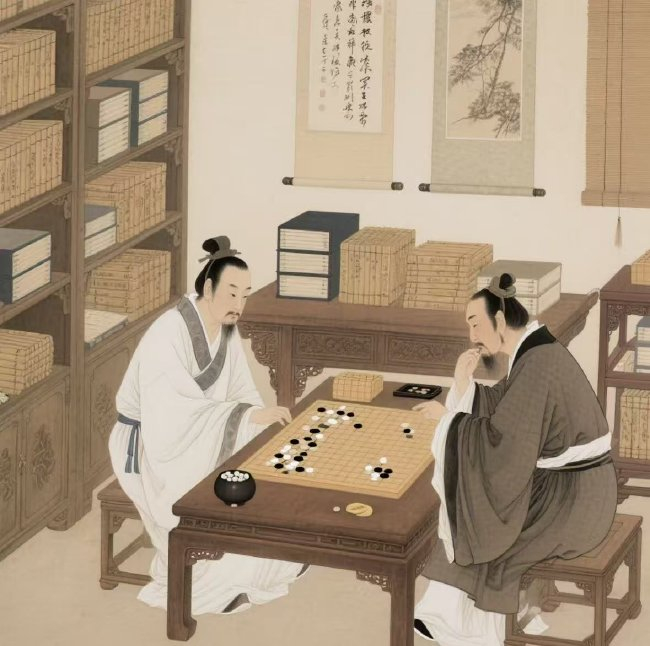
Strong Bijian: Three Contrasts in One Personality
People with strong Bijian energy tend to carry three pairs of opposites at the same time. Understanding the tension between them is more useful than sticking a single label on the person.
Contrast 1: Independent and Sociable
People with strong Bijian do not like being told what to do. In a meeting, while everyone else is waiting for the boss to decide, they have already sketched three plans in their head. In a group project, they would rather take charge of one piece themselves than wait for someone to hand out assignments. Yet the same people are often the life of the gathering. They are not loners by nature; they simply want to choose when to join in and when to go their own way.
Contrast 2: Loyal and Stubborn
In the traditional reading, Bijian is linked to friends, siblings, and the bonds between brothers and sisters. A friend needs money to get through a tight month, and a strong-Bijian person may transfer it without a second thought. A colleague is treated unfairly, and they may be the first to speak up. But there is a flip side. Once they have made up their mind, nine oxen could not drag them back. The whole family agrees that light-colored tiles would suit the renovation; they insist on dark gray and will argue about a single color code for an entire afternoon.
Contrast 3: Confident and Competitive
Bijian stands for people who are your equals, so there is always someone nearby to measure yourself against. A classmate scores 92 out of 100, they score 90, and while everyone else says 90 is already very good, they will remember that two-point gap for a week. On a running track or a sports field, that competitive streak is an asset: races, matches, and exams all become fuel. Inside a partnership, though, the same instinct can turn into a contest. Two people could simply split the work, yet each wants to prove they finished faster.
None of these contrasts is good or bad on its own. A person can be independent and sociable, loyal and stubborn, confident and competitive all at once. That is exactly the point: Bijian does not describe one trait. It describes a set of tensions pulling in different directions, and learning to read those tensions is far more useful than calling the whole pattern good or bad.
Bijian in Partnership: The Best Teammate and the Easiest Rival
The place Bijian comes up most often is partnership. In the traditional reading, Bijian stands for business partners, colleagues, and competitors, and very often all three are the same person. Two people open a small shop, each putting in half the money. One handles purchasing, the other handles sales. The first three months go smoothly. By the fourth month, they may be arguing over who works harder. That is not a character flaw on either side. It is the built-in question of a Bijian relationship: when two people are evenly matched, how do you divide the work, the profit, and the credit?
The old advice is blunt: agree on the rules first, and talk about feelings second. Picture a very ordinary scene. Two friends open a milk-tea shop. One puts in 200,000 yuan, the other puts in 100,000 yuan and runs the shop every day. After six months they have made 150,000 yuan in profit. How do they split it? Split by capital, and the one who did the daily work feels shortchanged. Split fifty-fifty, and the one who put in more money feels shortchanged. Many partnerships do not die because there is no money. They die because, once there is money, nobody agreed in advance how to divide it. People with strong Bijian especially need to write down four things before a partnership starts: who puts in what, who does what, how profits are shared, and how someone can exit. Even a handwritten note signed by both is ten times better than a verbal promise.
A second practical idea from the tradition is the “separate troughs” model of cooperation. When two people are equally capable, give each of them a line that does not overlap with the other’s: one runs the product, the other runs marketing; one handles online, the other handles offline. Once the boundaries are clear, the urge to compare has nowhere to land.

Bijian in Relationships: Many Friends, and the Art of Leaving Space
In readings of personal relationships, Bijian is often tied to friendship. People with strong Bijian energy tend to have many friends. Their messaging app holds hundreds of contacts, a holiday greeting can draw dozens of replies, and at a gathering they are the one who warms up a cold room. When a friend moves house, gets married, or has a baby, they are the first to show up.
But having many friends brings a warning that is easy to miss: boundaries. A strong-Bijian person often helps friends without counting the cost. They lend 5,000 yuan this month, then co-sign a friend’s installment plan next month. The old phrase for this is “Bijian seizes wealth,” which in modern terms is a simple reminder: before being generous to a friend, check your own bottom line. One practical habit is to set aside 5 percent of monthly income as a “friendship budget.” Any help beyond that number gets discussed with family first. A small rule like this prevents a lot of regret later.
In marriage, Bijian casts a different shadow. It stands for someone who is your equal, and inside a marriage that can mean neither person wants to back down. During an argument, one says “You apologize first,” the other says “Why should it be me?” and the standoff can last all night. The fix is rarely about who is right. It is about rhythm: take thirty minutes apart to cool down, then come back and talk about the specific thing that happened, not about old grievances. In a Bijian relationship, what hurts most is often not the incident itself but the contest over who wins the argument.
With parents and siblings, Bijian often shows up as quiet comparison. Two brothers come home for New Year: one has a stable job at a state-owned company, the other runs his own business, and the family cannot help measuring them against each other. Understanding Bijian means understanding where that urge to compare comes from. It is not jealousy. It is the natural instinct of people of the same kind to use each other as a reference point. Once you see that, many family tensions can shift from “you are not as good as him” to “you are walking different paths.”
Living With Your Own Bijian Energy: Three Practical Steps
Here are three ideas you can actually use, whether or not you believe in BaZi at all.
Step 1: Give Your Competitive Streak an Outlet
Spend thirty minutes a day on something you can measure: run three kilometers, memorize twenty words, practice one page of calligraphy. Turn the urge to be better than someone else into a record of being a little better than yesterday. A month later, your running pace may have improved from seven minutes per kilometer to six and a half. That visible progress feels steadier than beating any particular person.
Step 2: Write the Rules Before You Cooperate
Whether you are starting a business with a friend or splitting a project with a colleague, spend twenty minutes at the start writing down four things: who is responsible for what, how the money is divided, who makes the final call, and how to walk away if it stops working. Writing it down is not a lack of trust. It is the longest-lasting protection a Bijian relationship can have. Many partnerships that survive ten years do so not because the feelings run deep, but because the rules are clear.
Step 3: Leave Breathing Room in Your Relationships
However close your friends are, keep some time that belongs only to you. Set aside one evening a week with no work messages and no dinners out, just for yourself. Once a month, have a real, unhurried conversation with your two or three closest people instead of exchanging shallow greetings with twenty or thirty. Bijian means walking shoulder to shoulder, and walking side by side means heading in the same direction, not being tied together so tightly that neither of you can move. Leaving space is not distance. It is what lets a relationship breathe.

Conclusion: Bijian Is a Mirror, Not a Label
Back to the twins at the start. Both carry strong Bijian, yet one became a solitary researcher and the other became an organizer with friends everywhere. The Ten Gods offer a language for observing personality, not a verdict on a life. What Bijian really tells us is just one thing: there will always be people like you around you, and cooperation, competition, and comparison will all happen. What matters is how you use that energy.
Once you understand Bijian, try three small things this week. Look at your own BaZi chart and see where Bijian falls. Think back to a recent friction in a partnership and ask whether the rules were ever spelled out. And invite an old friend to dinner, just to talk, with no business on the table. Bijian is a mirror. It reflects you, and it reflects every person walking shoulder to shoulder with you.
Quick Answers
What is Bijian in BaZi? Bijian is one of the Ten Gods, the traditional system’s ten names for the relationships between the five elements in a birth chart. It appears when another character in the chart shares the Day Master’s element and yin-yang polarity. In plain terms, it stands for peers, partners, and rivals, all in one symbol.
Does strong Bijian mean a good or bad chart? Neither. In the traditional reading, strong Bijian points to independence, loyalty, confidence, and competitiveness, along with stubbornness and a tendency to compare. It describes a pattern of tensions, not a judgment. Two people with the same pattern can live very different lives.
Why do Bijian partnerships argue about money? Because two evenly matched people often start without clear rules, and the argument is really about who contributed more. The traditional advice is to agree in writing, before starting, on capital, duties, profit sharing, and exit terms.
How do I know if I have Bijian in my chart? Find your Day Master, the character for the day you were born, then look for any other character in the chart with the same element and the same yin-yang polarity. A BaZi calculator or chart-reading tool can show this in a minute; the interpretation is cultural, not a prediction about your future.
Can Bijian help me understand my friendships? It can offer a useful frame. If you recognize the Bijian pattern in yourself, the practical habits are simple: set a budget for helping friends, write down the rules before a joint project, and protect some time that is only yours. The goal is not to change who you are, but to work with the pattern rather than against it.
This article is a cultural introduction to the BaZi tradition. It is not a personal reading and makes no claims about any individual’s fate.