Around November 22, Xiaoxue arrives. You step out in the morning and your breath turns into a small white cloud. The down jacket comes out from the back of the closet. Your body knows before the calendar does: winter is really here.

Xiaoxue, or Minor Snow, is the 20th of the 24 Solar Terms in the traditional Chinese calendar — a system that has guided farming, food, and daily life in China for more than two thousand years. Each term marks a turn in the season, and Xiaoxue marks the moment when rain begins to carry the first hint of snow. This guide explains what actually changes in the weather, how to keep warm, what to eat, how to move, and how to look after your mood — all in small, practical steps that fit into an ordinary week.
What Changes When Xiaoxue Arrives
The old saying goes: “At Xiaoxue, rain falls and is thinned by the cold, so it condenses into snow.” In plain terms, precipitation starts to show traces of snow, but the snowfall is still light. It often melts halfway after landing, leaving wet rooftops and slushy streets rather than a deep blanket of white.
The numbers tell the story best. Across much of northern China, daytime highs drop to around 5°C, while nighttime temperatures fall below 0°C. The gap between day and night stretches past 10°C, so a coat that felt fine at noon can feel far too thin by 7 p.m. Along the middle and lower Yangtze River, daytime temperatures still reach 12–15°C, but mornings and evenings hover around 5°C — one light jacket is no longer enough.
Humidity falls too. Once the heating comes on indoors, relative humidity often drops to just over 30%. Cracked lips and a scratchy throat first thing in the morning are among the most common complaints of this season. If your nose feels dry or your voice sounds hoarse before breakfast, the air is almost certainly the cause, not a cold.
There is one more change that is easy to miss: the days keep getting shorter. In late November, sunrise in Beijing comes after 7 a.m. and sunset before 5 p.m., leaving fewer than ten hours of daylight. When it gets dark early, many people feel sleepy and low on energy. That is not laziness. It is a normal response to less light, and it helps to plan for it instead of fighting it.
Staying Warm: Protect Three Places First
The trick to keeping warm at Xiaoxue is not to wrap yourself up like a dumpling from head to toe. Start by protecting the three places that feel the cold most: your head, your neck, and your feet.
A hat outdoors is not a matter of style; it is a necessity. The head loses heat quickly. Ten minutes waiting for a bus or riding an electric scooter in a cold wind can leave you with a headache by the time you get home. A scarf matters just as much. Behind the neck sits the Dazhui point, an acupuncture point at the base of the neck that traditional Chinese medicine associates with warming the whole upper back. Wrap a scarf around it, and your entire back feels noticeably warmer.
Your feet are the farthest point from your heart, and blood circulation there is naturally slower. Before bed, soak your feet in warm water at around 40°C for 15 minutes, with the water covering your ankles. Stop when your forehead feels slightly warm with sweat. Dry your feet immediately and put on socks — never walk barefoot on a cold floor right after a soak. If there are older people at home, swap their slippers for cotton ones with a heel strap, so a midnight trip to the bathroom does not end with cold feet.
Keep indoor temperatures between 18°C and 22°C. In a heated room, place a basin of water nearby or drape a damp towel over the radiator. Once the humidity rises, your nose and throat will feel far more comfortable. Open the windows twice a day for 10 to 15 minutes each time, ideally around midday when it is warmest outside, so the room never turns icy.
What to Eat: Three Hot Bowls Beat Any Supplement
When it comes to food at Xiaoxue, one word sums it up: warm. This does not mean piling on rich meat dishes. It means making sure every meal carries heat.
Breakfast: A Bowl of Hot Porridge
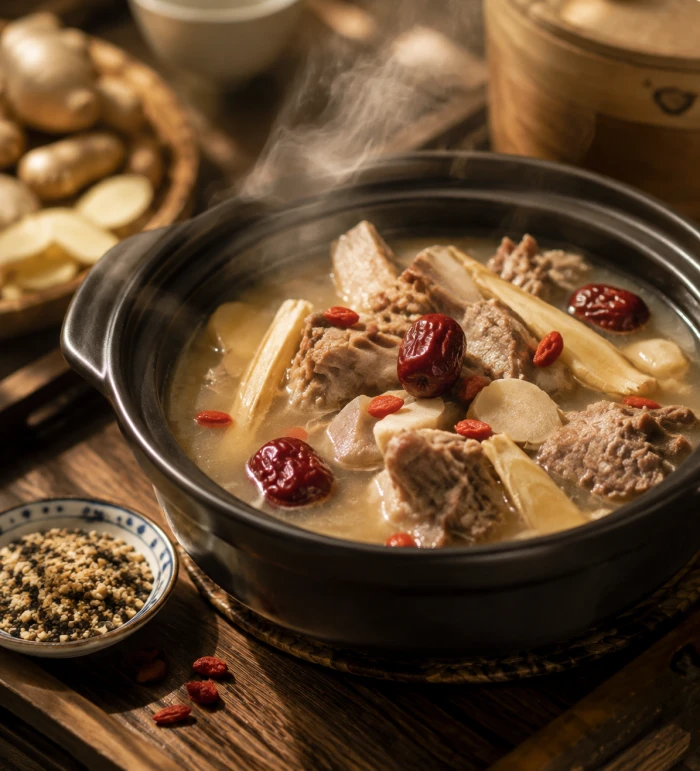
Swap a cold breakfast for a bowl of hot millet porridge. Add a few red dates and a small handful of goji berries, and cook until the grains bloom open. A bowl at 7 a.m. keeps your stomach warm all morning. If you tend to feel cold, stir in a little shredded ginger — it warms without stinging the throat.
Lunch and Dinner: White Radish and Lamb Soup
For lunch or dinner, try white radish and lamb soup. Cut one white radish into chunks, blanch 500 grams of lamb to remove any gaminess, then simmer both with two slices of ginger over low heat for about an hour and a half. Finish with chopped spring onion and a pinch of salt. In traditional Chinese food wisdom, white radish helps the flow of qi (vital energy) while lamb is warming and nourishing — people with cold hands and feet notice the difference most. Once or twice a week is enough; eating it too often can leave you feeling overheated.
Black Foods and a Handful of Walnuts
Black foods are another good choice for this season. Soak black beans overnight and cook them with rice into black bean rice. Grind black sesame seeds into a powder and stir a spoonful into yogurt or sprinkle it over a steamed bun. Eat three or four walnuts a day, either on their own or crushed into oatmeal. All of these are simple habits that take almost no extra effort.
Two things are worth cutting back on: ice-cold drinks and fruit straight from the fridge. Cool-natured fruits such as persimmons and pears are better eaten warm after Xiaoxue — cut a pear into chunks and simmer it with rock sugar for 20 minutes for a dessert that soothes dryness and warms the stomach. Carry warm water with you and drink around 1,500 ml a day in small sips, rather than gulping down a large glass all at once.
Moving Your Body: The Best Exercise Is the Kind That Does Not Make You Sweat
Exercise at Xiaoxue has one clear standard: move until your body feels warm, but do not work up a heavy sweat. When you sweat a lot, your pores open wide, and a cold wind can chill you straight through — the quickest route to a cold.
Baduanjin: Two Movements for This Season
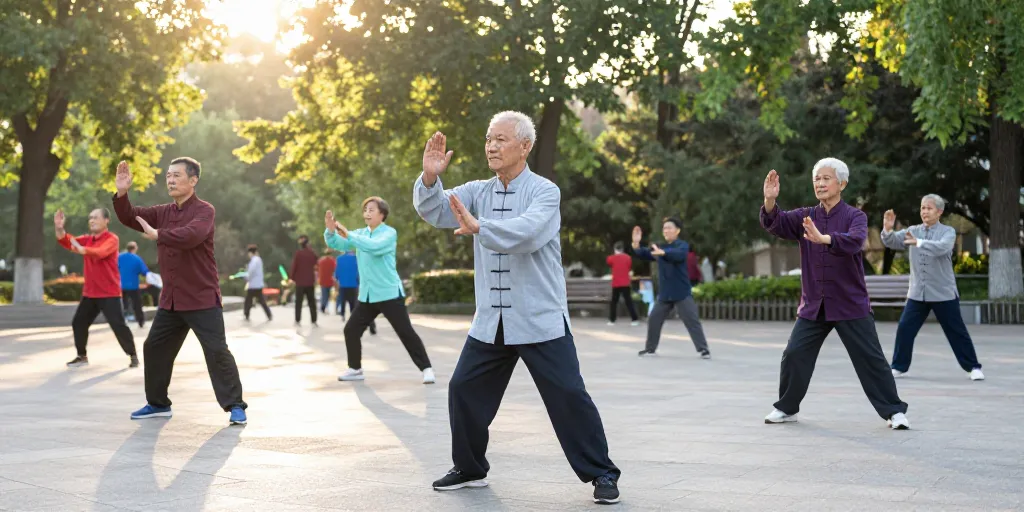
Two movements from Baduanjin (the Eight Brocades, a gentle qigong routine practiced in China for over 800 years) suit this season best: “Holding Up the Sky to Regulate the Triple Burner” and “Drawing the Bow to Shoot the Eagle.” Practice the full set of eight movements after getting up in the morning, in the living room or on the balcony. The whole routine takes about 15 minutes and loosens the shoulders, neck, and lower back. Move slowly, breathe with each motion, and stop when your forehead feels faintly warm — that is exactly right.
Tai Chi: Twenty Minutes, No Rush
The 24-form Tai Chi is another good choice. One full set takes about 20 minutes and keeps your heart rate around 100 beats per minute — no panting, no exhaustion. If you have never tried it, start with just three moves: the opening, “Cloud Hands,” and the closing. Ten minutes a day is enough, and within a week the movements will start to flow.
Brisk Walking: The Easiest Habit to Keep
Brisk walking is the easiest exercise to stick with. Head out half an hour after dinner at a pace of 100 to 110 steps per minute. In 30 minutes you will cover about 3 kilometers, and your body will feel gently warm with a trace of sweat on your back — then head home. On rainy, snowy, or smoggy days, do not force it: march in place indoors or climb the stairs instead. The effect is the same.
Time your exercise for after 9 a.m. or around 3 p.m., avoiding the coldest hours between 5 and 7 a.m. If your knees are weak, skip mountain climbing and deep squats. Try a wall sit instead: lean your back against a wall, bend your knees to 90 degrees, hold for 30 seconds, rest for 10 seconds, and repeat five times.
Mood: When the Days Get Dark Early, Go Easy on Yourself
After Xiaoxue, darkness falls early, and by 4 p.m. many people feel as if the day is already over, with a hollow feeling inside. Traditional Chinese medicine speaks of “winter storing” — winter is a season for gathering and conserving energy, not for pushing hard.
Shift your schedule half an hour earlier: be in bed by 10:30 p.m. and up between 6:30 and 7 a.m., aiming for seven to eight hours of sleep. Put the phone away half an hour before bed. Soak your feet, listen to some gentle music, or read a few pages of a book, and you will fall asleep much faster.
Get more sunlight during the day. Around noon, stand on the balcony for 20 minutes with your face and hands uncovered — your body needs the light for vitamin D, and your mood benefits just as much. Even on cloudy days, sitting by a window helps: daylight is far stronger than lamplight.
If you feel low and listless for several days in a row, do not carry it alone. Talk to your family, or meet a friend for a hot meal. In winter, the warmth of human company is sometimes exactly the temperature of a shared hot pot.
Quick Answers
When is Xiaoxue in 2026? Around November 22. The exact date shifts slightly from year to year, but it always falls in the second half of November.
What should I eat at Xiaoxue? Warm food: hot millet porridge for breakfast, white radish and lamb soup once or twice a week, black beans, black sesame, and a few walnuts a day. Go easy on ice-cold drinks and chilled fruit.
What is the best exercise for this season? Anything that warms you without heavy sweating — Baduanjin, 24-form Tai Chi, or a 30-minute brisk walk after dinner. Exercise after 9 a.m. or around 3 p.m., not in the coldest early morning hours.
Why do I feel sleepy and low after Xiaoxue? Shorter days mean less light, and the body naturally slows down. Earlier bedtimes, midday sunlight, and regular gentle movement usually help. If low mood lasts for weeks, talk to a doctor.
How do I keep my home comfortable? Keep rooms at 18–22°C, add a basin of water or a damp towel near the heater to raise humidity, and ventilate twice a day for 10 to 15 minutes around midday.
The Short Version: Three Things to Remember
Wellness at Xiaoxue is simpler than it sounds. Remember just three things: dress warmly, especially your head, neck, and feet; eat warm food, with a bowl of hot porridge and a pot of hot soup each day; and move every day for 15 to 30 minutes without working up a heavy sweat. Follow those three things for a week from November 22, and you will notice the difference when you wake up — a throat that is no longer dry, hands and feet that stay warm. Winter becomes much easier to live with.
Tomorrow morning, start with a bowl of millet and red date porridge. Your body will remember that warmth, and it will carry you through the whole winter.
Disclaimer: This article is for general information only. Individual constitutions vary greatly. The dietary and exercise suggestions here are general wellness advice and do not promise any therapeutic effect. If you have a chronic condition, are taking medication, or have any special health concerns, please follow your doctor’s advice and consult a physician before starting a new exercise routine.