Seven in the morning, at a wet market in Beijing’s Chaoyang District. Mrs. Li, 62, stops at the dried-goods stall as she does every autumn morning, picks up a handful of tremella, squeezes it, then holds it close to smell it. Every autumn and winter, her throat goes dry and itchy, she coughs twice at night, and her skin feels tight. Her daughter keeps telling her to eat more tremella — but the few times she has cooked it, it either never turned silky or came out with a strange smell. Getting tremella right matters far more than eating a lot of it: pick the right batch, soak it the right way, and cook it the right way.
Tremella, also called snow fungus or white wood ear, is a gelatinous mushroom long used in Chinese food therapy — shiliao, the practice of using everyday foods to support the body through the seasons. This guide explains how to choose it, soak it, cook it until it releases its signature gel, and use three reliable autumn-winter recipes.
Why Tremella Is Called the “Poor Man’s Bird’s Nest”
Tremella (yín’ěr, literally “silver ear”) is a jelly fungus. The name fits: once cooked, it turns clear and glossy, slippery and soft on the tongue, and it does look a little like bird’s nest soup. Dried tremella contains about 10 grams of protein and more than 30 grams of dietary fiber per 100 grams (about 3.5 oz). Its most talked-about component is tremella polysaccharide, a water-soluble fiber that swells when it meets water and forms the slippery gel that makes a good tremella soup thick and glossy — the Chinese call this “releasing the gel.”
The nickname is about price and texture, not nutrition: a 100-gram (3.5 oz) bag costs a couple of dollars and makes five or six pots, while a single serving of bird’s nest can cost ten times as much.
In traditional Chinese food therapy, tremella is considered neutral in nature and sweet in flavor, associated with the lung and stomach channels, and said to moisten the lungs and nourish the stomach. That lines up neatly with autumn and winter, when dry air leaves many people with a dry mouth, tight skin, and an itchy throat. One thing to be clear about: tremella is a food, not a medicine. Its “moistening” effect works at the level of everyday diet — if a cough lasts more than two weeks, or you see blood in your sputum, see a doctor; no bowl of soup can solve that.
Choosing Tremella: Whiter Is Not Better
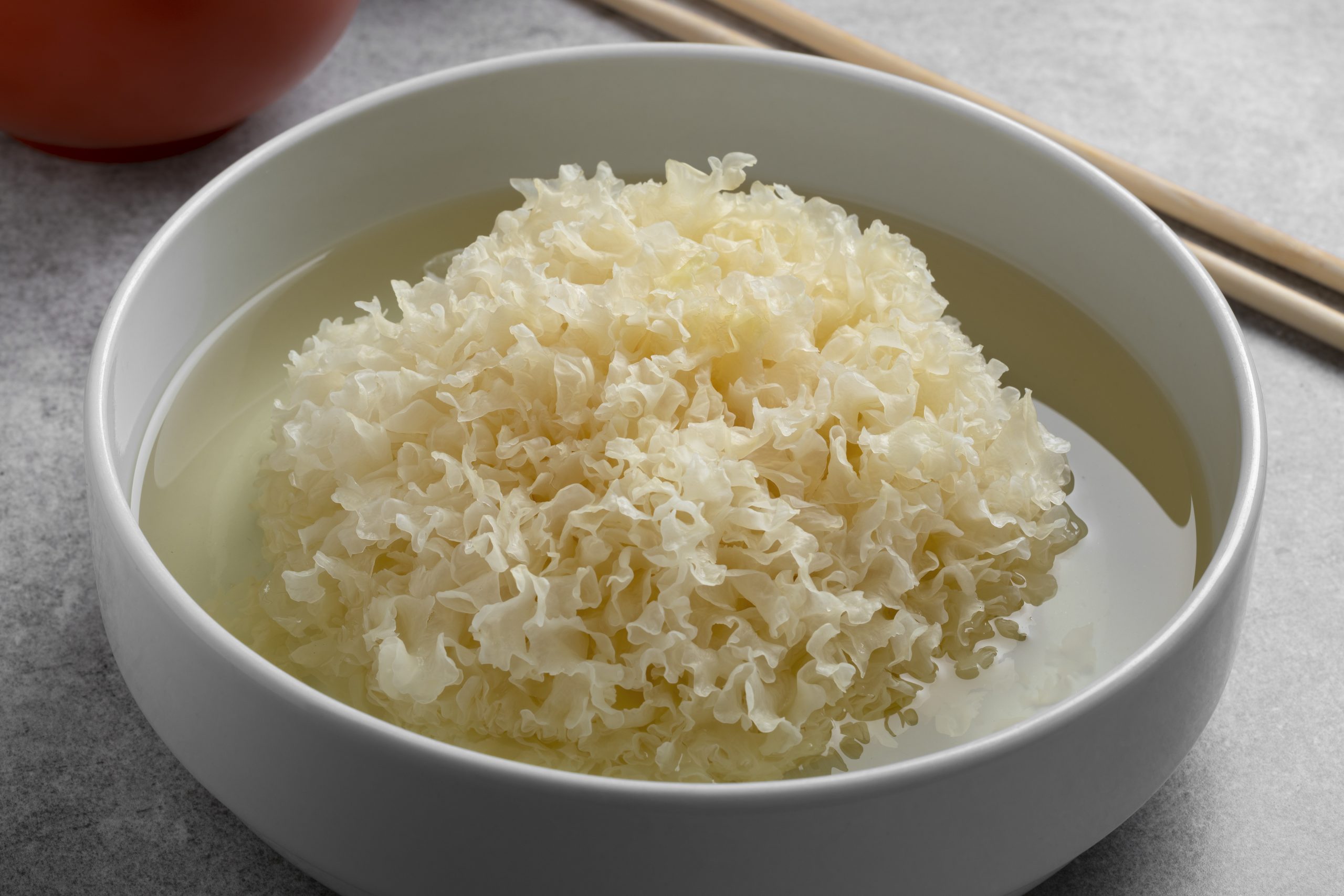
Many shoppers pick tremella by whiteness alone — and that is exactly where they go wrong. Good dried tremella is a pale, natural cream or light yellow, with whole fronds and slightly curled edges, and it smells faintly of fresh mushroom. Snow-white tremella, especially the kind that looks almost luminous, has very likely been bleached with sulfur: it smells sharp and sour, and the soaking water turns yellow and cloudy.
Remember three moves when you shop: look, smell, squeeze. Look for a natural pale yellow, not a stark white. Smell it — any sour or acrid note means put it down. Squeeze it — good tremella feels brittle and snaps with a faint crackle, and leaves no powder on your fingers.
Once home, do not soak the whole bag at once. Store dried tremella in a sealed jar or bag in a cool, dry place — never beside the stove. A 200-gram (7 oz) bag is enough for about a month. Throw away any pieces that are damp, moldy, or have black spots.
Soaking and Cooking: This Is Where the Gel Comes From
When tremella soup refuses to turn silky, the problem is almost always in the soaking or the heat. Soak dried tremella in cold water for 2 to 3 hours; warm water can cut that to about 1 hour, but never use boiling water — it scorches the gel on the surface and makes the soup release less of it later. Properly soaked, tremella swells to 8 to 10 times its dry size, and you should cut off the yellowish, hard root at the base: it is the toughest part and the hardest to cook soft.
After soaking, tear the tremella into small pieces — the smaller, the better. A whole frond dropped into the pot barely releases any gel; torn into pieces the size of a fingernail, the surface area is far larger and the gel comes out roughly twice as fast.
Use a clay pot or a slow cooker: bring to a boil, then simmer on low for 1 to 1.5 hours. A pressure cooker can do it in 20 to 25 minutes but easily turns mushy; a rice cooker’s porridge setting works if you watch the water level, since tremella absorbs water fast. Add sugar only in the last 10 minutes, and stir the tremella at the 40-minute mark to release the gel faster.
Three Autumn-Winter Tremella Recipes, With Exact Amounts
Tremella can be cooked many ways, but these three are the best fit for autumn and winter, each tested in a home kitchen.
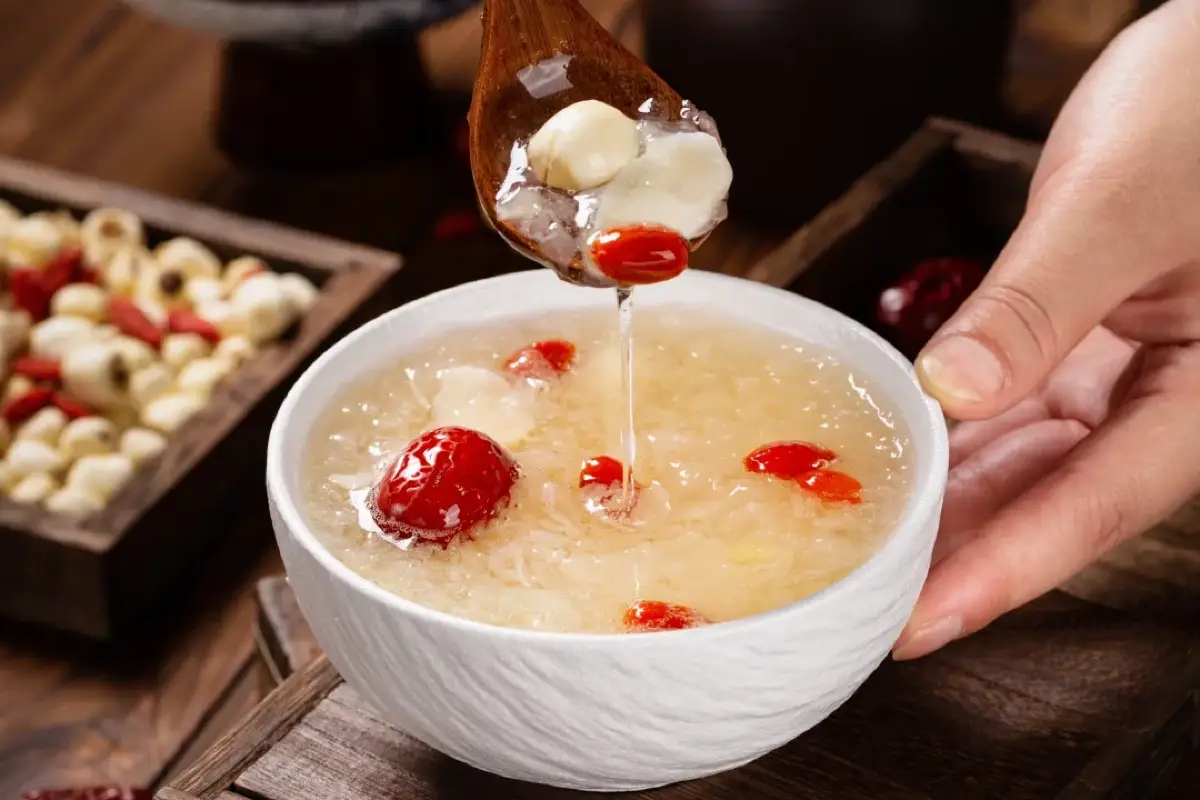
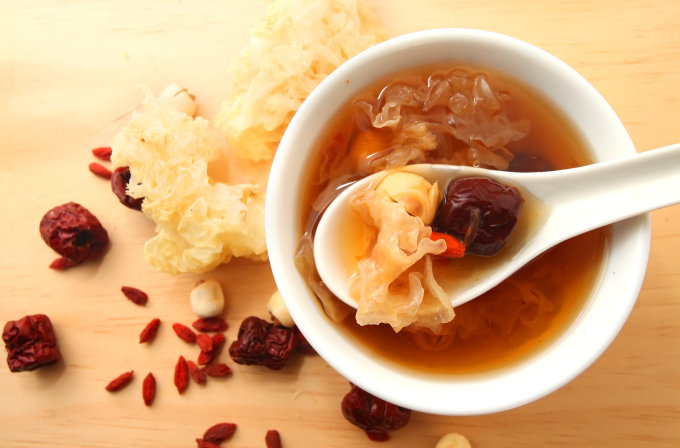
Recipe 1: Tremella and Lotus Seed Soup — the Classic Moistening Pair
Ingredients: 10 g (about 1/3 oz) dried tremella, 30 g (about 1 oz, or 3 tablespoons) dried lotus seeds, 6 red dates (hongzao, Chinese jujubes), 20 g (about 1 1/2 tablespoons) rock sugar, 1.2 liters (5 cups) water.
Method: Soak the tremella in cold water for 2 hours, trim the root, and tear it into small pieces. Soak the lotus seeds for 1 hour and remove the green bitter core inside each one — do not skip this, the core is where the bitterness comes from. Wash the dates and remove the pits. Put everything in the pot with the water, bring to a boil, then simmer on low for 1 hour. Add the rock sugar 10 minutes before serving and stir until dissolved. Best in the evening: a small bowl before bed feels warming and settling. Do not overdo the lotus seeds — 30 grams is enough; more will make the soup bitter.
Recipe 2: Tremella and Snow Pear Soup — for a Dry, Scratchy Throat
Ingredients: 8 g (about 1/4 oz) dried tremella, 1 snow pear (about 250 g / 9 oz), 10 g (about 1 tablespoon) goji berries, 15 g (about 1 tablespoon) rock sugar, 1 liter (4 1/4 cups) water.
Method: Soak and tear the tremella, then simmer it alone for 40 minutes. Peel and core the pear, cut it into small chunks, and add it for another 20 minutes. Add the goji berries and rock sugar only in the last 5 minutes — goji berries cooked too long turn sour and lose their color. Snow pears are naturally sweet, so you can cut the rock sugar to 10 grams (about 2 teaspoons). This soup is mostly liquid, so it works well as a daytime drink: a bowl when your throat feels dry brings relief quickly. Use a snow pear, not a duck pear — duck pears turn sour when cooked.
Recipe 3: Tremella and Millet Porridge — a Gentle Breakfast
Ingredients: 6 g (about 1/5 oz) dried tremella, 60 g (about 1/3 cup) millet, 4 red dates, 1 liter (4 1/4 cups) water.
Method: Soak and tear the tremella, then put it in the pot with the rinsed millet. Bring to a boil, then simmer on low for 40 minutes. Pit and slice the dates and add them at the 30-minute mark. Taste before serving: add a small spoonful of rock sugar if you like it sweeter, or skip it — millet has a gentle natural sweetness of its own. Best for mornings, especially if a greasy breakfast feels like too much. Millet porridge boils over easily, so keep the heat low and leave the lid slightly ajar.
What to Watch Out For
Can you eat leftover tremella the next day? The worry behind this old saying is nitrite. In reality, tremella itself is low in nitrate; cooked and refrigerated, the increase in nitrite within 24 hours is very small. The real risk is tremella left at room temperature overnight, reheated again and again, or already tasting sour — that is a bacterial problem, not a nitrite problem. The safest habit: cook what you will eat, refrigerate any extra in portions, and reheat it once the next day rather than three or four times.
If you have diabetes, watch the sugar. Tremella itself is low in carbohydrate and does not raise blood sugar quickly, but many people load their tremella soup with rock sugar, and then a single bowl carries far too much. Use a small amount, or none at all — the dates and the pear add sweetness on their own. If you have diagnosed diabetes, ask your doctor or dietitian before eating it regularly instead of guessing.
If your digestion runs cold, do not overeat it. Tremella is neutral to slightly cooling in nature. If you tend toward a cold constitution — frequent loose stools, or stomach pain after cold food — keep portions small: two or three times a week, one small bowl at a time. Cooking it with red dates or a little ginger helps balance the cooling quality, but if you are actively having diarrhea, pause until your digestion recovers.
Tremella has no real conflict with common foods like spinach or white radish, and spoiled tremella — moldy or sour-smelling — should always be thrown away.
Quick Answers
How do I pick good dried tremella? Choose a natural pale yellow with whole, intact fronds and a faint mushroom smell. Snow-white, suspiciously bright tremella may have been sulfur-bleached — skip it if it smells sour or sharp.
Why won’t my tremella soup turn silky? Usually two reasons: the soaking water was too hot, or the fronds went in whole. Soak in cold water for 2 hours, tear the tremella into fingernail-sized pieces, and simmer on low for at least 1 hour. Add sugar only in the last 10 minutes.
Which recipe should I try first? For evenings, the lotus seed soup. For a dry, scratchy throat, the snow pear soup. For breakfast, the millet porridge. Rotate them two or three times a week — that is plenty.
Can I eat tremella the next day? Yes, if it was refrigerated promptly and eaten within 24 hours. Reheat it once. Do not eat tremella left at room temperature overnight or reheated repeatedly.
Is tremella a medicine? No. It is an everyday food used in Chinese food therapy to support the body in dry seasons. It cannot treat disease or replace medication.
Four things to remember: pick the natural pale yellow, not the snow white; soak in cold water for 2 hours, trim the root, and tear it small; simmer low for a full hour and add sugar at the end; eat it fresh, keep sugar low if you have diabetes, and keep portions small if your digestion runs cold. Start tonight: soak 10 grams (about 1/3 oz) of tremella, and tomorrow morning cook a pot of millet porridge for the family. Keep it up for a few weeks, and you will notice the difference in your throat, your skin, and your sleep.
Disclaimer: This article is food and nutrition information for general reference only. Food therapy cannot replace medical treatment. Tremella is an ordinary food and does not treat disease. If you have diabetes, a chronic digestive condition, a chronic cough, or any other chronic illness, adjust your diet under the guidance of your doctor or dietitian, and seek medical care promptly if symptoms persist. Recipe amounts are for a typical healthy adult; children, pregnant people, and anyone with special health needs should follow their doctor’s advice. No therapeutic effect is promised.