It is 6:30 on a Tuesday morning, and the wooden door of the training hall swings open silently. Twelve-year-old Zhe pauses on the threshold. Before changing his shoes or stepping onto the mat, he turns toward the statue of Guan Gong — the red-faced general of loyalty whose image watches over Chinese martial arts schools — and bows, his right fist pressed into his left palm. Only then does he walk in.
His coach later told his mother: “His kicks still need work. But that bow at the door counts for more than ten extra kicks.” In a Chinese martial arts school, that small gesture is not decoration. It is the first lesson — and in many ways the whole lesson.
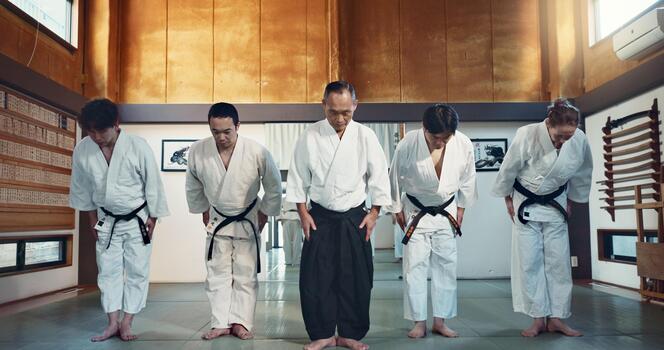
The Baoquan Salute: One Palm, One Fist, a Whole Code
The most common greeting in Chinese martial arts is the baoquan, the fist-palm salute: the open left palm covers the clenched right fist, held in a circle before the chest. It looks simple. The rules behind it are not.
Place the left palm flat, four fingers together, against the right fist, knuckles outward, palm pressing gently over the fist, arms held in a rounded circle at chest height. The symbolism is in the hands: the open left palm stands for culture and learning, the closed right fist for martial skill. A martial artist should carry both. The character for martial arts, wu, is traditionally explained as “stopping the spear”: the highest use of force is to end conflict, not to start it.
The details change with the occasion. A casual greeting needs only a salute at chest level. On formal occasions, or before a bout, the hands rise to eyebrow height — the baoquan qi mei, the salute level with the brows. The left hand goes outside for a reason: in traditional Chinese thought, left is associated with yang, with benevolence and openness, while the right fist — force — stays tucked beneath the palm. Courtesy comes first; power stays behind it. Get the hands the wrong way around — right palm over left fist — and you have accidentally performed the salute used at funerals. A trained martial artist is expected to know the difference.
When to Salute
- Entering and leaving: salute the teacher and senior students on arrival, and again before you leave.
- Opening and closing class: the whole class faces the coach and salutes together at the start and end of every session.
- Before and after sparring: salute your opponent before the referee signals the start, and again when it is over — win or lose.
- Meeting elders: if you meet a teacher from another school or an older martial artist, salute first, whether or not they know you.
The Apprenticeship Ceremony: Before You Kneel, Answer One Question
In the old-style schools, taking on a student was a serious matter. The prospective student prepared a written baishi tie, a formal letter of apprenticeship, giving their name, birth date, and the reason they wanted to learn. The master read it, asked a few questions, and only if the young person’s character seemed sound would a date be set for the ceremony.
On the day itself, the student performed three deep bows — the san koushou — and offered the master a cup of tea. The master drank, then gave a token of the school in return — sometimes a wooden plaque, sometimes only a spoken rule. Only then was the student admitted.
The heart of the ceremony was never the kneeling. It was the question asked before it. Many masters began with the same one: Why do you want to learn martial arts? A student who answered “so I can win fights” was often turned away. One who said “to build my health and learn some discipline” was far more likely to be taken on. The rules of the master-disciple relationship were spelled out in the open: respect your teacher and your elders, never betray your school, call your fellow students brothers and sisters, and never use the school’s name to cause trouble outside it.
Most schools today have replaced the three deep bows with a bow and a cup of tea. But the meaning has not changed: the coach takes responsibility for the student’s character, and the student owes the coach basic respect. As one tai chi teacher with twenty years behind him put it, the apprenticeship letter never really says “I want to learn a few moves.” It says “I am willing to keep a few rules.”
Wude: The Five Refusals and the Ten Precepts Written Into the Manuals
There is an old saying in the martial arts world: “Learn manners before you learn the art; learn virtue before you learn to fight.” Wude — martial virtue — is the code of conduct that governs a martial artist’s behavior.
The best-known version is the “Five Refusals,” the five kinds of people a teacher should not pass real skill on to: the scheming and ill-intentioned, the belligerent who love a fight, the heavy drinker who loses control, the show-off who flashes techniques at every chance, and the timid soul who backs down whenever things get hard. None of the five mentions talent. Every one of them is about character.
The Ten Precepts of Shaolin — the rules handed down by the famous Shaolin Temple, the Buddhist monastery long associated with Chinese martial arts — are more specific: do not betray your teacher or your school, do not bully the weak with your strength, do not commit crimes of lust or theft, do not cause trouble through drunkenness, and so on. Read today, most of these are already written into law and school rules — but they carry a reminder that still matters: the stronger your hands and feet become, the stricter the restraints on them must be. For centuries, masters chose students the same way: character first, physique second.
There is one part of wude that is easy to overlook: respect for the opponent. In the old days, a bout was expected to stop at the touch — dian dao wei zhi, “stop at the point of contact.” The winner did not chase a beaten opponent, and did not humiliate them afterward. The loser saluted in acknowledgment; the winner returned the salute. The match ended with dignity. The line in the old manuals — “martial arts stand on virtue” — means exactly this.
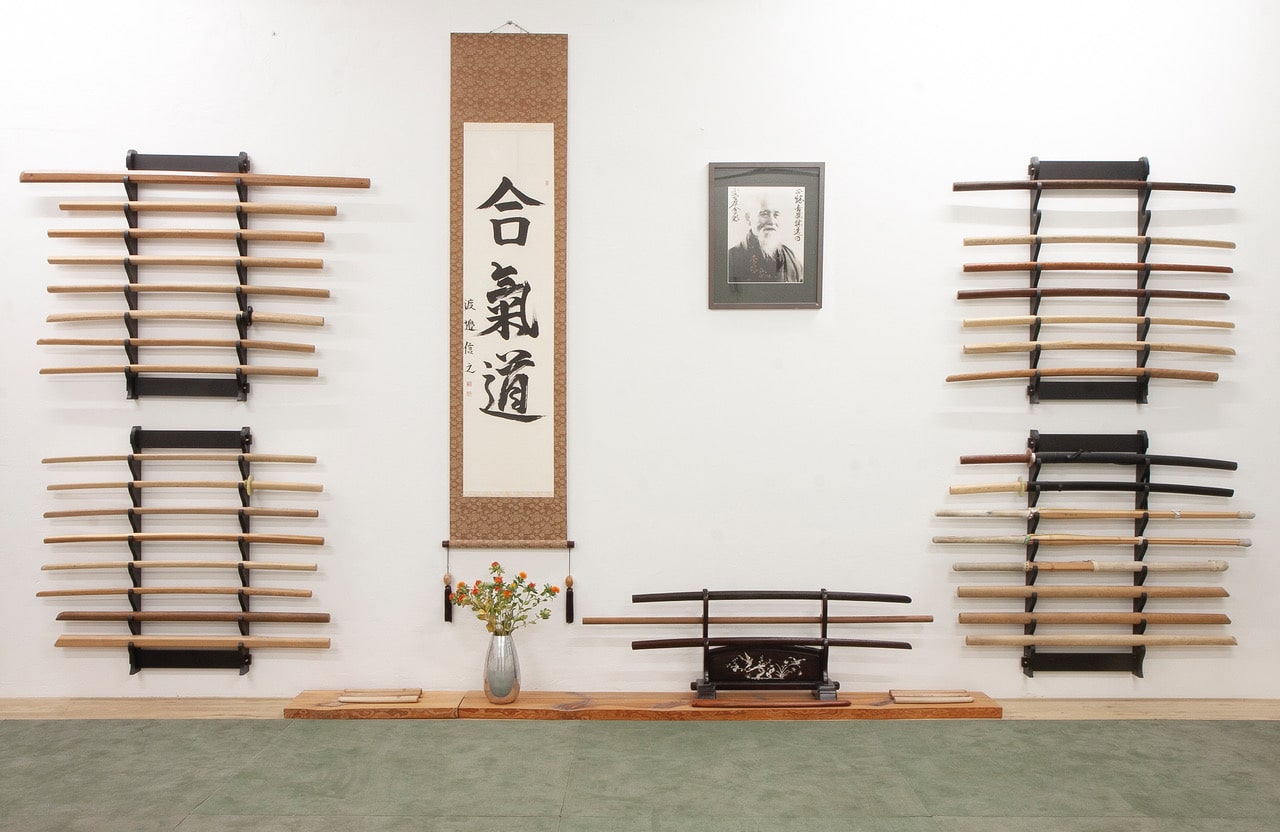
Old Manners, New Forms: Etiquette in Today’s Schools and Arenas
Walk into a martial arts school today and the etiquette has not disappeared. It has simply changed shape. In many children’s classes, the first lesson is not a kick but three things: how to salute when you walk in, where to stand in line, and what posture to hold while the coach speaks. One Beijing school running for fifteen years found nine in ten children who stayed six months had made “Hello, coach” and “Thank you, coach” into habits — built by daily repetition of the salute and the bow.
In competition, etiquette is not optional; it is written into the rules. Before a sanda (Chinese kickboxing) or taolu (forms) match, athletes must salute the referee and their opponent with the fist-palm gesture or a bow. Skip it, and you get a warning. After the match, win or lose, both sides shake hands or salute. At the 2019 National Wushu Taolu Championships, a young athlete who had just lost a medal still bowed to the judges’ table as he left the floor — a clip now used as teaching material across the country: winning and losing are temporary; manners last.
Even in school physical education classes, the fist-palm salute is now built into the warm-up, and teachers report noticeably better discipline in classes where the etiquette is done properly.
Learning Manners First: What Martial Arts Really Teaches Children
For teenagers, the biggest gain from martial arts is often not a few extra moves. It is a whole new set of behavioral standards. A child who trains three times a week performs more than a thousand fist-palm salutes in a year — every one a small exercise in thinking of others before thinking of yourself. The rules are concrete: no lateness, no cutting in line, no mocking a slower classmate, and every weapon returned to its rack when you are done. Nobody lectures these rules into children. They are learned through daily repetition, until the body remembers them.
Parents often describe the change with the same word: their child has become “steady.” That steadiness comes from two places. The first is physical control — once you know how much force your fists and feet actually carry, you know better than to use them carelessly on other people. The second is emotional regulation: in the rise and fall of forms, children learn not to rush and not to flare up. A fifteen-year-old who had practiced Changquan, the northern long-fist style, for six years put it plainly: when he argues with a classmate now, his first instinct is to step back and think about the consequences.
Etiquette education can still go wrong. Some parents hear “learn manners before you learn to fight” and take it to mean blind obedience. That misses the point. Real wude education teaches children to tell right from wrong: respect your teachers, but do not follow blindly; obey the rules, but do not be afraid to speak your mind. Manners are a baseline, not a cage.
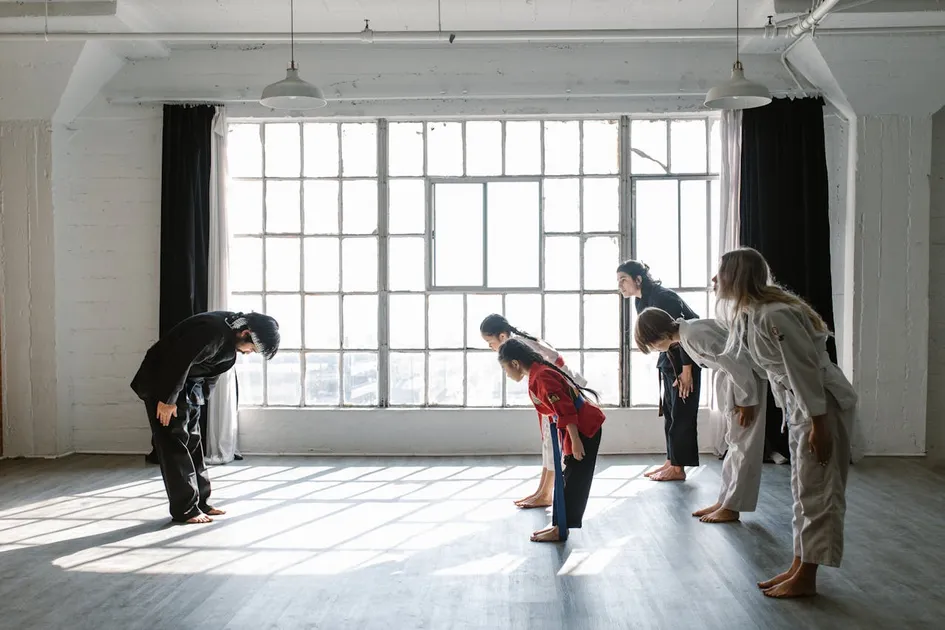
Practice manners until they become part of daily life. Learning manners before learning to fight is not a warm-up act before the real training begins. It is part of the training itself, from the first day to the last. From the placement of the hands in the fist-palm salute, to the rules of the apprenticeship ceremony, to the bottom lines of the Five Refusals and the Ten Precepts, to a single bow on the competition floor — every rule of etiquette answers the same question: what makes a martial artist worthy of respect? The answer is not how fast their fists move. It is whether their conduct has measure.
If your child is learning martial arts, or if you have just walked into a school yourself, start with three small things: salute when you walk in, and make it a habit that never slips; put the equipment back where it belongs when you finish; and after sparring, say “I yield to your skill” first — graceful in victory and in defeat alike. Practice the manners long enough, and they become part of your character — the most lasting thing martial arts can give you.
Quick Answers
What is the fist-palm salute, exactly? The baoquan: left open palm over right clenched fist, held before the chest. The palm stands for culture, the fist for martial skill. At chest height for everyday greetings; at eyebrow level on formal occasions and before bouts.
What is wude? Wude, or martial virtue, is the code of conduct for martial artists. Its best-known forms are the Five Refusals — five character flaws that disqualify a student from real teaching — and the Ten Precepts of Shaolin, which forbid betraying one’s teacher and bullying the weak.
Do modern schools still do the old apprenticeship ceremony? Most have replaced the three deep bows with a bow and a cup of tea. The core has not changed: the teacher takes responsibility for the student’s character, and the student shows the teacher respect.
Is etiquette enforced in competition? Yes. Athletes must salute the referee and their opponent before a match, and acknowledge each other afterward. Skipping the salute can earn a warning.
What should a beginner do on day one? Three things: salute when you enter the school, put equipment back when you finish, and thank your partner after sparring. The rest of the training builds on those habits.
Martial arts training involves physical contact and exertion. Practice within your limits and consult a qualified professional if you feel unwell.