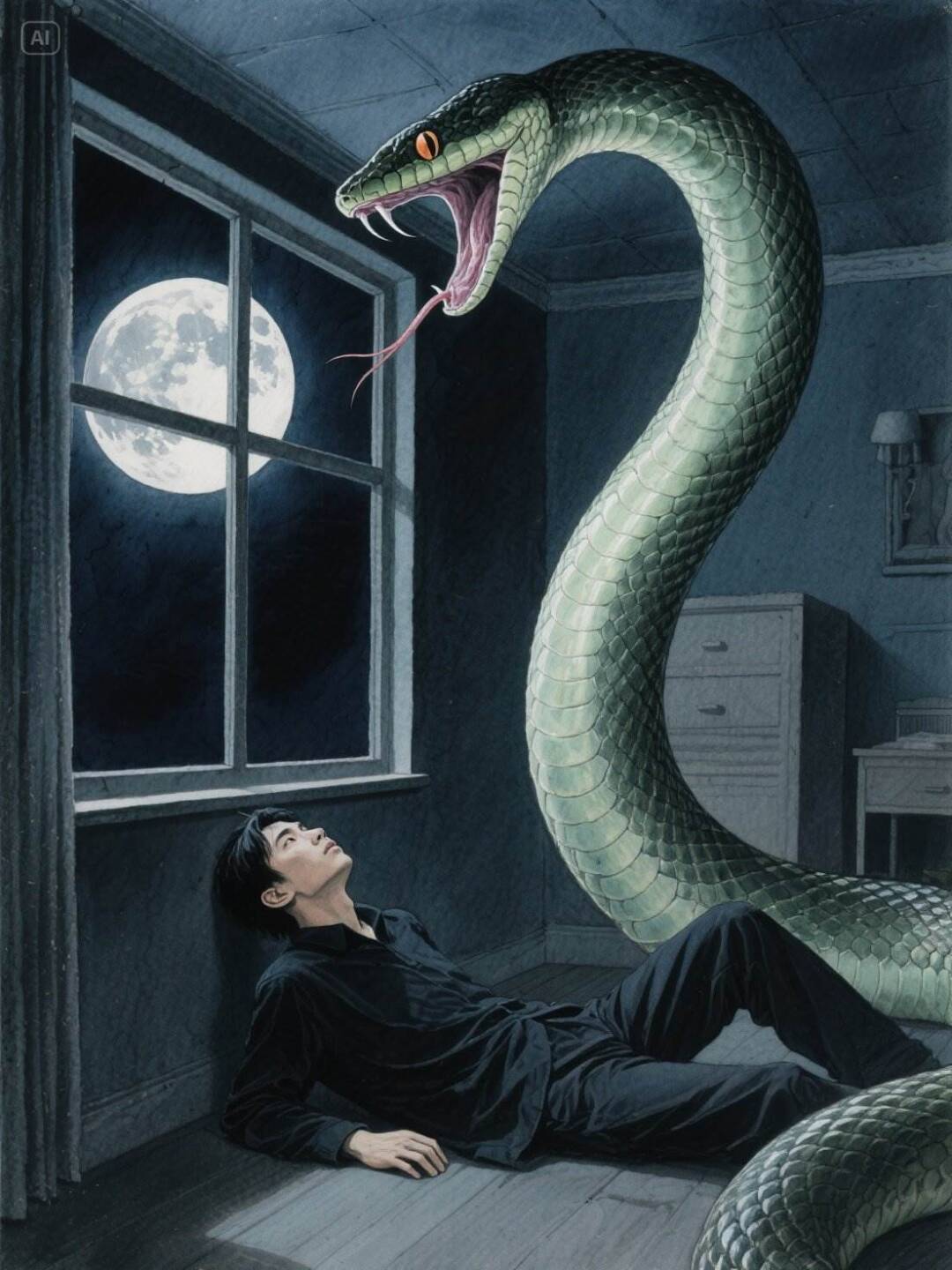
It is 3 a.m. You wake up with your heart pounding, the sheets tangled around your legs, and one image still burned into your mind: a snake gliding across the floor beside your bed. You sit up, reach for your phone, and type the same question millions of people have typed before you — what does it mean to dream of a snake?
In Chinese culture, the snake dream is one of the most asked-about dreams there is. Village elders have their sayings about it. So do office workers in Beijing and students in Shanghai. Ask ten people and you will hear ten different answers — and that, as it turns out, is part of the story.
This guide walks through the folk interpretations, the colors, and what modern psychology makes of the same dream, so you can decide for yourself what your snake dream is worth.

Why Snakes Keep Showing Up in Our Dreams
The snake holds a strange double position in Chinese tradition. It is a creature people fear — and, at the same time, one that villages once worshipped. Old folk beliefs spoke of snake spirits and household snake gods, known as jia xian (family guardians). The old advice was clear: if a snake came into the house, do not kill it; escort it out gently.
There is also a pattern in when snake dreams tend to appear. People report them most often during weeks of change — a job switch, a move, an exam, or a stretch of poor health. During the day, your mind is busy with something unresolved; at night, it stages that worry as a single vivid image. The snake, in this reading, is not a prophecy. It is a symbol your brain reached for because it is hard to ignore.
What Different Scenarios Are Said to Mean
Traditional Chinese dream interpretation, known as jiemeng (the folk art of reading dreams), always starts with the scene. The same snake means different things depending on what it is doing. Below are the most widely repeated versions — presented as cultural lore, not as fact.
Being Chased by a Snake
This is the most common snake dream of all. You run as fast as you can, but the snake follows at an unhurried pace, and no matter how far you go, you cannot shake it off. The old reading is that the snake stands for something you have been avoiding: an unpaid bill, a difficult conversation, a decision you keep putting off. The snake is not chasing you — it is the thing you keep walking around.
A Snake Entering the House
A snake gliding into the bedroom, slipping into the kitchen, or coiling on the doorstep is, surprisingly, often read as a good sign in folk tradition. There is a saying — “a snake entering the house is a guest” — and elders took it to mean good news was on its way, sometimes even a new baby or new income for the family. There is a darker counter-reading, though: if the snake coils motionless at the head of the bed, some say it is a reminder to look after the health of older family members, especially their sleep and blood pressure.
Watching a Snake Shed Its Skin
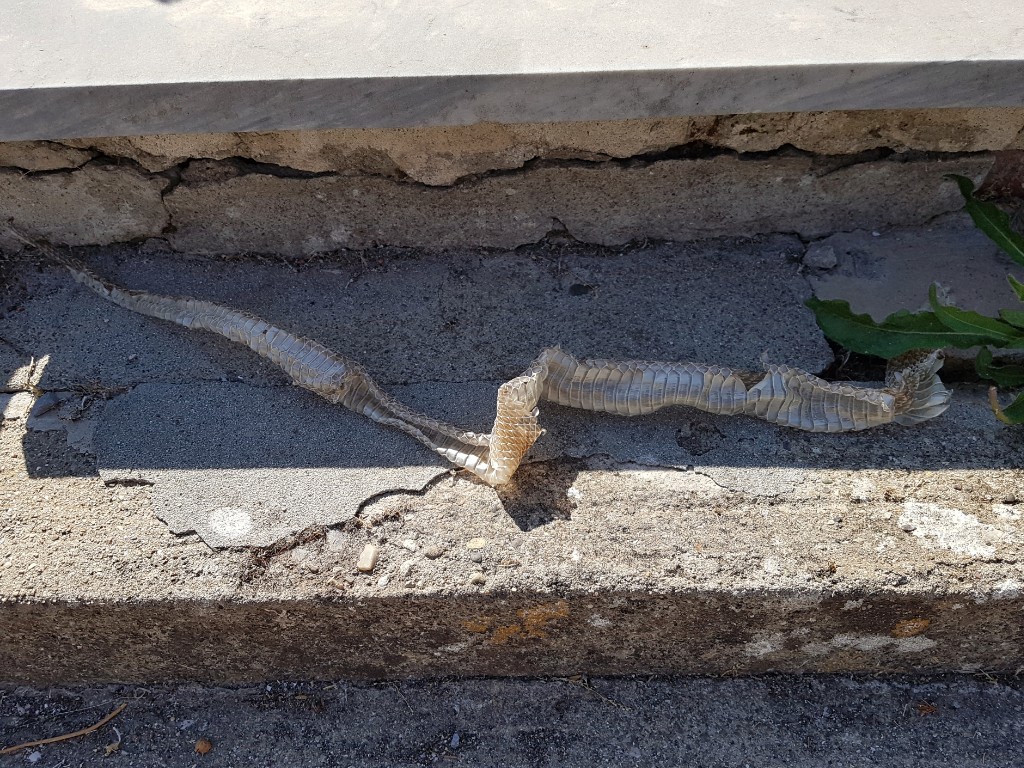
You watch a snake slip out of its old skin, revealing a bright new layer underneath. In many traditional dream books, this is treated as a fortunate sign, a symbol of shedding the old for the new: an old job coming to an end, a bad habit finally broken, a relationship turning a page. In practice, people who have just started a new job or moved into a new home do report this dream more often than most.
Being Bitten by a Snake
The bite dream is the most frightening kind — you may even wake up and instinctively touch the spot where you were bitten. Folk sayings split neatly in two on this one. One side says a bite means losing money; the other says it means gaining money. Two opposite answers for the same dream is a good reminder that there is no single standard here. Enjoy the story, but do not take it as a verdict.
A Snake Coiled Around Your Body
A snake wrapped around your arm, your leg, or near your neck often leaves you waking up with a tight chest. The old explanation usually ties this to pressure: too many things on your plate, too many people pushing you, a relationship that leaves you no room to breathe. Some also read it simply as a sign that you are exhausted and need rest.
White Snakes, Black Snakes, and the Language of Color
Color matters in the folk reading of snake dreams, and the white snake is the most famous of all. The classic tale The Legend of the White Snake — a beloved Chinese folk story about a white snake spirit who takes human form and falls in love — has made the white snake almost synonymous with kindness and spiritual power. Dreaming of a white snake is often read as meeting a helpful person or good news on the way. In some regions, people say it means an elder of the family is watching over the younger generation.
The black snake is more complicated. Some say it stands for steadiness and wealth, like ballast in a ship. Others say it is a warning: watch out for a petty person at work, or keep an eye on a payment that has not arrived yet. The same black snake gets two opposite readings, depending on who is telling the story and where they come from.
Green, red, and patterned snakes appear less often in the lore. Green snakes are usually tied to vitality — spring, rain, new shoots, the season when green snakes are said to appear. Red snakes are most often linked to celebrations and happy occasions. The color system is worth hearing out, but it is not a standard answer. Ask the same dream in another village and you may get a completely different one.
What is worth paying attention to is how the snake made you feel: afraid, curious, or calm. That feeling says more about your recent state of mind than any color ever could.
What Psychology Says About Snake Dreams
Psychology offers a very different explanation. Freud and the early psychoanalysts treated the snake as a primal, instinct-driven symbol tied to desire and impulse. Carl Jung went further: he saw the snake as one of the oldest images in the collective unconscious — the shared layer of human experience, in his theory — standing for transformation and healing, and also for danger. The two meanings, he argued, were always tangled together.
Modern psychology cares less about the symbol and more about what happened recently. Imagine someone who has worked overtime for two weeks, sleeping five hours a night, and then dreams of a snake coiled around them. A therapist would more likely ask about recent stress than reach for a dream dictionary. Here the snake works like an alarm: your body and emotions have reached a limit, and the dream is sounding it in the most direct way possible.
There is also a common reading tied to change. Snakes shed their skin — they are among the few animals in nature that can “put on a new body and keep living.” So people at turning points dream of snakes more often: graduation, a career change, a wedding, a new baby, a move to a new city. Every one of these moments shares the same feature — an old way of life is being replaced.
Folk tradition explains what the dream means in culture; psychology explains what it has to do with your life right now. Both are worth hearing, and neither is a fortune.
What to Do After a Snake Dream
Do not rush to a dream book and hand yourself a verdict. The morning after a snake dream, three small steps can help you turn the dream into something useful.
- Write it down: Within ten minutes of waking, note the dream in your phone. Record the snake’s color, where it was, what you were doing, and how you felt when you woke. Dreams lose their details within a couple of days, and only a written record lets you compare later.
- Check it against your week: Think back over the past seven days. Is there something you keep putting off — an unanswered message, a raise you have not asked for, a health check you have not booked, a fitness plan you have delayed for three months? A snake dream often just dresses that one thing up in a different costume.
- Change one small thing: If you have genuinely been exhausted, go to bed one hour earlier tonight. If something is hanging over you, take the smallest step on it today — send the message you have been postponing for two days. Whether the dream’s “warning” had any truth in it becomes clear once you act.
If the snake dreams keep coming back — three or more in a week, or every time you wake up panicked, sweating, and unable to fall back asleep — do not rely on dream books alone. First check whether your sleep has been poor or your stress unusually high, and if needed, talk to a doctor or a counselor. Recurring nightmares are sometimes your body’s way of raising an alarm, and that is worth more attention than any interpretation.
Quick Answers
Does dreaming of a snake mean something bad is coming? Not necessarily. In Chinese folk tradition, some snake dreams are read as good omens — a snake entering the house, for example, is often taken as a sign of good news. The reading depends on the scene, the color, and the local custom, and none of it is a prediction.
Why do I dream of snakes when I am stressed? Because your brain reaches for a strong, hard-to-ignore image to represent pressure or unresolved worry. Psychologists often treat the snake as an alarm signal from a tired mind or body, especially during weeks of change.
What does a white snake mean in a dream? In Chinese culture, the white snake is strongly associated with the folk tale The Legend of the White Snake, where it symbolizes kindness and spiritual power. Folk readings usually lean toward a helpful person or good fortune — but this is a cultural story, not a guarantee.
Should I worry if I keep dreaming of snakes? A single snake dream is common and usually harmless. If it repeats three or more times in a week, or you wake up panicked and cannot sleep again, look at your sleep and stress levels first, and consider speaking with a doctor or counselor.
What should I do the morning after a snake dream? Write down the details within ten minutes, check them against anything you have been putting off in the past week, and change one small thing — go to bed earlier, or take the smallest step on the task you have been avoiding.
Snake dreams have lasted this long in Chinese culture not because they can predict the future, but because they touch the most sensitive points in the human mind: fear, change, pressure, and new beginnings. A snake sliding into your dream may mean you have been pushing yourself too hard — or it may just mean you watched a snake video yesterday. Both explanations are possible, and you do not have to choose one.
Next time you dream of a snake, ask yourself three questions: Where was the snake? What was I doing? How did I feel the moment I woke up? Write down those three answers — they will tell you more than ten dream books ever could. Folk sayings are a useful reference for understanding why this dream has been remembered for generations. Real life, though, still comes back to one concrete thing you need to do in the daytime.
A dream is a letter from the night. Read it once, and there is no need to wait for a reply. Sleep well, and take care of the day’s work one thing at a time — that is the best response to a snake dream.
This article is a cultural overview of folk dream interpretation, provided for reference only. It is not a prediction of fortune or fate.