Two new hires start at the same company on the same Monday. Both are handed the same employee handbook, the same deadlines, the same chain of command. Three years later, one of them has become the person everyone trusts with the keys to the safe — and the other feels like the rulebook is slowly strangling him. The difference is not the handbook. It is what each of them does with order. In BaZi, the ancient Chinese system of personality analysis, that relationship with order has a name: Zhenguan, the Direct Officer.
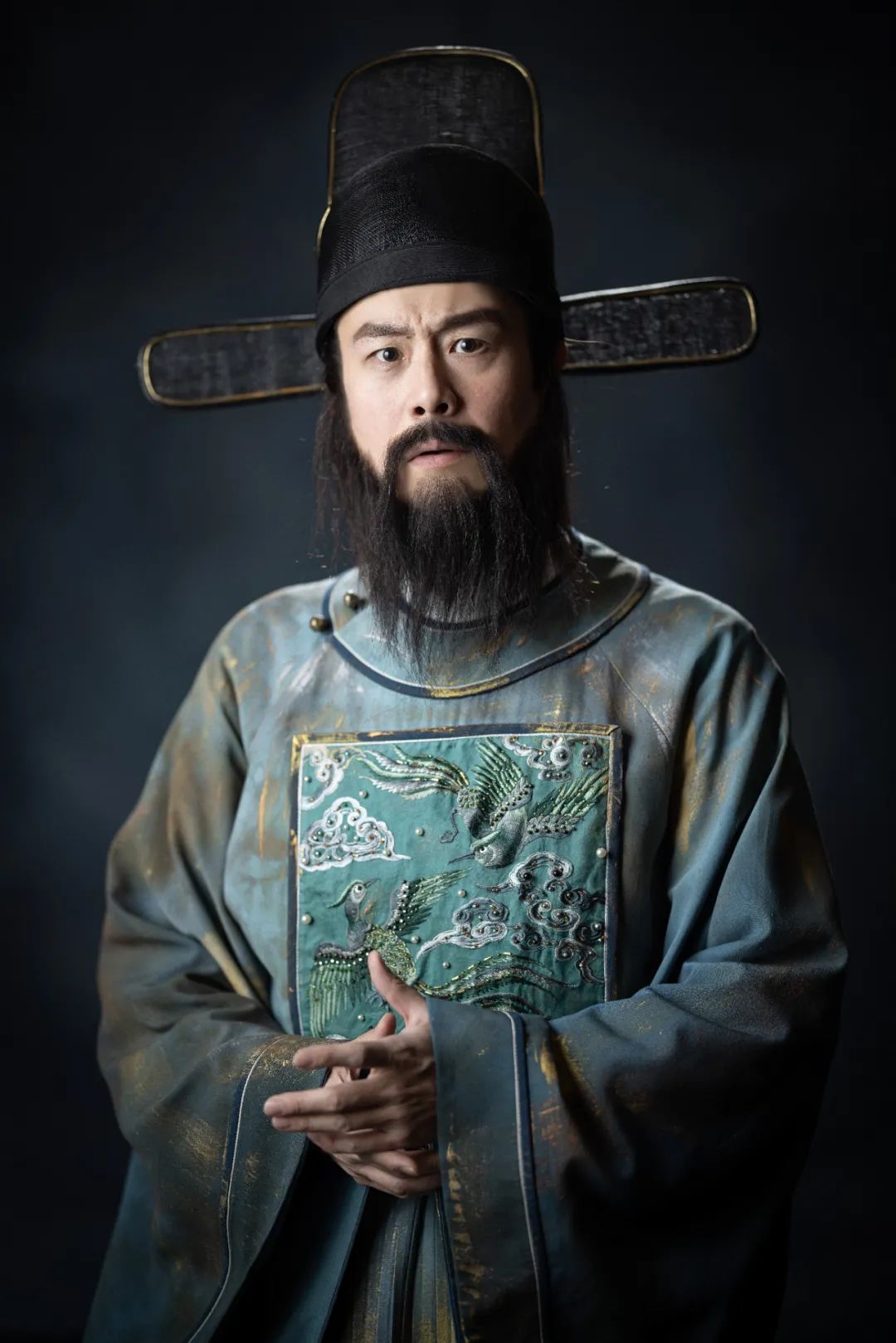
This guide explains Zhenguan the way BaZi readers have understood it for centuries — as a cultural symbol, not a verdict. You will learn how it shapes personality, why it points some people toward steady careers and others toward friction, what it looks like inside a family, and what traditional wisdom suggests when the balance tips too far in either direction.
What Is Zhenguan? The “Order Star” of BaZi
BaZi, literally “eight characters,” is a traditional Chinese system that maps a person’s birth date and time onto four pairs of characters — year, month, day, and hour. Each pair contains a Heavenly Stem and an Earthly Branch, and together they form a chart that readers use as a framework for talking about personality and life patterns. It is a cultural tradition, not a science, and this article treats it as such.
Inside that chart, the Ten Gods are ten roles assigned according to how each element in the chart interacts with the Day Master — the element of the day you were born, which represents you. Zhenguan, the Direct Officer, is the element that controls the Day Master while having the opposite yin-yang polarity. Take a Day Master of Jia Wood, for example: Wood is controlled by Metal, and Yin Metal (Xin) becomes Jia Wood’s Direct Officer.
Classical texts describe this “opposite-polarity control” as a restraining force with good intentions — like a strict but fair manager. It keeps you in line, but it also gives you direction. That image captures the whole spirit of Zhenguan: discipline that serves a purpose, rather than discipline for its own sake.
In the traditional symbolism, Zhenguan stands for social norms, professional reputation, duty, and responsibility. In a man’s chart it was also read as a sign of his relationship with his children; in a woman’s chart, it was traditionally associated with her husband. Where it sits in the chart adds another layer of meaning. Zhenguan in the month pillar — the position classical readers called the Zhenguan pattern — was said to mark a life lived by clear principles. Zhenguan in the day branch was read as a steady, upright partner. Zhenguan in the hour pillar was linked to support in later life and dutiful children. These are symbolic readings from a cultural tradition. They describe tendencies, not destinies.
The Three Traits of a Strong Zhenguan Personality
When Zhenguan is strong and well placed in a chart, three traits tend to show up again and again. The first is punctuality and reliability. A meeting is set for nine in the morning; this person is already in the room at 8:50. A proposal is promised for Friday; it lands in your inbox on Thursday evening. The second is a concern for propriety. The clothes are not necessarily expensive, but they are always neat. The words are not necessarily charming, but they are rarely careless. The third is a heavy sense of responsibility. When a team project goes wrong and everyone else is busy blaming each other, this person is already thinking about how to fix it. When an elderly parent is admitted to hospital, this is the one quietly running between the registration desk, the ward, and the pharmacy.
Consider a finance manager I heard about from a BaZi reader: Zhenguan showing in his month stem, he had not been late to work once in more than thirty years, and he would send back an expense form over a single misplaced decimal point. Colleagues called him rigid. But when the annual audit came around, the accounts he handled never once had a problem. His boss trusted him — not because he was good at office politics, but because he simply never made mistakes. That reliability is the most valuable thing about the Zhenguan personality. It compounds slowly, like interest, until one day it is the only asset that matters.
The same ruler, applied too strictly, can also cut. When Zhenguan is very strong and there is no Seal star (Yin, the element that nourishes and softens the Officer) to balance it, the person can turn into what traditional texts call a “rules fundamentalist”: procedure matters more than outcome, and getting the signature matters more than solving the problem. A child scores 98 out of 100 on a test, and the first question is where the two lost points went. A subordinate suggests a shortcut that would save everyone an afternoon, and the first response is “that is not how the procedure works.” The old saying goes, “a strong Officer without a Seal makes a person overly cautious.” In plain language: someone who only knows how to follow rules and never how to bend them will find their road getting narrower every year.
Career: Where Zhenguan Thrives
Traditional BaZi advice about Zhenguan careers is blunt: take the straight road. Civil service, teaching, medicine, law, banking, management in a state-owned enterprise — jobs with a clear promotion ladder, where seniority and professional qualifications count. These suit Zhenguan best. A person with a Zhenguan pattern who spends ten years inside an institution, moving from junior clerk to section chief, does it not by scheming but by scoring excellent on every annual review and never making a serious mistake. The path is slow. It is also stable.
What about starting a business? It can work, but the style is different from the typical founder story. High-risk, fast-turnover ventures — trading crypto, flipping goods, chasing the latest trend — are a poor fit. What fits is a business built on reputation and qualifications accumulated over time: an accounting firm, a compliance consultancy, a training school. The first client comes for the price. The second comes because “this person is reliable.” After ten years, reliability itself has become the best advertisement the business has.
The friction appears when Zhenguan is heavily attacked by Hurting Officer (Shang Guan), the star that represents talent and rebellion and is specifically the force that clashes with the Direct Officer. People with this combination are quick-witted and sharp-tongued. They write better proposals than anyone else in the room — and they cannot stand the rules their manager keeps quoting. They argue with the boss in meetings. The moment a new policy comes out, they start looking for loopholes. Forced into a rigid institution, they will be miserable. But in content creation, freelancing, or independent consulting, that same refusal to be managed becomes productive. The old texts warn, “when Hurting Officer meets the Officer, trouble follows a hundredfold.” Read with a modern eye, it is less a curse than a career tip: do not force a rebellious streak into a shell that demands obedience.
Relationships and Family: The Other Side of Zhenguan
In friendships, Zhenguan often shows up as “cold on the outside, warm on the inside.” These people do not collect a large circle of friends, but the ones they keep are friendships of ten years or more. They are awkward at banquets and bad at small talk. Yet when a friend calls at midnight needing to borrow money, they transfer it without a second question. Their way of socializing is “few and deep”: they filter people with time, not with occasions.
At home, a strong Zhenguan person is usually the pillar of the family — not the loudest voice, but the first one standing when something goes wrong. When a father is hospitalized, this is the person calling the hospital, handling the paperwork, and organizing the rota to sit by the bed. When the house is being renovated, this is the person comparing quotes, signing contracts, and checking the builders’ work. Family members may find them quiet, serious, even a little distant. But when a real crisis hits, they are the first person everyone thinks of.
That steadiness has a cost, and partners notice it. A Zhenguan-strong partner may forget to say “I love you” and instead show it by fixing the leaking tap before you even mention it. If you are in a relationship with such a person, it helps to read the actions rather than wait for the words. And if you are the Zhenguan person, it helps to remember that the people closest to you sometimes need warmth expressed out loud, not just delivered in the form of a solved problem.
When the Balance Tips: Too Strong, Too Weak, or Under Attack
BaZi is a system built on balance, and Zhenguan is no exception. Too strong, too weak, or under attack, and its best qualities start to warp. There are a few everyday warning signs worth noticing. Before doing anything, you first ask “will this break a rule?” instead of “is this the right thing to do?” A casual remark from someone else keeps you turning it over in your head for three days. When something unexpected happens, your first instinct is to look for the procedure or call a superior, instead of solving the problem in front of you. If all three sound familiar, the inner “Officer” may be pressing harder than your ability to act.
The traditional remedy is called “Seal transforms the Officer” (Yin Hua Guan): use the Seal star to convert the Officer’s pressure into something useful. The Seal represents learning, reflection, and inner cultivation. Translated into modern habits, that means three things. First, keep learning. When pressure builds, read a few books in your field or earn a useful certificate — turn anxiety into concrete ability, and the Officer’s pressure finds an outlet. Second, build your own standard of judgment. Follow the rules, but follow them because you understand why they exist, not because everyone else follows them. Third, leave a little room in your life for the Hurting Officer spirit. Pick up a hobby with no practical purpose — calligraphy, fishing, running, cooking — and give yourself two or three hours a week that belong entirely to you. A person whose life is only work and duty, with no outlet for release, will eventually be crushed by even the strongest Officer star.
For people whose Zhenguan is weak or under attack, the remedy runs in the opposite direction: not loosening up, but building structure. Get up at the same time every day. Write a to-do list of three things each morning. Put every promise you make into a note on your phone. These sound like clumsy little tricks, and they are. But for someone who is naturally allergic to rules, keeping them up for thirty days is a small act of rebuilding the Officer star. The classical saying is “the Officer only becomes noble when it is held in check,” and modern psychology says much the same thing about discipline: freedom is not doing whatever you want — it is being able to not do what you do not want to do.
Quick Answers
What does Zhenguan mean in BaZi? Zhenguan, the Direct Officer, is one of the Ten Gods in BaZi — a traditional Chinese system that reads personality from a birth chart. It represents order, rules, duty, and reputation. It is the element that controls your Day Master (the element of your birth day, which stands for you) with opposite yin-yang polarity.
Is a strong Zhenguan good or bad? Neither, on its own. A well-balanced Zhenguan is linked to reliability, punctuality, and steady career progress. Too strong without a balancing Seal star, it can turn into rigidity and an obsession with procedure. BaZi is a framework for reflection, not a judgment.
Which careers suit a strong Zhenguan? Traditionally, roles with clear structures and promotion paths: civil service, teaching, medicine, law, banking, and management. For business, reputation-based fields such as accounting, compliance consulting, or training schools fit better than high-risk speculation.
What if Zhenguan clashes with Hurting Officer in my chart? That combination is traditionally read as tension with authority and rules. It often fits people better in creative, freelance, or consulting work, where independence is an asset rather than a problem. Many BaZi readers treat it as career guidance, not a warning.
How can I balance an over-strong Zhenguan? Traditional advice points to the Seal star: keep learning, develop your own judgment about why rules matter, and protect a few hours a week for a hobby with no practical purpose. Small, regular habits — not grand gestures — are what shift the balance.
Can BaZi predict my future? No. BaZi is a cultural system for reflecting on personality and life patterns. This article presents it as cultural knowledge for interest and self-reflection only. It is not a prediction of fate, and it is not a basis for life decisions.
In the end, Zhenguan is really about one thing: a person’s relationship with order. Those who live with it well earn trust and a good name. Those who are trapped by it lose flexibility and ease. If Zhenguan is strong in your chart, treat “reliable” as a personal brand: do what you promise, learn one new skill every year, and keep half a day each week free of rules. If it is weak, do not worry — find a reliable partner to complement you, or set yourself three small rules you never break, and look again after a hundred days. BaZi’s Ten Gods are not a verdict on your fate. They are a set of observation tools left behind by the ancients. What Zhenguan teaches, in the end, is a single sentence: how far a person goes depends not on how clever they are, but on how much they can be trusted.
This article is a cultural introduction to traditional Chinese BaZi for general interest only. It is not a prediction of fate or advice for life decisions.