You climb three flights of stairs and you’re already out of breath. You slept eight hours and still wake up groggy. Your colleague catches a cold and shakes it off in three days; yours drags on for two weeks. If three or more of those sound familiar, this guide is for you. In traditional Chinese medicine (TCM), this pattern has a name: qi deficiency. Qi (pronounced “chee”) is the body’s vital energy — the force that powers breathing, digestion, circulation, and immunity. TCM also describes nine constitution types, or body types based on long-term patterns of energy, digestion, and resilience, and qi deficiency is the most common of them. It isn’t a disease. It’s a pattern you can work with — slowly, practically, and mostly through everyday habits.

How to Tell If You’re Qi Deficient
The signs hide in small daily moments. Your voice gets quieter as the day goes on; ten minutes into a meeting, your throat feels dry and you run out of air mid-sentence. You break into a light sweat from a short walk, wipe it off, and it comes right back — and a breeze makes you feel cold. After lunch, you could fall asleep at your desk. Eat a little too much and your stomach feels bloated and stuck.
The mirror gives clues too. Your tongue looks pale, with teeth marks along the edges. Your face is pale or slightly yellowish rather than rosy. You catch colds four or five times a year, and each one lingers for ten days or more. Loose stools, two or three trips to the bathroom a day, are another common signal. If you recognize four or more of these, read on.
One thing to get straight: qi deficiency is not the same as being tired. An ordinary person who pulls two late nights recovers with one good sleep. Someone with qi deficiency feels drained for weeks even with a normal schedule — like a phone with an aging battery that drops to 30% by noon after charging all night.
Where Qi Comes From — and Where It Leaks Away
TCM says qi comes from three sources: what you’re born with, what you eat, and what you breathe. Some people start out with less — they were the sickly kid, always last in the school run, and the pattern follows them into adulthood. But the two acquired sources cause far more trouble, and they’re the ones you can change.
The biggest leak is irregular eating. Skipping breakfast, loving ice-cold drinks, living on greasy takeout — all of it wears down the spleen and stomach. In TCM, the spleen is the engine that turns food into qi and blood; when digestion is weak, qi simply isn’t made. Plenty of young professionals run the same script: an iced coffee on an empty stomach, two bites of lunch at the desk, then a heavy hotpot dinner. A few years of that, and the tongue coating gets thicker and the teeth marks deeper.
The second leak is overwork. Staying up past 1 a.m. night after night steals the hours your body uses to repair itself. Teachers, customer-service staff, salespeople — anyone talking six to eight hours a day burns through qi faster than most. A serious illness, surgery, childbirth, or heavy periods can drain it in one big hit. Age matters too: after 40, qi naturally declines, so all-nighters that were survivable at 20 take much longer to recover from.
Eating Your Way Back: Warm, Soft, Regular
Start with three meals a day, and make them warm, soft, and regular. Don’t skip breakfast — a bowl of millet porridge and an egg will carry you further than coffee on an empty stomach. Build your staple foods around root vegetables: yam, sweet potato, pumpkin, potato. They’re easy to digest and kind to the spleen. Steam yam or cook it into porridge three or four times a week, and within a month the after-meal bloating usually eases.
For meat, chicken and beef do the most honest work. The classic pairing is astragalus chicken soup: half a stewing hen with 15 grams of astragalus root (huang qi, a traditional tonic herb), simmered gently for an hour and a half, once or twice a week. If that’s too much effort, steep 10 grams of astragalus with five red dates in hot water and drink it as tea — after two weeks, that heavy feeling in the morning often lightens. Beef stewed soft with potato is another good option for a weak stomach.
Keep a few cheap staples on hand: five or six red dates a day, eaten as-is or cooked into porridge; lotus seeds and fox nuts, 15 grams each in porridge, which suit people with loose stools; a small handful of steamed chestnuts as a snack. For fruit, choose warming ones — steamed apple, or dried longan in hot water — over iced watermelon or pears straight from the fridge.
One warning: more is not better. A giant pot of tonic soup gulped down in one sitting only burdens the spleen further. The rhythm is small amounts, often, for a long time. Give your body at least four to six weeks before judging the result.

Move Gently, Sleep Enough — That’s How Qi Stays
Exercise for qi deficiency has one rule: stop when you break a light sweat. Never push to a drenching sweat. Brisk walking is the best fit — 30 minutes a day at about 100 steps per minute, fast enough that your forehead glistens and your breathing quickens, but you can still talk normally. Ten minutes a day of Baduanjin (a traditional eight-movement qigong routine), especially the first movement, “Holding Up the Sky,” and the third, “Single Lift to Regulate the Spleen and Stomach,” done slowly with the breath, is genuinely helpful.
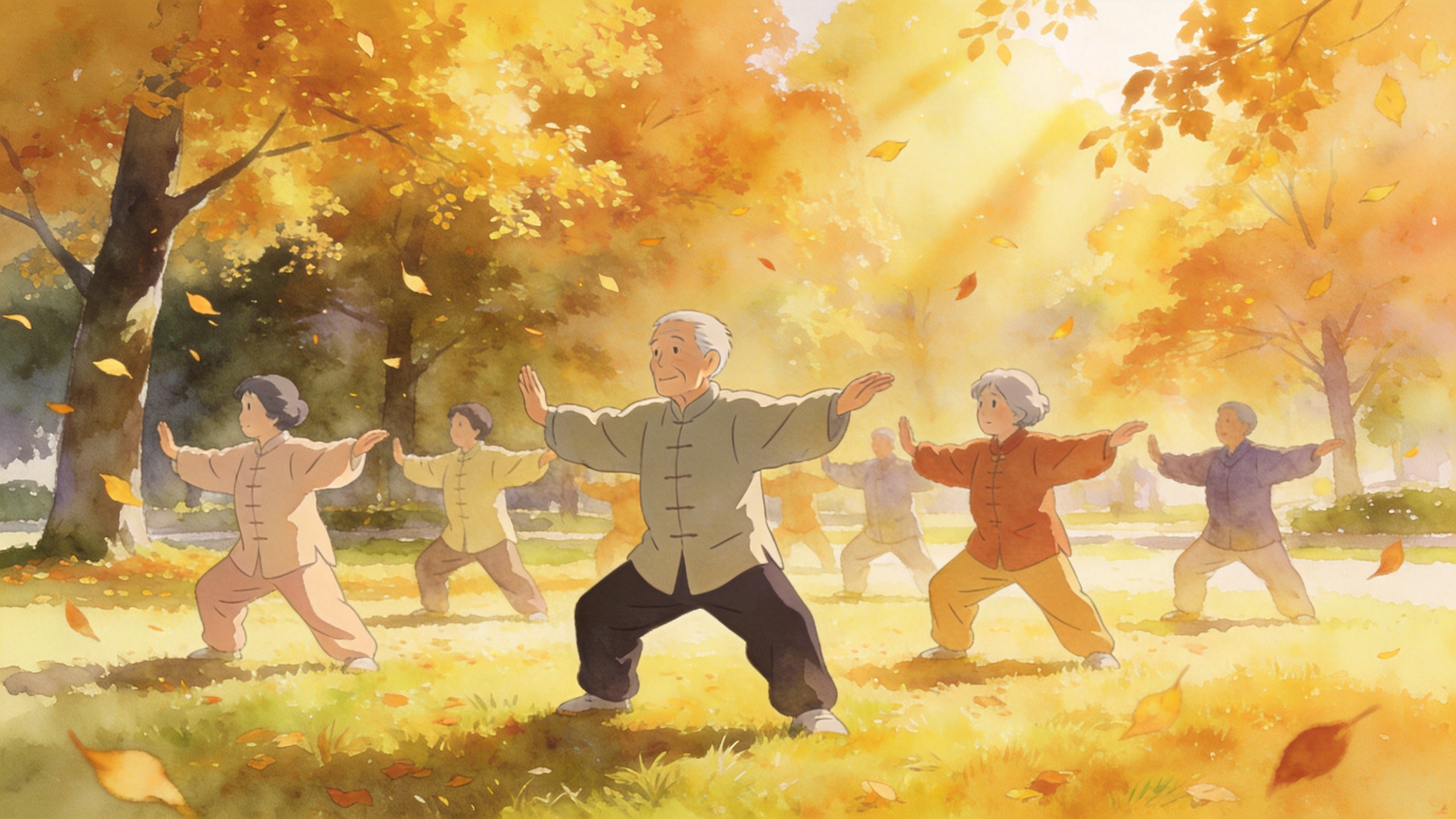
Tai chi is worth trying too: three sessions a week, 20 to 30 minutes each. If you finish feeling warm and clearer-headed, the dose is right. The reverse is also a signal: if you force yourself through a 10K run or high-intensity interval training and feel more exhausted afterward, you’re spending qi you don’t have. Back off immediately.
Sleep is the cheapest tonic there is. Be in bed by 11 p.m., get seven to eight hours, and take a 20-minute nap after lunch — the afternoon difference is noticeable. In autumn and winter, keep your neck, lower back, and ankles warm, and soak your feet in water around 40°C (104°F) for 15 minutes before bed, until your forehead is lightly damp. Then go to sleep.
The Four Things Qi-Deficient People Should Avoid
First, cold food and drink. Ice water, iced fruit, cold drinks — they hit the spleen directly. A summer of iced drinks often shows up in autumn as diarrhea and colds. In air conditioning, add a layer; don’t let cold air blow on your belly button or lower back.
Second, crash dieting. Many people lose barely any weight but their complexion collapses first — and for women, periods become irregular — because the diet ate their qi and blood along with the calories. You can lose weight, but eat three real meals and let the extra 3,000 steps a day do the burning instead.
Third, sitting all day and staying up late. A full day without moving slows circulation; a night that runs to 2 or 3 a.m. doubles every symptom the next day.
Fourth, grabbing random tonics. Seeing the words “tonifies qi” and buying ginseng or deer antler is a common mistake — if your constitution runs hot, the wrong tonic just makes you feel wired and overheated. If you’re unsure of your constitution, or you already take medication for a chronic condition, ask a doctor before deciding how to tonify.
Quick Answers
How long before I feel a difference? Most people notice lighter mornings and less after-meal bloating in four to six weeks of steady habits. Three days is too soon to judge; one week of no change is not a reason to quit.
Can I drink coffee? One cup is fine — just not on an empty stomach, and not iced. Eat breakfast first, then the coffee.
Is astragalus safe for everyone? No. It’s warming and tonifying, so people with a cold or fever, or a constitution that runs hot, should skip it and check with a practitioner first.
What’s the single best first step? Cook yourself a bowl of millet and yam porridge tomorrow morning, put the phone down by 11 p.m., and take a 20-minute brisk walk after lunch. Three small changes, four weeks, then count the signs from the first section again and see how many are gone.
When should I see a doctor instead? If fatigue, shortness of breath, or sweating keep getting worse, or they come with chest tightness, unexplained weight loss, or a persistent low-grade fever, get checked first — to rule out anemia, thyroid problems, or heart issues — before working on your constitution.
There is no shortcut for qi deficiency. It comes down to three things: eat warm and regular, move gently to a light sweat, sleep early and long enough. Start with the smallest change tomorrow morning — that’s how the slow work begins.
Disclaimer: This article is educational content about TCM constitution types. It is not a substitute for medical diagnosis or treatment, and it promises no results. If your symptoms are pronounced, persistent, or you have an underlying health condition, please see a doctor and follow their guidance.