At the entrance of a morning market, an old man glances at the stallkeeper’s face for three seconds and says with a smile, “You did not sleep well last night, did you? The space between your eyebrows looks dull.” The stallkeeper blinks. He had, in fact, slept only four hours. Scenes like this are common across China, and they raise an obvious question: what exactly is face reading looking at? For over a thousand years, this tradition has treated the features, complexion, and lines of the face as clues to a person’s state of being. This guide does not deal in fortune-telling. It unpacks the basic ideas of Chinese face reading, known as mianxiang, as cultural history and everyday observation.
Mianxiang literally means “face appearance.” It grew out of an old Chinese habit: judging character and condition by looking closely at people. It sits alongside other traditional observational arts, such as the diagnostic “looking” in Chinese medicine and the portraiture of classical painting. The point of this guide is not to teach you to predict anyone’s future. It is to help you understand why generations of Chinese people read faces the way they do, and what a modern reader can reasonably take from it.
The Three Sections: How a Face Is Divided
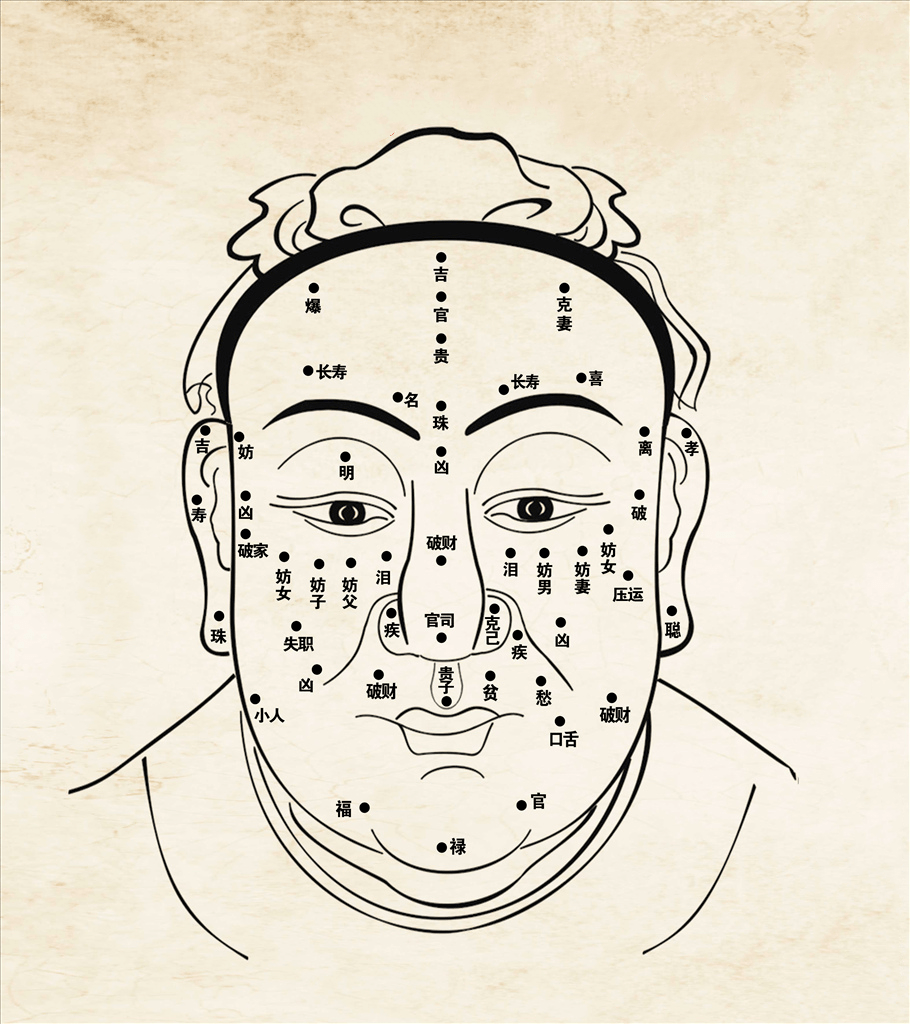
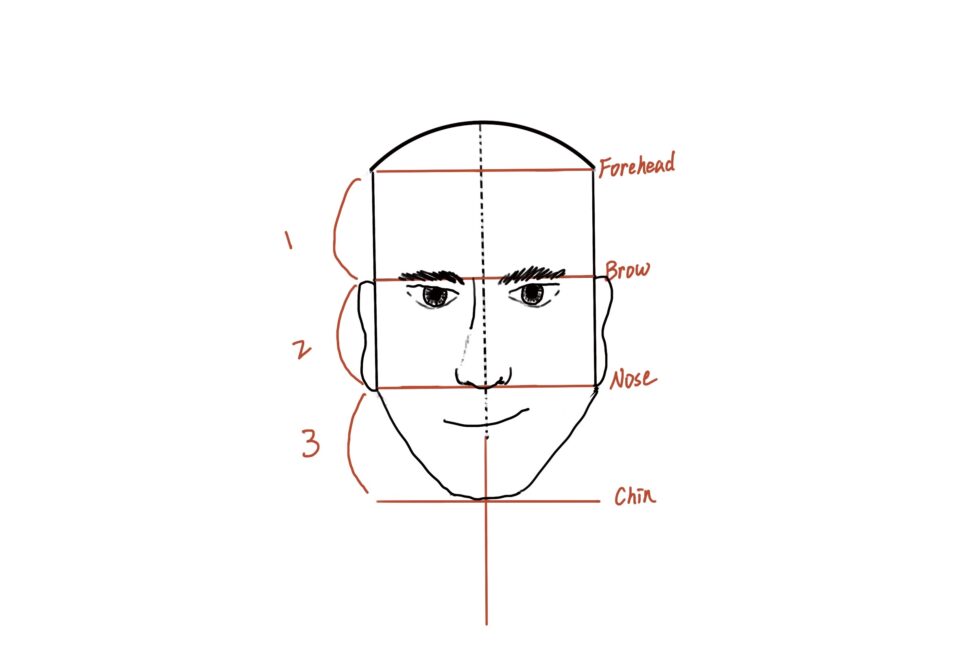
Traditional face reading divides the face into three horizontal sections, called the “three stops” (san ting). The upper stop runs from the hairline to the eyebrows and is traditionally linked to early life and mental activity. The middle stop runs from the eyebrows to the tip of the nose and is linked to midlife and drive. The lower stop runs from the nose tip to the chin and is linked to later life and one’s material foundation. This division appears in texts from the Han dynasty onward and was systematized in the Ming dynasty classic “Shenxiang Quanbian”, often translated as “The Complete Guide to Physiognomy”.
What matters in this system is proportion and balance, not any single feature. A long upper stop, the tradition says, suggests a thoughtful, bookish temperament, someone who can sit still and concentrate. A full middle stop suggests steady, practical energy. These are personality sketches, not medical findings. Think of them the way you might think of an old proverb: a compressed observation about human nature, interesting to consider, unsafe to treat as proof.
The five features also have formal titles in this tradition. Eyebrows are called the “officer of longevity”, eyes the “officer of inspection”, the nose the “officer of discernment”, the ears the “officer of hearing”, and the mouth the “officer of expression”. Behind the elegant names lies a practical logic: brows show emotional steadiness, eyes show vitality, the nose anchors the center of the face, ears show structure, and the mouth shows communication. Consider two job candidates. The one whose eyes are bright and who can hold natural eye contact tends to leave an impression of being alert and well-rested. That is not mysticism. It is the exact point where face reading overlaps with the everyday first impressions we all form.
The Five Features, One by One
Eyebrows: The Rhythm of Temperament
Tradition holds that the thickness, length, and direction of the eyebrows reflect the rhythm of a person’s temperament. Thick, tidy brows are said to signal abundant energy and an orderly mind. Sparse, unruly brows are said to suggest a tendency to overthink and sleep lightly. A modern lens adds a simpler explanation: chronic late nights and sustained stress really do make eyebrows thinner and patchier, because hair follicles respond to stress hormones and poor sleep. The old observation and the modern explanation point at the same visible fact.
Eyes: The Window the Tradition Values Most
An old saying calls the eyes “the sprout of the heart”. When the tradition reads eyes, it looks at three things: how clear the contrast is between the white and the iris, whether the gaze is steady, and whether there is obvious darkness or puffiness under the eyes. Anyone who has worked two straight weeks of overtime knows this picture: yellowish whites, dark under-eye circles, a gaze that drifts. The tradition would describe this as “insufficient spirit”. In plain modern language, it means the body is asking for rest.
Nose, Mouth, and Ears
The nose, as the center of the face, is traditionally read for steadiness: a straight bridge and full nostril wings are said to suggest a grounded, reliable character. The mouth is read for communication: rosy lips and upturned corners are said to suggest warmth and ease with others. Lips that stay dry and pale for weeks, on the other hand, may simply signal dehydration, low iron, or a disrupted sleep schedule. Ears get their own folklore: a well-defined outer ear and a full earlobe are traditionally called a sign of good fortune. Today that reads as a blessing, not a diagnosis, but it shows how the tradition treated the ear as a reference point for health and aging.
Complexion: The Layer That Changes Every Day
If the features are the relatively fixed foundation, complexion is the layer that changes daily. Traditional face reading sorts complexion into five colors, greenish, reddish, yellowish, pale, and dark, and maps them onto the five phases (wuxing) of Chinese cosmology and onto bodily states. A yellowish tone is traditionally linked to the digestive system. A greenish or bluish tone is linked to cold, fatigue, or suppressed emotion. Paleness is linked to low energy and blood. Redness is linked to internal heat or strong emotion.
These claims overlap with modern observation more often than skeptics expect. Anemia really does make people look pale. Jaundice really does turn the skin yellow. Chronic insomnia really does leave a dull, grayish-green cast. The crucial difference is what happens next. Modern medicine follows up with blood tests and liver function checks to confirm a cause. Traditional face reading stops at looking. Complexion can be a useful prompt to pay attention, never a diagnosis. Imagine a friend whose face has looked waxy yellow for three days while her appetite fades. The traditional advice would be “watch your digestion”. The modern move is to get checked first. The two are not in conflict: one is a nudge, the other is verification.
Complexion also moves with emotion, and the old texts noticed this too. A person goes pale under stress, flushes red with anger, and blushes at the ears when embarrassed. The tradition called these sudden shifts “abrupt changes of complexion”. Modern readers would call them the visible effects of adrenaline and blood flow. Either way, the face is a live display, not a fixed label.
Lines and Moles: Traces Left by Time
Beyond features and complexion, the tradition reads lines. The three most discussed are forehead lines, crow’s feet at the corners of the eyes, and the nasolabial folds running from the nose to the mouth. Tradition says early forehead lines suggest a habit of deep thought, deep nasolabial folds suggest responsibility and strong opinions, and abundant crow’s feet suggest a cheerful, laughter-prone character. Modern anatomy offers a plainer account: these lines are the record of repeated muscle movement and skin aging. People who frown often develop forehead lines. People who laugh a lot develop crow’s feet. People who hold a serious expression deepen their nasolabial folds. Lines are less like destiny marks and more like the annual rings of a life lived in a particular way.
Moles have their own chapter in the tradition. A mole between the brows, at the corner of the mouth, or on the earlobe each carries a traditional interpretation. A mole at the mouth corner, for example, is traditionally said to mark someone who enjoys food and speaks well. These readings are charming, but modern dermatology draws a very different line: a mole that suddenly grows, changes color, develops an irregular border, or bleeds repeatedly within a few months should be examined by a dermatologist, not by a face reading manual. Knowing where cultural interpretation ends and health common sense begins is the most important skill a beginner can learn.
How to Read Face Reading Rationally: Three Reminders
First, it is culture, not a verdict. Face reading comes from an old empirical tradition of “observing people”, related to diagnostic looking in Chinese medicine and to portraiture in art. It was never put through controlled scientific testing, and it should never decide hiring, marriage, or investment choices.
Second, read the state before the structure. Bone structure barely changes, but complexion, gaze, and expression change every day. The genuinely useful part of face reading is noticing whether someone looks tired, slept badly, or seems emotionally steady, not branding them for life.
Third, watch out for scams dressed as face reading. If someone looks at your face and declares that a disaster will strike within three years unless you pay for a ritual to avert it, that has left the realm of cultural education and entered the business of selling fear. Walk away.

Conclusion: Face Reading as a Mirror for Daily Life
The core of face reading, stripped of superstition, is surprisingly simple: learn to observe proportion, vitality, and changes of complexion in a face, understand why the ancients summarized them the way they did, and then check your impressions against modern common sense. Next time you look in the mirror, take an extra moment. Does your complexion look better than yesterday? Are the dark circles under your eyes telling you to go to bed earlier? Is that unruly brow a small reminder to tidy up your routine as well as your appearance? Turned into a habit of paying attention to yourself and your family, that is the most practical use this old art still has.
Try this:
- Spend one minute each morning looking in the mirror and noting the link between your complexion and your sleep. Keep it up for two weeks and you will discover your own personal “complexion weather report”.
- Read a modern annotated selection from “Shenxiang Quanbian” as cultural history, not as a checklist to apply to your own face line by line.
- If an abnormal complexion persists for more than a week, get a routine medical check first and discuss traditional interpretations afterward.
- When talking about face reading with family, say “the tradition holds that…” rather than stating conclusions. Keep it a dinner-table cultural topic, not a standard for judging people.
Quick Answers
What is mianxiang? Mianxiang is the traditional Chinese art of reading the face. It interprets features, complexion, and lines as clues to a person’s condition and character. It is a cultural tradition, not a science.
What are the “three stops” (san ting)? The face is divided into three horizontal sections: the upper stop from hairline to eyebrows, the middle stop from eyebrows to nose tip, and the lower stop from nose tip to chin. The tradition links them to early life, midlife, and later life, and values balance between them.
Can complexion really reveal health problems? Complexion can hint at things worth checking: paleness with anemia, yellowing with liver problems, dullness with poor sleep. But it cannot diagnose anything. Persistent changes deserve a medical check, not a face reading verdict.
Do moles mean anything? In the tradition, each mole position carries an interpretation, but these are folklore. From a health standpoint, what matters is change: a mole that grows, darkens, or bleeds should be seen by a dermatologist.
Is face reading still worth learning? Yes, as cultural literacy and as a habit of observation. It teaches you to notice fatigue, stress, and mood in yourself and others. It becomes a problem only when it is used to label people or to sell fear.
This guide is for cultural education only. It does not diagnose, treat, or predict health outcomes. If you notice persistent changes in your face or complexion, consult a qualified medical professional.