It is 6:40 in the evening, and you are standing outside your own front door with your arms full of groceries, fumbling for your keys while a pile of shoes blocks the doorway. The hallway light is off, the shoe cabinet door will not quite close, and a cold draft is blowing straight past you into the living room. Nothing is broken, and nothing is expensive to fix. The entrance of your home — the small stretch of space where the outside world meets the inside — simply was never thought through. In traditional Chinese culture, this space has a name and a whole body of wisdom behind it. Strip away the mystique, and it turns out to be remarkably practical advice about light, air, and movement.

Feng shui (literally “wind and water”) is an ancient Chinese system for arranging living spaces in harmony with their surroundings. When it talks about the front door, it is really talking about five everyday things: which way the door faces, how much open space lies in front of it, how the entryway is organized, how the door itself is sized and hung, and how all of it feels when you walk through it fifty times a day. This guide walks through each one, with measurements and fixes you can use tonight.
Direction: Check Light and Wind Before You Check the Compass
Traditional teachings have a great deal to say about which compass direction a door should face. In daily life, though, the first things that actually affect you are sunlight and wind. A south-facing door in the northern hemisphere lets in two or three extra hours of winter sun, so the living room stays warmer and brighter. A north-facing door can funnel cold winter wind straight inside; in that case, a windbreak vestibule or a heavy curtain just inside the door makes an immediate difference.
Here is a simple test that beats any abstract compass reading. Stand at your front door at 9 in the morning and again at 3 in the afternoon. Does sunlight reach into the entryway? Does the wind blow straight through into the rooms beyond? Those two observations tell you more about how the door performs than any directional label. If you are choosing a home or planning a renovation, run this test before you sign anything.
Watch out for two common layouts. If the front door faces a staircase or a long corridor head-on, wind rushes straight in — refreshing in summer, uncomfortable in winter, and a reliable carrier of dust. The fix is simple: place a screen or a tall cabinet in the entryway to slow and deflect the airflow, which also gives you a visual transition between outside and inside. If your door faces a neighbor’s door directly, so that opening it gives a clear view into each other’s living rooms, frosted glass on the door or a curtain in the entryway restores privacy at once.
Mingtang: The Open Space in Front of the Door
Mingtang, literally “bright hall,” is the feng shui term for the open area in front of a main entrance. In plain language, it means: do not block your own front door. A doorway crowded with parcels, parked scooters, or renovation debris is hard to walk through, cuts down light and ventilation, and makes the whole home feel cramped before you even step inside.
The practical standard is modest. Keep at least enough clear ground in front of the door for one person to turn around comfortably — roughly one square meter or more — with level ground that does not puddle when it rains. That is it. No elaborate landscaping required.
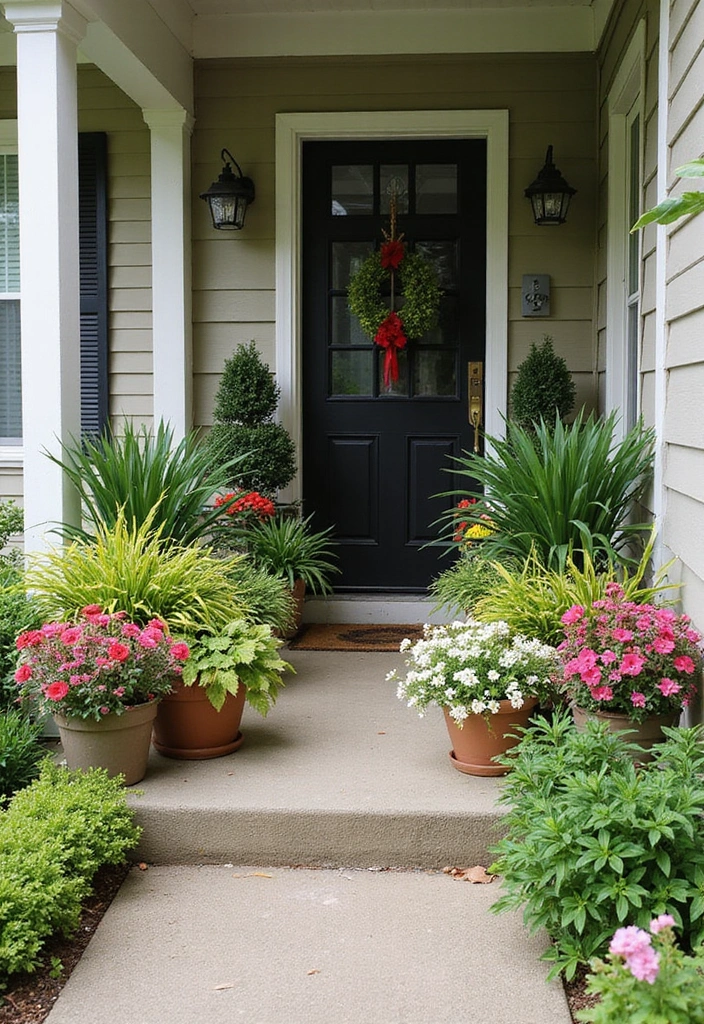
Apartment dwellers can apply the same idea to their shared hallway. Fire escape routes must never be blocked, and a shoe cabinet should not extend past the line of your own door frame. Some residents build cabinets that jut more than a meter into the corridor; neighbors cannot pass comfortably, and the owners themselves struggle to open their own door. Keeping the space in front of the door clear is not just about looks — it is about safety and good relations with the people next door.
For detached houses or homes with a yard, two low shrubs or a pair of stone markers can frame the entrance nicely. Avoid tall trees that block the door itself: they cut off light, block the view, and drop leaves and debris right where you walk every day.
The Entryway: Three Pieces That Decide How Smooth Coming Home Feels
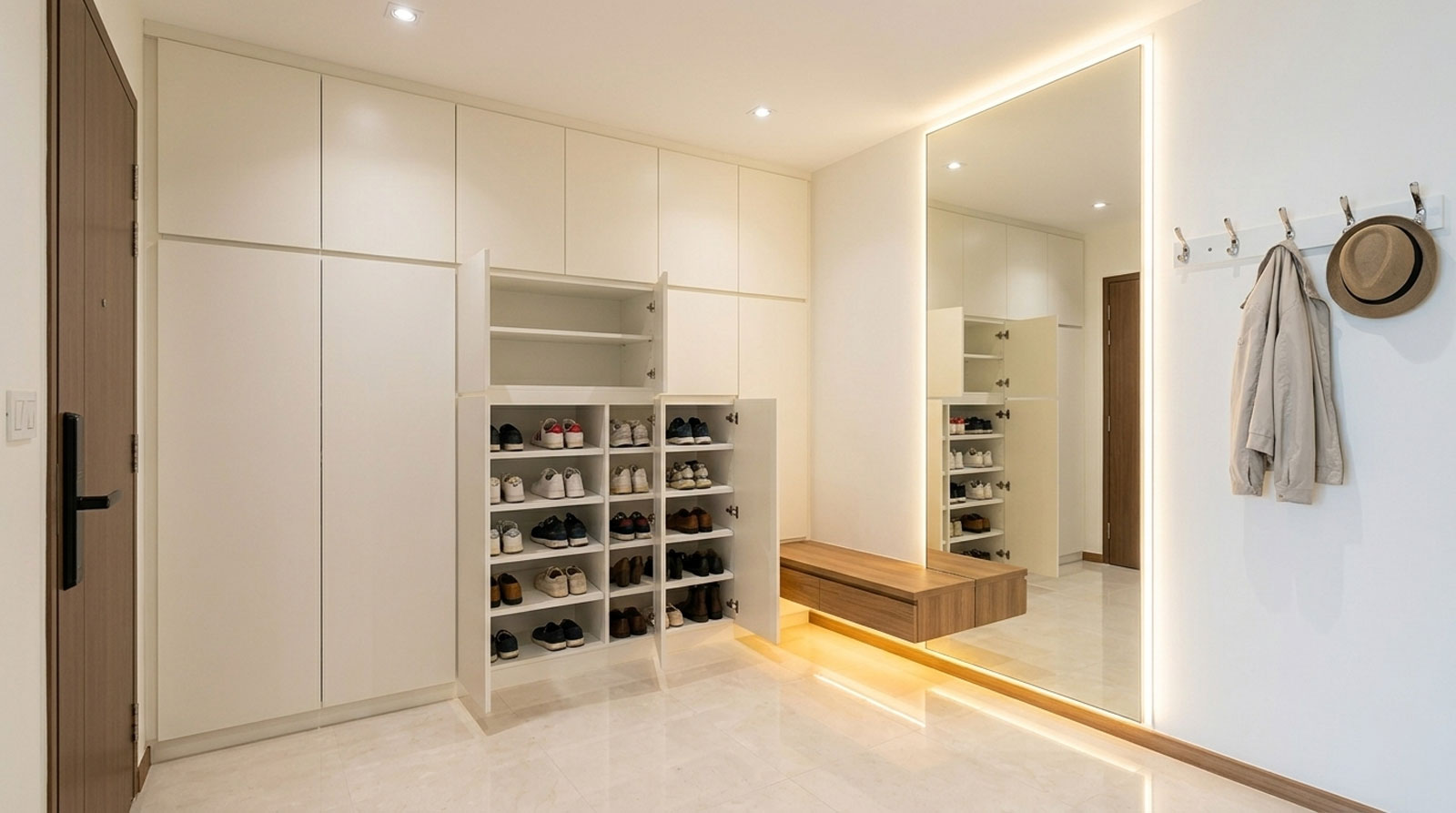
The entryway — the xuanguan, or “dark pass,” in Chinese homes — is the first place you stop after stepping inside. It has four jobs: changing shoes, putting down a bag, hanging a coat, and dropping your keys. A well-functioning entryway needs only three pieces of furniture: a shoe-changing bench about 45 centimeters high, a shoe cabinet big enough for the family’s everyday shoes, and a row of hooks or a coat rack.
Do not underestimate the bench. Sitting down to change shoes is far safer for older adults and children, and it is a genuine help for anyone pregnant or carrying heavy bags. It is a small piece of furniture that prevents real falls.
Lighting deserves its own mention. Many entryways have a single ceiling light, and when you walk in with your back to it, the shoe area ends up in shadow. Add a motion-sensor light or a wall lamp so the space lights up the moment you enter — no more fumbling in the dark on late nights home. For flooring, choose durable, easy-to-clean tile or stone: mud and rainwater from outside wipe off in seconds, while carpet in an entryway traps dust and moisture and can grow mold.
Dimensions matter too. Aim for a clear passage at least 90 centimeters wide, so two people can pass each other and you can carry a box through without turning sideways. If your entryway is only 60 centimeters wide, choose an ultra-slim shoe cabinet no more than 30 centimeters deep — otherwise the door itself may not open fully.
Door Size and Swing: Details You Use Dozens of Times a Day
A standard front door is generally 90 to 100 centimeters wide. Narrower than that and moving furniture becomes a struggle; wider and the door grows heavy to open and close. A height of around 2.1 meters is common — anything below 2 meters means taller adults will duck every time they enter.
Hinges and locks are the hardware you touch every single day, so judge them by more than appearance. Check the load rating of the hinges, the security grade of the lock cylinder, and whether the weather stripping seals tightly. These are what determine whether the door still swings smoothly ten years from now.
Swing direction shapes the whole entryway layout. A door that opens inward eats roughly one square meter of entryway space; a door that opens outward takes space from the corridor, and apartment residents should check with building management before choosing that option. Before any renovation, draw the door’s swing arc on the floor in chalk and check whether it hits the shoe cabinet or a corner. Five minutes of chalk can save an expensive rework.
Finally, the threshold: a step of 1 to 2 centimeters above the floor is enough. Higher than that, and it becomes a tripping hazard, especially for older adults and small children.
Five-Minute Checklist: Grade Your Own Front Door
Run through this list at home. The more items you can check off, the better your entrance is already working for you:
- With the lights off during the day, you can still see the floor and the shoe cabinet clearly in the entryway
- When you open the door, wind does not blow straight into the living room, and there is no constant draft through the doorway
- The area in front of the door is free of clutter, so you never have to sidestep or squeeze past anything to get in
- Changing shoes, putting down a bag, hanging a coat, and dropping keys each have a fixed spot
- The door opens and closes smoothly without scraping the floor, and the lock turns without sticking
- On rainy days, mud and water have somewhere to be dealt with at the door instead of being tracked into the living room
If one or two items fall short, there is no need for a major renovation. Adding a motion-sensor light, swapping in a slim shoe cabinet, or simply clearing the clutter in front of the door are all changes you can make today. The original spirit of feng shui was never to create anxiety — it was to make homes feel comfortable and easy to live in.
Conclusion: Treat the Front Door as the First Step of Homemaking
Direction, mingtang, entryway, door size, and swing — unpacked, these are all plain living wisdom: let light in, slow the wind down, leave space in front of the door, and make coming and going effortless. If your renovation budget is limited, spend it first on daylight, storage, and door hardware. Those three deliver the most noticeable improvement per dollar. After you move in, check the locks, hinges, and weather stripping every six months; small problems caught early keep a front door working well for years.
Three things you can do tonight when you get home: clear everything within one meter of your front door, stand in the doorway once and notice the light and the wind, and add a motion-sensor light to the entryway. None of them costs much, and all three make the moment you walk through your own door noticeably more pleasant. A home is for living in. When the entrance works, daily life works a little better too.
Quick Answers
What is the single most important thing about a front door? Clear space. Keep the area in front of the door and the entryway itself free of clutter, and most other problems — poor light, awkward movement, bad first impressions — improve on their own.
Does the compass direction of my door really matter? What matters most is what that direction delivers in your climate: sunlight and wind. Test both at your door at 9 a.m. and 3 p.m. before worrying about directional rules.
What is mingtang? Mingtang (“bright hall”) is the traditional term for the open, uncluttered area in front of a main entrance — the space that lets light, air, and people move freely into the home.
What is a xuanguan? The xuanguan is the entryway or foyer just inside the front door, the transitional space where you change shoes, hang coats, and shift from outside to inside.
How wide should an entryway passage be? At least 90 centimeters of clear width, so two people can pass and you can carry a box through. In a narrow entryway, keep the shoe cabinet under 30 centimeters deep.
Can I improve my entrance without renovating? Yes. Clear the clutter, add a motion-sensor light, and choose a shoe cabinet that fits the space. These three small changes cover most of what a good entrance needs.
Disclaimer: This article presents traditional Chinese residential culture for educational purposes. It makes no claims about fortune or luck. Any structural changes, or changes affecting fire escape routes, must comply with building management rules and local regulations; consult a qualified professional for safety-related questions.