It is mid-November, and the office has split into two camps. One group is still in shirtsleeves. The other is wrapped in blankets at their desks, hands curled around a mug that never seems to stay warm, dreading the moment they have to type with bare fingers again. At night, they climb into bed and wait — sometimes for more than an hour — for their feet to stop feeling like ice. If that sounds familiar, this guide is for you.
Cold hands and feet in autumn and winter are extremely common, and in traditional Chinese wellness thinking they are usually read as a sign that warmth and nourishment are not reaching the extremities. The classic explanation involves qi and blood — qi being the body’s motive energy and blood the material that carries warmth and nourishment. When qi and blood are low, or when circulation is sluggish, the hands and feet, being farthest from the body’s core, feel it first. You do not need to accept that whole framework to use the practical advice below, but it helps explain why these remedies focus on warming food, digestion, movement, and sleep rather than on heating the hands alone.
First, Figure Out Which Kind of Cold You Have
Cold hands and feet are not one single condition, and the right response depends on the pattern. Before you try anything, see which of these three descriptions fits you best. The five remedies that follow are designed for the first two groups. The third group needs a doctor, not a recipe.
- Chilled by the weather and by sitting still: Your hands and feet are normally warm, but they go cold on cold days or after hours at a desk. Moving around or stepping into a warm room fixes it quickly. Here the main issues are insulation and circulation, so clothing, movement, and foot soaks matter most.
- Cold most of the time, plus tiredness: Your hands and feet feel cool in every season, not just winter. You often feel drained, look a little pale, and sometimes feel dizzy when you stand up quickly after crouching. Women often notice it more around menstruation. This pattern is commonly linked in Chinese wellness tradition to low qi and blood and a weak digestive system — in this framework, the spleen is not just the anatomical organ but the whole digestive function that transforms food into energy and blood. Food therapy is the main tool here.
- Cold on one side only, or cold with pain: Only one hand or foot is cold, or the cold comes with pain, numbness, tingling, or skin that turns white, blue, or purple. Wounds on the feet heal slowly or not at all. Do not try to fix this at home. See a doctor and ask about blood vessel and nerve problems first.
One principle runs through everything below: judge results over weeks, not overnight. A bowl of soup will not transform your circulation by bedtime. What changes things is a steady routine — warm food in the morning, a walk every day, a foot soak before bed — repeated long enough for your body to respond.
Five Remedies: Three Warming Recipes and Two Daily Habits
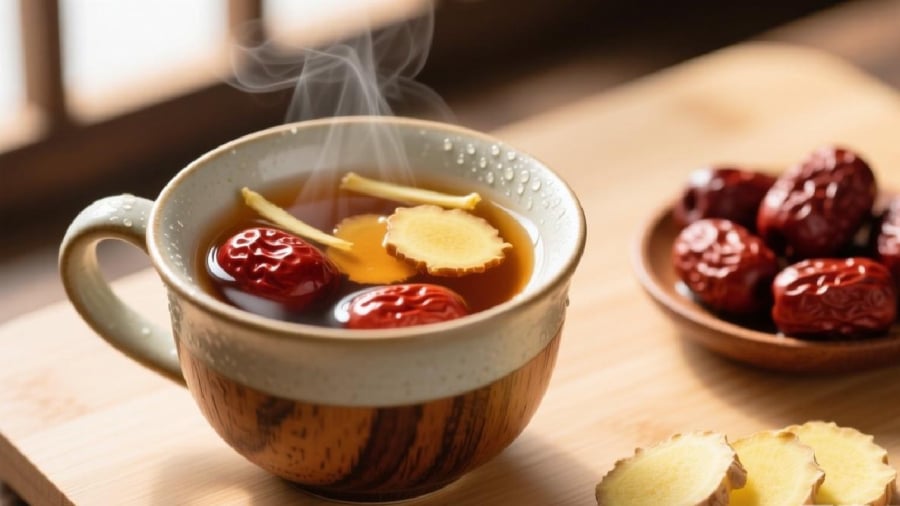
Recipe 1: Red Date and Ginger Tea for Cold Mornings
If you wake up with cold hands and a cold-feeling stomach, and cold drinks make you uncomfortable, start here. This tea takes about ten minutes and is gentle enough for most people to drink on weekday mornings. Red dates, known as jujubes, are a staple of Chinese home cooking: sweet, mild, and traditionally used to nourish blood. Ginger warms from the inside and is the classic remedy for a chilled stomach.
- Ingredients: 5 red dates (pitted and torn open), 3 slices of fresh ginger (about 10 grams), 1 small teaspoon of brown sugar (about 5 grams, optional), and 500 ml of water.
- Method: Put the dates and ginger in the water, bring to a boil, then simmer on low heat for 10 minutes. Stir in the brown sugar just before serving if you want it. Drink it hot, in small sips, ideally between 9 and 10 in the morning when your digestion is getting going.
- Best for: People who feel cold in the morning, get a chilled stomach easily, or notice their hands and feet get especially cold in the week before menstruation.
- Skip or pause when: You have mouth ulcers, a sore throat, or signs of overheating. People with diabetes should leave out the sugar. If your palms and soles tend to feel hot, or you often wake up sweating at night, this daily warming tea is probably not right for you.
Recipe 2: Dang Gui, Ginger, and Lamb Soup, Once a Week
When cold hands come with constant tiredness, a pale complexion, and a real dread of wind and cold, a once-a-week warming soup is worth the effort. Dang gui, also called Chinese angelica root, is one of the most widely used herbs in Chinese food therapy, traditionally taken to nourish blood and improve circulation. Combined with ginger and lamb — both considered warming foods — it makes a substantial, deeply warming meal. The key word is once a week. This is a strong dish, not an everyday one.
- Ingredients (serves 2): 300 grams of lamb (cut into chunks), 10 grams of dang gui, 30 grams of sliced ginger, 10 grams of goji berries, a pinch of salt, and 1.5 litres of water. Halve everything for one person.
- Method: Blanch the lamb in cold water, bring to a boil, skim off the foam, then rinse. Put the lamb, dang gui, and ginger in a pot with the water, bring to a boil, then simmer on low heat for 1 hour. Add the goji berries 10 minutes before the end and season with salt. Eat the meat as well as the soup — the benefit is not in the broth alone.
- Best for: People who feel cold and depleted, tire easily, or are recovering from illness or childbirth and notice cold hands and feet. Also suited to people whose constitution runs cold and who are cold all winter long.
- Skip or pause when: You have a cold, a fever, or diarrhea. People with high blood pressure or high cholesterol should go easy on rich soup and fatty cuts. If you often feel dry-mouthed, constipated, or internally heated, this soup is not for you. If you are pregnant, ask your doctor first.
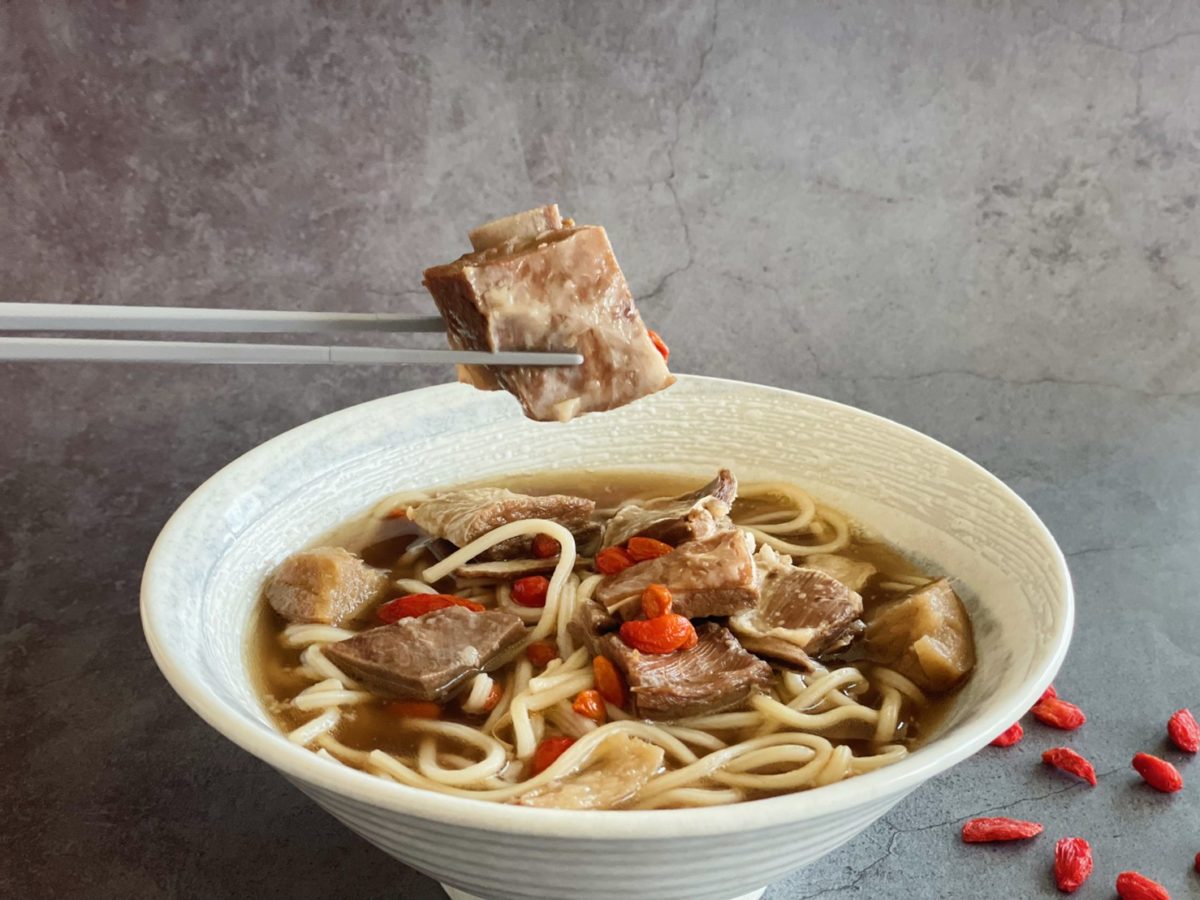
A weekend batch works well: cook it on Saturday or Sunday, eat one portion hot, and keep the second for the next day. Do not be tempted to eat it daily to speed things up. Overdoing warming foods is a classic mistake — it often ends in a sore throat, restlessness, or bloating, which is your body telling you the balance has tipped too far.
Recipe 3: Millet Porridge with Yam and Red Dates for a Weak Stomach
For many people, the root of cold hands is not a lack of warm food but a digestive system that cannot turn food into energy properly. They eat plenty yet still feel drained, their stools tend to be loose, and cold food easily upsets their stomach. In the Chinese framework, this is a weak spleen pattern: the digestive function is too feeble to generate enough qi and blood. Heavy tonics will only sit undigested. A gentle porridge is the safer daily choice, because it is easy to absorb and it steadily supports digestion.
- Ingredients: 50 grams of millet, 100 grams of yam (peeled and diced), 4 pitted red dates, and 800 ml of water.
- Method: Rinse the millet, add it to the pot with the yam and dates, bring to a boil, then simmer on low heat for about 35 minutes, until the porridge turns thick and a glossy layer of rice oil forms on top. One bowl for breakfast, plus a boiled egg, makes a complete and satisfying meal.
- Best for: People with a modest appetite, loose stools, a stomach easily upset by cold food, and cold hands paired with fatigue. Older adults and children can eat it too, in smaller portions.
- Watch out for: If you have diabetes, keep the portion moderate, do not overcook it into a very thin gruel, and pair it with vegetables and protein. If you are allergic to yam, swap in 100 grams of pumpkin.
You do not need all three recipes on the same day. A sensible rotation is tea or porridge on weekday mornings and the lamb soup once at the weekend. Rotating keeps the diet varied and avoids the overheating and bloating that come from piling on warming foods all at once.
Daily Habit 1: A 20-Minute Foot Soak Before Bed, Done Right
A foot soak is the cheapest way to warm up, but it is easy to do wrong. Water that is too hot and soaks that run too long often leave people more tired rather than more relaxed. The standard below is deliberately modest, and modest is enough: the goal is warm feet and a slightly sweaty forehead, not a sauna.
- Temperature: Around 40 degrees Celsius — hot to the touch but bearable for the whole soak. Do not push past 45 degrees. The risk of scalding outweighs any extra benefit.
- Time: 15 to 20 minutes. Stop when your forehead is lightly sweating and the soles of your feet feel warm and flushed. Dry your feet immediately afterwards and put on socks. Walking barefoot on a cold floor undoes the whole point.
- Optional additions: 3 slices of ginger, or a small handful of mugwort leaves (about 10 grams), simmered in water and added to the basin, will make the warming effect more noticeable. Three or four times a week is plenty; you do not need the additives every night.
- Do not soak without medical advice if: You have diabetic foot problems, severe varicose veins, or open wounds on your feet. People with heart or cerebrovascular conditions should keep the water cooler and the soak under 15 minutes.
The best time is in the evening, about an hour before bed. Many people find they fall asleep faster afterwards, as the body cools down from its warmed state.
Daily Habit 2: 30 Minutes of Brisk Walking, Because Warmth Follows Movement
People with cold hands share one habit: sitting for too long. After a full day at a desk, blood pools in the torso and the limbs get short-changed. No blanket fixes that as durably as movement does, because movement is what pumps blood outward. Thirty minutes a day is the target, and it does not have to happen in one block.
- Brisk walking: 30 minutes a day, at a pace where you can talk but not sing. Fifteen minutes at lunch and fifteen after dinner counts just as well as a single half-hour walk.
- Calf raises at your desk: Sit with both feet flat, lift your heels and lower them again, 30 times per set, 3 sets a day. The calf muscle acts as a second pump for blood returning from the lower legs, and this small exercise is surprisingly effective for desk workers.
- Cover three spots: Your neck, your waist and abdomen, and your ankles. Autumn and winter outfits with low-cut shoes and short socks leave the ankles exposed, and no amount of warming food compensates for that leak. Switch to long socks or ankle supports, and many people feel a difference within a week.
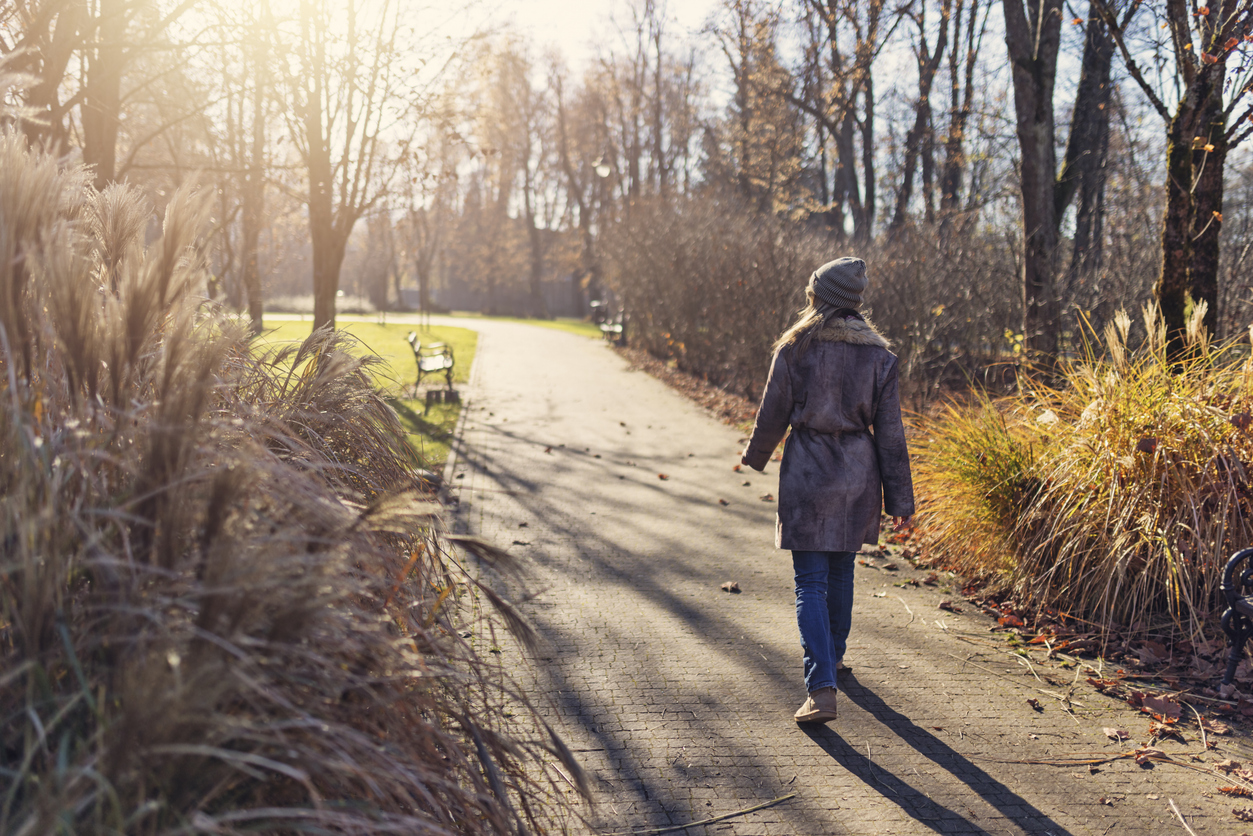
If walking outdoors feels unappealing in cold weather, start indoors: walk at lunch, take the stairs, or march in place while dinner cooks.
Warning Signs: When to Stop Self-Care and See a Doctor
Home remedies are for ordinary cold sensitivity without an underlying disease. If any of the following appears, do not try to wait it out with soup and foot soaks. See a doctor — internal medicine or vascular surgery is the usual starting point — and describe the pattern clearly.
- Pain, numbness, or tingling together with the cold, or skin turning white, blue, or purple.
- Only one side is cold while the other side feels normal, with an obvious difference.
- A small wound on the foot that has not healed after two weeks, or toes that keep getting darker.
- Cold hands and feet plus palpitations, chest tightness, or noticeable weight loss in a short period.
These signs can point to circulation or nerve problems that food therapy cannot address, and catching them early matters far more than finishing a week of porridge. When in doubt, a check-up is the correct move, not a stronger remedy.
A One-Week Action Plan: Start Tomorrow Morning
Boiled down to a single week, this whole guide is just four actions. Drink red date and ginger tea or eat yam and millet porridge in the morning. Cook the lamb soup once at the weekend. Soak your feet for 20 minutes before bed. Walk briskly for 30 minutes a day. Keep it up for three weeks, and track three simple markers: are your hands still cold when you wake up, do your feet warm up faster when you get into bed, and has the cold around menstruation eased? Those three observations tell you more than any vague feeling of improvement.
Cold hands and feet have no quick fix. In the traditional view, qi and blood are built by eating, moving, and sleeping well over time — not by a single dramatic remedy. Start with one bowl of hot porridge and one cup of hot tea, get the basics of warmth and movement right, and most people find winter becomes noticeably easier to live through.
Quick Answers
How long before I feel a difference? Clothing and walking changes can help within a week. Food-based changes usually take three weeks of steady routine before you can judge them fairly. If nothing has changed after a month, reconsider the pattern — or get checked.
Can I do all three recipes every day? No. Rotate them. Daily warming tonics often cause overheating, bloating, or a sore throat. The lamb soup in particular is a once-a-week dish.
Is a foot soak safe for everyone? No. Skip it or ask a doctor first if you have diabetic foot problems, severe varicose veins, open foot wounds, or a heart or cerebrovascular condition.
What if only one hand or foot is cold? See a doctor promptly. One-sided coldness is a warning sign, not a pattern to treat with home remedies.
Do I need expensive supplements? No. The remedies here use ordinary groceries — dates, ginger, millet, yam, lamb — and habits that cost nothing. That is the point: warmth comes from routine, not from purchases.
Disclaimer: This article provides general wellness information only and is not medical advice. It does not diagnose, treat, or promise to cure any condition. If you experience pain, numbness, tingling, discoloration, wounds that do not heal, or coldness affecting only one side, seek medical care promptly and follow your clinician’s guidance.