Picture this: two people have both been practicing Xingyiquan for three months. One throws a punch and the whole room hears the snap of it. The other has been training for twice as long, yet every punch still looks like an arm swinging on its own, with the waist never joining in. The difference is rarely raw strength. It is whether they have found the “jin” — the coordinated power — inside the Five Elements Fists.
Xingyiquan (literally “form-and-intent boxing”) is one of China’s three great internal martial arts, alongside Tai Chi and Bagua. Its reputation rests on directness: no wide flourishes, no wasted motion, just a short step and a punch that arrives with the whole body behind it. The Five Elements Fists are the foundation of that directness, and this guide breaks them down one by one, so you can start practicing them correctly from day one.
First, Get One Thing Straight: Five Fists, Not Five Routines
Pi (Splitting), Beng (Crushing), Zuan (Drilling), Pao (Pounding), and Heng (Crossing) sound like five separate techniques. In fact, they are five ways of generating force. An old Xingyiquan saying puts it this way: the power starts at the feet, travels through the waist and hips, and arrives at the hands. Change the direction and path of that force, and the same arm produces a different fist.
Think of it in everyday images. Pi is like an axe chopping downward. Beng is like an arrow leaving the bowstring, straight and sudden. Zuan is like an awl twisting upward into wood. Pao is like a cannonball bursting out at an angle. Heng is like a millstone grinding sideways. Different directions demand different body coordination, and that is exactly where beginners go wrong: they memorize the hand shapes but forget the body mechanics, so all five fists end up looking identical.
One more point surprises most newcomers. When practiced alone, each of the five fists is small. One step, one punch, a step of less than half a meter, the fist stopping at chest height. Small movements are the point: they keep the chain of force complete and unbroken. Chasing big, fast, loud punches is a reliable sign you have drifted off track.
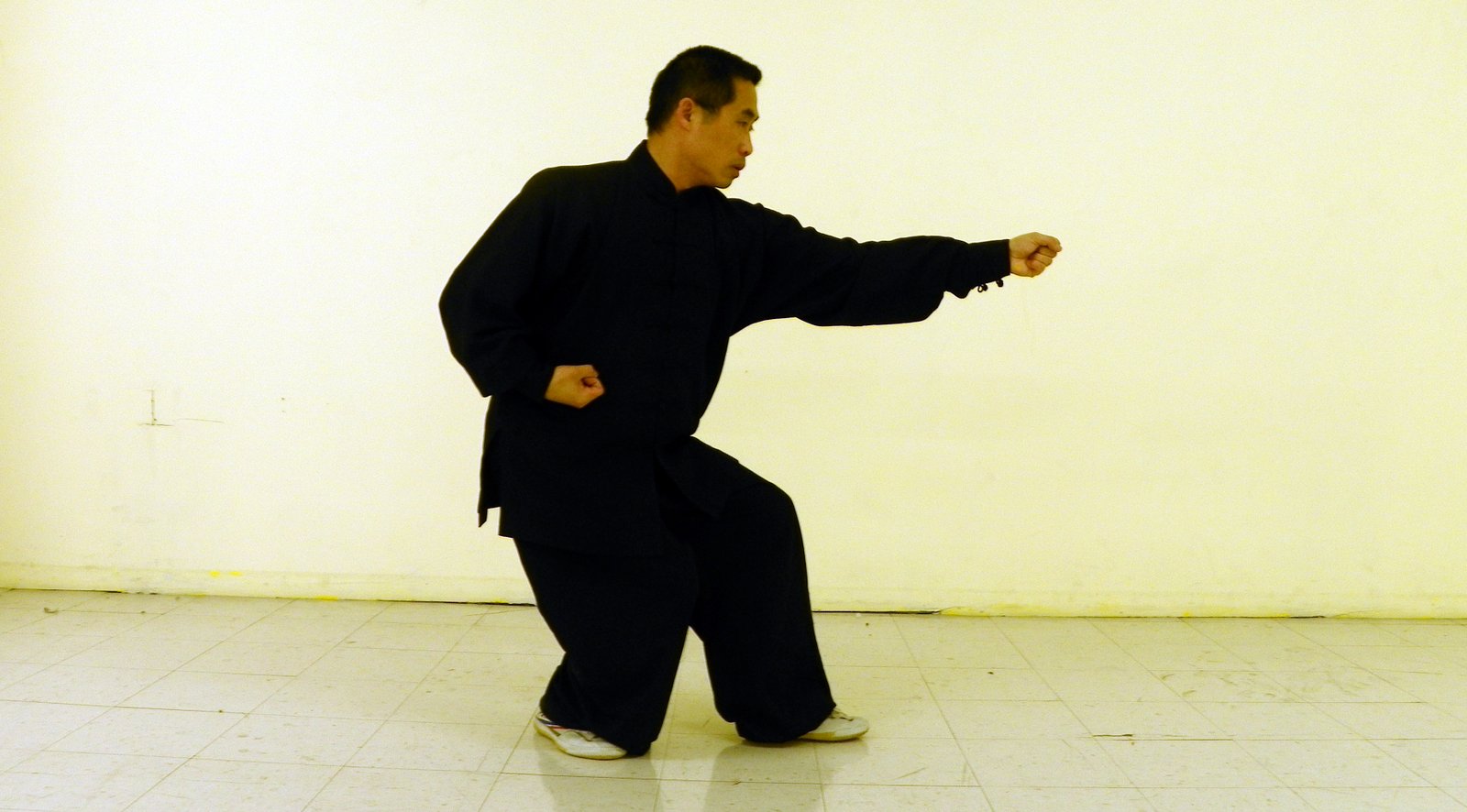
The Five Fists, One by One: What Each Kind of Power Feels Like
Pi Quan (Splitting Fist): Downward, Like an Axe Splitting Wood
Pi starts near the forehead and drives down along the body’s centerline, finishing around chest or belly height, while the front foot advances half a step. The feeling of power does not come from pressing the arm down. It comes from the whole body sinking as one unit: the back foot pushes off the ground, the hips drop, and the force runs down the arm with that sinking motion.
Try this check. Stand about ten centimeters from a sturdy tree trunk — do not actually hit it — and stop your hand just short of the bark. At the moment your hand stops, does your front foot land at exactly the same instant? If the hand arrives first and the foot lands late, the chain of force is broken. In traditional theory, Pi belongs to Metal in the Five Elements system (an ancient Chinese framework that groups natural phenomena into five interacting phases: Metal, Wood, Water, Fire, and Earth) and is linked with the lungs, with an emphasis on smooth, unforced breathing. Never hold your breath and force the chop down.
Beng Quan (Crushing Fist): Straight Forward, Like an Arrow Leaving the Bow
Beng is the most famous fist in Xingyiquan, and the old saying goes “Beng Quan is like an arrow.” Its path is the straightest of the five: the fist shoots forward in a line from the waist while the other hand pulls back to the waist, the front foot steps forward and the back foot follows. The body feels like it is being pulled forward along a single thread.
The classic mistake is swinging the arm in an arc. Ask a training partner to watch you from the side: the fist should travel in a straight line, not a curve. Practice Beng alone 50 times a day for two weeks, and many people discover something telling — their waist gets tired before their arms do. That is correct. The power comes from the waist and hips; the arm is only the end of the chain. Traditionally, Beng belongs to Wood and is linked with the liver, with an emphasis on relaxed, expansive movement. If your shoulders creep up toward your ears, the power gets trapped in the upper body.
Zuan Quan (Drilling Fist): Twisting Upward, Like an Awl Boring a Hole
Zuan travels diagonally upward from the waist, and the fist rotates as it goes, finishing with the knuckles facing up. Its power is not straight but twisting, like wringing out a wet towel: rotation and forward motion combined.
Beginners often turn Zuan into a diagonal uppercut, and the difference is the waist. In a real Zuan, the waist and hips rotate half a turn first, and the fist is carried out by that rotation. Slow it down to one-third speed: rotate the waist ten times without punching at all, then add the fist, and the twisting power suddenly becomes obvious. Traditionally, Zuan belongs to Water and is linked with the kidneys, with an emphasis on a stable, sunken posture. Keep your knees from pushing too far past your toes, and do not sink so low that you can no longer turn.
Pao Quan (Pounding Fist): Bursting Out at an Angle, the Most Demanding of Whole-Body Coordination
Pao travels diagonally: one fist bursts out from the waist at an upward angle while the other guards the chest, the two arms opening and closing like a drawn bow. Its signature quality is the “explosion” — the instant the front foot lands, the power of the whole body arrives at the fist surface at the same moment. The key word is “whole.”
Pao is also the easiest fist to practice badly. The typical failure is falling apart: the foot lands but the hand is late, or the hand arrives but the hips never joined in. The fix is to slow down to one punch per second, pausing half a second after each one, and checking that foot, hips, shoulder, and fist all arrive together. Traditionally, Pao belongs to Fire and is linked with the heart, with an emphasis on concentrated bursts. Never hammer out a dozen hard punches in a row without stopping — once the coordination scatters, all that is left is arms flailing.
Heng Quan (Crossing Fist): Grinding Sideways, the Most Like “Wrapping”
Heng moves sideways: the fist sweeps from one side to the other with the fist surface facing outward, while the body turns like a millstone. Its power is neither straight nor diagonal but a sideways wrapping force, often used to deflect an opponent’s straight attack and to reposition your own body.
Heng is the hardest of the five to feel, precisely because it does not “strike out” like the other four. Start with empty hands: hold your arms as if hugging a large water jar and turn left and right 20 times each way, feeling the waist and hips carry the arms sideways. Traditionally, Heng belongs to Earth and is linked with the spleen, with an emphasis on centered stability. If your upper body rocks from side to side, the waist is not wrapping the power properly.
How to Read the Organ Associations: Training Cues, Not Medical Claims
Pi with Metal and the lungs, Beng with Wood and the liver, Zuan with Water and the kidneys, Pao with Fire and the heart, Heng with Earth and the spleen — this correspondence comes from traditional martial arts theory. Its real meaning is simpler than it sounds: each fist’s character echoes how ancient practitioners understood the body’s organs. The sinking quality of Pi matches the traditional idea of the lungs governing breath; the expansive drive of Beng matches the traditional idea of the liver governing smooth flow.
As a memory aid and a way to feel each fist’s character, this framework works well. But it must not be read backward. Practicing Pi does not treat lung problems, and practicing Beng does not nourish the liver. The traditional view describes a feeling of whole-body coordination, not a medical effect. If one fist feels especially awkward, it usually means that line of body mechanics is not yet smooth — not that something is wrong with a particular organ.
There is only one genuinely useful correspondence here: practiced together, the five fists cover every direction of force — forward, back, up, down, and sideways. Someone who only practices Beng tends to become all forward rush; someone who only practices Pi tends to become all sinking weight. Rotating through all five keeps the body from developing lopsided habits.
The Five Mistakes Beginners Make Most Often
- Practicing hands without footwork. In Xingyiquan, the step and the punch arrive together. A punch whose foot never followed is a punch that never really happened. Check the footwork first, then worry about the fist.
- Chasing quantity over quality. Doing each of the five fists 200 times a day beats nothing, but 50 careful reps of one fist — stopping to check your posture after each one — teaches far more. Repetitions with scattered power are wasted repetitions.
- Holding your breath to generate force. The moment you brace and hold your breath, you will finish dizzy with a stiff neck and shoulders. Breathe naturally and exhale gently as the fist goes out; do not force a grunt on every punch.
- Shrugging the shoulders and lifting the elbows. Raised shoulders cut the chain of force at the shoulder joint. Before you start, spend 30 seconds dropping the shoulders and sinking the elbows, and only then begin.
- Skipping stance training and jumping straight into punching. The Santi stance (the foundational standing posture of Xingyiquan, with one foot forward, one foot back, and the hands held in a guarding triangle) is the base the five fists stand on. Stand in Santi for 5 minutes before each session, and the feeling of rooted feet becomes obvious.
A One-Week Beginner Plan: 20 Minutes a Day Is Enough
Days 1-2: Santi stance only, 10 minutes a day in two sessions. After standing, do 30 slow Pi punches in the air, aiming only for hand and foot arriving together. Speed does not matter yet.
Days 3-4: Add Beng and Zuan, 50 reps each, with 30 Pi punches between sets. Finish with a 5-minute slow walk to cool down rather than sitting down immediately.
Days 5-6: Do all five fists, 30 reps each, in sequence. Rest one minute after each full round, and complete two rounds. Slow down especially for Heng and Pao, and check that the whole body arrives as one unit.
Day 7: Rest, or stand in Santi for 10 minutes only. Muscles and nerves both need a recovery day; people who hammer through a full week of hard practice usually find their form falling apart in week two.
After four weeks of this routine, most people notice one clear change: when they punch, the feet and waist move first, not the arm. That change is the real sign you have entered the gate of the Five Elements Fists.
Summary: Three Lines to Remember
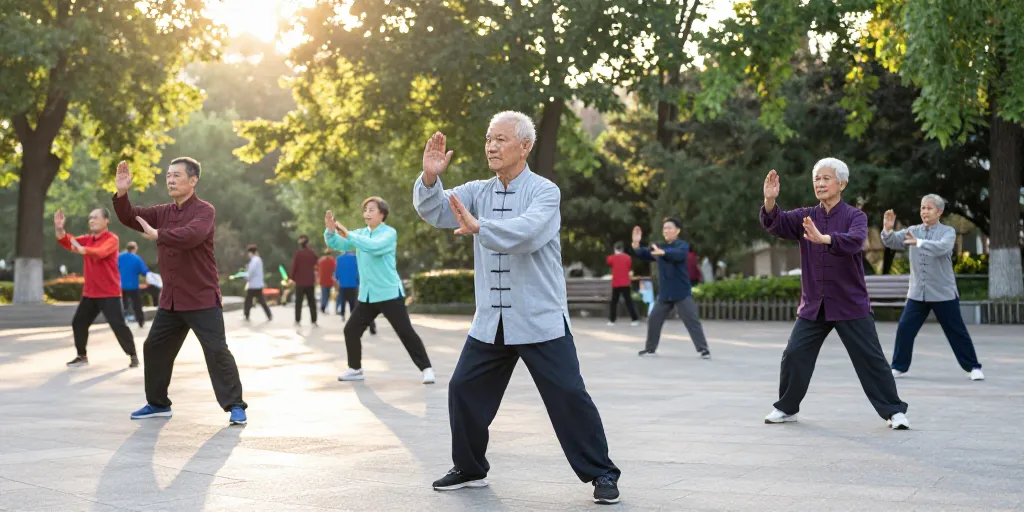
Power starts at the feet, passes through the waist, and reaches the hands. The five fists are five directions of force, not five decorative forms. And the organ associations are training cues, not medical treatments. Keep those three lines in mind, and you have a standard for checking your own practice every time you train.
Here is a concrete way to start. Today, stand in Santi for 5 minutes, then throw 30 Pi punches and feel the hand and foot landing together. Tomorrow, add Beng; the day after, add Zuan. Within a week you will have tried all five. Do not rush to find a sparring partner or to learn a longer routine — once each single fist is smooth, routines become smooth on their own.
After a month of practice, if there is a Xingyiquan teacher or school nearby, ask them to watch your form once. An experienced eye can spot in a glance exactly where your chain of force breaks, and that one correction is worth three months of guessing on your own.
Quick Answers
Do I need to learn all five fists at once? No. Start with Pi, add one fist every day or two, and complete the set within a week. Depth on one fist beats a shallow pass over all five.
How long should I practice each day? Twenty minutes is plenty for a beginner, including stance training. Consistency over four weeks matters far more than a single long session.
What if one fist feels much harder than the others? That is normal, and it is useful information: it tells you which line of body mechanics needs more work. Slow that fist down, check your waist rotation and footwork, and do not force it with arm strength.
Can I practice without a teacher? You can start alone with this guide, but have an experienced practitioner check your form after about a month. Small errors in the chain of force are hard to spot by yourself and easy for a teacher to see.
Do the Five Elements associations have medical benefits? No. They are traditional training cues that help you remember each fist’s character. They are not treatments for any condition.
Safety Note
Practice gradually and within your limits. Stop immediately and rest if you feel joint pain, dizziness, or heart palpitations. If you have old injuries or chronic conditions such as high blood pressure or heart disease, consult a doctor or a qualified professional coach before starting systematic practice, and do not increase intensity on your own. This article introduces traditional martial arts culture and beginner practice methods; it does not promise any fitness or therapeutic effect.