At a school reunion last spring, the group photo took three attempts. One classmate kept edging to the front row to show off his prominent nose; another turned her face slightly sideways, as if to hide hers. An elderly uncle chuckled: “A well-shaped nose means a comfortable wallet.” It sounded like a joke — but behind it sits a thousand-year-old system called physiognomy (mianxiang, literally “face reading”), in which the nose is crowned the “Palace of Wealth.” What is it really about? Let’s read it the way cultural history deserves: with curiosity, and with skepticism in hand.
Why the Nose Gets to Be the “Palace of Wealth”
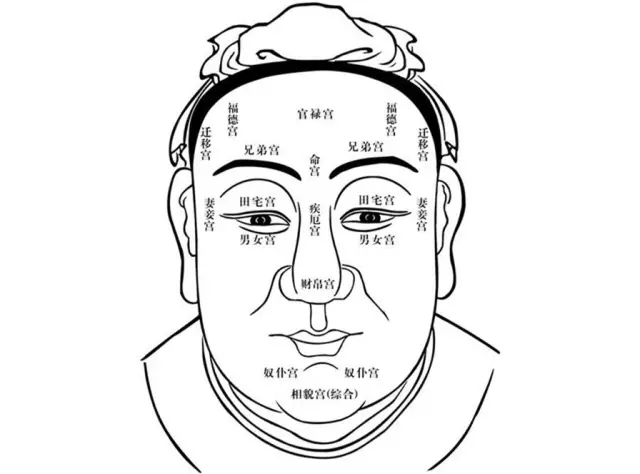
The “Twelve Palaces” are a traditional method of dividing the human face into twelve functional zones for observation, traceable to the Mayi Xiangfa (literally “Mayi’s Art of Physiognomy”), a classic compiled around the Northern Song dynasty (roughly 1000 years ago). Each palace has a name and a post: the Palace of Life sits between the eyebrows, the Palace of Wealth on the nose, the Palace of Siblings in the eyebrows, the Palace of Property under the eyes — every zone filed under one aspect of a person’s life, like folders in an archive.
Why does the nose get the money folder? The old texts give three reasons. First, position: the nose sits dead center of the face, the “Middle Peak” among the five sacred mountains of facial geography. Whoever sits in the center commands the whole — and money, coming and going, passes through the center symbolically. Second, shape: the bridge of the nose works like a bridge over a river, the nostrils like the gates of a warehouse. The old books say “the nose is the Earth Star, belonging to the earth element,” and earth, in traditional cosmology, stands for bearing weight, keeping promises, and storing grain — a natural fit for a treasure house. Third, complexion: the tip of the nose is called the zhuntou (“the precise point”), and a Ming-dynasty manual, the Liu Zhuang Xiangfa, devoted whole chapters to reading its glow — a bright, yellowish shine on the tip meant money coming in; a dull, grayish cast meant money leaking out. Underneath the poetry, they were really observing someone’s vitality and spirit.
One crucial correction: the old “wealth” (caibo) is not just cash. It covered farmland, salary, and whether your table was full or thin — the overall state of a person’s material life. Reading the nose as “a barometer of how comfortably you live” is far closer to the original meaning than “a secret code for getting rich.”
The Nose-Type Dictionary of the Mayi Xiangfa
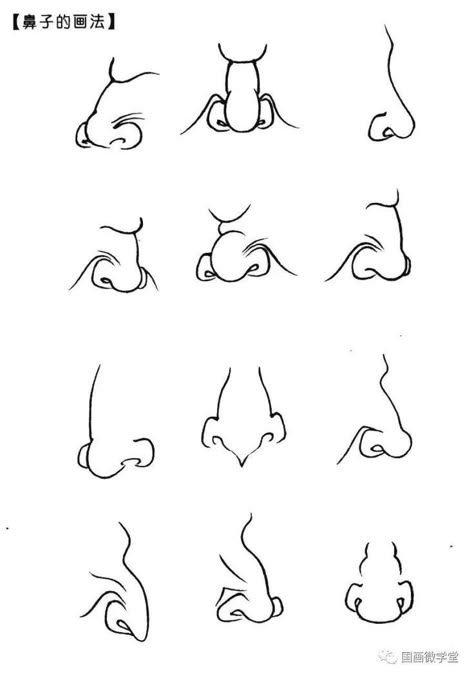
Traditional face readers catalogued dozens of nose shapes. The five most famous — each with its own rhyme and moral of the story — are these:
- The hanging-gallbladder nose (xuan dan bi): a round, full tip with fleshy nostrils, said to look like a gallbladder hung up to cure. The rhyme goes, “a nose like a hanging gallbladder, and the bearer shall know honor.” It stands for a well-stocked life and a generous character — one of the most praised shapes in the whole canon.
- The cut-bamboo nose (jie tong bi): a straight bridge and a neatly squared tip, like a bamboo tube sliced clean. It is linked to an upright personality — someone who starts things and finishes them, the kind of person the old books believed could hold a family fortune together.
- The lion nose (shizi bi): a big tip with wide-flaring nostrils, resembling a lion’s muzzle. The manuals say “a lion nose marks its owner for martial distinction,” pairing it with the image of generals and trailblazers rather than scholars.
- The eagle-beak nose (ying zui bi): a high bridge with a downward-hooking tip, like an eagle’s beak. The old verdict is rather unkind — scheming, grasping, “pecking at others.” Read between the lines and you’ll see ancient society projecting its anxieties about shrewd merchants onto a piece of cartilage.
- The lone-peak nose (gu feng bi): a tall bridge with thin, unsupported nostrils — one peak standing alone. The rhyme warns, “a lone peak standing apart: money comes, and money goes.” It describes someone who struggles to keep money, a comment on saving ability rather than earning power.
Strip away the mystique and these categories are really ancient personality typology: labeling character by facial features, then predicting behavior from the label. To modern eyes, they read more like folk-psychology shorthand than science — fascinating, but not evidence.
Your Nose and Your “Streaming Years”: The Decade from 41 to 50
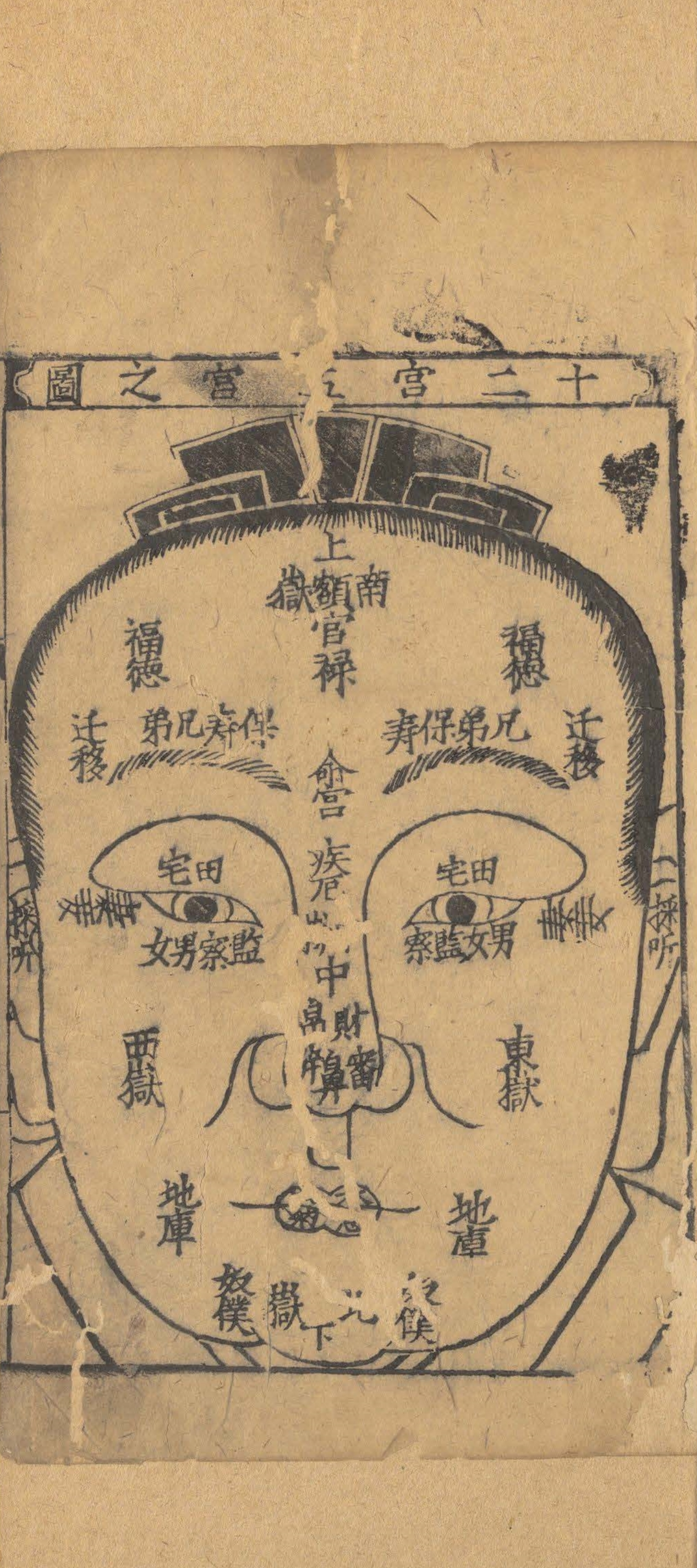
Physiognomy doesn’t only look at static features; it also reads liunian — literally “streaming years,” the idea that different parts of the face govern different ages of your life. In the streaming-years verses of the Mayi Xiangfa, the nose rules the decade from age 41 to 50: the root of the nose (between the eyes) covers 41, the bridge covers 42 to 44, the zhuntou — the tip — covers 48, and the left and right nostrils cover 49 and 50.
Why this particular decade? In the world the old texts were written for, your forties were the peak of “establishing yourself”: parents aging above you, children growing below, your career entering its harvest years while household expenses peaked. Assigning the nose to these ten years was a way of drawing a map of midlife financial pressure right onto the face. Once you see that, physiognomy starts to look like an ancient theory of life stages, using the face as a timeline.
Streaming-years readings put special weight on complexion. Same nose, same person: if in a given year the tip glowed yellowish and bright, the reader would say the year’s finances flowed well; if it looked dull and bluish, they’d advise caution with spending. A modern interpretation? They were reading the whole person — sleep, stress, health — in a single glance. Someone whose complexion glows is, as a rule, someone having a decent year.
When Physiognomy Borrows from Chinese Medicine
About half of what the old face-reading books say about noses is actually borrowed from traditional Chinese medical observation (wangzhen, “looking diagnosis”). In the medical tradition, the nose tip corresponds to the digestive system, the nostrils to the lungs, the bridge to the liver and gallbladder. A chronically red nose tip? “Heat in the stomach,” the old doctors would say. Flaring nostrils with hurried breathing? A sign of weak lung qi.
When these observations wandered into physiognomy manuals, they morphed into verdicts like “a red nose tip spells broken fortune.” Peel off the mystique and the core is a plain health observation: someone who stays up every night and eats without restraint does look washed out around the nose, and their working life — what the ancients called “fortune” — does suffer. The old chain of reasoning, “health → complexion → fortune,” is internally consistent; the direction of causation is what’s debatable.
How to Read All of This Rationally
Discussing nose reading today, the real value lies not in fortune telling but in three layers of cultural meaning.
- It is ancient social psychology. The nose-type catalogues record how pre-scientific people tried to judge strangers’ characters at a glance — a folk-era “art of reading people.”
- It is folk art. The woodblock illustrations in the Mayi Xiangfa and the Liu Zhuang Xiangfa — spare lines, highly stylized — are first-hand material for studying ancient printmaking and aesthetic taste.
- It is a mirror for self-awareness. Look at your own nose in the mirror and think about how this decade of your life is going. Turned this way, “reading faces” becomes a moment of self-inventory — more useful than any fortune-telling stick.
And a line needs to be drawn clearly: there is no scientific evidence for any causal link between nose shape and personal wealth or destiny. Treat these readings as dinner-party conversation if you like — but basing big life decisions on them (cosmetic surgery “to change your fortune,” hiring people by their noses) is neither scientific nor, in some cases, legal.
Quick Answers
What exactly is the “Palace of Wealth”? It’s one of the Twelve Palaces of traditional Chinese physiognomy — a thousand-year-old system that divides the face into twelve zones, each tied to one area of life. The nose got the finance zone, not because noses cause wealth, but because of its central position and storage-like shape symbolism.
Is any of this backed by science? No. The nose-type categories are folk personality typology, not evidence-based findings. The one kernel of reality is the complexion reading, which is really borrowed medical observation — a washed-out nose tip often reflects poor sleep or health, which does affect your work life.
Why do the old texts fixate on ages 41 to 50? Because of the liunian, or “streaming years” system, which maps life stages onto facial zones. The forties were the peak breadwinning-and-spending decade in ancient society, so the nose — finance’s headquarters — was assigned those years. It’s a life-stage map drawn on the face.
Can “reading” my nose change anything? Not your luck — but it can change your perspective. The old saying goes xiang you xin sheng: “the face grows from the heart,” meaning long-held habits write themselves onto your features. Regular sleep, generosity toward others, reliability in work — a healthy glow is the most practical “fortune change” there is.
If this system intrigues you, pick up a facsimile edition of the Mayi Xiangfa or the Liu Zhuang Xiangfa sometime and compare their nose illustrations with the faces around you — it makes a vivid lesson in folk culture. Understand it, appreciate it, but don’t let it define you. That is probably the best attitude a modern person can bring to traditional physiognomy.
Note: this article is a cultural and historical explainer, not medical or financial advice. Physiognomic claims are folk beliefs, not scientifically supported conclusions.