2 AM. You’ve counted 482 sheep. The building across the street went dark hours ago, but your brain is still holding a meeting: tomorrow’s deadlines, the message you never replied to, next month’s rent. Sleeping pills feel like a line you don’t want to cross, and melatonin stopped working months ago. Here’s what most people don’t know: your wrists, legs, and feet are carrying five built-in “sleep switches.” Ten minutes of pressing them before bed, and a surprising number of people feel the difference the very first night.
A quick note on what follows: these are 穴位 (xué wèi) — acupressure points from Traditional Chinese Medicine, specific spots where pressing is traditionally believed to influence the body’s systems. You don’t need to believe the theory to try the practice. Think of it as a structured, screen-free wind-down ritual with two thousand years of user reviews.
Set expectations honestly: acupressure won’t knock you out the way a pill does, and that’s the point. Sleeping pills impose unconsciousness from the outside; these points nudge your own nervous system toward the parasympathetic “rest” state, so the sleep you get is yours — no morning grogginess, no dose escalation, nothing to taper off. The trade-off is patience: pills work on night one and cost you later, acupressure asks for a week and pays you back for years.
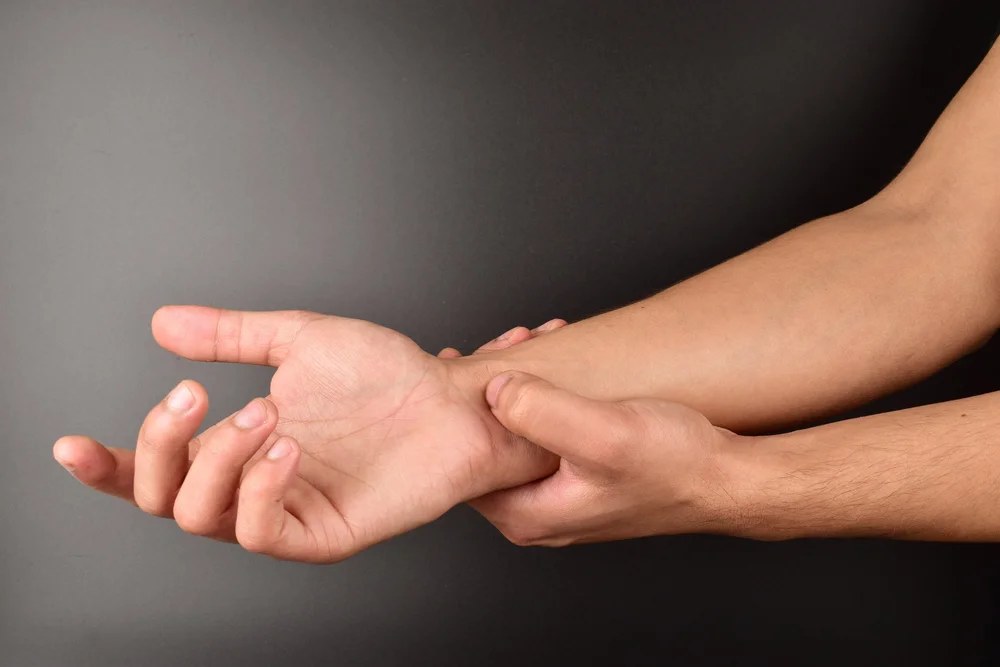
Point 1: Shenmen — The Off-Switch for Racing Thoughts
Location: on the wrist crease, in the small hollow on the pinky-finger side. Palm up, press your other thumb into the pinky end of the wrist crease — you’ll feel a little dip. That’s Shenmen (神门, “Spirit Gate”).
How: press firmly with the pad of your thumb for 1 minute, hard enough to feel a dull ache — never a pinch. One minute per wrist.
Best for: the mind that won’t shut up — the moment you close your eyes, the meeting reconvenes. TCM describes Shenmen as “calming the heart and settling the spirit”; modern researchers have found that stimulating this area can dial down sympathetic nervous system arousal. Whatever the mechanism, it’s the first point insomniacs usually learn, for good reason.
Point 2: Anmian — The Name Says It All
Location: behind the earlobe, at the midpoint between the mastoid (that hard bony bump behind your ear) and the angle of the jaw. Open your mouth and you’ll feel the area shift — you’re in the right neighborhood. Anmian (安眠) literally translates as “peaceful sleep.”
How: with index and middle fingers together, knead gently for 2 minutes. This point is sensitive — keep the pressure light, aiming for a faint warmth rather than soreness.
Best for: people who lie awake tossing for 30+ minutes, watching the clock do its cruel arithmetic. It’s an “extra point” outside the main meridian channels, and generations of TCM physicians have reached for it first in insomnia cases.
Point 3: Sanyinjiao — The System Regulator
Location: on the inner calf, four finger-widths (about 3 cun, the traditional body-inch) above the tip of the inner ankle bone, in the hollow just behind the shinbone. Sanyinjiao (三阴交, “Three Yin Intersection”) is where three leg meridians — liver, spleen, kidney — are said to meet.
How: press with your thumb, medium pressure, 2 minutes per leg. It’s sometimes called the “gynecologists’ Sanyinjiao” for its traditional role in regulating qi and blood.
Best for: light sleepers — the ones who wake at 3 AM and can’t get back under. With consistent practice, many people also notice their chronically cold hands and feet improving, since the same point is used to support circulation.
Warning: skip this point entirely if you are pregnant or trying to conceive. Traditional texts consider it off-limits in pregnancy due to a risk of stimulating uterine contractions. When in doubt, leave it out.
Point 4: Yongquan — Draw the Fire Down
Location: on the sole of the foot, in the hollow about one-third of the way down from the toes. Curl your toes hard and a little pit appears in the middle of the forefoot — that’s Yongquan (涌泉, “Gushing Spring”).
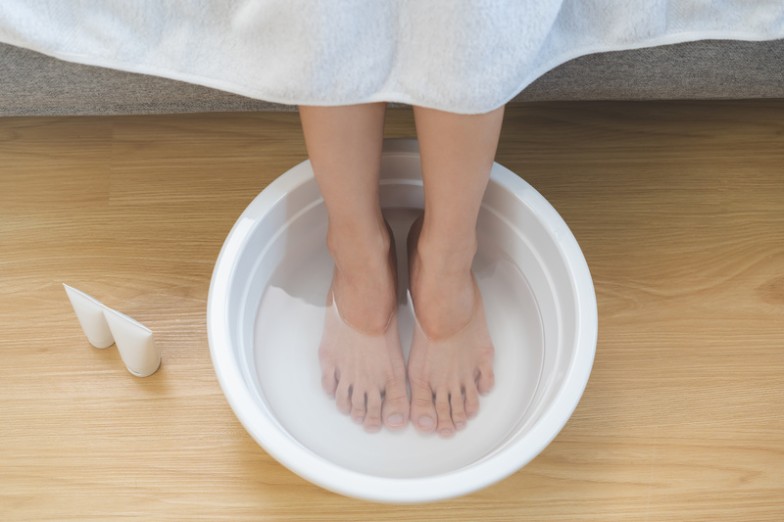
How: soak your feet in hot water (around 40°C / 104°F) for 10 minutes before bed, towel off, then press firmly into Yongquan with your thumb for 2 minutes — or rub the soles of your feet together 50 times. The foot soak is doing half the work here.
Best for: the “hot head, cold feet” pattern — forehead burning, feet like ice. TCM reads this as “fire failing to return to its source” (火不归元): energy stuck upward. The soak-plus-press combination is the traditional way to draw it back down.
Point 5: Neiguan — Unbind the Chest
Location: two finger-widths (about 2 cun) above the wrist crease, in the dip between the two tendons on the inner forearm. Neiguan (内关, “Inner Pass”) sits right where you’d wear a watch, slightly toward the elbow.
How: press straight down with your thumb for 1–2 minutes, synced with slow breathing: inhale as you press, exhale as you release.
Best for: the chest that feels physically tight — that “something pressing on my heart” feeling that keeps you awake. Neiguan is traditionally used to “widen the chest and move qi.” Frequent travelers know it too: it’s the same point pressed for motion sickness and nausea.
Your 10-Minute Bedtime Sequence
Don’t bounce between points at random. Run them in this order: foot soak (10 minutes, pressing Yongquan while you soak) → in bed, press Sanyinjiao (2 minutes per leg) → Shenmen (1 minute per wrist) → Neiguan with slow breathing (2 minutes) → finish by gently kneading Anmian as you drift off. About 10 minutes total. Put your phone on Do Not Disturb before you start — that’s part of the protocol.
Give it 7 days. Most people notice falling asleep faster and waking less. If night one feels like nothing happened, that’s normal — the first two or three sessions are your nervous system learning the routine, not failing it. The most common self-sabotage is pressing harder when nothing happens; more force isn’t more effective, it just adds tension, which is the opposite of the assignment. Stay at “dull ache,” stay consistent, and let the repetition do the work. But here’s the honest boundary: if two weeks of consistent practice changes nothing, or if you currently need medication to sleep at all, don’t tough it out — get checked at a sleep clinic. Insomnia can ride along with anxiety, thyroid issues, or sleep apnea, and no acupressure point can substitute for a diagnosis.
4 Details That Decide Whether It Works
Same points, wildly different results. The gap is almost always in these four details:
- Timing: start about 30 minutes before bed. Too early (right after dinner) and the drowsiness evaporates before bedtime; too late (an hour of frustrated tossing first) and you’re already agitated — pressing points through irritation just adds irritation.
- Breathing: inhale slowly for 4 counts as you press, exhale for 6 as you release. Slowing the exhale is itself a brake pedal for the nervous system — combined with the pressure, it’s a double lock.
- Warmth: if your hands and feet are cold, soak your feet or rub your hands warm first. Pressing points with ice-cold fingers roughly halves the effect. Warmth is part of the signal.
- Consistency: acupressure regulates; it doesn’t flip a switch. Give your body 7–14 days to build a new falling-asleep reflex. Quitting after two “useless” nights is the most common reason it “doesn’t work.”
And one more rule: don’t scroll your phone while pressing. Thumb on Shenmen, eyes on short videos — your brain stays lit up and no point on earth can override that.
Remember this: acupressure points help you power down; they don’t repair the machine. Thirty fewer minutes of phone time before bed will do more for your sleep than any point you press.
For general wellness information only — not medical advice. If you feel unwell, consult a qualified professional.
中文版:失眠按这5个穴位