Stand in front of the bathroom mirror tomorrow morning and look at your face the way you usually do: eyes first, then nose, then maybe the teeth. Almost nobody stops at the short vertical groove between the nose and the upper lip. It is barely two centimeters long, easy to miss, and most people could not tell you its name. In Chinese face reading, though, that little groove has a name, a history, and a whole set of stories attached to it: the renzhong, literally “the middle of the person.”
For centuries, practitioners of Chinese physiognomy – the art of reading character and fortune from the face – have treated the renzhong as a small window onto two of the biggest questions in a person’s life: how long will they live, and how will their children fare? The claims are poetic, specific, and, as we will see, best enjoyed as cultural history rather than as a health check. This article walks through what the old books actually say, where those ideas came from, and how to read them with a clear head. All of it is for cultural reference only.
What Is the Renzhong in Face Reading?
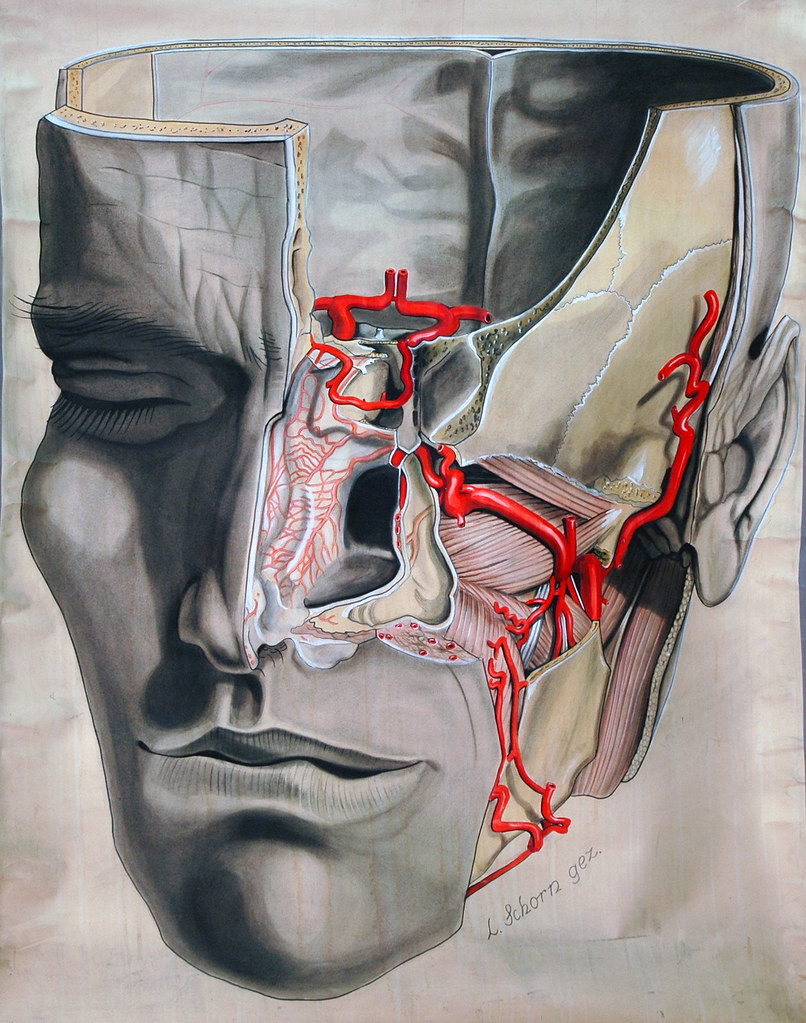
The renzhong is the shallow groove running straight down from the tip of the nose to the middle of the upper lip. In most adults it measures roughly 1.5 to 2.5 centimeters long and about 0.5 centimeters wide. In the traditional “three sections” (san ting) division of the face – forehead, mid-face, and lower face – the renzhong sits right at the top edge of the lower section, a small bridge connecting the middle of the face to the chin and jaw.
The classic physiognomy manual Mayi Shenxiang (The Divine Physiognomy of the Hemp-Clad Sage) calls the renzhong the “Hall of Longevity” (shou tang) and the “Palace of Children” (zi xi gong), linking it to a person’s later years and to the strength of their kidney qi. In traditional Chinese medicine, kidney qi is the deep energy associated with growth, reproduction, and aging, so the connection the old books draw is not random: the groove sits, in their system, on a channel where that energy shows itself.
The Ming dynasty compilation Shenxiang Quanbian (Complete Collection of Divine Physiognomy) puts it plainly: “A deep and long renzhong belongs to a person of high longevity.” Similar lines appear in face-reading texts for hundreds of years, and they are still quoted in folk physiognomy today.
One thing needs to be said before we go any further: none of this is a medical conclusion. In modern medicine, the shape of the philtrum is mainly determined by how a person developed before birth, and it has no direct causal link to how long someone will live or how many children they will have. What follows is the traditional reading, presented as cultural knowledge. Face reading cannot decide anyone’s fate.
Depth, Length, Width, Clarity: The Four Traditional Measures
Traditional physiognomy judges the renzhong on four qualities: depth, length, width, and clarity. Each one carried its own reading, and the old books are surprisingly precise about what counts as good.
Depth means the groove is clearly carved, with a visible outline. A deep renzhong, the books say, shows ample kidney qi and vigorous energy, and a person with one will often stay steadier than their peers after fifty. A shallow renzhong, so faint it is almost invisible or even flat, was read the opposite way: the old texts describe it as a sign of insufficient qi and blood, and the advice attached to it was practical rather than mystical – rest more, eat better, take care of yourself.
Length is the distance from nose to lip. A popular old saying runs, “One extra fen of renzhong, ten more years of life.” A fen is a traditional unit of about a third of a centimeter, and nobody should take the arithmetic literally. What the saying really records is a judgment: in the physiognomy system, a long renzhong belongs to someone whose middle and later years are expected to be relatively stable. There is a real observation hiding underneath the folklore, too. As people age, the upper lip thins and the philtrum appears longer, so older faces generally show a longer renzhong than younger ones. That is simply what aging looks like, not a reward handed out by fate.
Width is the spacing between the two sides of the groove. The favored shape, according to the books, is narrow at the top and wider at the bottom, like a small shovel. That shape was read as a sign of support in old age and a good bond with one’s children. Wide at the top and narrow at the bottom was considered less fortunate.
Clarity means the groove is clean inside, without obvious horizontal lines or moles. Horizontal lines across the renzhong were interpreted as a sign that the middle years might bring setbacks.
Take a concrete example. A 68-year-old man has a renzhong about 3 millimeters deep, 2.2 centimeters long, narrow at the top and wider at the bottom, with no lines crossing it. By the traditional standard, this is a well-formed “Hall of Longevity,” and the old books would give it a favorable reading. Put the very same shape on a 25-year-old, though, and the reading changes completely. A young person’s face has not settled yet, and physiognomy itself insists that “the face changes with age.” You cannot measure everyone with the same ruler.
Why the Renzhong Became the “Palace of Children”
The name “Palace of Children” comes from an old way of thinking about the body. In traditional Chinese thought, the renzhong was seen as a meeting point of the Ren and Du meridians, the two central energy channels that run up the front and back of the body. Since the kidneys were held to govern reproduction, and kidney qi was believed to show itself at the renzhong, the groove was used to make guesses about children and family life.
The specific claims run like this: a deep, long renzhong with a clear outline was said to mean a good bond with one’s children, and children who grow up healthy. A renzhong crossed by horizontal lines, or one that looks broken, was read as a sign of more difficulties around childbearing or raising children. A crooked renzhong was interpreted as a thinner bond with children, or a life spent mostly apart from them.
These ideas made sense in the world that produced them. In pre-modern China, medical care was limited and childbirth carried real danger. People needed a visible sign to hold onto, something they could look at and feel reassured by, and the renzhong is right there on the face, always in view. Seen from today, the whole system looks more like a projection of cultural psychology: what actually decides children’s health and family relationships is medical care, daily habits, and how parents and children treat each other – not a groove on the face.
It is worth noting that modern medicine does find real links between philtrum shape and certain developmental conditions. Children born with a cleft lip often have an incomplete philtrum, and some chromosomal conditions can come with changes in philtrum shape. But that is the territory of clinical diagnosis, requiring professional examination. It is absolutely not something you can judge by looking in the mirror.
How to Read These Old Claims Sensibly
Face reading has survived for so long not because it is accurate, but because it offers a way of looking at people. Looking at your own renzhong is harmless. The harm starts when a line meant as “for reference only” is treated as a verdict.
- Read the shape, not the destiny: the depth of a renzhong can be a doorway into traditional culture, but it cannot tell you how long someone will live or how many children they will have.
- Read the change, not the snapshot: a face changes with age, weight, and health. The renzhong of a thirty-year-old and the renzhong of a sixty-year-old are not the same groove, and any reading has to take age into account.
- Read the whole face, not one feature: the old books themselves teach “the five features in combination.” Judging a person from the renzhong alone goes against physiognomy’s own method.
- When in doubt, go to a professional: if you care about longevity, regular health checkups beat mirror-gazing. If you have questions about fertility, a hospital examination is far more reliable than face reading.
A practical suggestion: treat face-reading knowledge the way you would treat a good after-dinner topic. Chatting with friends about “people with a deep renzhong have good energy” is harmless fun. But if someone uses that same claim to sell you a service that promises to change your luck or “fix” your fortune, that is the moment to be careful.

A Short Groove That Mirrors a Culture
The renzhong is only about two centimeters long, yet in traditional physiognomy it was asked to carry two of life’s biggest concerns: living long and seeing one’s children thrive. That says less about how the ancients observed faces than about what they hoped for: a long life, and children who are safe and well. For more than two thousand years, that hope has not changed – only the ways of expressing it have, generation after generation.
Next time you look in the mirror, take an extra second to notice your own renzhong, and think about the culture layered into it. Treat it as a small window onto tradition. Then step out of the bathroom and get on with the things that actually shape a life: sleep, food, movement, and time with the people you love. Face reading makes good conversation. The days themselves still have to be lived well, one at a time. All of this is for cultural reference only, and no feature on a face can decide a person’s fate.
Quick Answers
What is the renzhong? The vertical groove between the bottom of the nose and the top of the upper lip, usually 1.5 to 2.5 centimeters long. In English anatomy it is called the philtrum. In Chinese physiognomy it is known as the renzhong, “the middle of the person.”
Why is it called the “Hall of Longevity” and the “Palace of Children”? Classic texts such as Mayi Shenxiang gave it those names because, in the traditional system, it was linked to kidney qi, which was held to govern aging and reproduction. A deep, long, clear renzhong was read as a favorable sign for later life and for one’s children.
Does a deep renzhong really mean a long life? No. There is no medical evidence linking philtrum depth to lifespan. The traditional reading is a cultural belief, not a health fact, and it is for cultural reference only.
Can face reading tell you about your children? No. Children’s health and family relationships depend on medical care, living habits, and how family members treat each other. The old claims about the “Palace of Children” reflect the anxieties of a time when childbirth was far riskier than it is today.
Does the renzhong change with age? Yes. As people age, the upper lip thins and the philtrum appears longer, which is why older faces generally show a longer renzhong. Traditional physiognomy itself says the face changes with age, so a reading that ignores age is not even faithful to the old method.
Is there any real medical link? Only in a clinical sense: some congenital conditions, such as cleft lip, involve an incomplete philtrum. That is a matter for professional diagnosis, not something to judge in the mirror.