After the Start of Winter, the thermos on every office desk starts to look the same: a layer of small red berries floating on top of the water. Some people toss in a handful and drink it straight. Some drop them into soup at the last minute. Some just chew them dry, like a snack. It is the same handful of goji berries — but how you eat them changes what you actually get out of them.

Goji berries have been a kitchen staple in China for centuries, and they sit in a special category that traditional Chinese medicine calls “food and medicine from the same source” — in other words, an everyday ingredient that is also treated as a gentle tonic. They are cheap, they keep for months, and they slip into almost anything: tea, porridge, soup, or straight into your mouth. The trick is knowing which way of eating them suits you, how much is enough, and when to leave them alone. This guide covers all of it.
What Is Actually Inside a Goji Berry?
A dried goji berry is small, but it carries a respectable nutritional profile. It contains goji polysaccharides, carotenoids, vitamin C, and a range of minerals. One of those carotenoids, zeaxanthin, is the reason goji berries keep showing up in conversations about eye health. In traditional Chinese medicine, goji is described as neutral in nature and sweet in flavor, acting on the liver and kidney channels. Traditionally it is said to nourish the liver and kidneys, benefit the essence, and brighten the eyes, and it has long been used for the kind of lower back soreness, knee weakness, dizziness, and tired eyes that traditional theory links to liver and kidney yin deficiency.
First, set expectations straight: goji is a food for daily nourishment, not a medicine. The usual daily amount is 10 to 20 grams — roughly one small handful, or 20 to 30 berries. Eating that much every day beats eating half a bowl once in a while. Consistency matters more than quantity, and a small daily habit is the whole point.
Quality varies, and the most famous source is Ningxia, in northwest China. Ningxia berries tend to be large and fleshy, and when steeped they turn the water a pale yellow-orange. If your soaking water comes out vividly red or purple, be cautious: unnaturally bright color can be a sign the berries were treated with dye or fumigated. Good berries should color the water gently, not dramatically.
There is one common misunderstanding worth clearing up early. When you steep goji berries in water, not all of the nutrients move into the water. Goji polysaccharides, for example, do not dissolve well. If you drink the tea and throw the berries away, you are leaving roughly half the benefit behind. Eat the berries after soaking them — that is the part most people skip, and it is the part that makes the habit work.
Five Ways to Eat Goji Berries
There is no single “correct” way to eat goji berries. Each method suits a different kind of day, a different stomach, and a different schedule. Here are the five most practical ones, with the details that actually matter.
1. Steeped in Water: The Easiest Method, With One Catch
Take about 15 grams of dried berries and steep them in water at 60 to 70 degrees Celsius for about 10 minutes. Boiling water straight from the kettle will destroy some of the vitamin C and make the drink taste sour. Steep it twice if you like, then chew and swallow the berries. Many office workers keep a fixed rhythm: one cup after waking up, another around three or four in the afternoon.
The catch is the temperature. Water that is too hot is the most common mistake, and it is also the easiest to fix. If you have just boiled the kettle, wait a couple of minutes before pouring. Your berries — and your vitamin C — will thank you.
2. Cooked in Porridge: Best for Sensitive Stomachs
Take 50 grams of millet, 15 grams of goji berries, and 3 pitted red dates. Cook the millet first for about 20 minutes, until it turns creamy and releases its starch. Then add the goji berries and dates and cook for another 10 minutes. Do not add the berries too early: long cooking makes them sour and bitter, and turns them mushy.
A bowl of this on a cold winter morning is warming in a way that toast and coffee never quite manage. The dates bring a gentle sweetness that balances the berries’ slight tartness, and the millet is easy on the stomach. If your digestion is delicate, this is the method to start with.

3. Simmered in Soup: Where Goji Shines Brightest
Goji berries pair beautifully with meat soups, but timing is everything. Add them only in the last 15 minutes before the soup comes off the heat. For a whole stewing hen of about 1.5 kilograms, use 20 grams of goji berries and a few slices of ginger, simmer for about 1.5 hours, and drop the berries in near the end. They keep their color, the soup stays clear and sweet, and nothing turns sour.
Remember that the berries are a supporting actor here, not the star. The meat and the slow cooking do the heavy lifting. Throw the berries in at the start and they will stew to pieces — you will have paid for color and flavor and gotten neither.
4. Eaten Dry: The Most Direct Absorption
Chew 10 to 15 berries a day, straight from the bag. Hold them in your mouth for a moment first, let your saliva soften them, then chew slowly and swallow. A small jar in your office drawer beats a bag of potato chips, and it is a habit that survives even the busiest week.
The risk with this method is overeating. Dry berries are easy to keep popping into your mouth, and the sugar and calories add up. Stay under 20 grams a day. If you find yourself finishing a whole bag in an afternoon, switch back to steeping — the ritual of making tea slows you down.
5. Goji and Chrysanthemum Tea: For People Who Stare at Screens All Day
Take 10 grams of goji berries and 5 Hangzhou white chrysanthemum flowers, and steep them in warm water for 10 minutes. Chrysanthemum is cool in nature while goji is neutral, and together they are traditionally used to clear the liver and brighten the eyes. This is the cup for people who spend seven or eight hours a day in front of a screen, with dry, strained, swollen-feeling eyes.
One warning: do not drink it at night. Chrysanthemum leans cool, and people with sensitive stomachs may feel uncomfortable drinking it before bed. Keep this one for the daytime.
Pairing Rules: What Goes Well, and What to Avoid
Some combinations are classics for a reason. Goji with red dates, Chinese yam, longan, or white fungus are all common autumn and winter pairings: dates are traditionally said to nourish the blood, yam to strengthen the spleen, longan to calm the mind, and white fungus to moisten dryness. Together they are gentle and warming without being heavy. A simple goji and white fungus soup takes little effort: soak one white fungus, tear it into pieces, simmer for 40 minutes until it turns silky, then add 15 grams of goji berries and a little rock sugar and simmer for 10 more minutes.
Other combinations are best avoided. Goji berries and green tea do not go well together: the tannins in green tea can interfere with the absorption of nutrients from the berries, and the taste turns astringent. Eating goji in the same meal as cold-natured seafood such as crab can upset a weak stomach and lead to diarrhea. Milk and goji have no real conflict, but the berries’ slight acidity can make the milk taste off — eating them separately is simply more pleasant.
More important than any pairing is knowing when not to eat goji at all. Skip it when you have a cold or fever, or when your body is fighting an infection: goji is warming in nature and can add to internal heat. People with weak digestion or frequent diarrhea should also eat less of it, because goji is fairly rich and greasy in the traditional sense, and too much can cause bloating. People with diabetes can eat goji berries, but should keep it under 10 grams a day — dried berries are not low in sugar, and that sugar counts toward the day’s total.
How to Buy and Store Them: Don’t Buy the Wrong Ones
When you are choosing dried goji berries, remember four checks. First, color: good berries are dark red or purplish red, evenly colored. Berries that look too bright and vivid should raise suspicion. Second, texture: properly dried berries feel hard and crisp when pinched, not sticky, and they should not leave red color on your fingers. Third, smell: they should have only a faint fruity fragrance. A sharp, sour, chemical smell suggests sulfur fumigation. Fourth, taste: sweet with a slight tartness, and no bitterness after chewing.
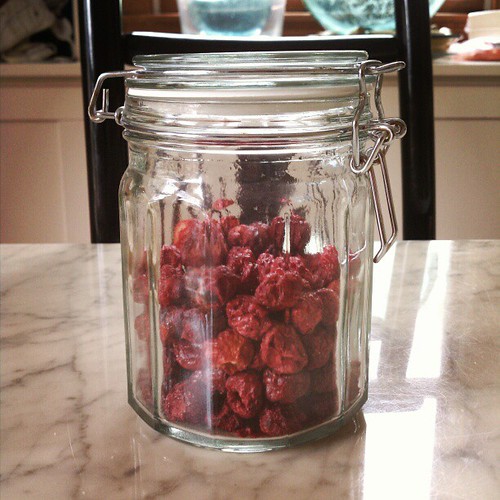
Storage is about keeping them dry and keeping insects out. After buying, sun them for an hour or two, let them dry completely, then seal them in an airtight jar with a small packet of food-grade desiccant, and keep the jar in a cool, dry place. In the dry autumn and winter months they will keep for half a year without trouble. When the humid rainy season arrives, move them to the refrigerator. Once berries have gone soft, damp, or clumped together, do not eat them — they may already be moldy inside.
On price, there is no need to chase the most expensive option. Ordinary Ningxia goji berries at 60 to 100 yuan per 500 grams are a normal range. Berries far cheaper than that are often mixed with small or stale stock. Berries at two or three hundred yuan per 500 grams are usually paying for packaging and branding — the nutritional difference is much smaller than the price difference suggests.
Making Goji Part of Your Daily Routine
There is no secret to getting the most out of goji berries. Eat 10 to 20 grams a day. If you steep them, eat the berries too. If you cook porridge or soup, add them near the end. Pair them with gentle ingredients like red dates and Chinese yam. Skip them when you have a cold or fever, or when your digestion is weak. Autumn and winter are the best seasons for goji, and a month or two of steady eating beats a sudden binge on a whole jar before the New Year.
The simplest action step: tonight, weigh out 15 grams of berries on a small plate and remember what that handful looks like. Starting tomorrow, eat that amount every day. Put goji in your thermos, in your porridge, in your soup — pick whichever method you can actually stick with, and give it a month before you judge it.
Quick Answers
How many goji berries should I eat a day? About 10 to 20 grams, roughly 20 to 30 berries. Eating a small amount every day matters more than eating a lot once in a while.
Should I eat the berries after steeping them in water? Yes. Some nutrients, including goji polysaccharides, do not dissolve well in water. Drink the tea and eat the berries — otherwise you only get about half the benefit.
What water temperature is best for goji tea? Around 60 to 70 degrees Celsius. Boiling water destroys some vitamin C and makes the drink taste sour. Let freshly boiled water cool for a couple of minutes first.
Can I eat goji berries when I have a cold? No. Goji is warming in nature and can add to internal heat, so skip it during a cold, fever, or active infection, and wait until you have recovered.
Can people with diabetes eat goji berries? Yes, but keep it under 10 grams a day. Dried berries contain a fair amount of sugar, so count it toward your daily total.
How do I tell good goji berries from bad ones? Look for dark red, evenly colored berries that feel hard and crisp, smell faintly fruity, and taste sweet with a slight tartness. Avoid berries that are unnaturally bright red, sticky, sharp-smelling, or bitter.
How should I store dried goji berries? Dry them fully, seal them in an airtight jar with a desiccant packet, and keep them cool and dry. In humid weather, store them in the refrigerator. Discard any berries that have gone soft, damp, or clumped together.
Disclaimer: Goji berries are a food for daily nourishment and are not a substitute for medical treatment. Use with caution if you have a cold or fever, or a weak spleen and stomach. No therapeutic effect is promised. If you have a medical condition or are taking medication, follow your doctor’s advice.