A newborn baby comes home, and within days an elder in the family is holding a slip of paper covered in strange characters, asking anyone who will listen: “What element is this child missing?” The answer usually comes back as a single word — “water” or “fire” — followed by a string of advice: put “miao” in the name, wear more blue, keep a fish tank in the living room. Many people carry that answer with them for decades. Very few ever stop to ask what “missing” actually means — or what it is supposed to do to a person’s life.

This article explains the idea from the ground up, as a piece of cultural knowledge rather than a fortune-telling verdict. BaZi — literally “eight characters” — is a traditional Chinese system for reading a person’s birth chart. The Five Elements — Wood, Fire, Earth, Metal and Water — are its basic vocabulary. When someone says a chart is “missing” an element, they are describing a simple count. What matters is everything that comes after the count.
How “Missing an Element” Is Calculated
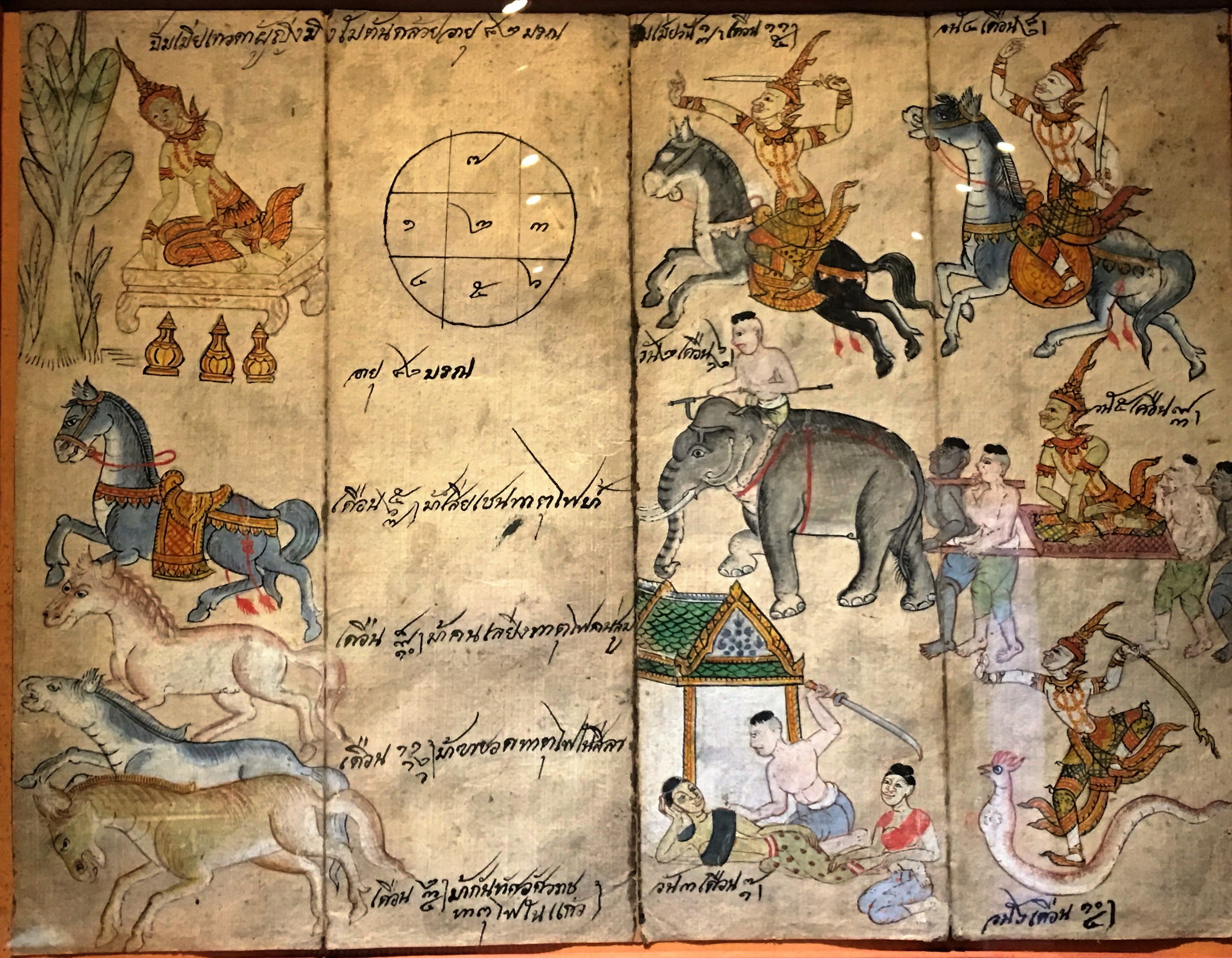
A BaZi chart is built from four points in time: the year, month, day and hour of birth. Each point contributes a pair of characters, one Heavenly Stem and one Earthly Branch, making eight characters in total. There are ten Heavenly Stems — Jia, Yi, Bing, Ding, Wu, Ji, Geng, Xin, Ren and Gui — and twelve Earthly Branches — Zi, Chou, Yin, Mao, Chen, Si, Wu, Wei, Shen, You, Xu and Hai. Every stem and branch belongs to one of the Five Elements: Jia and Yi are Wood, Bing and Ding are Fire, Wu and Ji are Earth, Geng and Xin are Metal, Ren and Gui are Water; among the branches, Yin and Mao are Wood, Si and Wu are Fire, Shen and You are Metal, Hai and Zi are Water, and Chen, Xu, Chou and Wei are Earth.
Drawing up a chart means converting all eight characters into their elements and counting how many times each one appears. If Water never shows up, the chart is said to be “missing Water.” That is the whole calculation — a tally, nothing more mysterious than that.
But there is a catch. Each Earthly Branch also carries hidden elements inside it, called “hidden stems.” The branch Yin, for example, contains Wood on the surface but also hides Fire and Earth within it; Chen hides Wood, Water and Earth. So a chart that looks “missing” an element on the surface may turn out to contain it once the hidden stems are counted. The results often differ.
There is another common case worth knowing. Sometimes an element appears only once. Strictly speaking, that is not “missing” — it is “weak.” In the old terminology, weak and missing are two different things, and confusing them is one of the most frequent mistakes in casual readings.
A Missing Element Is Not a Missing Fortune: Look at the Day Master First
At the heart of every BaZi chart sits a concept called the Day Master — the Heavenly Stem of the day of birth, which stands for the person themselves. The other seven characters relate to it in different ways: some generate it, some control it, some support it, some drain it. Judging a chart is not really about counting how many elements are absent. It is about whether the Day Master is strong or weak, and whether the overall distribution of forces is balanced.
Take two examples. A person whose Day Master is Jia Wood, born in spring when Wood energy is at its peak, with two more Wood characters lending support, has a very strong Day Master. If that chart is missing Metal, it is not necessarily bad news: Metal controls Wood, and a strong Day Master can actually benefit from being reined in a little. Now take the opposite case — a person whose Day Master is Ren Water, born in summer, surrounded by Fire and Earth that drain Water away. That Day Master is weak, and missing Metal matters much more, because Metal generates Water: Metal is a source of strength the Day Master needs. The same “missing Metal” means opposite things in two different charts.
This is why traditional practitioners focus on two further concepts: the “favorable element” and the “unfavorable element.” The element that helps the Day Master is called favorable; the one that harms it is unfavorable. When you “supplement” something, you supplement the favorable element. If the missing element happens to be an unfavorable one, its absence is actually a good thing. Think of it like cooking: a good dish is not one that contains all five flavors in equal measure, but one whose flavors work together. The Five Elements are about the harmony of the whole, not about mechanically collecting all five.
The Generating and Controlling Cycles: Two Ways to Read Balance
The Five Elements relate to each other through two cycles. The generating cycle runs Wood feeds Fire, Fire creates Earth, Earth bears Metal, Metal collects Water, Water nourishes Wood — and around again. The controlling cycle runs Wood controls Earth, Earth controls Water, Water controls Fire, Fire controls Metal, Metal controls Wood — also in a loop. The ancients used these two cycles to describe how the natural world works: wood burns and makes fire, fire leaves ash that becomes earth, metal can be refined from earth, moisture condenses on cold metal, and water feeds the growth of trees.
Once you understand these two cycles, the idea of “harmonizing” a chart starts to make sense. Suppose a chart has far too much Fire. The fix is not always to add Water to control the Fire directly. You can also add Earth: Fire generates Earth, so the excess Fire pours its energy into Earth and naturally calms down. This is called “draining.” Or suppose Wood is too weak. Besides adding Wood directly, you can add Water: Water generates Wood, so nourishing the source strengthens the Wood that grows from it. This is called “generating.” Generating and controlling are two sides of the same coin — what matters is the balance of forces and where each element sits in the chart.
The ancients had a saying for this: “too much is as bad as too little.” Any element taken to excess causes trouble: Wood in excess breaks, Metal in excess cracks, Water in excess floods, Fire in excess burns, Earth in excess blocks. Balance does not mean all five elements appear in equal amounts. It means each force stays within a suitable range — neither absent nor overstepping. Applied to a chart, the question is whether the Day Master can carry the forces around it, and whether the whole structure has flow or has seized up somewhere.
Common Ways to Harmonize — and How to Think About Them Rationally
Once people know the structure of their chart, traditional culture offers a set of harmonizing practices. The best known starts with a person’s name. If the favorable element is Water, the name might include characters like “jiang” (river), “he” (stream) or “ze” (marsh); if it is Wood, characters like “lin” (forest), “sen” (woods) or “dong” (pillar timber). The point is to supplement the favorable element, not simply to fill in whichever element is “missing.” If the missing element is an unfavorable one, the name deliberately avoids it — which is better.
Directions and colors follow the same logic: East belongs to Wood, South to Fire, West to Metal, North to Water, and the Center to Earth; green is Wood, red is Fire, white is Metal, black is Water, yellow is Earth. In the past, people used these associations to choose a bedroom’s orientation, pick clothing colors or arrange household objects. Today these practices are mostly a matter of lifestyle flavor and psychological comfort — a way to feel at ease — not hard tools for changing one’s luck.
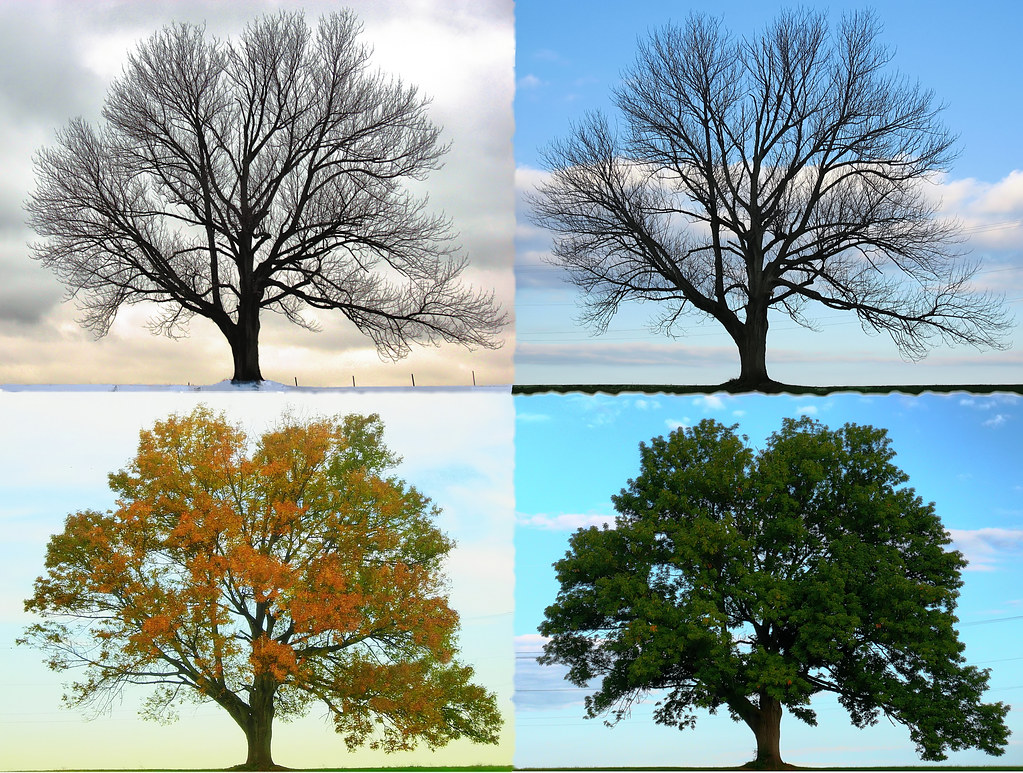
At the level of daily habits, the harmonizing ideas overlap surprisingly well with modern health common sense. In the Five Elements framework, each element pairs with an organ — Wood with the liver, Fire with the heart, Earth with the spleen, Metal with the lungs, Water with the kidneys — and with a season: spring is Wood, summer is Fire, late summer is Earth, autumn is Metal, winter is Water. Following this logic, spring is a good time to care for the liver by sleeping early and rising early, summer calls for protecting the heart and avoiding excessive cold, autumn for moistening the lungs and eating less spicy food, winter for nourishing the kidneys and keeping warm. Most of this advice is simply living in step with the seasons. Even if you do not believe in BaZi at all, following it does no harm.
Three suggestions will help you think about “missing an element” rationally. First, never accept the three words “you’re missing X” at face value. Ask three questions: were the hidden stems counted? How strong is the Day Master? And is the missing element favorable or unfavorable? Once those are answered, most vague claims fall apart. Second, keep “cultural reference” and “life decision” separate. Putting a water-related character in a name or a potted plant on the desk is a low-cost cultural practice — do it or not, it hardly matters. But if someone uses “you’re missing Fire” to suggest you quit a stable job and change careers, or spend tens of thousands on objects supposedly meant to “supplement” your elements, stop and think: that has moved beyond cultural discussion. Third, what is missing does not matter much — imbalance is what deserves attention. The real value of a BaZi chart is that it prompts you to notice your weak spots and your current state.
Conclusion: Treat the Five Elements as a Mirror
Back to the scene at the start: an elder holding a slip of paper and asking what element the child is missing. What they really want to know is, “Will this child be all right?” But the answer is not on that slip of paper. A missing element is only a statistic. The Day Master’s strength, the favorable and unfavorable elements, and the flow of generating and controlling forces — that is the full framework for understanding a chart.
If you remember three sentences from this article, that is enough: a missing element does not mean a missing fortune — check the Day Master’s strength before talking about what to supplement; supplement the favorable element, and if the missing element is an unfavorable one, its absence is a blessing; the Five Elements are a mirror for observing yourself, not a verdict on your fate. With those three sentences in mind, the next time someone tells you what you are “missing,” you will have a standard of your own to judge it by.
And the practical steps are simple. If you want to understand your own chart, pick up an introductory book on the subject and draw up your chart once by hand, using the stem-and-branch reference tables. Focus on what your Day Master is and how the surrounding forces are distributed — calculating it yourself makes it stick. If you want to harmonize your daily life, start with seasonal routines: rise early in spring, guard against heat in summer, keep things moist in autumn, stay warm in winter. That is the most solid, least risky part of Five Elements thinking. As for names, directions and ornaments, treat them as cultural flavor — use them if you like them, and do not feel obliged if you do not. The purpose of culture is to help people live with more clarity and ease, not more anxiety.
Quick Answers
What does “missing an element” actually mean? It means one of the Five Elements — Wood, Fire, Earth, Metal or Water — never appears when the eight characters of a BaZi chart are converted into elements. It is a count, not a diagnosis. Always ask whether the hidden stems inside the Earthly Branches were counted, because they often change the result.
Is a missing element bad luck? Not by itself. What matters is whether the Day Master — the Heavenly Stem of your birth day, representing you — is strong or weak, and whether the missing element is favorable or unfavorable to it. A missing unfavorable element is a good thing. Never judge a chart by the count alone.
What is the Day Master? The Day Master is the Heavenly Stem of the day you were born, and it stands for you in the chart. The other seven characters generate it, control it, support it or drain it. Judging a chart starts with the Day Master’s strength, not with which elements are absent.
How do the Five Elements generate and control each other? In the generating cycle, Wood feeds Fire, Fire creates Earth, Earth bears Metal, Metal collects Water, and Water nourishes Wood. In the controlling cycle, Wood controls Earth, Earth controls Water, Water controls Fire, Fire controls Metal, and Metal controls Wood. Balance means each force stays in a suitable range — not that all five appear equally.
What should I do if my chart is “missing” something? Supplement the favorable element, not the missing one. In practice, that usually means small cultural choices — a character in a name, a color, a plant on the desk — and, more usefully, seasonal habits like sleeping early in spring and keeping warm in winter. Treat expensive “remedies” and career advice based on a missing element with skepticism. BaZi is a cultural framework for self-reflection, not a prediction of fate.