After the first frost of winter, the vegetable stalls are piled high with white radishes — three yuan a jin, cheap enough to buy without thinking. Take one home, drop it into a pot of soup, and within half an hour the whole kitchen smells warm. This plain, unglamorous winter vegetable happens to be one of the most forgiving foods on the cold-season table.
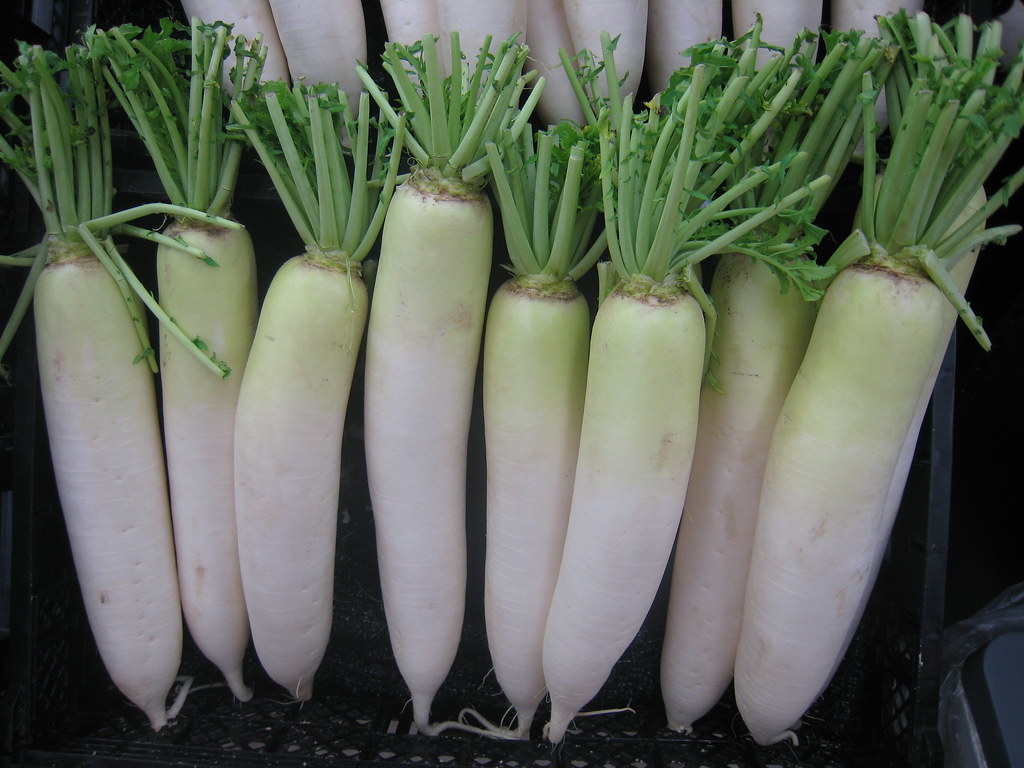
In Chinese food culture, the white radish is not a superfood and nobody pretends it is. It is something better: cheap, easy to find, hard to ruin, and genuinely useful when the weather turns cold and the meals get heavy. This guide covers what it actually offers, three home recipes that work every time, the pairings worth avoiding, and how to pick and store a good one.
Nutrition and Nature: Cheap, but No Compromise
A white radish is more than 90% water. A hundred grams carries roughly 21 calories, so it fills you up without weighing a meal down — a practical choice when you want a lighter dinner. It also provides vitamin C, potassium, calcium, and a modest amount of dietary fiber, along with glucosinolates, the sulfur compounds behind the faint peppery bite you taste when you cut one open. That gentle sharpness is part of why radish whets the appetite.
In traditional Chinese dietary therapy — shiliao, literally “food therapy,” the practice of using everyday ingredients to support the body according to its needs — white radish is classified as cool in nature, pungent and sweet in flavor, and associated with the lung and stomach channels. The old saying is that it “sends qi downward and aids digestion.” In plain terms: after a heavy winter hot pot or a rich meal of stewed meat, when your stomach feels bloated and your burps will not come smoothly, a bowl of radish soup often settles things. It is not medicine. It is a humble vegetable that happens to be very good at finishing a meal.
One practical note: vitamin C breaks down under prolonged high heat, so a long-simmered soup will lose some of it — but the potassium and fiber mostly stay in the broth and the radish pieces. A simple compromise is to add the radish chunks and simmer them for 20 minutes, long enough for flavor and softness. If you make a cold tossed radish salad, blanch the shreds for just 30 seconds; you keep the crunch and more of the vitamin C.
There is another seasonal advantage that has nothing to do with nutrients: radish is wet food. Once the heating comes on in northern homes, the indoor air dries out, and many people drink less than 1,200 milliliters of water a day — dry lips, scratchy throat. Cooking radish into soups and dumpling fillings quietly adds water back into your meals, which is far more comfortable than forcing down another glass of plain water.
Three Home Recipes: Simmered, Steamed, and Tossed
White Radish and Lamb Soup: The Warmest Pot of Winter
You will need 500 grams of lamb, one white radish (about 600 grams), 3 slices of fresh ginger, and a few pieces of scallion. Put the lamb in a pot of cold water with a spoonful of cooking wine, bring it to a boil, skim off the foam, then lift the meat out and rinse it. Add 1.5 liters of fresh water, return the lamb and ginger, and simmer gently for 50 minutes. Cut the radish into 2-centimeter chunks, add them to the pot, and simmer for another 20 minutes. Season with a teaspoon of salt and scatter the scallion over the top.
Timing is the whole secret here. At 15 minutes the radish still has a firm core; at 20 minutes it turns soft and soaked with flavor; past 30 minutes it starts to fall apart. The radish’s mild pungency tames the lamb’s gaminess, and the broth comes out clear, sweet, and never greasy.
Steamed Radish and Pork Meatballs: Soft Enough for Grandparents and Kids
Grate 400 grams of white radish into fine shreds, toss with half a teaspoon of salt, and let it sit for 10 minutes. Squeeze out the water firmly. Mix the shreds with 200 grams of minced pork, one egg, 3 tablespoons of flour, and a little minced scallion and ginger, stirring in one direction until the mixture holds together. Wet your hands, roll the mixture into balls about the size of a ping-pong ball, and steam over high heat for 15 minutes.
Do not throw away the water you squeezed out — keep it for adjusting the filling or for soup; the sweetness and nutrients are in it. Eat the meatballs hot: the outside is soft and tender, the inside carries the radish’s clean sweetness, and a dip of vinegar with minced garlic beats any fried meatball for freshness. Make 20 extra, let them cool, and freeze them; next time you cook noodles or soup, drop them straight in and they are ready in 5 minutes.
Sweet-and-Sour Shredded Radish: A Three-Minute Appetizer
Cut 300 grams of white radish into fine shreds. Toss with a tablespoon of sugar and half a teaspoon of salt, let it sit for 10 minutes, then pour off the liquid it releases. Add 2 tablespoons of rice vinegar, half a tablespoon of sesame oil, and a few goji berries, mix well, and chill in the fridge for half an hour — it comes out even crisper.
This little dish earns its place next to rich main courses. With braised pork, dumplings, or hot pot, one chopstick of sweet-and-sour radish cuts straight through the grease.
Pairings and Who Should Eat Less: Good Food Still Needs Good Timing
Many families simmer white radish together with carrots, and there is no conflict there: the beta-carotene in carrots is fat-soluble and needs a little oil to be absorbed, and the small amount of fat in a radish soup is enough. The combinations that actually deserve attention are these:
- Radish + ginseng or codonopsis (dangshen): Traditional dietary wisdom holds that radish “breaks qi” and can weaken the tonic effect of ginseng-type supplements. If you are taking ginseng, skip radish that day and eat it a day apart.
- Radish + persimmons or oranges: Radish metabolizes into thiocyanate in the body, and the flavonoids in persimmons and oranges can also convert in the gut into substances that interfere with the thyroid. An occasional small serving is fine, but do not make radish-and-orange your daily afternoon snack.
- Radish + wood ear mushrooms: There is a folk claim that eating them together causes skin allergies, but no reliable evidence supports it. Still, people with sensitive digestion who eat a lot of both in one meal may feel bloated, so serving them separately is the safer choice.
Who benefits most? Anyone who eats a lot of meat in winter and tends to feel over-full — radish soup two or three times a week fits well. When a cough brings up phlegm or the throat feels raw, simmered radish and pear is a common home remedy: one pear, 200 grams of radish, boiled in water for 20 minutes, then drink the soup and eat the pear. Sweet, soothing, and simple.
Who should eat less? People with a cold, weak digestive system — cold hands and feet year-round, diarrhea after anything cold — should go easy on raw radish and cold tossed radish salad, and stick to well-cooked radish soup instead. Anyone in an active flare-up of stomach ulcers or chronic gastritis should also pause, since the radish’s pungent compounds can irritate the stomach lining. People with hypothyroidism who are on medication should check with their doctor about whether radish is on their list of foods to limit.
Choosing and Storing: Three Details That Decide the Flavor
At the market, look at the skin first: smooth, with no cracks or dark spots, means fresh. Dull skin and little pits where root hairs have sprouted mean it has been sitting for a while. Pick it up and weigh it in your hand — between two radishes of the same size, the heavier one holds more water and tastes crisper; a light one is probably spongy inside. Then squeeze the root end: firm is good, soft and springy means the inside has already hollowed out.
The leaves are a signal too. Bright green, upright tops mean the radish was pulled recently; yellowed, wilted tops mean it has been sitting for at least two or three days. If you buy a radish with its tops still on, remove them the same day — the leaves keep drawing moisture out of the root, and by tomorrow the radish will be limp.
Storage is simple: do not wash the radish. Put it in a produce bag, leave a small opening for air, and keep it in the fridge — it will last 7 to 10 days. For a radish you have already cut in half, place the cut side down on a plate, wrap it in cling film, and eat it within 2 days. Leftover cooked radish soup should be cooled, portioned, and refrigerated, eaten within 3 days, and reheated thoroughly before serving.
Quick Answers
How often should I eat white radish in winter? Two or three times a week, rotating between soup, steamed meatballs, and a cold tossed salad, is a comfortable rhythm. The point is variety, not volume.
Is raw radish or cooked radish better? Raw and lightly blanched radish keeps more vitamin C and crunch, but cooked radish is gentler on digestion. If your stomach is sensitive or your hands and feet run cold, choose cooked.
Can I eat radish with carrots? Yes. The two cook well together, and the small amount of fat in the soup helps your body absorb the carrots’ beta-carotene.
How do I know a radish is fresh? Smooth skin without cracks or dark spots, heavy for its size, a firm root end, and bright green tops. Light, soft, or yellow-topped radishes are past their best.
How long does it keep? Unwashed in a bag in the fridge, 7 to 10 days. A cut half lasts 2 days wrapped in cling film; cooked radish soup keeps 3 days refrigerated.
Closing: Let Radish Reach the Table Twice More This Winter
The appeal of white radish is not that it is miraculous — it is that it fits. Cheap, easy to buy, endlessly adaptable: simmered in soup, steamed into meatballs, tossed into a salad, it shows up two or three times a week without ever making the table boring, and it leaves the stomach lighter. The real lesson of winter eating was never to chase one magic ingredient. It is to take what is seasonal, affordable, and fresh, and eat it with rhythm and variety.
Next time you are at the market, pick up a heavy white radish on your way home: a pot of radish and lamb soup tonight, a plate of sweet-and-sour shredded radish for tomorrow’s lunch. Start this winter with one radish, and eat a little warmer, a little easier.
Disclaimer: This article is a general introduction to traditional food culture and nutrition. It is not medical advice and does not replace diagnosis or treatment by a doctor. The food-therapy suggestions here are for everyday dietary reference only and make no promise of any therapeutic effect. People with a cold or weak digestive system, active stomach conditions, thyroid disease, or anyone taking medication should eat radish in moderation according to their own condition and consult a doctor or dietitian when in doubt.