Look at a family photo from twenty years ago, then look at the same faces today. The eyes are more or less the same. The nose hasn’t changed much. But the chin — the chin tells a different story. Some chins have grown rounder and fuller; others have sharpened and thinned. In Chinese face reading, mianxiang (the traditional art of reading character and fortune from facial features), the chin has its own name and its own chapter: it is called the dige, the “Earth Pavilion,” and it is said to hold the story of a person’s later years.
This guide walks through what the old face-reading books actually say about chins — the five common shapes, what “later fortune” really meant to the people who wrote those books, and how to look at your own chin with a clear head. Treat it as cultural history, not as a verdict. Your chin is a mirror, not a judge.
The Chin’s Place in Face Reading: Why “Earth Pavilion”?
Traditional mianxiang divides the face into three sections, called the Three Courts. The forehead is the upper court, the nose and cheekbones form the middle court, and everything from the mouth downward — including the chin — is the lower court, the dige or Earth Pavilion. The name comes from an old building metaphor: if the face is a house, the chin is its foundation. A house can have fine walls and a good roof, but if the foundation is weak, it will not stand long or stand steady.
This way of dividing the face was not invented out of thin air. In youth, people look at the forehead and the eyes; in middle age, at the nose and cheekbones. After fifty, the part of the face that changes most visibly is precisely the chin area: muscles slacken, fat redistributes, and the state of the teeth reshapes the jawline. The old scholars had no modern medical vocabulary, so they recorded these observations in their own words — “a full Earth Pavilion,” “a sharp Earth Pavilion” — and passed them down.
One thing to be clear about from the start: chin shape is decided by bone, muscle, and fat together, and it changes with age, weight, and the way your teeth meet. The traditional readings below are cultural experience handed down over centuries, not scientific conclusions, and certainly not a judgment on anyone’s destiny. Read them the way you would read an old almanac — with curiosity, not with a checklist against your own face.
Five Common Chin Shapes and What Tradition Says About Each
The old face-reading books list many chin types. Boiled down, five come up again and again. Each carries a traditional reading — and each maps onto a scene from everyday life.
Round Chin: Gentle and Easy to Get Along With
A round chin has soft lines and an indistinct jaw angle; when its owner smiles, the chin pushes slightly forward. Tradition says such people are mild-mannered and generous, and that their later years tend to be settled and comfortable. In daily life, this is often the person at the family gathering who smooths things over: when the relatives start arguing, they pour the tea first, then gently steer the conversation somewhere else.
Square Chin: Strong-Minded and Able to Carry a Load
A square chin has a clear jawline and a bottom edge close to a straight line; seen from the side, the angles are sharp. The old books link this shape with determination and principle. Picture a square-chinned manager in charge of a project that has already dragged on for three months: everyone pressures them to compromise, but they insist on inspecting the work against the original standard. Face-reading books would file that refusal to budge under “square chin.”
Pointed Chin: Quick-Minded — and Prone to Overthinking
A pointed chin narrows sharply, coming to a fine tip. Tradition credits its owners with a quick mind and fine attention to detail, but also with a tendency to worry. A familiar scene: the pointed-chinned traveler who packs with a checklist of a dozen items, right down to how many charging cables to bring. The upside is that almost nothing gets left behind; the price is a restless night before departure.
Double Chin: A Traditional Sign of Comfort in Later Life
In the old books, a double chin is almost pure praise. The ancients believed a full, fleshy chin meant food and clothing would never run short in old age, and that children and grandchildren would be close by. But two kinds of double chin need to be separated: one that comes from a naturally fuller jaw, and one that appears after weight gain. The second is mostly a change in body shape, and treating a few extra pounds as proof that “good fortune has arrived” is not an accurate reading.
Short Chin and Long Chin: Two Different Portraits of Later Life
A short chin takes up a smaller share of the face’s lower third. Tradition says such people act quickly and can be impatient, and that in later life they should pay extra attention to health and state of mind. A long chin is the opposite: longer and larger in proportion, and the old books credit its owners with patience and steadiness, expecting a calm old age. Compare two sixty-year-olds on the first week of retirement: the short-chinned one may have signed up for three hobby classes by the second week, while the long-chinned one may spend a month tidying the house before slowly choosing a single class. Neither pace is better — they are simply different temperaments.
Chins and “Later Fortune”: What Were the Ancients Actually Looking At?
“Later fortune” sounds mystical, but unpack it and the old scholars were really watching three things: health, family relationships, and financial footing. A person with a full chin, they reasoned, probably ate well, slept well, and had children nearby in old age. A person with a sharp, thin chin, they worried, probably fretted too much and rested too little. Translated into modern language, the point is simple: how your later years turn out has far more to do with your habits, your family ties, and your savings than with your chin. The chin is only one side projection of those factors onto the face.
Shape is not the whole story. The old books also read the color and luster of the chin area: a rosy, firm chin was taken as a sign of good health at the moment, while a bluish, dull, or suddenly sunken chin was a prompt to look at rest and the body. That part of the tradition is not hard to understand — long nights, poor nutrition, and dental problems really do show up first in the skin and muscles around the chin.
And chins change. Gain or lose five kilos and the jawline shifts visibly; lose teeth or change your bite and the chin can look shorter or flatter. The old saying xiang sui jing zhuan — “the face changes as circumstances change” — says that physiognomy is never fixed, and that the way you live writes itself onto your face too. So “a full Earth Pavilion means a settled old age” is best understood this way: a middle-aged or older person whose chin is still full and fleshy is usually someone who can eat, sleep, and stay in a decent mood — and those three things are themselves the real foundations of a comfortable old age. Reading a sharp chin as “a bad old age” gets cause and effect backwards.
Character Sketches: Everyday Habits Read From the Chin
If the traditional readings are brought down to character, they can be summed up as a set of contrasts — useful for observing and testing against real people, not for labeling them.
- Round chin: seeks harmony first and steps back first in an argument. The strength is popularity; the weakness is a reluctance to say no face to face — agreeing to three things and only managing two well.
- Square chin: once decided, follows through to the end and rarely yields at the negotiating table. The strength is reliability; the weakness is occasional stubbornness — needing to hear a suggestion twice before reconsidering.
- Pointed chin: quick mind, fine observation, able to guess what the other person wants to say before they open their mouth. The strength is thoughtfulness; the weakness is overthinking — turning one small matter over three times in the mind.
- Double chin or fleshy chin: a relaxed attitude to life, not fond of arguing. The strength is a steady state of mind; the weakness is sometimes missing health signals — five extra pounds barely registering.
- Short chin: fast to act, direct in speech, doing things as soon as they come to mind. The strength is efficiency; the weakness is sometimes speaking before thinking it through, realizing a sentence was missing only after it has left the mouth.
All of these contrasts come with a condition: face reading is only a reference. Character comes far more from family, work, and life experience. Two people with the same chin shape can have completely different personalities. Using the chin as the only label for someone’s character is neither accurate nor fair.
How to Look at Your Own Chin: A Three-Step Check
If you want to observe your own chin, three steps and two minutes in front of a mirror are all you need.
Step 1: Look Straight On at the Shape
Stand in front of the mirror and relax your face — do not deliberately tuck or lift your chin. Notice whether the bottom of the chin is round, square, pointed, or flat, and how large it looks in proportion to the whole face. Write it down; there is no need to rush to a conclusion.
Step 2: Look From the Side at the Lines
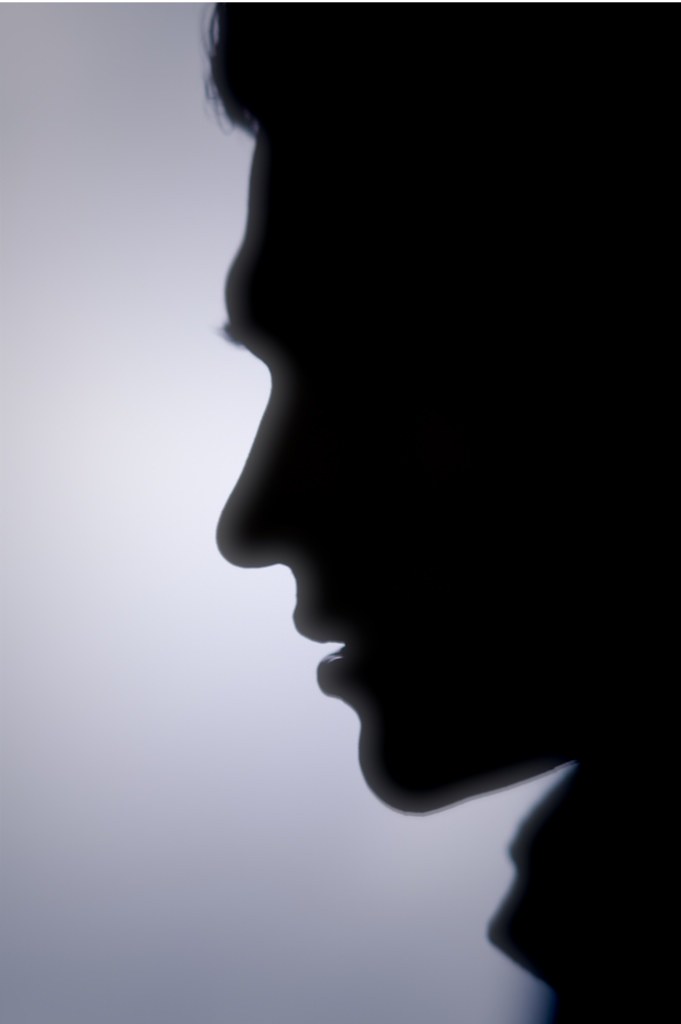
Turn your head and look at the profile: is the line from the lips to the chin to the neck smooth, or does it have a clear angle? The side line is closely tied to how your teeth meet and how you hold your neck — people who spend long hours looking down at a phone often find the chin area looking looser than it used to.
Step 3: Read the Complexion Along With the Shape
Look at the skin around the chin: is it rosy and firm, or dull and slack? Has anything changed recently — sudden spots, peeling, or a hollowed look? Changes in complexion are worth more attention than shape, because they are usually tied directly to sleep, diet, and stress.
Once you have looked, set the result beside your actual life: How have you been sleeping lately? Are you eating regularly? Is stress high? If the chin area looks worse than usual, those three questions will tell you more than any face-reading book will.
The chin is a mirror, not a verdict.
Chin reading has been passed down for over a thousand years. The genuinely valuable part is not what it predicts — it is what it reminds us to pay attention to in later life: being able to eat, to sleep, to have people around, to have something to do, and to have savings. Put those five together and old age takes care of itself. The face-reading books hid that advice inside phrases like “a full Earth Pavilion” and “a fleshy chin,” written for people who had no medical vocabulary.
Three small things you can do: look in the mirror at your chin’s shape and complexion, and note how you have been sleeping and eating lately. If the area around your chin stays dull, slack, or suddenly changes, adjust your rest first — and see a doctor if needed — rather than turning to a fortune teller. And treat this article as cultural knowledge to talk about with family, a window into how the ancients thought about faces.
Chin shape is given at birth, but the way you live is your own choice. Instead of worrying whether your chin is round or pointed, take care of the small, visible things each day — sleep, food, and state of mind. Those are the real foundation of the Earth Pavilion in later life. This article is offered as traditional cultural reference only; it makes no prediction about anyone’s destiny and is not medical advice.
Quick Answers
What is the dige (Earth Pavilion)? In Chinese face reading, mianxiang, the lower third of the face — from the mouth down, including the chin — is called the Earth Pavilion. The old metaphor treats it as the foundation of a house: it is associated with the later years of life.
Does a round chin really mean a comfortable old age? Tradition says a round, full chin points to a gentle character and a settled later life. Modern common sense adds the missing link: a full chin in later life often simply means the person eats well, sleeps well, and is in a good mood — and those are the real foundations.
Is a double chin good luck? The old books praise it as a sign of plenty in old age. But a double chin that appears after weight gain is mostly a change in body shape, not a change in fortune. The two should not be confused.
Can my chin change over time? Yes. Weight change, tooth loss, changes in bite, and the natural slackening of muscle with age all reshape the chin. The old saying is that the face changes as circumstances change — physiognomy was never meant to be fixed.
Should I worry if my chin is pointed or short? No. These are traditional associations, not diagnoses or predictions. A pointed chin in the old books is linked with quick thinking and overthinking; a short chin with fast action. Character comes far more from family, work, and life experience than from any single feature.
What is actually worth watching? Changes in the chin area’s complexion — sudden dullness, slackness, or spots — are more telling than shape, because they often track sleep, diet, and stress. If they persist, adjust your rest first and see a doctor if needed.