Ask anyone who has learned the 24-form Tai Chi, and they will tell you the same thing: Parting the Wild Horse’s Mane is where the form starts to fall apart. The left and right hands get mixed up, the bow stance wobbles the moment you step out, and the weight vanishes the instant you turn. It looks effortless when a teacher does it — and that is exactly why it is so easy to get wrong. Break the footwork, the hand shapes, and the power generation apart, get this one movement right, and every turn and weight shift in the rest of the form suddenly starts to flow.
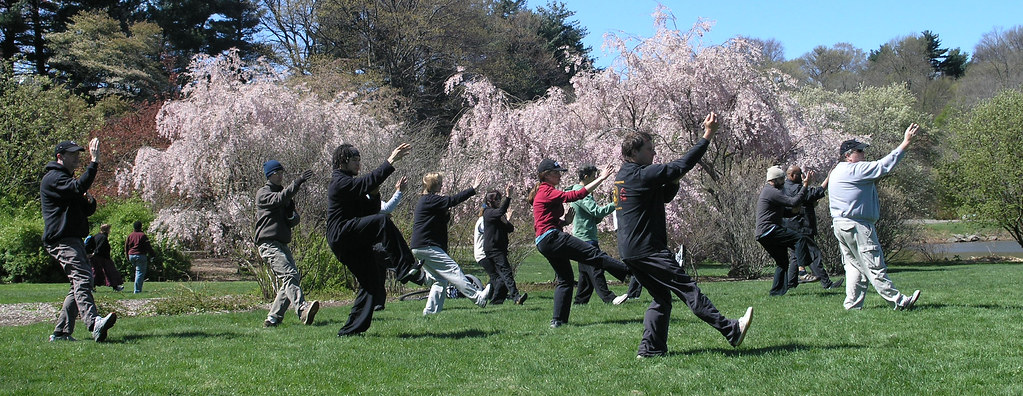
Breaking the Movement Down, Step by Step
Parting the Wild Horse’s Mane — Yě Mǎ Fēn Zōng in Chinese, literally “a wild horse parting its mane with a shake of the head” — appears three times in the 24-form: once on the left, once on the right, and once more on the left. The structure is identical each time, only the direction changes. Take the left version as our example. It begins from holding the ball: both hands come together in front of the chest, left palm on top and right palm underneath, as if you were cradling a ball about 30 centimeters across. Let the elbows hang slightly down and the shoulders release.
Step one: the waist leads the hands. Turn the waist about 45 degrees to the left. The left hand follows the waist and sweeps out toward the front-left, palm angled down, at shoulder height. At the same moment, the right hand presses down and to the right, palm facing the floor, settling just outside the right hip. The two palms move apart like the two ends of a length of cloth being pulled open — leave space across the chest, and never let the hands cross each other.
Step two: step out into a bow stance. The left foot steps forward and to the left, a stride of roughly 50 to 60 centimeters, heel touching down first, then rolling through to the whole sole. The toes point in the same direction as the left palm, angled about 30 degrees to the left. Once the front foot is planted, shift the weight forward slowly. The left knee bends into a bow stance — a gongbu, the classic Tai Chi forward stance with one leg bent and the other extended — but the knee never passes the toes. The right leg stays straight and pushes back, heel firmly on the ground, the whole back leg working like a pole bracing the body.
Step three: the palms part to their final positions. The left palm continues forward and slightly upward, palm angled outward, fingertips level with the eyebrows. The right palm presses back and down, palm facing the floor, fingers slightly spread. Look toward a point about 3 meters ahead of the left palm. From the starting posture to the finished position, the whole movement takes about 4 to 6 seconds — the slower you go, the more clearly you can feel the weight move.
The Key to Linking Left and Right
The right version is a mirror image of the left, and the transition between them is where most people lose the thread. After holding the left posture, do not rush to pull the hands back. Shift all of your weight onto the left leg first, then use the left foot as a pivot and turn the body about 90 degrees to the right, stepping the right foot out to the front-right as you turn. As you turn, bring the hands back together into the ball-holding shape in front of the chest, keeping the ball no higher than chest level.
Many people move the hands first and the waist second when they turn, and the hands and feet end up working against each other. Remember the order: the waist turns, the hands follow, the foot arrives.
Footwork and Hand Shapes Working Together
The footwork of Parting the Wild Horse’s Mane is a textbook bow stance. The sideways distance between the front and back feet is about 20 centimeters — too narrow and you will rock from side to side; too wide and you cannot sink your weight down at all. There is a simple test: once you are settled in the bow stance, ask a practice partner to give your shoulder a gentle push from the side. If one push topples you, your stance is too narrow. If you cannot be moved at all but your knees ache, you have stepped out too far.
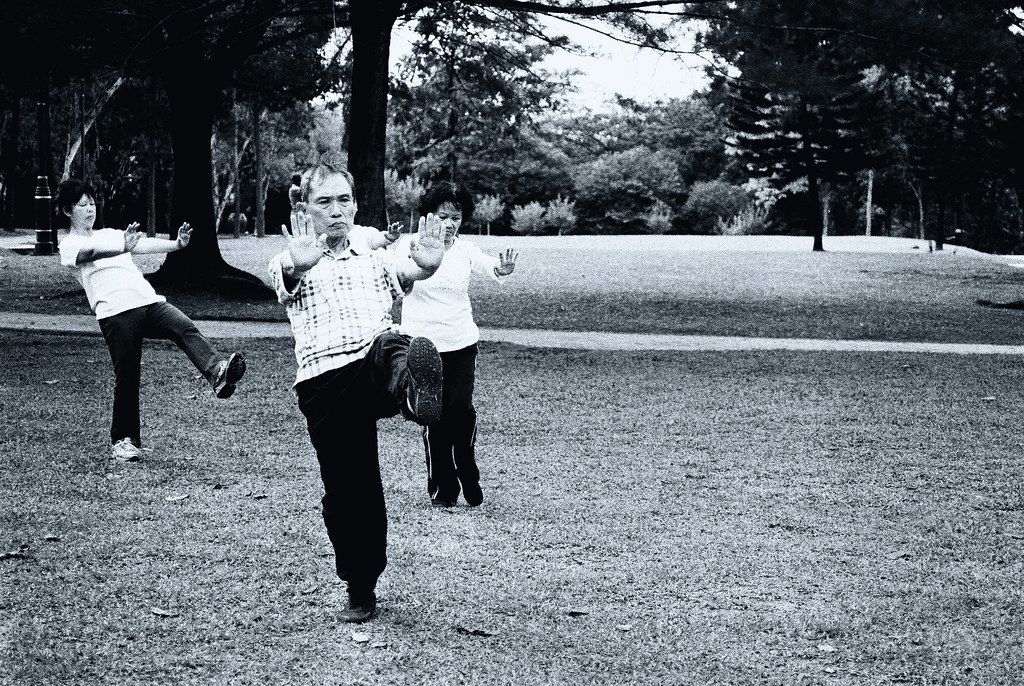
Three details in the hand shapes are worth obsessing over. First, do not stiffen the fingers into a board. Keep the web of the thumb open and rounded, fingertips slightly curved, as if you were gently pressing a ball of cotton. Second, keep a slight bend in the elbow as the left palm sweeps out, elbow tip pointing down. An arm stretched dead straight goes rigid the moment anything touches it, and it cannot redirect force. Third, when the right palm presses down, do not cross the body’s centerline — stop at the outside of the right hip. Pressing too far back twists the waist out of alignment.
The rhythm between hands and feet goes: foot lands, weight arrives, hands arrive — all three finishing at almost the same instant, but with the intention starting in the feet and traveling to the hands. Beginners can practice the pieces separately: first just step into the bow stance, hold steady for 3 seconds, then part the palms. After about ten repetitions, put the two halves together, and the rhythm will feel noticeably cleaner.
Power and Breathing
The power in Parting the Wild Horse’s Mane comes from the waist and legs, not from the arms. The straight back leg supplies the forward push; the turning waist carries that force out to the palms. In the instant the palms part, the back foot presses into the ground, the waist twists to the left, and the left palm pushes forward and up — force rising from the sole of the foot, traveling through the waist, and arriving at the base of the palm.
Here is how to check whether your power is flowing correctly: as you perform the movement, ask a partner to press lightly against your left palm with one hand. If they feel a steady, continuous forward push rather than a hard shove from the arm, the force is traveling the right way.
Breathing follows the opening and closing of the palms. Inhale as the hands gather into the ball, the belly drawing slightly inward. Exhale as the palms part into the bow stance, the breath sinking down to the dantian — the energy center in the lower abdomen, about three finger-widths below the navel. Keep the exhale even; never hold your breath. The whole movement rides on one complete breath, roughly 2 seconds in and 3 seconds out. If you catch yourself holding your breath, the movement is too fast or too forceful — slow down, shrink the range, and the breath will fall back into step.
Many practitioners hunch their shoulders as the palms part, and that almost always means the arms are doing the work instead of the waist and legs. The fix is to settle the shoulders and drop the elbows before you start, imagining an egg tucked under each armpit — crush it and you have failed, drop it and you have failed too. Once the shoulders release, the power from the waist and legs can finally reach the hands.
Common Mistakes and How to Fix Them
- Front knee collapsing inward: the front knee caving toward the middle is the single most common error in this movement. The knee must point in the same direction as the toes. Stick a small piece of tape on the outside of the knee as a reminder — ten repetitions is usually enough to build the muscle memory. A knee that collapses inward over months of practice puts unnecessary stress on the meniscus.
- All the weight on the front leg: in the finished bow stance, the weight should split roughly 60–40 between the front and back legs. If the back leg carries nothing, you cannot stand steady. Check it this way: in the finished posture, try lifting the ball of the front foot. If you cannot lift it, your weight is too far forward.
- Back heel lifting off the ground: the moment the back heel leaves the floor, the pushing power is cut off, the body leans forward, and the waist collapses. Shorten the step by 5 to 10 centimeters, or lower the bow stance, and only deepen it once the back heel can stay planted.
- Two palms on different planes: the left palm high and the right palm low is the whole point of the parting motion — but too much of a gap turns it into a lopsided shrug. The left palm sits level with the eyebrows, the right palm level with the hip, a height difference of about 40 centimeters. Anything beyond that needs reining in.
- Dragging the feet during the turn: when linking left to right, some people save effort by dragging a foot around in a circle, and you can hear the sole scraping the floor. Before turning, shift your weight fully onto the supporting leg, then lift the other foot lightly and set it down lightly — the toes may brush the ground, but never drag. The quieter the shoe, the cleaner the footwork.
- Eyes locked on the palm: staring at your own hand stiffens the neck. The gaze should rest on a distant point ahead of the left palm, with the hand sitting in the edge of your vision. The farther the eyes look, the more the body opens up.
A Daily Practice Plan
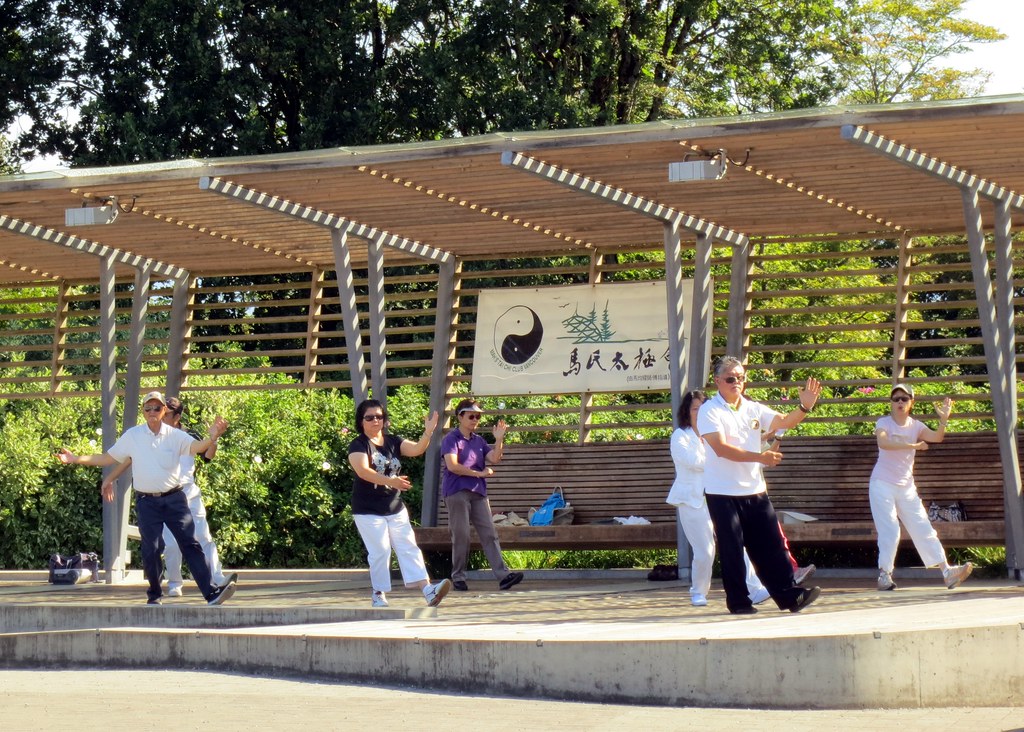
Parting the Wild Horse’s Mane is worth pulling out of the form and practicing on its own — ten minutes a day is enough. A practical routine: five repetitions on the left, five on the right, each one lasting about 6 seconds, performed without stopping. That is one set, roughly 8 minutes for two sets with a 1-minute rest in between. All you need is a flat, non-slippery patch of ground about two meters square — a corner of the living room, or an open spot in the neighborhood park.
Once the movement feels steady, add a static hold: settle into the bow stance with the palms parted and hold for 30 seconds, feeling the three forces at once — the back leg pressing into the ground, the front leg carrying the weight, and the waist holding its twist. After 30 seconds, release and switch sides. A week of holding practice, and when you return to the continuous movement, the footwork will feel far more solid.
Putting It All Together
The whole movement condenses into three lines. Footwork is the bow stance: keep about 20 centimeters between the feet side to side, and keep the knee tracking over the toes. Hand shapes are the parting palms: the left palm rises to eyebrow height, the right palm presses down beside the hip. Power comes from the waist and legs: the back foot presses the ground, the waist turns, and the hands arrive last.
Practice those three lines until they live in the body, and when you go back to the full 24-form, every turn and every weight shift will move more smoothly.
Start today: find a two-meter square of open floor, do five repetitions on each side, and check two things — the direction of the knees, and whether the back heel stays on the ground. Do it again tomorrow at the same time and compare how steady the steps feel. After a week, add the 30-second static hold to your practice. By then, Parting the Wild Horse’s Mane will be standing on its own feet.
Quick Answers
How many times does Parting the Wild Horse’s Mane appear in the 24-form? Three times — left, right, then left again. The structure is identical each time; only the direction changes.
How long should one repetition take? About 4 to 6 seconds from the ball-holding start to the finished posture, on a single breath: roughly 2 seconds in, 3 seconds out.
My front knee keeps collapsing inward — what helps? Check that the knee points the same way as the toes, and put a small piece of tape on the outside of the knee as a reminder. Ten focused repetitions is usually enough to start building the habit.
Why does my back heel keep lifting? Your step is too long, or your stance too deep. Shorten the step by 5 to 10 centimeters or lower the bow stance, and deepen it only once the heel stays planted.
How long before the movement feels natural? With ten minutes of daily practice — five repetitions per side — most people feel the footwork stabilize within about a week, and the static 30-second hold speeds that up noticeably.
Safety note: warm up for 5 minutes before practicing, loosening the knees, ankles, and waist. If you have an old knee or lower-back injury, or you are in pain, reduce the depth of the bow stance or pause practice, and consult a doctor if needed. Older practitioners, or anyone with weaker balance, should practice near a wall for support or with a family member nearby to avoid falls. This article is a cultural introduction to traditional martial arts and makes no promises about treatment or health benefits; seek medical attention promptly if you feel unwell.